Home Blog Page 1219

Actors Guild of Nigeria suspends Actress Halima Abubakar indefinitely

0
Halima Abubakar

Nollywood actress Halima Abubakar has been suspended by Actors Guild of Nigeria, AGN, over what it described as professional misconduct.

The AGN said Abubakar’s “involvement in slandering Nollywood” was uncovered after two years of secret “painstaking” investigation.

Announcing her suspension in a statement on Friday, the Guild stated that other female members on the watch-list, especially over the recent release of names of persons purported to have had dealings with the Senate President, Godswill Akpabio, are being investigated by the secret panel.

The Guild said it found the actress “guilty of spreading false information about fellow colleagues, associates, and patrons, including allegations of extramarital affairs with highly placed individuals.”

“Following the thorough investigative report by the Special Secret Investigation Panel set up to conduct an underground investigation into the activities of some blogs/bloggers since 2022.

“After two years of painstaking investigations, the Panel found out that Miss Halima Abubakar was behind all the slandering information of our members, associates and patrons, especially news of extra marital affairs linked with highly placed individuals in society emanating from the industry.

“Therefore, Halima Abubakar is hereby placed on indefinite suspension. She will face the National Disciplinary Committee to determine full punishment. And she’s not permitted to participate in any AGN and filming activities.

“However, some female members on the watch-list are being investigated by the secret panel, especially in the release of names purported to have had dealings with the Senate President.”

I have the gift of prophecy –Ofori Amponsah

0
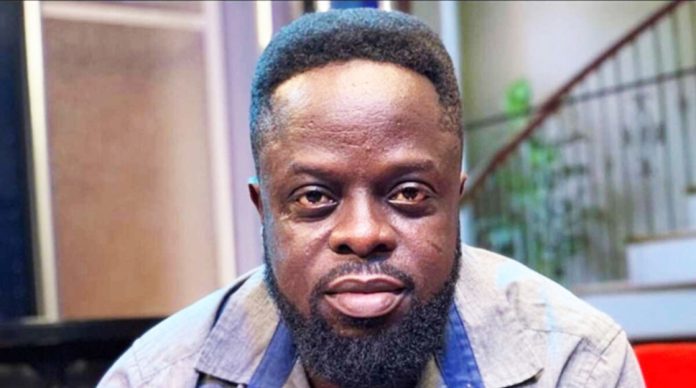
Ofori Amponsah

Celebrated Highlife Artiste, Ofori Amponsah has said he’s been gifted by the Almighty God to prophesy.

“I don‘t want to speak about it today but like a gift. I can sit down and say in the year 2020, this would happen.”

“Of course,” he said when asked if he could prophesy.

The ‘Otoolege’ hitmaker explained that he took advantage of his music career as a platform to manifest his God-given gift.

For him, the gift of prophesy even precedes his music talent.

“It’s a gift and that was what I was doing in church before I became Ofori Amponsah. And for me, music was my platform. For example, I am in the studio and it came to me that in 2020 this will happen so I put it in the song because I don’t have a church.

“That’s actually my gift than even the music,” he added.

In an interview on TV3, the Artiste turned pastor said he didn’t turn to God because he wanted to give his life to Christ.

According to him, he used to sing, preach and lead worship in church before he became the star he’s known for.

“Ofori Amponsah was already in church, singing in church before I became Ofori Amponsah. So, it’s not like I tried to give my life to Christ. I was already doing that,” he stated.

He explained that he took a break from music because he was going “wayward” and wanted to

“But that time I had my own challenges. I was doing this thing for a long time and I needed a break.

“I was like I needed to find myself again and I think the break was a very good thing for me because actually I was a bit going wayward until I just took a break and came back.

“Right now, I am successful than before, hundred times successful,” he noted on Sunday, October 20.

MPS Calls For Reduction In 100% Examination Of Containers At Terminal 3

0
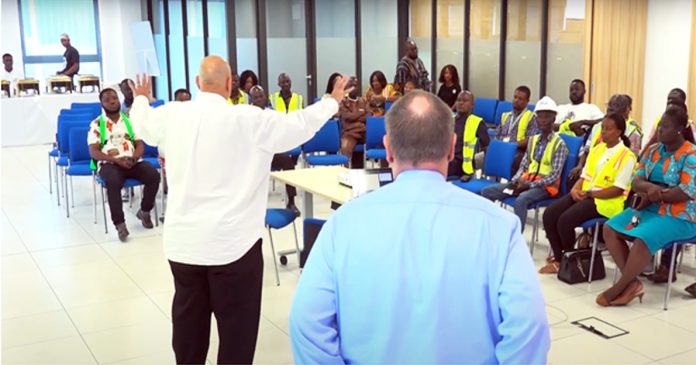
MPS’ management in an engagement with Customers

The Chief Executive Officer of Meridian Port Services (MPS), Mohamed Samara has appealed to stakeholders in the cargo clearance chain to refine their processes to allow for increased efficiency.

According to him, it is imperative for stakeholders and customers to collaborate effectively and provide constructive feedback to the company for enhanced service delivery.

He was speaking during the Company’s Customer Service Week celebrations.

“In a service environment, we really need to measure and gauge the service that we’re providing to our customers and the best way to gauge it is through these forums you know where we can listen to them and understand what challenge they have and what they expect from us to do better,” he said.

Mr. Samara also advocated for a reduction in the 100% physical inspection of cargo at Terminal 3, while reminding customers to adhere strictly to the terminal’s truck appointment system to avoid delays and ensure smooth operations.

“The experience that a customer gets is not just from GPHA or MPS, it’s also from the statutory services and we are really hoping that they can upgrade their kind of approach to business to the speed of trade and the logistics chain in the same manner that the expectations or people are growing.

The level of inspection is quite high and we would like to see a more emphasis on the risk engine that the Customs has developed to identify risky trade from non-risky trade and give the non-risky trade the facility it deserves because this is the norm in any other port,” the MPS Boss urged.

Some customers shared feedback on the Company’s operations, highlighting some operational challenges, to which the Chief Financial Officer for MPS, Steen Larsen assured of a speedy resolution of the identified challenges.

President Of CUBAG Praises Ground-Breaking Rules Of Origin Training

0
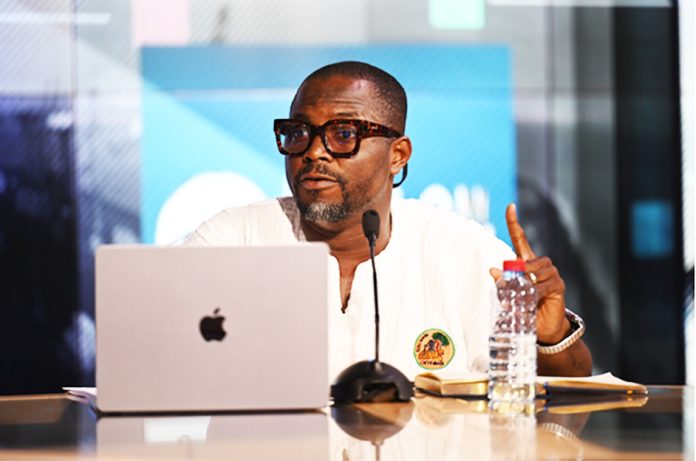
CUBAG Prez Nana Fredua Agyemang Ofori-Atta

The President of the Customs Brokers Association, Ghana (CUBAG) and a leader of the Council of Freight Forwarder Associations (CoFFA), Mr. Nana Fredua Agyemang Ofori-Atta, has praised the recent World Customs Organization (WCO) training on the Rules of Origin under the Africa Continental Free Trade Area (AfCFTA), calling it “ground-breaking.”

According to him, the initiative is a pivotal moment for Ghana’s private sector, as it enhances the capacity of freight forwarders to facilitate Africa-wide trade more effectively.

In an Eye on Port session with Kennedy Mornah, Nana Fredua highlighted that this marks the first time that such comprehensive training has been extended to private sector players like freight forwarders.

He noted that prior to this, training had primarily focused on regulators, leaving intermediaries like freight forwarders without the necessary skills to fully comply with or benefit from trade agreements.

“It took two trips to the WCO and multiple rounds of discussions to secure this training. It’s truly ground-breaking because it fills a critical knowledge gap,” he explained.

The training, which focused on understanding the Rules of Origin within the AfCFTA framework, aims to ensure that freight forwarders are well-equipped to classify products accurately based on their origin, allowing them to benefit from preferential customs duties.

The AfCFTA, Nana Fredua pointed out, is an improvement over the ECOWAS Trade Liberalisation Scheme (ETLS), as it expands trade opportunities beyond West Africa to the entire African continent.

“The stakes are much higher now, and the need for widespread participation in AfCFTA is crucial for its success,” he said.

One of the major challenges, Mr. Ofori-Atta noted, is the complexity involved in determining the origin of goods. He cited an example of a locally made fugu shirt, where the cotton fibre could be sourced from Egypt, turned into yarn in another African country, and finally made into fabric in Ghana.

“To qualify for AfCFTA preferential rates, we need to ensure that the product is sufficiently transformed in Africa and adheres to the accumulation principle, where different stages of production across multiple African countries are recognized,” he explained.

Mr. Ofori-Atta stressed that failure to understand and apply these rules properly could hinder trade facilitation and prevent businesses from taking advantage of lower customs duties.

He shared that previously, only limited training opportunities were available, and even then, the costs were prohibitive.

“Two years ago, the cost for Rules of Origin training was around GH¢15,000 per head, and it could be as high as GH¢30,000 today. We’ve managed to run this training for free for our members because of how important it is,” he stated.

Although this training marks a significant step forward, Nana Fredua believes that it is only the beginning. “We were given a quota of 30 participants for the WCO training, but we managed to train 39 companies. This is just the start. We will continue to train as many people as possible,” he promised, emphasizing that continuous education is crucial for keeping pace with evolving trade agreements. He also revealed plans to implement a “trainer of trainers” program to ensure that freight forwarders nationwide—from Elubo to Aflao—are adequately trained.

When asked to rate the current level of understanding among freight forwarders regarding the Rules of Origin, Ofori-Atta gave a cautious assessment. “For those who have undergone training, I’d say we’re at an intermediate level. But for the general freight forwarding community, the level of understanding is marginal. We still have a long way to go,” he admitted, rating the sector’s overall knowledge between six and seven out of ten.

The Executive of CoFFA Nana Fredua spoke about the broader potential of AfCFTA to transform Ghana’s economy. He urged the country to identify industries where it holds a natural competitive advantage, such as cocoa production, and to build value chains that maximize the benefits of intra-African trade.

“Between Ivory Coast and Ghana, we’re the largest exporters of cocoa, but we receive less than a tenth of the global revenue from the product. AfCFTA presents an opportunity for us to change that by creating African-wide value chains,” he emphasized.

He also highlighted the importance of private sector participation in realizing AfCFTA’s potential. “The agreement alone won’t make a difference unless businesses actively engage in transforming raw materials into value-added products. Whether it’s cocoa, minerals, or oil, we need to find ways to add value within Africa before the final product leaves the continent,” he explained.

Nana Fredua concluded by expressing optimism about AfCFTA’s ability to boost intra-African trade and shift Ghana’s economy from its current reliance on imports.

“Africa trades the least with itself, but AfCFTA gives us the opportunity to change that. We have the potential to become the largest free trade area in the world, and Ghana must position itself to benefit fully,” he said.

In his view, the WCO training on the Rules of Origin is a key step in helping Ghanaian businesses take advantage of AfCFTA. However, he cautioned that much work remains to be done to ensure that all stakeholders, especially those in the private sector, are adequately prepared to leverage the benefits of the agreement.

“AfCFTA could be the game changer for Ghana and Africa, but we must commit to continuous learning and collaboration to make it a reality,” he concluded.


Kano Chief Judge Frees 37 Inmates On Medical Grounds

0
Chief Judge of Kano State, Justice Dije Abdu Aboki

Thirty-seven inmates at the Medium Security Custodial Centre, Goron Dutse, Kano, were released on medical grounds by the Chief Judge of Kano State, Justice Dije Abdu Aboki, as part of efforts to decongest the state’s custodial centers.

The inmates were freed due to prolonged detention without trial and poor health conditions.

Addressing the released inmates, Justice Aboki urged them to reflect on their past and avoid actions that could lead to their re-incarceration.

The Chief Judge also handed over ₦10,000 to each of the released inmates as transport fare to ease their return to society.

The release was done in the presence of various legal officials. Among them was the Attorney General of the state, represented by the Director of Public Prosecution (DPP), as well as representatives from the Legal Aid Council (LAC) and the Chief Registrar of the High Court of Kano State.

The Controller of Corrections for Kano State Command, Ado Inuwa, expressed his gratitude to Justice Aboki for her decision.

“We are appreciative of the Chief Judge’s intervention in decongesting the prison and her kind gesture towards these inmates who have suffered from long stays without trial and health complications,” he said.

Credit: channelstv.com

Court sacks Kano electoral commission chairman, members, stops LG polls

0
Court sacks electoral commission chairman

A Federal High Court sitting in Kano has disqualified the chairman and members of the Kano State Independent Electoral Commission, KANSIEC, from conducting the scheduled local government elections in the state.

The court ruled that the KANSIEC chairman and other members of the Commission are card carrying members of the ruling New Nigeria Peoples Party, NNPP, and also are not civil servants above grade level 14.

This is coming barely four days to the Kano LG elections, scheduled for Saturday October 26, 2024.

The court presided by Justice S.A Amobede made the declaration while delivering judgement in a suit filed by Aminu Aliyu Tiga, an All Progressives Congress, APC, member against KANSIEC, the state Attorney General and Commissioner for Justice, Barrister Haruna Isa Dederi, and 14 others.

The judge further ruled that “Kabir Zakirai, the Secretary of the Commission, not being an officer in the Kano State Civil Service not below the rank of Director prior to his appointment as Secretary of the Commission, is not qualified to be appointed to the position pursuant to Section 14 of the Kano State Independent Electoral Commission Law 2001”.

The judge added that “the 1st Defendant (KANSIEC) whose composition of members was made in contravention of constitutional provisions of Section 197 (1)(b) and Section 200 (1) (a) of the 1999 Constitution of the Federal Republic of Nigeria (as amended) and Section 4 of the Kano State Independent Electoral Commission Law 2001, cannot validly and competently conduct Local Government Election 2024 in respect of 44 Local Governments in Kano State until and unless qualified persons are duly and legally appointed as chairman and members of the commission in line with relevant extent law.”

Justice Amobede further ruled that whatever the Commission “did or has done or is doing in preparation of 2024 Local Government Election in Kano State such as issuance of election guidelines, circulars, screening of candidates, sale of nomination and expression interest forms whichever and howsoever are null and void and of no effect whatsoever”.

Credit: dailypost.ng

Senate to investigate NDLEA’s drug trafficking allegations against Ashiru

0
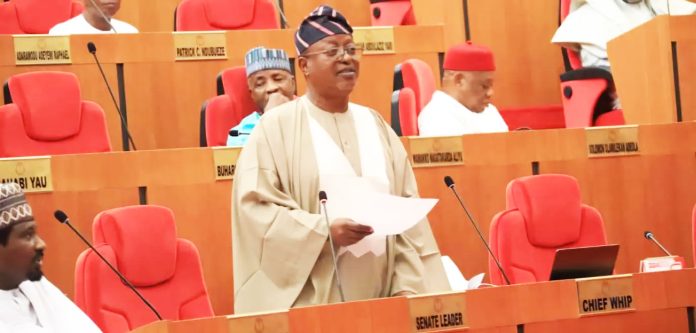
Nigerian Senate

The Nigerian Senate has set up an Ad-hoc Committee to investigate allegations of drug trafficking against Senator Oyelola Yisa Ashiru representing Kwara South Senatorial District.

The setting up of the investigative committee came after Ashiru raised Order 42 of Senate Rules, which bothers on personal explanation, noting that the National Drug Law Enforcement Agency, NDLEA, accused him of involvement in drug trafficking, which led to the arrest of some of his aides.

Ashiru said the allegation against him by NDLEA was baseless and unfounded, stressing that the agency was angry because he contributed to a proposed bill on the establishment of a drug-related agency on Tuesday, 15th October, 2024.

He urged the Senate to take action on the matter, saying that the allegation was an infringement on his person and his privilege as a sitting senator.

He explained: “Mr Senate President, I come under Order 42 – personal explanation. My personal explanation is NDLEA’s malicious reaction to my debate on a bill seeking to establish an institute on drug awareness and rehabilitation.

“I expressed my concern on this bill for so many reasons. For the reason that there are a lot of information from my constituency on the negative effect of drug consumption and trafficking to the extent that one of my constituents has ascertained that in the last two years, he can count up to 50 people who have lost their sanity due to consumption of drugs.

“Equally, they are visible examples of drug barons who are making money through distribution of drugs in my constituency and other constituencies too.

“Mr President, I come under Order 42 to clear insinuation published especially by Daily Trust that Senator Ashiru is involved in distribution of drugs. In my life, I am 68 years now, I assert that I cannot even identify cannabis or any drug. Beyond taking water, I don’t do drugs, I don’t drink caffeine, I don’t even take carbonated drinks.”

Credit: dailypost.ng

Roadside Beggars given ultimatum to vacate the streets of Abuja

0
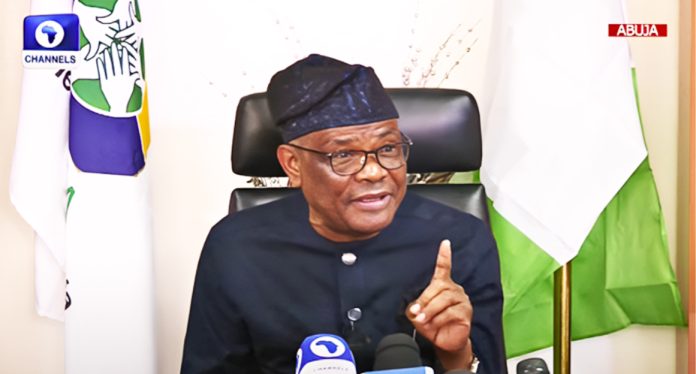
FCT Minister, Nyesom Wike

The Federal Capital Territory Administration has issued a warning to roadside beggars to desist from the act or risk being arrested by enforcement agents.

The minister disclosed at Katampe during the flag-off ceremony of the construction of the access road to the newly flag-off judges’ quarters.


He lamented that the number of persons who stay on the road is alarming which poses a threat to security in the metropolis.

He then issued an October 27, 2024 ultimatum to the concerned parties to vacate the streets.

Wike had on Monday, recalled how he revoked the certificate of occupancy (C of O) of some plots of land allocated to German construction giant, Julius Berger, in the Katampe District of Abuja.

The minister spoke at the official Flag-Off Ceremony of the Design and Construction of 40 Judges’ Quarters at the nation’s capital.

The event was attended by the Chief Justice of Nigeria (CJN), Justice Kudirat Kekere-Ekun; and the President of the Court of Appeal of Nigeria, Justice Monica Dongban-Mensem; among other dignitaries.

Wike said 70% of funds for the project had been released after its approval by the Federal Executive Council last month. He said out of the 40 units to be constructed, 20 will be allocated to the FCT High Court, 10 to the Federal High Court, and 10 to the Court of Appeal.

Credit: channelstv.com

Koku Anyidoho kicks against ban on small scale mining

0

Following a tour of some small-scale mining companies in the Tarkwa-Nsuaem Municipality in the Western Region, Mr Samuel Koku Sitsofe Anyidoho, the Chief Executive Officer of the Atta-Mills Institute, has urged Civil Society Organisations (CSOs) and all persons calling for a total ban on small-scale mining to reconsider their campaign and rather focus on complementing the government’s efforts in fighting illegal mining (galamsey).

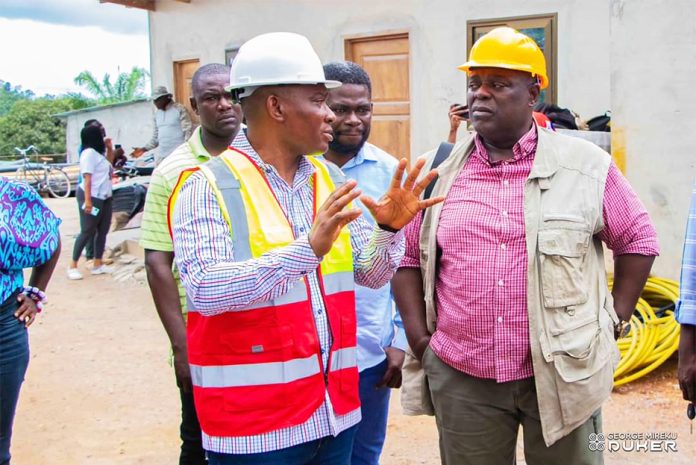
On Saturday, October 19, 2024 Mr. Anyidoho joined a delegation led by the Deputy Minister for Lands and Natural Resources, responsible for Mines, George Mireku Duker, to visit some licensed small-scale mining companies in the Tarkwa Nsuaem Municipality of the Western Region.

The team visited the Tarkwa Community Mining Scheme, Mohammed Brothers Ltd, Johnson Mining Services Ltd, and Dakete Mining Company Ltd, all in the Tarkwa-Nsuaem Municipality.

During the tour, the companies took the delegation through a safety induction, mining procedures through the shaft-rail-locomotive ore/logistics hauling system, mineral processing, and tailings management.

Addressing the media at the end of the tour, Mr. Koku Anyidoho noted that contrary to the public narrative, most small-scale mining companies are engaged in responsible and sustainable mining.

Mr Anyidoho believes that the organisations and persons clamouring for a total ban on small-scale mining do not fully appreciate the issues at hand, as his experience has made him realise that the galamsey menace is not being perpetrated by all small-scale mining companies.

He urged members of the ‘ban small-scale mining’ brigade not to generalise the issues, as the situation on the ground does not support their claims, and promised to be an advocate for responsible small-scale miners.

“Galamsey has become a very big issue, so it’s a crisis. Unfortunately, the discourse is that all small-scale licenses must be taken away. We have quacks and bad people in every profession, but it will be unfair to join the call without coming here firsthand”, he said.

“The protection of the river bodies is critical, but all we see are the destroyed water bodies and not the companies who are engaged in responsible small-scale mining. The discourse is that everybody with a small-scale mining license must have it revoked, but I believe we should separate the chaff from what is good so that we can have people advocating for you,” he added.

George Mireku Duker, in a brief address to the press, explained that his consistent defense and advocacy for responsible small-scale mining was in tandem with his role as a Member of Parliament who has sworn fealty to the law.

According to him, as long as the country’s laws make provision for Ghanaians to engage in small-scale mining, he will advance their cause and fight for them.

Beyond the law, Duker’s commitment to the small-scale mining industry is due to his absolute belief that it is the only means through which Ghanaians can grow to become owners of large-scale mining companies.

The Deputy Minister also condemned galamsey, reiterating the point that the government will continue to fight against the menace.

“We can only use ownership from small-scale mining to middle-tier and then to the conglomerate. As Ghanaians, while we have enacted laws to regulate small-scale mining, I must be the one championing it.

“Once we’ve agreed as MPs to enact laws for small-scale mining, I will continue to protect that law. It is the reason I keep on championing small-scale mining. I’m happy to see Ghanaians like you managing a facility like this because it means the benefits will remain in the country. Employees are all Ghanaians.”

Professor Boateng calls for immediate reform in board compensation

0
Prof Douglas Boateng, Board chairman - Mineral Income Investment Fund

The Board chairman of the Minerals Income Investment Fund (MIIF), Professor Douglas Boateng, has called for immediate reforms in board compensation in state-owned-enterprises (SOEs).

“The time for change is now. Governments must reassess how SOE boards are compensated, not just for fairness, but to ensure that our state-owned enterprises are led by the best talent equipped to navigate today’s complex global challenges,” Professor Boateng suggested at the recent Boardroom Summit, which hosted over 1000 top CEOs, policymakers and executives.

He said that immediate reform is critical because the current state of board compensation is unsustainable.

Professor Douglas Boateng, highlighting the dangers of inadequate boardroom compensation on the sidelines of the summit, said it threatens the future of these vital institutions.

“We can no longer pretend everything is fine,” he stated.“How can we expect board members, overseeing organisations with assets exceeding $400 million, to fully commit to their duties when they are paid less than $380 per meeting or $1,520 per annum? Some receive a paltry $114 per quarter or $500 annually. This level of compensation is far too low for the responsibilities involved.”

Professor Boateng emphasised that board members face increasingly serious risks in today’s corporate landscape.

“In these days, not only can one’s hard-earned reputation be destroyed, but you can go to jail if things go seriously wrong. Board members must take their roles seriously and for that, they must be properly compensated,” he suggested.

He also stressed the need for board members to add value through a deep understanding of the companies and industries they oversee.

“Protecting shareholder interests and driving value requires directors to constantly seek information, ask tough questions and stay informed. This demands time, effort and fair compensation,” he said.

While recognising the honour of public service, Professor Boateng insisted that fairness in remuneration is essential.

“Serving as a non-executive director in SOEs is a national duty, but the serious responsibilities involved require fair compensation. This call is not for higher pay for current directors and chairpersons, but to ensure that future leaders are properly incentivised to meet modern board room governance demands.

“Outdated practices must change. State-owned enterprises are critical to national development and meeting global objectives like the UN SDGs and Africa’s Agenda 2063.

“Board compensation must reflect the importance of these roles, not just to attract talent but to safeguard the integrity and effectiveness of these institutions,” he added.

Professor Boateng called for a shift from politically motivated appointments toward merit-based leadership.

“SOE board roles require specialized expertise, strategic thinking, and accountability. Compensation should reflect the demands of the role. If we fail to act, we risk jeopardising the future of these institutions,” he warned.

The Ghanaian Chronicle