Home Blog Page 1217

Understanding The Necessity Of New GES Academic Calendar For Second Cycle Institutions

0
Opinion

The Ghana Education Service (GES) has recently announced its 2024/2025 academic calendar for second-cycle institutions, with the academic year commencing on 30th October 2024. This has generated a wave of reactions from various stakeholders, including parents, educators, and education advocacy groups, many of whom have raised concerns about the number and quality of contact hours students will receive under the new schedule.

These legitimate concerns stem from fears that the compressed timeline may affect the quality of teaching and learning. However, upon closer examination of the GES’s The Ghana Education Service (GES) has recently announced its 2024/2025 academic calendar for second-cycle institutions, with the academic year commencing on 30th October 2024.rationale, it becomes clear that the changes are part of a broader, well-considered strategy to restore and stabilize the academic calendar, which has been disrupted in recent years.

Addressing Legitimate Concerns

It is important to acknowledge the validity of some of the issues raised. First, the concern that students might not have enough time to fully cover the curriculum, especially in critical subjects, cannot be ignored. The limited time for contact hours might also raise questions about whether teachers will be able to deliver lessons effectively, or if students will be adequately prepared for their final examinations. In this light, the academic community is rightly worried about the possible long-term impact on students’ overall performance and readiness for higher education or the job market.

The concerns around scheduling are particularly critical given the disruptions caused by the COVID-19 pandemic, which led to the temporary implementation of transitional academic calendars, hybrid learning, and other emergency measures. While these measures were necessary during the pandemic, the resulting disorganization has had lingering effects, and the latest calendar adjustments are part of the effort to correct course.

The Strategic Reasons Behind the New Academic Calendar

Despite these concerns, sources within the GES have explained that the new calendar is necessary for multiple strategic reasons. The most pressing of these is Ghana’s membership in the West African Examinations Council (WAEC). As a member state, Ghana’s academic calendar must align with that of other countries in the region to ensure that students can write the West African Senior School Certificate Examination (WASSCE) alongside their counterparts in Nigeria, Sierra Leone, The Gambia, and Liberia.

Before the COVID-19 pandemic, Ghana’s calendar was fully synchronized with the regional academic cycle, with students writing the WASSCE in May/June each year. However, the disruptions caused by the pandemic led to a series of adjustments that pushed the academic calendar out of alignment.

The government, through the GES, is now taking deliberate steps to revert to the pre-COVID calendar. The 2024/2025 academic year will begin on 30th October 2024, to gradually restore the September start date for academic years by September 2025.

This means that, by the 2025/2026 academic year, Ghanaian students will be writing their WASSCE in May/June 2026, along with their peers in other WAEC member countries. This regional alignment is essential for standardizing academic assessments and ensuring that Ghanaian students are not disadvantaged by an off-cycle calendar.

Additionally, the GES aims to realign the Senior High School (SHS) calendar with that of tertiary institutions, as was the case before the pandemic. A synchronized academic schedule between secondary and tertiary education is important for smooth transitions between levels, minimizing overlaps, and ensuring a more cohesive education system.

For instance, delays in completing the SHS curriculum often lead to delays in tertiary admissions, which has a ripple effect on the entire education pipeline.

Breaking Down the Transition for First-Year Students

To understand the implications of the new calendar, it is essential to consider the specific case of first-year students in Transitional Calendar Schools. These students are currently completing their 2023/2024 academic year, which is scheduled to end on 28th October 2024. Upon completion, they will be promoted to Form 2 and immediately begin the new academic year on 30th October 2024.

However, there has been some misinformation circulating that suggests these students have only been in school since late September 2024, leading to fears that their promotion to Form 2 is premature. This is not accurate. In fact, these first-year students began their first semester as far back as 4th December 2023, which ended on 5th March 2024.

The second semester commenced on 13th May 2024, with a break between 9th July and 27th September 2024. Therefore, these students have been attending classes throughout the year, and the timeline for their promotion to Form 2 is in line with the overall academic plan.

It is crucial to clarify that these students have had adequate time to complete their first-year studies, and the idea that they are being rushed through the academic process is not accurate. The GES has designed the academic year with careful consideration of the student’s progress and contact hours, ensuring that they are sufficiently prepared for promotion and the subsequent academic year.

The Larger Goal: Stabilising the Academic Calendar

The overarching objective of the new GES academic calendar is to stabilize the entire education system, bringing it back in line with pre-pandemic standards and regional expectations. The transition to the 2024/2025 academic year is part of a broader roadmap that will see the academic calendar revert to a September start by 2025, thereby ensuring that Ghanaian students are no longer isolated from the WAEC cycle.

This shift is also intended to improve the synchronization of SHS and tertiary calendars, ensuring that students can progress from one level of education to the next without unnecessary delays. This alignment is essential for students who are transitioning to higher education institutions, as it will reduce the backlog of students waiting to matriculate into tertiary programs, streamline admissions processes, and improve overall system efficiency.

Conclusion: A Necessary Step for Long-Term Stability

While concerns about contact hours and student readiness are valid and should be addressed through continuous engagement with stakeholders, the GES’s decision to implement the new academic calendar is grounded in a clear strategy. The long-term benefits of aligning with WAEC’s regional schedule, restoring the September academic start, and synchronizing secondary and tertiary education calendars far outweigh the temporary inconveniences and adjustments that schools, students, and teachers will have to navigate in the short term.

By the 2025/26 academic year, Ghana’s education system is expected to have fully reverted to its pre-pandemic calendar, providing stability for students, teachers, and institutions alike. This effort, though challenging, is critical for the continued success of the country’s education sector and the international competitiveness of Ghanaian students in the global academic arena.

By Raymond Acquah  

Credit: myjoyonline.com

Editor’s note: Views expressed in this article do not represent that of The Chronicle

Man remanded for alleged robbery and rape

0
Accra Circuit Court

The Accra Circuit Court, presided over by Her Honour Basilia Adjei-Tawiah, has remanded Isaac Odai Afotey, a 25-year-old labourer in custody after he pleaded not guilty to charges of robbery and attempted rape.

The case has been adjourned to November 4, 2024 for further proceedings.

Afotey is facing three counts in connection with an incident that occurred on October 10, 2024 at Nungua, a suburb of Accra.

Details of the Charges

In Count One, Afotey is charged with robbery under Section 149 of the Criminal and Other Offences Act, 1960 (Act 29).

He is accused of robbing Patience Ebi of her iPhone Xs, valued at GH¢5,500.

In Count Two, he is also charged with robbery for allegedly stealing Emmanuel Emegor’s iPhone 6s, valued at GH¢1,800 – a wristwatch worth GH¢800 and slippers worth GH¢400,totalling GHC3,000.

In Count Three, Afotey is charged with attempting to commit rape, contrary to Sections 18(1) and 97 of the Criminal and Other Offences Act, 1960 (Act 29).

According to the prosecution, led by Chief Inspector Daniel Ofori Appiah, Afotey and an accomplice, identified only as Jonathan, alias ‘Gucci’, who remains at large, attacked two siblings, Patience Ebi and Emmanuel Emegor, while they were at the beach near the Sea Water Desalination Plant.

The prosecution revealed that on the night of October 10, 2024 the complainants, Patience Ebi, a caterer and her brother, Emmanuel Emegor, a barber, went to the beach to pray.

They were suddenly attacked by Afotey and Jonathan, who were armed with knife, sticks and stones. The attackers assaulted the siblings and robbed them of their belongings.

While Emmanuel managed to escape, leaving his sister behind, the accused and his accomplice divided the stolen items between themselves.

Jonathan fled the scene, leaving Afotey with Patience.

Afotey allegedly attempted to rape her, ordering her to undress and forcing her to prove she was menstruating by inserting her fingers into her cervix, while he watched.

Emmanuel later returned to the beach with two others and found his sister with Afotey. They apprehended him and took him to the police station, where a search revealed Patience’s stolen phone in Afotey’s possession.

During police interrogation, Afotey admitted to the robbery in his caution statement.

The court has ordered that Afotey remain in custody while police efforts to apprehend Jonathan continue.

The prosecution is set to continue when the case reconvenes on November 4.

Another GH¢110 million suit against Twifo Atti Morkwa Omanhene

0
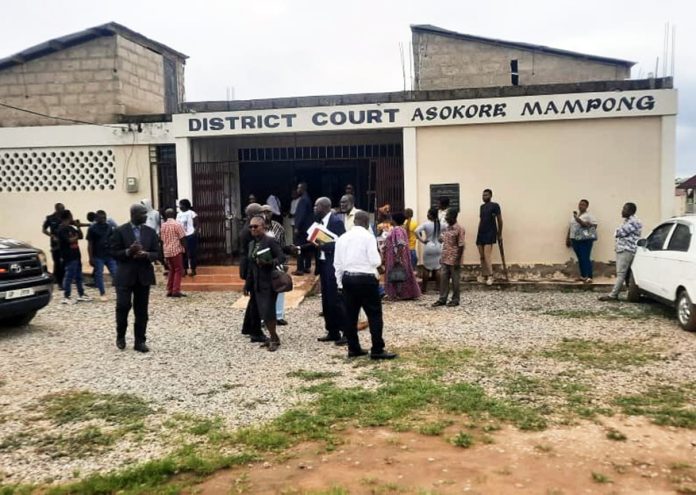
District Court

The Omanhene of Twifo Atti Morkwa Traditional area in the Central region, Oseadeaye Kwasi Kanin V, has come under intense pressure from another legal suit against him by nine mining companies.

The plaintiffs are; God Made Mining Enterprise, Dana Mining Enterprise and Truly Shepherd Mining Enterprise, Follow the Shepherd Mining Enterprise, Nazareth Mining Enterprise, Better Shepherd Mining Enterprise and Servant Mining Enterprise.

They are suing for recovery of GHc90 million against the defendant chief and three co-defendants for the quantity of gold mined illegally from the plaintiffs’ concession.

They are also suing for general damages of GHC20 million, as well as seeking an order directing the defendants to undertake compulsory environmental reclamation and revegetation of the area mined by the defendants.

The purported reclamation and revegetation exercises are to be done under the supervision of the Minerals Commission and the Environmental Protection Agency.

The plaintiffs also want an order for injunction restraining the defendants, their agents and their workers from interfering with the plaintiffs’ mining concession at Twifo Atti Morkwa in the Central region.

The court was moved yesterday, October 23, 2024 to hear the plaintiffs, per their lawful attorney, but His Lordship Justice Samuel Faraday Johnson, who is also presiding on the suit by Bright Kwabena Obeng in a previous suit, prefers to give its ruling on October 28, 2024 whether it has jurisdiction or not, before it decides to entertain the GHc90 million suit against the beleaguered OmanheneOseadeaye Kwasi Kanin V, Okyeame Yaw Asamoah, Ernest Ahirlu and Wu Ming Ji as defendants.

The embittered Oseadeaye Kwasi Kanin V is already facing a GHC15 million suit for similar claims by an individual before a Kumasi High Court, for which the defendants have raised an objection to the venue and thus seeking an order for transfer of the suit to an appropriate forum in Cape Coast.

The first defendant has deposed that the disputed land lies in a mining concession at Twifo Atti Morkwa and that the nearest High Court (Commercial Division) to the disputed land is the High Court of Cape Coast in the Central region and, therefore, the appropriate venue to hear and determine the suit.

The plaintiff, Bright Kwabena Obeng, who is seeking to recover a total of GHc35 million, including seeking general damages of GHc20 million jointly and severally against the defendants, has reacted that the Kumasi Court has jurisdiction geographically to hear the matter on a full-scale trial basis, describing the defendants’ objection as materially incompetent, misconceived, and unsustainable both in substantive and procedural jurisdictions of the court.

The court will give its ruling on Monday, October 28, 2024.

Soldier, 4 Others Remanded for Kidnapping and Robbery

0
Court gavel

The Accra Circuit Court, presided over by Mr. Samuel Bright Acquah, has remanded a military officer and four others, in connection with charges of conspiracy to commit kidnapping and robbery, involving a Dutch national.

The accused persons, including W.O.1 Elorm John Ahiakpor, a 50-year-old military officer stationed at Burma Camp, pleaded not guilty to the charges.

The others are Silas Amewonye, 25, farmer; Farouk Nuodio, 32, trader; Daniel Kwesi Obiri Yeboah, aka Aljazeera, 49, trader; and Michael Nana Addo, 25, carpenter.

The accused faces multiple counts, including conspiracy to commit kidnapping, actual kidnapping and conspiracy to commit robbery under the Criminal Offences Act of 1960 (Act 29).

Prosecutor ASP Kofi Anane presented that the complainant, Lodewijk Marinus Frederikus, a Dutch national, arrived in Ghana on October 17, 2024 to meet Silas Amewonye, whom he allegedly had a personal relationship with.

The accused, including Farouk Nuodio and Michael Nana Addo, lured the complainant to Alexis Lodge in Afienya and later to Amewonye’s residence.

On October 20, 2024 when the complainant expressed desire to leave the country due to suspicious behaviour by Amewonye and his accomplices, he was forcefully confined.

The group, including the military officer W.O.1 Ahiakpor, subsequently kidnapped him and demanded a ransom of €15,000.

After negotiations, the ransom was reduced to €8,000.

The complainant was forced to withdraw GH¢6,000 from a Stanbic Bank ATM at gunpoint while the accused awaited the €8,000 transfer.

Fortunately, the complainant managed to alert the police, leading to his rescue and the arrest of the accused individuals.

The accused admitted to the offences during police interrogation and they were charged accordingly.

The court adjourned the case to October 29, 2024 for further proceedings and investigation.

Fondation BotnarJoins Koforidua NJSM Assembly Youth Townhall Meeting

0
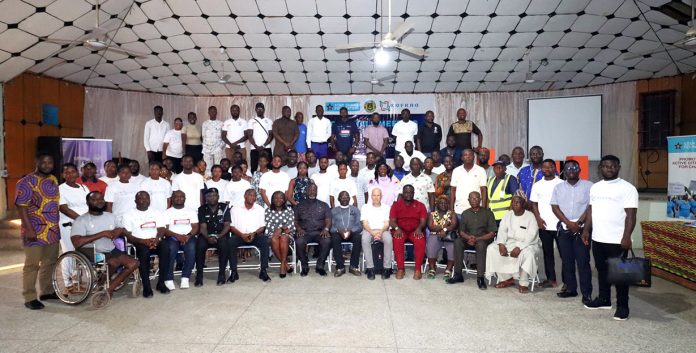
A group photograph of participants, Assembly Authorities and partners

FondationBotnar, a Swiss philanthropic foundation, on Tuesday, October 15, 2024 participated in a townhall meeting held for the youth and the New Juben South Municipal Assembly (NJSMA) in Koforidua, Eastern Region of Ghana.

The townhall meeting was a platform for the youth of the municipality to hear the activities of the assembly and for the authorities to pick feedback from the youth on further issues to be addressed.

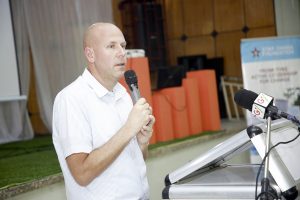
Partnerships Coordinator of Fondation Botnar, Zur Oren giving a brief message

The exercise, which was highly patronised, with funding from Fondation Botnar, is aimed at enhancing youth participation in governance and empowering them to help in the development of the municipality.

The aim of the townhall meeting aligned with what FondationBotnar is known for, and thus participated as a funding partner to the New Juben South Municipal Assembly, through its partners like the Star-Ghana Foundation, Kofkro.

Through its thematic areas, FondationBotnar works to improve the wellbeing of young people living in growing cities around the world.

By supporting innovative initiatives and bringing partners from across sectors to enable youth voices, FondationBotnar is in the NJSMA with its Our City Project.

The town hall meeting was on the theme: “Promoting civic engagement, role of the youth in development.”

ADDRESSES

In a brief message, Partnerships Coordinator for FondationBotnar, Zur Oren, said the forum was an opportunity for him to witness the engagement between the municipal authority and the youth.

He informed the youth that it is important for them to fully participate in making the municipality great by brainstorming homegrown solutions and supporting the authority to implement them.

Zur was particularly happy that the working relationship that commenced two years ago was manifesting physically, benefiting the youth and people of Koforidua.

The Portfolio Manager of Star Ghana, Raymond Danso, said the event was a partnership forum that allowed for idea sharing that encourages youth participation in the development of the municipality.

He said Star Ghana was open for innovative solutions to grow the assembly and assured the gathering that their collaboration would continue further.

The Municipal Coordinating Director of the Assembly, Edward Abazing, welcomed participants to the meeting and specially commended the youth for taking keen interest and attending in their numbers.

He expressed appreciation to FondationBotnar for the partnership, adding that the forum enabled the assembly to account to the people and also hear their concerns.

The Municipal Chief Executive of the Assembly, Isaac Appaw-Gyasi, recalled his trip to Romania, courtesy of FondationBotnar.

According to him, his experience enlightened his understanding about youth participation in development. He commended the Star Ghana Foundation and FondationBotnar for their support of the assembly.

He made a PowerPoint presentation of the activities the assembly had undertaken, which set the tone for an open forum.

OPEN FORUM

The Assembly was commended by Edmund Duodu, a youth, “for the participatory governance system,” saying it encourages their voices to be heard, as the youth feel involved in every scheme of affairs.

Stephen Asante Tetteh, another youth, urged the assembly to intensify security, especially as Ghana heads to a general election to elect a new president and parliamentarians on December 7, 2024.

A physically challenged youth speaking during the open forum

He also highlighted that the assembly faced issues with water and appealed that measures were taken to address that problem. A student from Oti Boateng Senior High School appealed to the assembly to help construct a dining hall for her school.

The MCE took time to respond to the several questions from the youth. He assured that the assembly had put measures in place to ensure that the municipality was always safe. He added that the security agencies were capable of protecting the assembly and there was no cause to feel insecure.

Responding to the issue of water, the MCE admitted that the assembly faced a challenge and the immediate remedy was to construct a borehole, which he appealed to Star Ghana to come to their aid.

CYBERSECURITY

The meeting ended with a session on cybersecurity, where the youth were educated on how to combat misinformation and disinformation.

Inviting the Cybersecurity Authority to speak to the youth, Dr. Ernestina Korliki-Tetteh said October was a cybersecurity month and Ghana had taken part in sensitising its people.

The officials from the Cybersecurity Authority advised the youth to prioritise fact-checking, among others.

Bagbin Requested For Bomb Detectors From Army To ‘Sweep’ Parliament Chamber Before Yesterday’s Sitting

0
Alban Sumana Kingsford Bagbin, Speaker of Parliament

The military personnel were not in Parliament to interfere with proceedings, but to sniff for explosive devices or harmful substances, the Ghana Armed Forces (GAF) has clarified.
According to GAF, the military personnel were deployed on the request of the Speaker of Parliament, through the Clerk.

GAF has said that the Speaker of Parliament, Alban Sumana Kingsford Bagbin, on Monday, October 21, 2024 formally made the request to the GAF, to conduct routine canine and bomb sweeps of the Chamber, which is a “standard procedure.”

A statement dated Tuesday, October 22, 2024 signed by the Director General Public Relations of GAF, Brigadier General E. Quarshie-Aggrey, attempted to kill the misinformation, which he said, if allowed to fester, would tarnish the reputation of GAF.

“The Speaker of Parliament, through the Clerk, formally requested security assistance from GAF for routine canine and bomb sweeps of the Chamber,” the GAF said.

The release continued that “it is essential to clarify that GAF personnel were not present at the Grand Arena to interfere with parliamentary proceedings.

“Their role was exclusively to conduct these routine sweeps to ensure the safety and security of the facility by checking for any explosive devices or harmful substances.”

Assuring the public that the GAF remained committed to ensuring the security of the state, the statement also urged the media to refrain from disseminating false information and to report responsibly on matters of public interest.

REQUEST

The Chronicle has also sighted the letter from Parliament that requested the assistance of GAF, an application that was premised on the “pronouncement” of the Speaker on the controversial seat saga last Thursday.

“The Rt Hon. Speaker would, therefore, be grateful if the Ghana Armed Forces would conduct canine and bomb sweeps of the Chamber on the first sitting day of the week (mostly Tuesdays),” Parliament told the GAF.

DEMOCRACY TEST

In the last months, Ghana’s 32-year-standing democracy has been witnessing controversies in the run-up to the 8th consecutive general election under the current Republican dispensation.

The current controversy arising from the vacation or otherwise of some four parliamentary seats placed the entire nation on tenterhooks, with fears of turmoil.

The pronouncement by the Speaker that four seats are vacant, followed by the drama by the New Patriotic Party (NPP) and National Democratic Congress (NDC) Members of Parliament, created tension in the country.

As if that was not enough, the judiciary stepping in to stay the execution of the pronouncement by the Speaker further heightened the tension. Legal brains and political analysts are split over the ongoing test of the democracy.

NO DRAMA

The NPP MPs assured the public that they would not be part of the drama the NDC MPs were seeking, but would rather rely on the law.

On Tuesday, the NDC MPs, who had declared themselves as the majority, occupied the seats on the right-hand side of the Speaker, but the NPP MPs decided to yield the Chamber to them, to avoid any chaos, as the NPP MPs were not ready to sit on the left-hand side of the Speaker.

The NDC MPs maintained that they were operating with the communication by the Speaker on Thursday, which translated them into having more seats in the House than the NPP MPs.

According to the NDC caucus, they will only change their stance of referring to themselves as the majority, if the Speaker gives another communication to restore the composition to what it was earlier.

RULING SERVED

Speaker Bagbin took his seat after meeting leaders of both caucuses at a pre-sitting meeting and informed them that he was going to adjourn indefinitely.

In the Chamber, Speaker Bagbin followed the normal procedure of leading the House to pray and recite the national pledge, but skipped a roll call of the House, which at the moment was made up of some members of the NDC MPs.

In his communication to the House yesterday, Speaker Bagbin mentioned that he had been served the ruling of the Supreme Court in relation to the matter, but did not say more.

“Yesterday (Monday), I received a process from the Supreme Court, which is a ruling from the Supreme Court, pursuant to an ex parte application, directing Parliament to recognise and allow the four affected members of Parliament to duly represent their constituents and conduct full scope of duties of their offices as members of Parliament, pending the final determination of a suit filed by Honourable Alexander Afenyo-Markin.”

QUORUM

The Speaker then notified the House about the lack of quorum to take decisions, except for the transaction of business, citing Article 102 of the 1992 Constitution and Order 64.1 of the Standing Orders of Parliament.

Article 102 of the Constitution reads that a quorum of Parliament, apart from the person presiding, shall be one-third of all the members of Parliament.

However, Article 104(1) forbids the House in taking decisions, as the Speaker noted that “the numbers [in the Chamber] are not sufficient for us to take decisions.”

Article 104(1) says, except as otherwise provided in the 1992 Constitution, matters in Parliament shall be determined by the votes of the majority of members present and voting with at least half of all the members of Parliament present.

“Honourable Members, we don’t have at least half of all the members of Parliament present [in the Chamber].

ADJOURN SINE DINE

Consequently, the Speaker indicated that he would adjourn the House, particularly as there was a question on the composition and constitution of Parliament and the public interest in the issue.

“I want to quote Standing Orders 59.1. It says the Speaker may, in consultation with leadership, suspend a meeting of the House indefinitely or for a period determined by the Speaker, having regard to the public interests and the exigencies of the state of affairs in the country.

“Honourable Members, I have consulted leadership, and I am exercising my discretion to decide to suspend the meeting of the House indefinitely. The House is accordingly adjourned sine die,” Bagbin said.

We Won’t Follow Minority’s ‘Patapaa’ –Afenyo-Markin

0
NPP MPs, led by their leader leaving the Grand Arena.

The Majority members in Ghana’s Parliament say they are committed to peace, vowing not to resort to violence, after the opposition National Democratic Congress (NDC) Members of Parliament (MPs) took over the Majority bench at a sitting on Tuesday, October 22, 2024.

Majority Leader, Alexander Afenyo-Markin

Speaking to journalists after staging a walkout from the floor of Parliament, the Majority Leader, Alexander Afenyo-Markin, said the path to the Majority bench isn’t through “patapaa” (brute force), urging the NDC Minority Group to respect the Supreme Court’s ruling that overturned Speaker Alban Sumana Kingsford Bagbin’s orders.

This ruling, issued on Friday, October 18, 2024 allowed four previously barred MPs to represent their constituents and declared their seats no longer vacant.

Afenyo-Markin advised the NDC to persuade Ghanaians to vote for them, if they believe they have the electoral appeal to win the Majority.

“That’s how we secured the Majority benches in 2017 and 2021, that is how it is done elsewhere, not through threats or intimidations. The path to the Majority bench is not carved through brute force or ‘patapaa’, in the hope that the seats on the Speaker’s right will be surrendered”, he noted.

On Friday, October 18, 2024 the Supreme Court of Ghana temporarily overturned Speaker Alban Sumana Kingsford Bagbin’s ruling, which had barred four Members of Parliament (MPs) from representing their constituents and declared their seats vacant.

The apex court, accordingly directed Parliament to recognise and allow the four affected MPs namely; Andrew Amoako Asiama, Independent MP for Fomena and 2nd Deputy Speaker, Cynthia Mamle Morrison, NPP MP for Agona West, Peter Yaw Kwakye-Ackah, NDC MP for Wassa Amenfi East and Kwadwo Asante, NPP MP for Suhum, to perform their duties.

The decision followed the granting of an ex-parte application filed by the Majority Leader, Alexander Kwamena Afenyo-Markin, praying to the Court to stay the execution of Bagbin’s ruling, declaring vacant the seats of four MPs and ordering the said MPs to vacate their seats in Parliament, on account of his declaration.

Following the Supreme Court’s ruling, the Minority Caucus, led by Dr. Cassiel Ato Forson, on Sunday, October 20, 2024 declared the NDC’s readiness to protect their new Majority status, citing the Speaker’s ruling that shifted the balance of power, giving the NDC Caucus a slight advantage with 136 MPs, compared to the NPP’s 135.

The Minority Leader said the NDC MPs were resolute in defending what they believe to be their rightful majority.

“The effect of the Speaker’s declaration is that currently, we no long have an independent Member of Parliament. The NPP has 135 members. This effectively utters the configurations of Parliament significantly.

“The NPP Group is now the Minority Caucus as defined in Order 6 of the Standing Orders of Parliament. The Minority Caucus means members of the party or parties that have the send largest number of seats in Parliament”, he stated.

The Minority Group backed their words with action by taking over the Majority bench at a sitting on Tuesday.

However, Afenyo-Markin emphasised that his side will always respect the court’s decisions and not resort to violence. “If they insist on entering the chamber with advertised thuggery, we will quietly leave and stay away from the House”, he stated.

The walkout led to a conclave meeting between the Speaker and the Leadership of Parliament, but it wasn’t enough to convince the two sides to resume sitting, prompting the Speaker to adjourn the House sine die.

By Stephen Odoi-Larbi

Green Gold Agenda To Rake In $5bn Annually –COA Boss

0
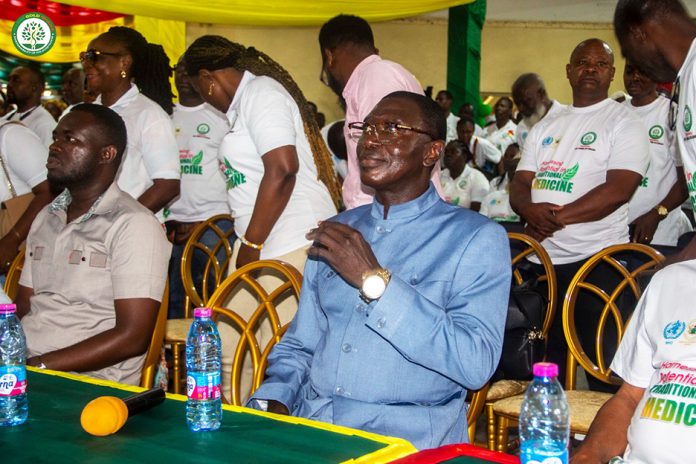
Prof Ato Duncan at the 22nd African Traditional Medicine (ATM) Day celebration

The President-General of COA Research and Manufacturing Ltd, Prof. Samuel Ato Duncan has stated that the Green Gold Agenda, which is being pushed by Executives of Ghana Federation of Traditional Medicine Practitioners Associations (GHAFTRAM) is expected to yield $5 billion annually for the country. This, he argued, would be more than the proceeds made from cocoa.

The Green Gold Agenda is a program that seeks to harness the potential of Traditional Medicine through research and develop them to international standards for the Global Market as another commodity (Green Gold) for Ghana.

“We expect this to generate over USD 5 billion annually, which is more than that of our proceeds from the cocoa industry,” he stated.

Prof. Samuel Ato Duncan made the statement at the Commemoration of the 22nd African Traditional Medicine (ATM) Day and 25th Traditional Medicine (TM) Week celebration of Ghana, held in Accra over the weekend.

Prof. Ato Duncan speaking at the ceremony

He observed that the herbal medicine industry was one of the fastest growing industries in the world, due to factors such as consumer preference for natural products, the perception that natural products are effective with minimal to no side effects, rising costs for synthetic pharmaceutical drugs, and budget cuts for modern healthcare.

According to him, the global herbal medicinal products market is expected to be valued at $177.65 billion by 2029. President-General of COA Research said in Asian countries including China, India, Singapore, and Malaysia, a significant portion of their total economic revenue is generated from the traditional medicine industry.

He said the aforementioned statistics indicate that the majority of the Earth’s population uses Traditional Medicines and therefore Traditional Medicine needs serious attention.

“It is based on these significant contributions of Traditional Medicine that WHO developed and launched the WHO Traditional Medicine Strategy 2014–2023, which also emphasised the integration of traditional and complementary medicine to promote universal healthcare and to ensure the quality, safety, and efficiency of such medicines,” he stated.

Despite the above statistics, Prof. Samuel Ato Duncan was saddened that in Ghana, the Traditional Medicine Industry has received very little attention from successive governments.

Meanwhile, he noted that Conventional Medicine and Traditional Medicine have one surname, “MEDICINE’, adding that they are twin brothers and must be raised together.

“You cannot raise one and leave the other and blame him for not doing well. The Traditional Medicine Industry needs serious support and attention,” he stated.

The President of GHAFTRAM, therefore, urged the government to consider including approved traditional medicines in the NATIONAL HEALTH INSURANCE SCHEME.

“On this note, I would like to call on everyone here and all stakeholders to join hands together to make traditional medicine our own. Long live GHAFTRAM, Long live Traditional Medicine,” he stated.

Green Gold Ghana

Meanwhile, aside from the Green Gold Agenda, the President of GHAFTRAM who desires to transform the Traditional Medicine Industry into an enviable one mentioned that GHAFTRAM would establish a very firm Administrative Structure to run the Federation and ensure that every Traditional Medicine Practitioner in Ghana is captured in its database and registered with GHAFTRAM.

Again, he said the Federation will help Traditional Medicine Practitioners to standardize their medicines and operations and as well establish a Research Committee made up of Representatives from reputable research institutions and Regulatory bodies.

In addition to the above, Prof. Samuel Ato Duncan said the Federation will establish a TRADITION MEDICINE DEVELOPMENT AND RESEARCH FUND to support research and DEVELOPMENT of Traditional medicine in Ghana and as well look for FUNDS internally and externally to support the industry and expand processing and distribution.

Fish feared extinct seen after almost 20 years

0
One of two giant salmon carp

When scientists heard reports that a large, mysterious fish had been caught in Cambodia in 2020, excitement stirred. Could this be the “Mekong Ghost,” they asked – an elusive fish that hadn’t been seen since 2005 and was feared extinct?

Photos of the fish and its telltale identifiers – an odd-shaped mouth and a protruding knob at its jaw – seemed to confirm it.

But the fish, which can grow as large as 66 pounds, was sold before scientists could get a closer look. It didn’t “feel like definitive proof,” said Zeb Hogan, a research biologist at the University of Nevada, Reno, and head of the US government-funded Wonders of the Mekong project, an initiative to study and conserve one of the most biodiverse rivers in the world.

Three years later, they struck gold.

Cambodian fishermen caught two fish in the Mekong River, measuring between 11 and 13 pounds and two to three feet long. This time researchers were able to purchase and examine the fish for themselves.

“Even though the fishermen … hadn’t seen the fish before, they knew that they had something remarkable, unusual. They knew that it was worth contacting us,” said Hogan, part of an international team of scientists who work with the Cambodian fisheries department, in an interview with CNN.

The researchers published their findings on Tuesday in a study in the Biological Conservation journal.

It was a moment of celebration for the team, which works to protect the Mekong, one of the world’s longest rivers and a lifeline to tens of millions of people.

Credit: cnn.com

Ex-president of Peru gets 20 years for corruption

0
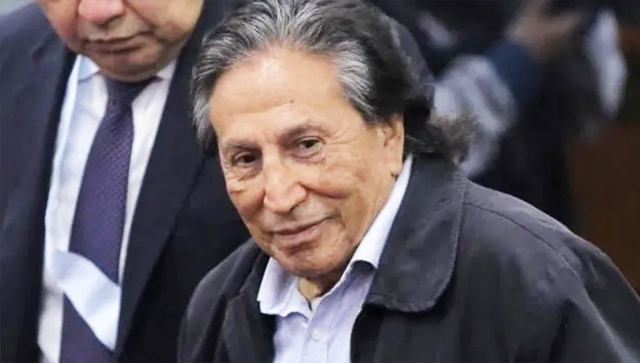
Former Peru President Alejandro Toledo

A court in Peru has sentenced former President Alejandro Toledo to 20 years and six months in jail for corruption and money-laundering.

Prosecutors say he took $35m (£27m) in bribes from a Brazilian construction company which was awarded a contract to build a road in southern Peru.

Toledo, 78, was in office between 2001 and 2006.

He was arrested five years ago in California, where he had lived and worked for many years, and extradited to Peru last year.

The Brazilian company Odebrecht admitted paying millions of dollars in bribes to officials across Latin America and the US to secure government contracts.

Judge Inés Rojas said Peruvians had “trusted” Toledo as their president, “in charge of managing public finances” and responsible for “protecting and ensuring the correct” use of resources.

Instead, she was quoted as saying by the Associated Press, he had “defrauded the state”.

Toledo has denied the allegations against him and on Monday frequently smirked and at times laughed, especially when the judge was speaking on Monday, the news agency notes.

In 2019, another former Peruvian president, Alan García, shot himself when police arrived at his home to arrest him over bribery allegations involving Odebrecht, which has since changed its name to Novonor.

Two other former Peruvian presidents, Pedro Pablo Kuczynski and Ollanta Humala, are also being investigated in the Odebrecht case.

Credit: bbc.com

The Ghanaian Chronicle