Home Blog Page 121

Angélique Kidjo, Ayra Starr Drop ‘Cross-Generational’ Single ‘Aye Kan’

0

Beninese music legend Angélique Kidjo has joined forces with Nigerian Afropop star Ayra Starr on a new single titled “Aye Kan (Are You Coming Back?)”, released on March 27, 2026.

The song is the lead track from Kidjo’s forthcoming 19th album HOPE!!, which is due for release on April 24, 2026.

On the record, both artistes bring their distinct styles together, combining Kidjo’s rich, traditional African sound with Ayra Starr’s modern Afrobeats and R&B influence.

The collaboration also points to a shared cultural background, as both singers have roots in the Benin Republic and Yoruba heritage, and highlights a growing wave of cross-generational partnerships shaping the direction of African music.

“When we link up It’s a vibe. On Feb 22nd, on the day of the Blizzard Of The Century, I joined forces with Queen @ayrastarr at the Power Station Recording studio in New York. But not even a storm could have prevented us from singing and dancing together! Aye Kan (Are You Coming Back?) was born!

“Thanks to @louddaaa for the production, to @johnnydrille for a powerful mix, to @apmworldmag for a beautiful and classy video and everyone from Ayra’s team from making this dream happen!!!” Kidjo wrote on her Instagram.

“Aye Kan” explores themes of love and longing, built around the recurring question, “Are you coming back or what?”.

The track moves between English, Pidgin and Yoruba, with Ayra Starr delivering expressive verses, while Kidjo’s vocals provide a strong, grounding chorus.

The single was produced by Louddaaa, with guitar by Femi Leye and saxophone by Bishop Sax, while mixing was handled by Johnny Drille.

An official music video directed by Apmworld has also been released, showing both artistes in a lively, colourful setting.

Kidjo had earlier hinted at the collaboration on social media, where she described Ayra Starr as “the queen” and shared her excitement about working together.

The release has already drawn positive reactions online, with many listeners praising the chemistry between the two artistes and the mix of old and new sounds.

Credit: channelstv.com

Black Sherif kicks off 2026 with new single ‘Pop Star’

0
Black Sherif

Ghanaian music powerhouse Black Sherif has officially released his first single of 2026 titled “Pop Star” via RBA/ Empire.

The single, produced by Joker Nharnah, arrives on the heels of the massive success of his sophomore album Iron Boy, which dominated streaming platforms, charts, and stages across continents.

With “Pop Star,” Black Sherif pushes into new sonic territory while maintaining the authenticity that has resonated with audiences across continents. The track reflects both the weight of rising stardom and the determination that continues to fuel his climb.

The release follows the remarkable run of his sophomore Iron Boy, an album widely celebrated for its raw lyricism, genre-blending production, and deeply personal narratives. The project not only strengthened Black Sherif’s position as one of Africa’s most compelling musical voices but also expanded his reach to a rapidly growing international audience.

The album charted at #6 on Spotify UK Top Albums, #10 on the Billboard World Albums, and #5 on the Nigerian Top 100 albums. The album set the record as the first Ghanaian album to receive 2 million streams on its first day.

Speaking on the new single, Black Sherif shared: “With PopStar, I seek to reclaim the artist and entertainer that I long sought to be before I moved to the city, which then compelled me to be what I had to be”.

Since breaking onto the global scene with Second Sermon featuring Burna Boy and his solo monster hit, Kwaku The Traveller, Black Sherif has built a reputation for music that resonates far beyond borders fusing elements of drill, highlife, hip-hop, and Afrobeats into a sound that is uniquely his own.

With “Pop Star,” he continues to push his artistry forward while staying grounded in the authenticity that defines his work.

Credit: myjoyonline.com

No Kings protesters across the US rally against Donald Trump

0
No Kings protesters

Large protests against the Trump administration have taken place in cities across the US, marking the third iteration of No Kings rallies that have previously drawn crowds into the millions.

Organisers say they are protesting against policies imposed by US President Donald Trump, including the war in Iran, federal immigration enforcement and the rising cost of living.

“Trump wants to rule over us as a tyrant. But this is America, and power belongs to the people – not to wannabe kings or their billionaire cronies,” organisers said.

A White House spokesperson called the protests “Trump Derangement Therapy Sessions” and said the only people who care “are the reporters who are paid to cover them”.

Throughout the day on Saturday, demonstrations took place in nearly every major US city, including New York, Washington DC, Los Angeles, Boston, Nashville and Houston. Crowds also gathered in smaller cities and towns across the country.

Rallies took over the streets of downtown Washington DC throughout the afternoon, with throngs of people marching through the nation’s capital. Protesters lined the steps of the the Lincoln Memorial and packed the National Mall.

Like in previous iterations of No Kings, protesters held up effigies of Trump, Vice President JD Vance and other officials in the administration, calling for their ousting and arrest.

Credit: bbc.com

Two Australian states offer free public transport as war pushes up fuel prices

0
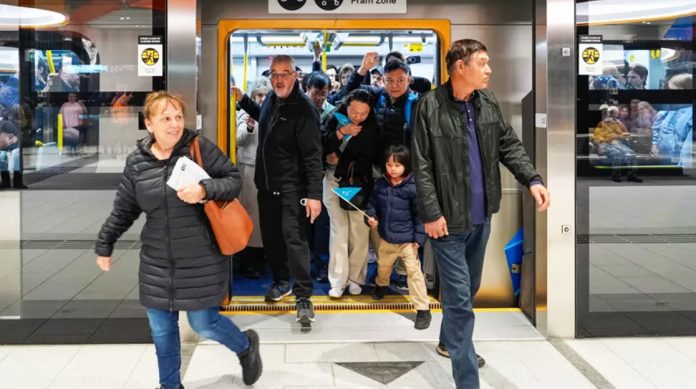
Trains in Melbourne are among services that will be made free

Public transport in two Australian states will be made free to incentivise people not to drive as fuel prices soar due to the war in the Middle East.

Victoria, home to Melbourne, has said it will have free travel throughout April, while Tasmania has said commuters will not need to pay from Monday until the end of June.

However, other state governments have so far declined to follow suit, with New South Wales (in which Sydney is located) indicating it was reserving funds to meet increased demand for public transport.

Australia is among a host of nations that have seen fuel prices increase sharply since the start of the US-Israel war with Iran and the effective closure of the Strait of Hormuz.

Follow updates on the Iran war

The near-total blockade of international shipping in the vital waterway – through which around 20% of the world’s oil and natural gas flows – has led governments around the world to begin implementing measures to conserve fuel.

Australia’s Prime Minister Anthony Albanese sought to reassure motorists on Friday following reports of panic-buying and petrol stations running dry.

Victoria Premier Jacinta Allan announced on Saturday that trains, trams and buses in the state would be free for all from Tuesday in a bid to drive down pressure on petrol pumps.

Meanwhile, the government of Tasmania – an island off the Australian mainland – announced people would be able to take its coaches, buses and ferries without charge for the coming few months.

Credit: bbc.com

Three arrested in Paris after attempted bomb attack outside Bank of America

0
Bank of America

Three people have been arrested in connection with a suspected foiled bomb attack on the Bank of America’s headquarters in Paris, France’s anti-terrorism prosecutor’s office said.

An initial suspect was detained at the scene after he placed a device containing five litres of liquid, believed to be fuel, and an ignition system close to the bank, a police source said, as reported by AFP.

On Sunday, French security services said two more people had been arrested in connection with the incident, which happened at about 03:30 local time (01:30 GMT) on Saturday in the city’s 8th arrondissement, a couple of streets from the Champs-Élysées.

France’s Interior Minister Laurent Nuñez said the attempted attack could be linked to the US-Israel war on Iran.

“In this type of conflict, you have a number of Iranian services that are likely to carry out actions such as these through proxies,” he said.

“There is a significant suspicion, but it is for the investigation to determine.”

The Iranian embassy in France has not commented on Nuñez’s remarks.

The initial suspect, who was detained at the scene, was accompanied by a second person, who appeared to be taking photos and videos with a mobile phone, but who fled when officers arrived, according to a police source, as reported by AFP.

“Two further individuals were taken into police custody last night as part of the investigation launched on March 28, 2026 into the offences committed against Bank of America,” the prosecutor’s office said on Sunday.

The custody of the first suspect, who is a minor, had been extended, it added.

Under French law, suspects in terrorism cases can be held for 96 hours. This period can be extended by a court.

Credit: bbc.com

Iran says its forces ‘waiting’ as US troops arrive in region

0
The USS Tripoli is an amphibious assault ship carrying around 3,500 marines and sailors

Iran’s parliament speaker has warned that his country’s forces were “waiting for American soldiers” as a further 3,500 US troops arrived in the Middle East.

Mohammad Bagher Ghalibaf said Iran would “rain fire” on any US troops attempting to enter Iranian territory.

US Central Command said on X that the newly-arrived sailors and marines were part of a unit led by the warship USS Tripoli, which also includes assault and transport assets.

Its arrival came as the Washington Post reported that the Pentagon was preparing for weeks of ground operations in Iran. US officials have not confirmed whether ground troops will be deployed.

In his message, reported by Iranian state media, Ghalibaf also said “the enemy signals negotiation in public, while in secret it plots a ground attack”.

Jeremy Bowen: Trump is waging war based on instinct and it isn’t working

Is Trump’s pause on attacking Iranian energy for diplomacy or an escalation?

There has been mixed messaging from US President Donald Trump about when the war could end. In recent days, he has said both that it was nearly over and that he was considering whether to take further action against Iran, including on energy.

Earlier this week, US media reported that his administration was preparing to ask Congress for $200bn (£150bn) in emergency funding for the ongoing Iranian military operation – suggesting he wanted it to continue.

Trump told reporters in the Oval Office last week that he was not sending ground troops to Iran, but added: “If I were, I certainly wouldn’t tell you”.


Secretary of State Marco Rubio, meanwhile, said on Friday that while the US could meet its war objectives without ground troops, Trump had “to be prepared for multiple contingencies”.

Credit: bbc.com

ECG to begin transformer upgrade in parts of Accra; outages expected

0
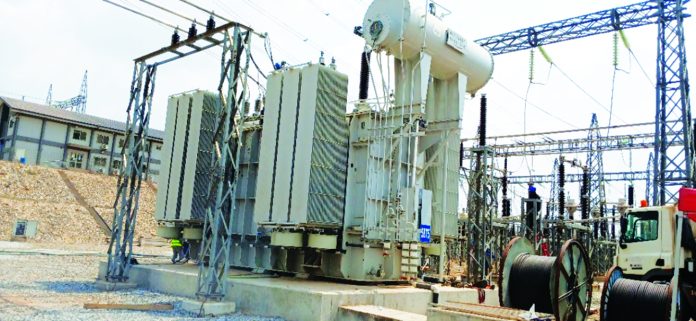
ECG transformers

The Electricity Company of Ghana (ECG) will commence a major transformer replacement and upgrade exercise in selected parts of Accra, next month, as part of efforts to improve power supply reliability and capacity.

The exercise, which has received approval from the Minister for Energy and Green Transition, Dr John Abdulai Jinapor, will involve the replacement and upgrading of 12 power transformers across six primary substations located in Adenta, La, Teshie-Nungua, Nmai-Dzor, Baatsonaa and Lashibi.

According to ECG, the transformers will be upgraded from 20/26 MVA to 30/39 MVA, a move expected to significantly boost load-handling capacity and reduce system overloads in rapidly growing communities.

The first phase of the programme is scheduled to take place from April 8 to April 10, 2026 starting with works at the Nmai-Dzor substation.

A second phase at the Lashibi substation will follow from April 15 to April 17, 2026.

ECG indicated that the upgrade works will require planned power outages in affected areas to ensure the safety of personnel and the successful execution of the project. The outages will be implemented in phases, with different groups of communities experiencing interruptions lasting up to six hours at scheduled intervals.

Areas expected to be affected during the Nmai-Dzor phase include parts of Nanakrom, School Junction, East Legon Hills, Borteyman, Lakeside communities, Katamanso, Amanfrom and surrounding areas. In the Lashibi phase, outages will impact communities around Sakumono, Spintex, Community 18 and 19, Baatsonaa and adjoining areas.

ECG said a detailed timetable outlining outage periods and affected locations will be published through its official communication channels to guide residents and businesses.

The company assured customers that every effort would be made to minimise disruptions, urging the public to take note of the schedules and make the necessary arrangements.

It described the upgrade programme as a critical step towards strengthening electricity infrastructure, improving system resilience and delivering a more stable and efficient power supply nationwide.


For more news, join The Chronicle Newspaper channel on WhatsApp: https://whatsapp.com/channel/0029VbBSs55E50UqNPvSOm2z


GIMPA must remain Ghana’s premier training ground for public sector leadership –Minister

0
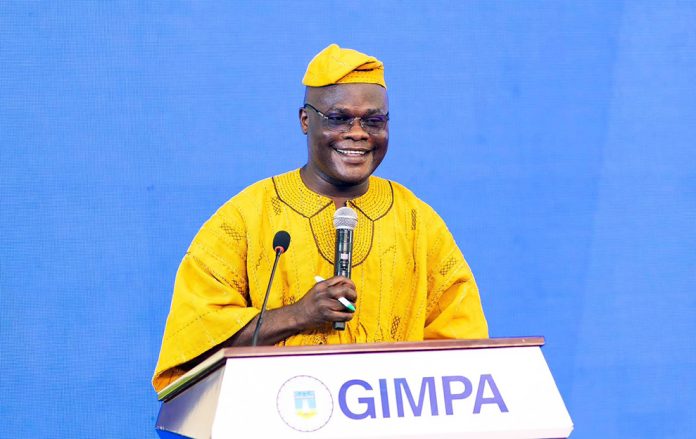
Minister for Local Government, Chieftaincy and Religious Affairs, Ahmed Ibrahim

The Ghana Institute of Management and Public Administration has officially launched its 65th anniversary celebrations with a strong call for the institution to refocus on its foundational mandate of grooming ethical, competent and transformational leaders for Ghana’s public service.

Delivering the keynote address at the colourful ceremony, the Minister for Local Government, Chieftaincy and Religious Affairs, Ahmed Ibrahim, emphasised that GIMPA’s growth over the years must not come at the expense of its core responsibility.

“GIMPA must remain, first and foremost, Ghana’s premier training ground for public sector leadership and administrative excellence,” he declared.

The Minister noted that while the institution has expanded academically and diversified its programmes, it must remain firmly anchored in its original purpose of strengthening governance through capacity building in the public sector.

Leadership gaps and national development

Mr Ibrahim expressed concern about what he described as a growing leadership deficit across various sectors in Ghana, stressing that the nation’s challenges go beyond funding constraints.

“The challenges confronting our country are not solely about resources or policy frameworks. They are also about leadership capacity, ethical discipline, institutional management and administrative competence,” he stated.

Dignitaries and guests seated at the launch

He pointed out that GIMPA’s unique model of training both public servants and politicians places it at the centre of efforts to address these challenges.

“GIMPA trains the politicians and the public servants at the same time. So GIMPA holds the key,” he said.

Drawing on his personal experience as an alumnus, the Minister described the institution as one that blends theory with practice, equipping students with real-world skills that directly impact governance and decision-making.

Rector highlights 65 years of impact

In a detailed welcome address, the Rector of GIMPA, Samuel Kwaku Bonsu, reflected on the institution’s rich history and enduring relevance in Ghana’s development journey.

He traced GIMPA’s origins to 1961, when it was established as the Institute of Public Administration through a partnership between the Government of Ghana and the United Nations, in line with the vision of Kwame Nkrumah to localise the country’s civil service.

According to him, the goal at the time was clear: to develop a new generation of Ghanaian leaders, thinkers and administrators capable of managing the affairs of the state with competence and integrity.

“Sixty-five years ago, the government of Ghana and the United Nations decided to set up a school of higher learning that would support the Ghanaian takeover of the public service,” he said.

Prof. Bonsu stressed that the anniversary is not merely a celebration of longevity, but a reflection of the profound impact the institution has had on individuals and the nation.

“The 65 years is not merely a number. It represents stories—stories written in the lives of the tens of thousands who have been touched directly by our dear GIMPA,” he noted.

He paid glowing tribute to the founders, faculty and successive leaders of the institution, acknowledging their sacrifices and vision in building GIMPA into what it is today.

“To the founders who had the vision for such an institution at a moment when our nation was still finding its feet… we say you were right,” he said.

He also recognised the pioneering faculty who worked under challenging conditions in the early years, noting that their dedication laid the foundation for the institute’s current success.

Beyond its academic achievements, Prof. Bonsu described GIMPA as a serene and inspiring environment that nurtures both intellectual and personal growth, referring to it as a place of “quiet beauty” that supports reflection and excellence.

He further highlighted the institution’s evolution over the decades—from a specialised training centre for civil servants to a globally recognised centre for higher learning in business, governance and public administration.

Sustaining excellence through innovation

Also speaking on behalf of the Chief of Staff, Presidential Advisor on the Economy, Seth Terkper, described GIMPA as a critical pillar in Ghana’s governance structure.

He noted that the institution has trained a significant number of public officials, including Members of Parliament and senior administrators, thereby shaping the country’s governance framework.

“Over six decades, GIMPA has quietly forged Ghana’s governance backbone,” he said.

Mr Terkper commended the institute’s efforts towards digital transformation, including the adoption of paperless systems, and encouraged it to deepen its role in supporting government reforms, particularly in areas such as public financial management and digital governance.

A celebration with purpose

The anniversary launch, held under the theme “A legacy of excellence, a future of digital transformation,” featured a series of activities including musical interludes, poetry performances, the unveiling of the anniversary logo, and goodwill messages from alumni and stakeholders.

The programme also highlighted GIMPA’s extensive network of alumni associations, staff bodies and student leadership, all of whom reaffirmed their commitment to the institute’s growth.

As the year-long celebration unfolds, culminating in a grand gala in June 2026, stakeholders say the focus will remain on strengthening GIMPA’s relevance in a rapidly changing world.


For more news, join The Chronicle Newspaper channel on WhatsApp: https://whatsapp.com/channel/0029VbBSs55E50UqNPvSOm2z

Late Night Cravings; What To Avoid And What To Eat

0

Catch yourself raiding the pantry or fridge at night, even if you’re not hungry? Eat too many snacks when you unwind after dinner and can’t seem to stop? Late-night cravings may lead to full-fledged binges that derail your health goals, leaving you feeling guilty, shameful, and frustrated.

While binge eating is not your fault, it is your challenge to deal with. Regular binges at night can be harmful to your physical and mental health. 

Best and Worst Late-Night Snacks

Leftover Pizza

It might look tempting, but anything that’s too greasy can cause heartburn, especially if you lie down soon after indulging. A snack that has fewer than 200 calories is a much safer bet.

Half a Turkey Sandwich

When you want something to fill you up, half a sandwich on whole wheat bread is a good pick. Your body digests whole grains more slowly so you’ll feel satisfied longer. And turkey has tryptophan, an amino acid that helps to make you sleepy. If you’re not into turkey, try peanut or almond butter on whole wheat toast. Nut butter has healthy fats that raise your levels of serotonin, a feel-good mood chemical that helps you relax.

Whole-Grain Crackers With Cheese

If you’re craving something cheesy, try a small amount with a few whole-grain crackers. Or go for a scoop of cottage cheese, which also has tryptophan.

Chips

The fat and salt are a bad combo, especially as bedtime nears. Plus, it’s easy to have too many, so what starts out as a small treat could turn into a binge that’s bad for your mood and your waistline.

Popcorn

As long as it’s not drenched in butter or super salty, popcorn’s a pretty good choice. It’s a whole grain and it has fiber, so it’ll be more satisfying than chips and tide you over for longer.

Cookies and Chocolate

Too much sugar will perk you up — at least for a bit — when you should be slowing down. Plus, a sugar high is often followed by a crash that can leave you feeling lousy.

A Low-Sugar Granola Bar

This can be a good stand-in for a cookie, as long as you check the nutrition label. Make sure your bar has some protein and fiber and not too much sugar. Or reach for half a banana and a handful of almonds — both good sources of magnesium, a mineral that can help you wind down. This fruit and nut combo has some tryptophan, too.

Ice Cream

Ben and Jerry might be calling your name, but try to resist. The fat and sugar can make it harder to snooze. And if you choose a flavor with chocolate, you’ll get caffeine you don’t want at a late hour.

Yogurt

When you want a creamy treat, protein-packed Greek yogurt is a better idea. Top it with some cherries or raspberries, which have melatonin, a hormone that helps lull you into dreamland.

Sugary Cereal

It’s loaded with empty carbs, so it won’t satisfy you for long. If you’re in the mood for cereal, swap your fruity, frosty, or coco flakes for a low-sugar, high-fiber variety.

Oatmeal

It’s not just for breakfast. The warmth can be soothing, and the fiber will help fill you up. Oatmeal also has melatonin, which promotes sleep.

Soda

You probably know to stay away from coffee in the wee hours, but watch out for tea and soda with caffeine as well. Try to cut off all caffeine at least 6 hours before bedtime. And carbonated drinks can be a problem even if they’re caffeine-free. The bubbles can make you feel bloated and trigger heartburn. A nightcap isn’t a good idea, either. While alcohol can make you feel sleepy, it can also make it harder to stay asleep.

Herbal tea

A cup of herbal (caffeine-free) tea can help you unwind before bed. Try chamomile, passionflower, or valerian. Peppermint can be a relaxing choice, too, as long as you don’t tend to get heartburn.

Avoid Mindless Munching

If you find yourself craving something while watching late-night TV, pause and ask yourself if you’re really hungry. Maybe you’re just bored, restless, or ready to turn in for the night? But if you are truly hungry, don’t ignore your body’s signals: It’s hard to fall asleep when your tummy’s rumbling or your blood sugar is low. Choosing the right nighttime snack may help you fall asleep faster and sleep more soundly.

Credit: webmd

Feature: No-Bed Syndrome Part (4):Hidden Bottlenecks of Discharge Delays and Financial Barriers

0
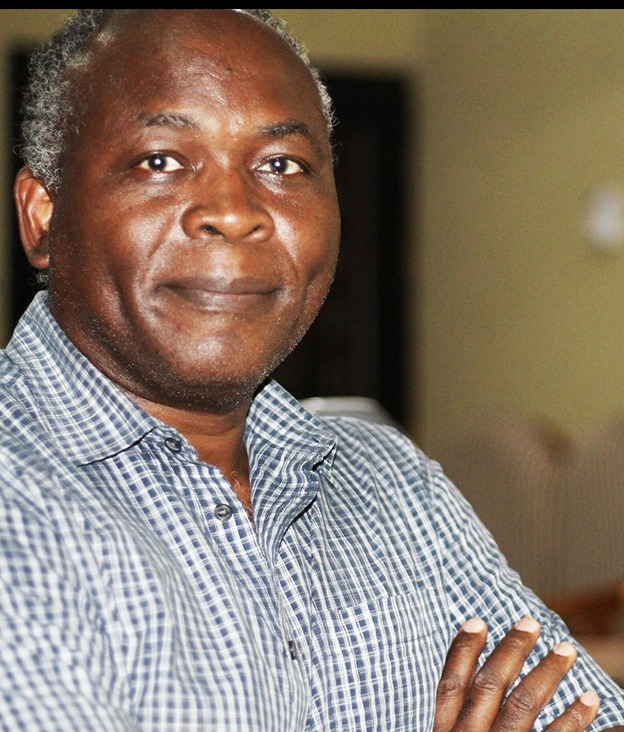
Dr. George Oduro, an Emergency Physician

In the first article in this series, we asked what we truly mean when we say “No-Bed Syndrome.” In the second, we examined why patients get stuck in the emergency department. In the third, we saw that admission does not always mean movement into a hospital ward bed.

Now we move further upstream on the patient’s journey.

As has been explained earlier, the real blockage is often not at the front door of the hospital. It is more frequently at the back door.

A hospital survives on movement. Patients arrive. They are assessed. They are treated. They are admitted. When stable, they are discharged. Beds are cleaned. New patients take their place. When that cycle moves smoothly, even a busy hospital can cope. When discharge slows, everything slows.

We often picture emergency department congestion as stretchers lining corridors and ambulances waiting outside. We speak of “No-Bed Syndrome” as though it begins and ends in the emergency department. But in many cases, the emergency department is not the origin of the crisis. It is the pressure gauge. It reflects what is happening elsewhere in the system.

A ward bed that should have been free on Monday remains occupied on Thursday. Not because the patient is deteriorating. In fact, the discharged patient may be found sitting up in the bed enjoying a hearty meal. The patient is waiting not because treatment must continue. But because discharge has stalled.

When the river is blocked downstream, the water rises upstream.

Discharge delay is not a single event. It operates at two distinct levels. Both can fail. Both affect emergency congestion.

The first level is internal discharge. This is movement from the emergency department to the hospital ward.

A patient arrives with severe pneumonia. Oxygen is started. Antibiotics are given. After stabilisation, the patient improves. The specialist team agrees on admission to a bed in the hospital ward. On paper, the patient has been accepted to a ward. Yet hours pass. The patient remains physically in emergency.

The ward may have a bed frame available. But the bed may lack piped oxygen. There may be no monitor available for a patient who still requires close observation. Staffing levels on the ward may not safely support a higher acuity case. The physical space exists, but the capability does not.

In that moment, the emergency department becomes a temporary high dependency unit. The patient is admitted in principle but cannot move in practice. Emergency space, designed for rapid assessment and turnover, becomes long stay care.

This is not a refusal. It is a capability mismatch.

When such mismatches occur repeatedly, admitted patients accumulate in the emergency department. New arrivals continue to come. Congestion deepens.

The second level is external discharge. This is movement from the ward to home or community.

A patient with heart failure stabilises after treatment. The doctor declares the patient fit for discharge. Yet departure does not occur. The patient requires home oxygen, but access is limited or unaffordable. Another patient has undergone surgery and needs crutches or a wheelchair to mobilise safely, but the family cannot secure one immediately. An elderly patient lives alone and has no structured home care support. Community physiotherapy is difficult to access. Transport arrangements are uncertain.

The hospital bed becomes a substitute for missing community infrastructure.

Both levels of delay share a common outcome. The beds in the hospital remain occupied. Admissions to the ward slow. Emergency congestion worsens.

One of the strongest drivers of external discharge delay is financial constraint.

A patient may be clinically ready to leave, yet the bill remains unsettled. In theory, insurance protects families from catastrophic expense. In practice, coverage gaps remain. Insurance cards may have expired. Some patients are not enrolled and do not have health insurance. Certain investigations or medications fall outside coverage. Drugs may be unavailable in the hospital pharmacy and must be purchased privately.

Uncertainty about cost creates hesitation. Families may delay discharge while seeking clarity or funds. Tension builds at the point when departure should be smooth.

Hospitals also experience financial strain. When reimbursement cycles are prolonged, health facilities too struggle with cash flow. Suppliers demand payment. Consumables run low. Equipment servicing is postponed. Administrators must ensure institutional survival.

In that environment, insisting on financial clearance before discharge can appear protective. Yet system wide, the consequences are significant. A blocked bed in a tertiary hospital prevents admission of patients who require specialised care. It increases boarding in the emergency department. It prolongs waiting times for critically ill patients. It raises risk.

Financial design shapes clinical movement. Resource scarcity compounds delay at both of the levels described.

Internal discharge from emergency department to the ward may stall because oxygen ports are not functioning at certain ward beds. Monitoring equipment may be insufficient. Infusion pumps may be limited. There is no space at the High Dependency ward. There is no bed in the Intensive Care Unit. Staffing shortages may reduce ward capacity to absorb higher acuity patients safely.

When wards cannot safely receive patients, emergency departments hold them longer. The emergency unit becomes a buffer for structural limitations elsewhere in the hospital.

External discharge depends on resources beyond hospital walls. Wheelchairs and mobility aids often require out of pocket purchase. Community physiotherapy services are unevenly distributed. Structured home nursing support remains limited and is not available in many areas.

In the absence of these supports, families request more time. Clinicians hesitate to discharge into unsafe environments. The hospital bed remains occupied.

Each individual delay may seem reasonable. An extra day to organise equipment. A day to await payment confirmation. Another day to arrange transport. But multiplied across dozens of patients, those days convert into lost bed capacity.

The cost of this immobility is not inconvenience. Unfortunately, it has clinical consequence.

Emergency medicine teaches that time matters. Early antibiotics improve survival in sepsis. Rapid intervention reduces disability in stroke. Timely surgery improves trauma outcomes. When beds remain occupied by patients medically fit for discharge, critically ill patients wait longer for definitive care.

In this way, the chain of survival stretches thin.

There is also a cultural element. Keeping a patient for one more day may feel cautious. Observation provides reassurance. Yet prolonged hospital stay carries its own risks. Hospital acquired infections become more likely. Elderly patients lose strength. Financial strain deepens for families.

A timely discharge is not careless discharge. It is appropriate care when planned early and supported adequately.

Discharge planning must therefore begin during admission, not at its end. Hotel operators understand this principle; at the time of entry, they will ask when is your leaving date. For health care, expected timelines can be discussed from the first days. Potential financial and social obstacles can be identified early. Equipment needs can be anticipated. Documentation can be prepared in advance rather than rushed at the final moment.

For these reasons, communication is decisive. Families who understand insurance coverage from the outset are less likely to face last minute shock. Transparent discussion reduces suspicion. Predictability builds trust.

Policy design matters as well. When reimbursement cycles are reliable and timely, hospitals feel less financial strain. When hospitals feel financially secure, discharge is less likely to become entangled with unsettled accounts. Institutional stability supports patient flow.

This is not about assigning blame. It is about recognising how system design shapes patient flow and movement through the health institution.

When discharge slows at either level, ward beds remain occupied. When ward beds remain occupied, admitted emergency patients cannot move. When admitted patients cannot move, new arrivals accumulate in the emergency department. What appears to be an emergency department crisis is often a hospital discharge crisis.

The human faces behind these delays are familiar. A father sleeps on a plastic chair because transport home cannot yet be arranged. A widow waits for a relative travelling from another region before she can leave. A labourer worries about lost wages while occupying a surgical bed he no longer medically needs. A patient remains in the emergency department because the ward bed lacks oxygen supply.

Thus discharge is not a clerical formality. It is a structural hinge in the health system. If the hinge is stiff, the door does not swing.

If we focus only on expanding emergency department space without addressing discharge flow, we risk enlarging waiting rooms rather than solving the bottleneck. Widening the entrance while neglecting the exit does not improve circulation.

The hidden bottleneck demands attention to both levels of exit. How often does emergency to ward transfer stall because of capability gaps? How often does ward to home discharge stall because of financial or social barriers? How long do patients remain in beds after being declared fit for discharge? Are these intervals measured? Are these measurements visible to key hospital stakeholders? Are they discussed?

What is not counted remains invisible. What remains invisible persists.

If discharge processes improve at both levels, beds open. When beds open, admitted patients move. When admitted patients move, emergency department congestion falls; and overcrowding is less likely. When congestion falls, treatment begins earlier. When treatment begins earlier, outcomes improve.

The back door of the hospital may not attract headlines. Yet it determines whether the front door can function.

The hidden bottleneck will not clear itself. But once we recognise that discharge operates at two levels, and that financial and resource design shape both, movement becomes possible again.

And when movement returns, the system breathes. But to restore movement, we must first make delay visible, measure it clearly, and count what truly matters. That is the focus of the next article in this series.

By Dr. George Oduro, FRCS, FRCEM (UK), FGCS
Consultant in Emergency Medicine


For more news, join The Chronicle Newspaper channel on WhatsApp: https://whatsapp.com/channel/0029VbBSs55E50UqNPvSOm2z



The Ghanaian Chronicle