Home Blog Page 122

Vision FC, Holy Stars play out goalless draw in Tema

0
Vision FC vs Holy Stars

Vision FC and Holy Stars played out a goalless draw in their Ghana Premier League Matchday 27 encounter at the Nana Adjei Kraku II Stadium in Tema.

In a tightly contested fixture, both sides struggled to break the deadlock despite creating a handful of chances.

Vision FC, playing at home, showed flashes of attacking intent but were unable to convert, while Holy Stars remained disciplined at the back to secure a valuable point on the road.

The result leaves Holy Stars in 8th position on the league table with 37 points, just one point ahead of Vision FC, who sit 9th with 36 points after 27 matches.

Looking ahead, Vision FC will face a stern test in their next outing against Hearts of Lions, as they aim to return to winning ways.

Holy Stars, meanwhile, will turn their attention to a clash against Karela United as they seek to maintain their position in the top half of the table.

Credit: myjoyonline.com

Dreams secure a convincing victory over Hohoe United

0
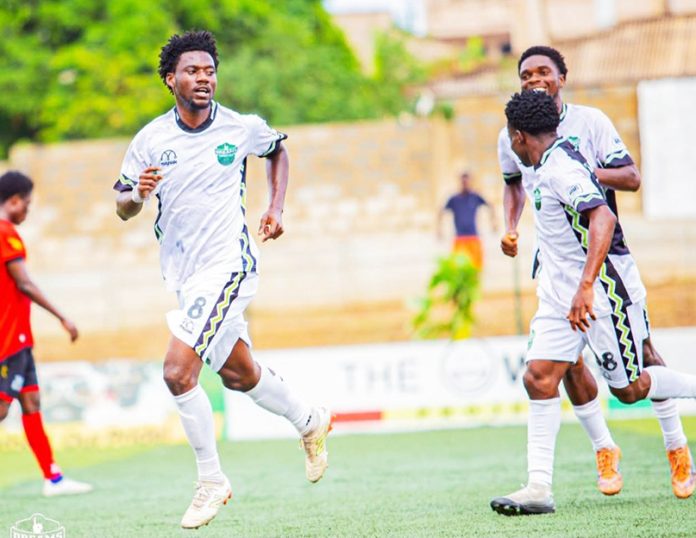
Dreams FC players jubilating

Dreams FC delivered a commanding performance to secure a convincing 3-0 victory over Hohoe United in their Ghana Premier League clash on Sunday at the Nii Adjei Kraku II Sports Complex in Tema Newtown.

The visitors wasted little time in asserting their dominance, taking the lead in the 17th minute through Aminu Adams.

The forward capitalised on a defensive lapse from Hohoe, calmly slotting home to hand Dreams an early advantage and set the tone for the afternoon.

Hohoe struggled to respond effectively, and their defensive frailties were exposed again before the break.

In the 40th minute, Suraj Seidu doubled Dreams’ lead with a well-taken effort, finishing off a swift attacking move to put the “Still Believe” side firmly in control heading into halftime.

Despite attempts by Hohoe to mount a comeback after the restart, Dreams remained organised and disciplined at the back, limiting the hosts to very few clear-cut chances.

Their composure paid off as they sealed the victory in the 80th minute when Abdul Razak Salifu added a third goal, putting the result beyond doubt with a clinical finish.

The emphatic win extends Dreams’ impressive unbeaten run and further boosts their position in the league standings, increasing their cushion above the relegation zone.

For Hohoe, the defeat is a significant setback in their survival bid as they remain stuck in the relegation zone with mounting pressure in the closing stages of the season.

Credit: ghanasoccernet.com

GPL Scores @ A Glance

0
Ball

Aduana 0-0 Kotoko

Hearts 2-2 All Blacks

Hohoe United 0-3 Dreams

Karela 2-0 Goldstars

Young Apostles 3-0 Heart of Lions

Vision FC 0-0 Holy Stars

Medeama 2-0 Eleven Wonders

Nations 1-1 Chelsea

Samartex 1-2 Bechem United

Hearts return to Accra Stadium with a 2-2 draw against All Blacks

0
Frank Duku

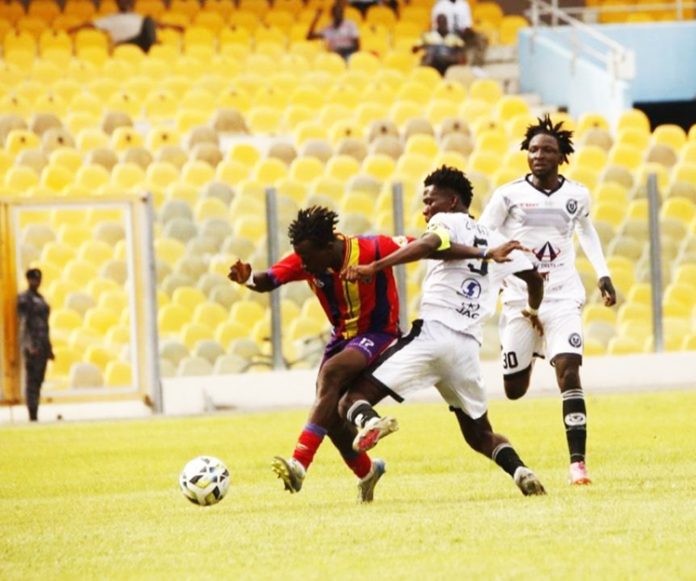
Hearts of Oak marked their return to the Accra Sports Stadium on Sunday afternoon with a 2-2 draw against Swedru All Blacks after coming from two goals down.

All Blacks made a strong start and took control in the first half through goals from Rudolf Mensah and William Danquah, giving the visitors a 2-0 lead at the break.

Hearts, who were without captain and goalkeeper Benjamin Asare due to international duty, struggled early on. His replacement Solomon Agbasi slipped in the build-up to the second goal.

The Phobians responded after the restart. Mawuli Wayo pulled one back before Frank Duku levelled with a simple finish following a poor back pass.

All Blacks had a big chance to restore their advantage at 2-1, but Mohammed Alhassan produced a crucial block to deny them a third goal after Wayo had reduced the deficit.

Hearts pushed for a winner late on, but Wayo was denied by a fine save from All Blacks goalkeeper Derrick Kofi.

The result extends Hearts’ winless run to five matches, leaving them fourth on the table and six points off the top. All Blacks will be disappointed they could not turn their chances into victory after letting a two-goal lead slip.

Credit: ghanasoccernet.com


Aduana and Kotoko share spoils in goalless game

0
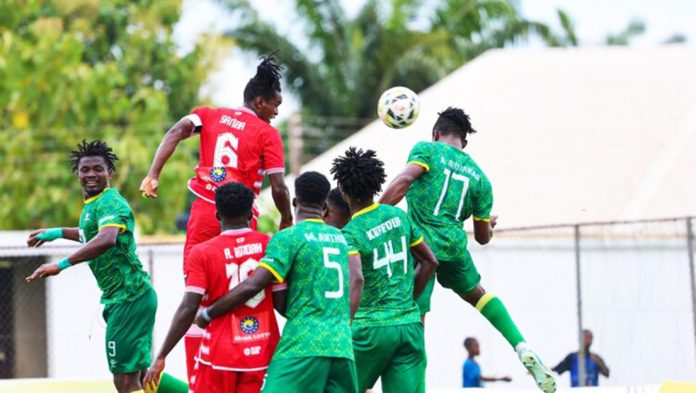
Aduana and Asante Kotoko players fight for the ball

Aduana FC and Asante Kotoko played out a goalless draw in Week 17 of the Ghana Premier League, as both sides missed the chance to gain ground in the title race at the Nana Agyemang Badu Park.

In a contest that carried weight in the race for the top positions, neither side was able to find a breakthrough despite moments of promise at both ends.

Kotoko, who came into the game on the back of a commanding 3-0 win over Nations FC, looked the more adventurous side.

They nearly found the opener in the 22nd minute when Patrick Asiedu spotted goalkeeper Osei Prince off his line and attempted an audacious long-range effort.

However, his effort narrowly missed the target.

The hosts responded ten minutes later with their own opportunity.

Dari Aziz was called into action and produced a fine save to deny Aduana, ensuring the match remained level heading into the break.

With both teams locked at 0-0 at half-time, the second half followed a similar pattern, but lacking cutting edge in the final third.

Despite their attacking intent, neither side managed to create clear chances to break the deadlock.

The result means Kotoko remain third on the league table with 43 points, while Aduana sit just behind in fifth place on 42 points.

Kotoko will return home to face Samartex at the Baba Yara Stadium in their next encounter, while Aduana travel to Golden City Park for a clash against Berekum Chelsea.

Credit: myjoyonline.com

Haruna Iddrisu’s “boy” undergoes fourth surgery successfully at KATH

0
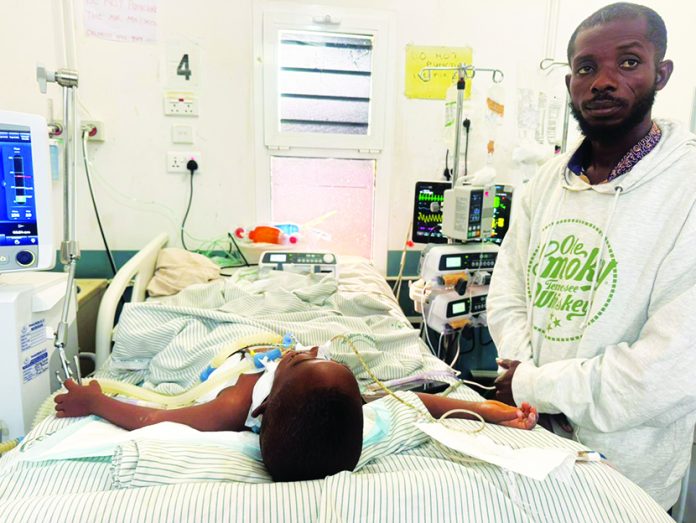
A doctor monitoring little Hanan after the surgery

Six-year-old boy, Hanan Abdullah, has successfully undergone his fourth major surgery at the Komfo Anokye Teaching Hospital (KATH) in Kumasi.

Hanan’s ordeal began at the age of two, when he accidentally drank a toxic substance while playing at home, causing a severe throat blockage and thus impaired his ability to eat normally, necessitating a long-term feeding through a tube connected to his stomach.

Medical Specialists at KATH previously performed three critical surgeries to manage his condition before the fourth surgery last Wednesday, which culminated in the four-year medical journey of the little boy.

Over the past four years, Hanan remained under close medical supervision at the facility as doctors prepared him for the final corrective surgery, which has now been successfully completed.

The cost of all four surgeries, amounting to approximately $27,000 (about GH¢209,000) was fully funded by the Member of Parliament for Tamale South and Minister for Education, Haruna Iddrisu.

With the successful completion of the final surgery, doctors are hopeful that Hanan will soon be able to eat normally again, ending years of dependence on tube feeding.

A representative of the MP, Hajia Rafia Nagumsi, on Wednesday, March 25, 2026

facilitated the final settlement of the medical expenses for the final surgery.

Hanan Abdullah is currently receiving care at the Pediatric Intensive Care Unit (PICU) of KATH, as he begins his recovery.

Family members have expressed deep gratitude to the Minister of Education, Haruna Iddrisu, for his sustained financial and moral support throughout the boy’s treatment.

They appealed to the public for prayers to ensure Hanan’s full recovery and asked for God’s blessings for Haruna Iddrisu, for his enduring kindness and commitment to the vulnerable in our community.

CUTS Calls for State Funding of Viable CSOs

0
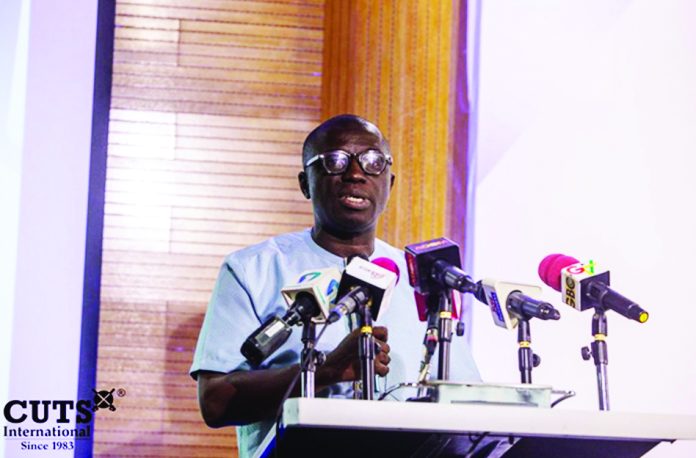
Mr Appiah Kusi Adomako, Esq, Director, West Africa Regional Centre of CUTS

A leading research and public policy think tank, CUTS International Accra, is calling on the government to consider urgent public funding support for civil society organizations in Ghana, warning that the country risks weakening its governance and policy systems if the current funding crisis is not addressed.

This was contained in a statement issued by Mr. Appiah Kusi Adomako, Esq., the Director of the West Africa Regional Centre of CUTS International Accra.

“For more than six decades, civil society organizations in Ghana have been largely sustained by foreign donors,” he stated.

“The result is a funding squeeze that now threatens the very survival of independent CSOs and, by extension, the quality of our public discourse and policy-making process.”

He explained that as Ghana’s democratic institutions have matured, many traditional donors have shifted their focus to countries facing instability and governance challenges. As a result, funding for advocacy and governance work in Ghana has steadily declined, leaving many organisations struggling to operate.

Mr. Adomako stressed that civil society remains central to Ghana’s socio-economic development. He described CSOs as “the fifth estate of our republic,” noting that their work has shaped major reforms across the country. “Through rigorous research, evidence-based advocacy, and sustained public engagement, CSOs have helped shape landmark legislation,” he said, referencing key laws such as the Right to Information Act, the Public Financial Management Act, Public Holidays and Commemorative Days (Amendment) Act 2025 and Road Traffic Amendment Act 2025.

He noted that without a strong and independent civil society, critical voices on education, healthcare, consumer and environmental protection, and public finance would weaken. This would reduce accountability and limit the quality of policy decisions.

The funding decline, he warned, creates broader risks beyond institutional survival. “When independent CSOs cannot access reliable domestic funding, some cease to exist, others chase narrow political or foreign agendas, and a vacuum emerges that can be filled by lobby groups or foreign intelligence interests,” he said. “He who pays the piper calls the tune.”

Mr. Adomako emphasised that Ghana must take ownership of its research and advocacy agenda. He argued that continued dependence on external funding allows foreign priorities to shape domestic issues, often sidelining areas critical to Ghanaian livelihoods such as consumer protection, healthcare access, and education reform.

He proposed a clear and practical pathway for reform. Government, he said, can fund civil society without undermining its independence by using established, transparent mechanisms. “The STAR Ghana Foundation provides a ready-made, proven model,” he explained. “Selection must be transparent, competitive, and based on pre-determined criteria, with full compliance with public financial management and procurement laws.”

He recommended that government allocate at least GHC 10 million annually through such an independent mechanism to support high-quality research and advocacy in priority sectors, including education, healthcare, road safety, governance, climate resilience, and consumer protection. He added that strict safeguards, including public disclosure of grants and annual audits by the Auditor-General, would ensure accountability and protect against political interference.

Mr. Adomako also called on the private sector to play a more active role in supporting civil society. He observed that corporate Ghana has shown limited interest in funding CSO work. “We should revise our tax laws to introduce incentives that allow companies and individuals to deduct donations to accredited CSOs from taxable income,” he said, pointing to international examples where such policies have strengthened civic engagement.

He warned that failure to act will have long-term consequences for governance and development. “If we continue to outsource the funding of our research and advocacy agenda to external actors, matters central to Ghanaian livelihoods will never remain donor priorities,” he stressed.

As the President prepares to engage civil society leaders at the Jubilee House, Mr. Adomako urged decisive commitment. “We have come too far in building our democratic institutions to allow civil society organizations to wither for lack of local ownership,” he said. “A clear commitment to sustainable domestic funding would constitute genuine strategic nation-building.”

CUTS is a leading research and public policy organisation dedicated to consumer protection, fostering efficient and competitive markets, road safety, international trade, economic policy, education, and healthcare.

Education must be anchored in Ghanaian identity – Kissi Agyebeng

0
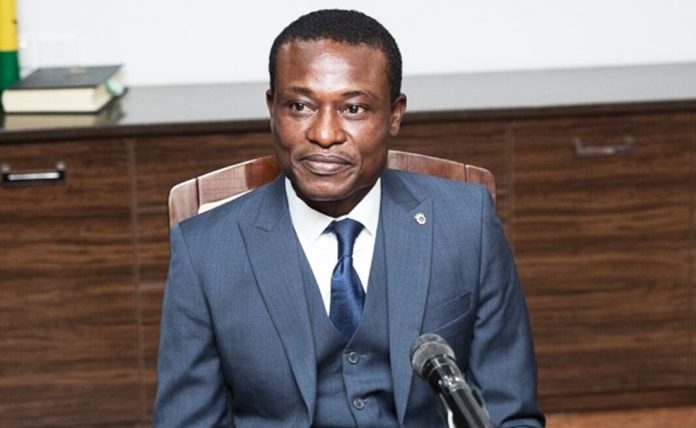
Kissi Agyebeng, Special Prosecutor

The Special Prosecutor, Kissi Agyebeng, has called for a fundamental reset of Ghana’s education system, urging policymakers to root learning firmly in the country’s heritage to drive innovation, leadership, and sustainable development.

Speaking as the guest speaker at the 95th Anniversary and Speech and Prize-Giving Day of Accra Academy, his alma mater, Mr Agyebeng stressed that education remains the most powerful tool for shaping a confident and self-reliant society.

Addressing the theme, “Education as the Catalyst for Preserving Heritage, Driving Innovation, and Empowering Future Leadership,” he warned that Ghana’s continued dependence on inherited colonial education models has created a growing disconnect between knowledge and national identity.

According to him, the country’s formal education system was originally designed to serve colonial administrative interests rather than indigenous development, a legacy he said has been compounded by external religious influences. This, he noted, has led to the marginalisation of local languages, distortion of indigenous names, and a gradual erosion of cultural identity.

“Our languages became unspeakable taboos; our culture and traditions were labelled barbarous,” he stated.

Mr Agyebeng pointed to the continued use of altered indigenous names—such as Ashanti instead of Asante, Kumasi instead of Kumase, Kyebi rendered as Kibi, and Oguaa replaced with Cape Coast—as evidence of a deeper identity crisis.

He cautioned that Ghana now finds itself in an “in-between” state, neither fully grounded in its own heritage nor completely aligned with external systems it seeks to emulate.

The Special Prosecutor argued that this identity gap has serious consequences for innovation and leadership, as societies disconnected from their roots often struggle to think independently and act with purpose.

To address this, he proposed a deliberate restructuring of the education system around three key pillars: preservation of heritage, promotion of innovation, and cultivation of leadership.

“Our educational system must securely preserve our heritage for any meaningful impact. The preservation of heritage drives innovation, which in turn empowers future leadership,” he emphasised.

Mr Agyebeng further called for a shift beyond examination-driven learning, advocating an education that develops the “heart, head, and hand”—instilling values, sharpening critical thinking, and equipping students with practical skills.

While acknowledging the importance of global knowledge, he stressed that Ghana must engage with the world from a position of confidence rooted in its identity.

“At all costs, we should enhance our circumstances with enlightened innovation and knowledge wherever it may come from. However, we should not lose ourselves and our identities in the process,” he added.

He concluded with a call for national reflection, urging stakeholders to confront the shortcomings of the current system and pursue reforms that align education with Ghana’s history and future aspirations.

In his view, the goal of education must go beyond academic success to nurturing a generation capable of defining its own path, innovating with purpose, and leading with clarity.

Pregnant Woman, Two Others Arrested Over Keri Shooting Incident

0

The Ghana Police Service has taken into custody a seven-month-old pregnant woman and two others in connection with a shooting incident at Keri in the Nkwanta Municipality of the Oti Region.

The suspects — Bomie Dennis, 22; Charity Salisa, 25, who is seven months pregnant; and Kakotse Victoria, 22 — were arrested by a military team from the 66 Artillery Regiment in Ho and subsequently handed over to the police for further investigations.

According to police sources, the victims in the incident have been identified as Gasalege Kumi Salisa, 82, and his son, Amoah Gasalege Amoah, 42, both of Challa extraction.

Police reports indicate that on March 18, 2026, at about 2:30 p.m., officers received information that two persons had sustained gunshot wounds at Keri and had been rushed to the Nkwanta Municipal Hospital for treatment.

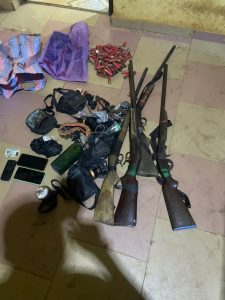
Arms and ammunition reportedly retrieved from the suspects in police custody.

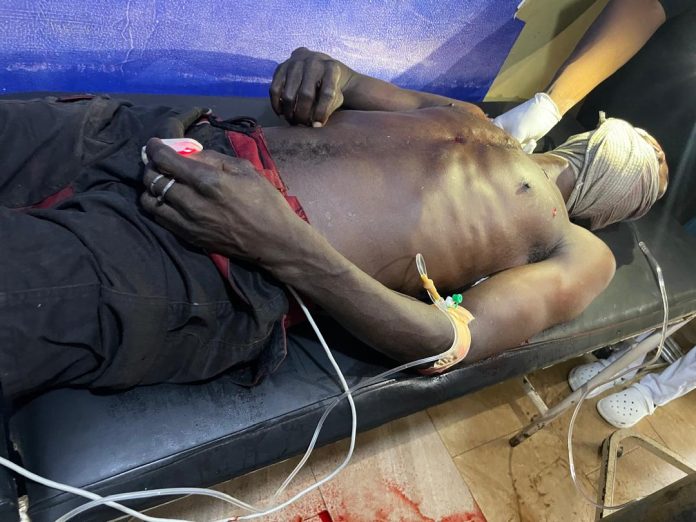
A police team proceeded to the facility and found the victims at the Emergency Ward with suspected pellet wounds to the head, chest, shoulders, and hands. Medical staff confirmed that both victims were responding to treatment.

Preliminary investigations revealed that at about 2:00 p.m. on the same day, the victims and their relatives were at their residence when unknown gunmen, believed to be of Akyode origin, opened fire on them, causing the injuries.

Further intelligence gathered around 3:45 p.m. suggested that some of the suspects had fled into nearby bushes.

A military team deployed a drone which detected individuals hiding in the area. The team pursued the suspects, leading to the arrest of three persons, while three others managed to escape.

Later that evening, at about 8:15 p.m., the suspects were officially handed over to the police by a military team led by Captain Nana Banyin Appiah Kubi of the 66 Artillery Regiment.

A search conducted at suspected hideouts led to the retrieval of several items, including four locally manufactured single-barrel guns, 63 AAA cartridges, 33 BB cartridges, one Royal Duck cartridge, a cartridge rack, two Samsung smartphones, an Itel keypad phone, three hanging bags, a schnapps bottle, two ECOWAS ID cards bearing the names Afreh Justice and Ntanso Kwabena, as well as a talisman, spanners, and other assorted tools.

The suspects are currently in police custody assisting with investigations, while the retrieved items have been retained as exhibits.

Police say efforts are underway to track down the remaining suspects who are currently on the run.


For more news, join The Chronicle Newspaper channel on WhatsApp: https://whatsapp.com/channel/0029VbBSs55E50UqNPvSOm2z

Cost of Data Hampering Internet Inclusivity in Ghana-Bawumia

0
Former Vice President, Dr. Mahamudu Bawumia

Despite Ghana recording one of Africa’s highest internet penetration rates, the cost of mobile data continues to shut out the country’s poorest citizens from meaningful digital participation — a barrier that former Vice President Dr. Mahamudu Bawumia warned on Saturday could determine whether artificial intelligence lifts Africa or leaves it further behind.

Addressing the LSE Africa Summit 2026 at the London School of Economics in London, Dr. Bawumia used hard data to ground what is often an abstract continental conversation about AI, arguing that the technology’s promise in Africa will rise or fall on the strength of its most basic foundations — connectivity, electricity, and reliable digital infrastructure.

“Before we debate algorithms, we must be disciplined about the foundations that enable adoption at scale: networks, power, and trustworthy data systems,” he told an audience of policymakers, scholars, and innovators.

Ghana’s Numbers Tell Two Stories

On the surface, Ghana’s internet figures are among the most encouraging on the continent. World Bank data cited by Dr. Bawumia puts Ghana’s internet connectivity at 70 percent as of 2023 — well ahead of Rwanda’s 34 percent and trailing only slightly behind South Africa’s 76 percent.

But the former Vice President cautioned against reading that headline figure as a measure of genuine inclusion.

The standard definition of an “internet user,” he noted, covers anyone who accessed the internet within the last three months, from any location or device. That threshold, he argued, is far too low for meaningful policy.

“The critical question is not only ‘who is online,’ but ‘who is online meaningfully’ — with affordable data, adequate speeds, and reliable service,” he said.By that sharper measure, Ghana’s story becomes considerably more complicated.

A Gigabyte That Costs Too Much

According to data from Ghana’s National Communications Authority covering 2024 to 2025, the average price of 1GB of mobile data in the country ranges from approximately 5 cents to 1.5 dollars — equivalent to GH₵6 to GH₵17 — depending on the network provider and the bundle selected.

For middle- and high-income Ghanaians, that cost is manageable. For the millions of low-income households that make up the base of the country’s largely informal economy, it is prohibitive.

Analysts note that income disparities and the dominance of the informal sector mean that for a significant portion of the population, regular mobile data usage remains a luxury rather than a utility. The result is a digital divide that does not show up in the headline connectivity statistics but is deeply felt on the ground.

Continent-wide, the picture is similarly troubling. In 2025, the entry-level cost of 1GB of mobile broadband across Africa averaged approximately 3.5 percent above the UN’s own affordability benchmark — meaning that even by a conservative international standard, African consumers are overpaying for basic connectivity.

Foundations Before Applications

For Dr. Bawumia, the data on affordability and access is not a footnote to the AI conversation — it is the conversation. Africa’s internet connectivity stands at just 43 percent overall, he noted, lagging behind both global and developed market averages. Beyond cost, the barriers include limited digital literacy and restricted access to reasonably priced devices. Each of these gaps, left unaddressed, transforms AI from a tool of inclusion into yet another mechanism through which existing inequalities deepen.

“Technological revolutions reward those who build foundations — institutions, infrastructure, skills, and rules — before they chase the latest applications,” Dr. Bawumia said. “This is how nations have always converted innovation into prosperity. Africa’s task is to do the same boldly, but methodically.”

Sovereignty or Dependency
The stakes Dr. Bawumia attached to these infrastructure gaps extend well beyond download speeds. In his framing, the choice Africa faces with artificial intelligence is fundamentally a question of sovereignty.

“If we treat AI as a set of imported tools, we will remain price-takers in the Knowledge Economy,” he warned. “But if we treat AI as a national and continental capability stack, we can become co-authors of the rules, the markets, and the benefits.”

That ambition, he made clear, cannot be realised while millions of Ghanaians — and hundreds of millions of Africans — remain priced out of the internet entirely.“The question of AI in Africa is not a niche technology topic,” he said. “It is a question about sovereignty, inclusion, and opportunity.”

Until data costs fall within reach of the informal worker, the market trader, and the rural smallholder, that opportunity will remain unevenly distributed — and Africa’s AI ambitions, however bold, will be built on an incomplete foundation.

Dr. Mahamudu Bawumia served as Vice President of Ghana from 2017 to 2025. He delivered this address at the LSE Africa Summit 2026 in London on Saturday, March 28th, 2026.


For more news, join The Chronicle Newspaper channel on WhatsApp: https://whatsapp.com/channel/0029VbBSs55E50UqNPvSOm2z

The Ghanaian Chronicle