Home Blog Page 1200

Economic turnaround driving companies back to Ghana –Amin Adam

0
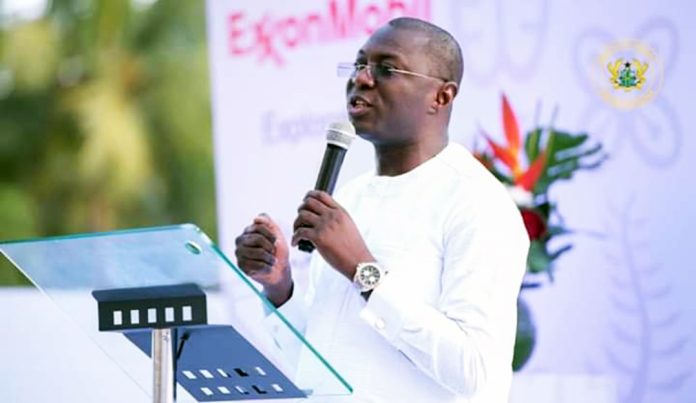
Dr. Mohammed Amin Adam Anta, Minister for Finance

Dr Mohammed Amin Adam, Finance Minister, says foreign companies are returning to Ghana due to the country’s economic rebound.

He said just as it was heard when some foreign companies exited the country due to the economic hardship, many have now started returning, owing to the positive growth in the first half of 2024.

He was speaking at the second Quarterly Economic Roundtable discussion held in Accra, on Monday, October 7, 2024 on the theme: “Driving economic growth through Small and Medium-sized Enterprises (SMEs).”

It was jointly organised by the Ministry of Finance and the University of Ghana.

“We were told that some companies left Ghana when the economy went down and it is important to note that companies are returning to Ghana because they see that the growth trajectory is positive,” Dr Amin Adam said.

“The latest is Virgin Atlantic (an airline company which left the country in 2013) which said only yesterday (October 6, 2024) that they’ve returned to Ghana to operate as an airline because they see economic recovery,” he noted.

The Finance Minister indicated that there were some other companies that were also returning to the country, but yet to be heard of.

“Let’s get ready for them to build strong partnerships and use that capital, expertise and technology that they’re bringing in, so that we can leverage them to support the growth of the economy,” Dr Amin Adam told Ghanaian businesses.

Referencing figures from the Ghana Statistical Service (GSS), he stated that the economic growth for 2024 was exceeding every expectation, prompting major analysts and keen observers to revise their projections upwards.

The Minister noted that the country’s half year Gross Domestic Product (GDP) growth of 5.8 per cent for 2024 was the highest in the last five years, which was a testament that the economy was ‘back on track.’

“It is fascinating to note that the growth of 4.8 per cent in quarter one and 6.9 per cent in quarter two was driven largely by industry and agricultural sectors, for quarter two, all three sectors, including services driven growth,” he said.

“What this means is that we are back on track. It also means that our policies to support the private sector are having significant impact. Economic actors in these sectors are receiving needed support,” the Finance Minister said.

He encouraged all Ghanaians to be guided by unity of purpose on SMEs to consolidate the strides made in fiscal consolidation, debt restructuring and economic reforms.

Pledging the government’s sustained support to SMEs, he said “you are not alone or lonely. You are priority of the Ghanaian society and this government. We will not fail you.”

Mr Kyle Kelhofer, Senior Country Manager, International Finance Corporation (IFC) noted that the current macro-economic landscape in Ghana requires resilient, flexible and innovative structures.

He called for a concerted effort from all stakeholders, including financial institutions, academia, government and the private sector, to drive sustainable economic growth through SMEs.

Professor Nana Aba Appiah Amfo, Vice- Chancellor, University of Ghana, encouraged all stakeholders to ensure that the ideas and recommendations from the discussions were translated into actions that would improve development outcomes and the wellbeing of Ghanaians.

She reiterated that SMEs remain the backbone of the Ghanaian economy, as they provided jobs and contributed significantly to GDP.

She recommended that policy interventions were directed at solving the cumbersome regulatory processes, limited access to finance, complex tax systems and high utility tariffs, which often hampered growth of SMEs.

By Francis Ntow

GNA
Fight against illegal mining needs collective efforts of stakeholders -Sanitation Minister

0
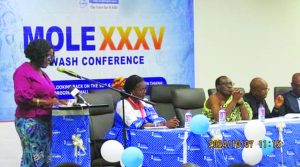
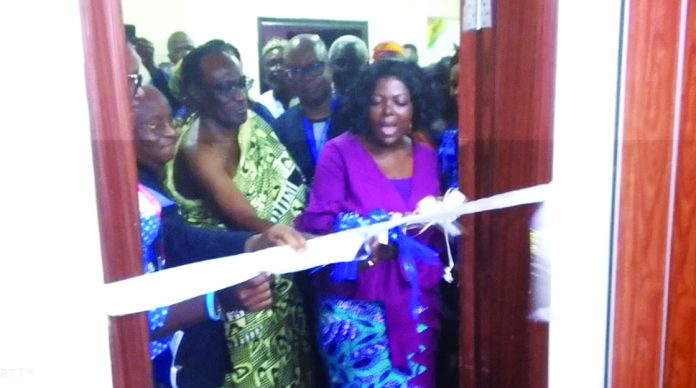
Madam Seyram Alhassan with Togbe Trepre Hodo IV officially opening the occasion

Madam Lydia Seyram Alhassan, Minister for Sanitation and Water Resources has called on Ghanaians to recognise the alarming rate of illegal mining (galamsey) in our water bodies and Forest Reserves as a National disaster.

According to her, if we do not come together in unity to develop a holistic solution to the problem staring us in the face, posterity would not be kind to us.

The Minister made the call in her keynote address during the opening ceremony of MOLE 35 Conference in Ho, in the Volta region yesterday.

Madam Seyram Alhassan, Minister for Sanitation and Water Resources delivering her keynote address

The conference was organised by the Coalition of NGOs in Water and Sanitation (CONIWAS) under the theme: “Looking Back on SDG 6 Implementation in Ghana: Progress, Challenges and Ways Forward.”

The four main thematic subjects are institutional alignments and policies, approaches, strategies and methods towards attainment of Sustainable Development Goal 6 (SDG6) in Ghana.

Among the institutions and organisations participating in the five-day MOLE35 Conference are the GAMA/GKMA Sanitation and Water Project, IRC Ghana, World Vision Ghana and the Media Coalition Against Open Defecation (M-CODe).

Madam Seyram stressed that the fight was not a blame game, but a period whereall stakeholders from all facets of society,  and from government, opposition, political parties, Civil Society Organisations (CSOs), Traditional Authorities and Religious groups among others, to come together to develop a solution devoid of politics to address the national problem.

She reiterated that posterity would not be kind to us if we fail to take a unified approach to save our water bodies and Forest Reserves and would not differentiate on the basis of what political party one belongs to.

The Minister noted that posterity would rather only remember us as a generation of people who act out of greed and that in our unkind urges to pursue our parochial interest failed to plan a common ground to address the existential threat.

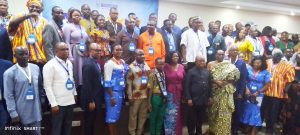
The participants in a group picture after the opening ceremony

She disclosed that the opportunity is now to chart a common course and come together to act for our own collective good and observed that we are into this together and not about politics, stressing that the fight against mining in our water bodies and forest reserves must be sustained.

The opening ceremony was chaired by TogbeTepre Hodo IV, Paramount Chief of Anfoega and the President of the Volta Regional House of Chiefs, with Dr. Archibald YaoLetsa, Volta Regional Minister and Development Partners in attendance.

Other participants included the Child Diplomat-Master Abdul Yazid Faraj TimtoniWumbei, WASH Experts and Practitioners, the Council of Elders of CONIWAS, CONIWAS members and Fellow Civil Society Representatives.

Responsible mining will not be banned –Duker

0
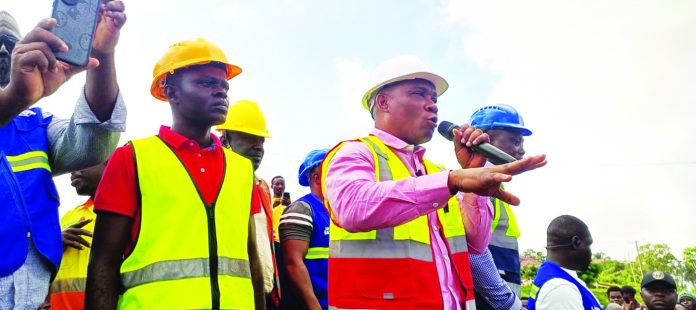
Minister George Mireku Duker (middle) addressing community mining workers at Tarkwa Akoon

The Deputy Minister for Lands and Natural Resources (MLNR), George Mireku Duker, says there is no justification for government to ban small scale/community mining, when both are done in a responsible manner.

According to him, unlike illegal mining, which is destroying water bodies and the environment, the community and small scale mining do not destroy the environment

To him, therefore, calls for total ban on mining, including those who are doing the right thing,   cannot be justified.

The Deputy Minister, who is also the Member of Parliament (MP) for Tarkwa Nsuaem constituency, reiterated that government would not ban responsible mining.

There is currently pressure on government by groups such as the Trade Union Congress (TUC), Civil Society Organisations among others,for the former to declare state of emergency by way of banning small scale and community mining.

This is as a result of the destruction being done to our water bodies and forests through mining. TUC has scheduled October 10, 2024 to declare strike, following government’s indecision to ban small scale/community mining, per the deadline given government.

But speaking to hundreds of workers of Tarkwa Community mining at Akoon on Monday, the Legislator stressed that the call for total ban on mining, whether small scale or community mining, would not be countenanced by the government.

He argued that those calling for the total ban have failed to distinguish between illegal mining and regulated mining.

Illegal mining, popularly known as “Galamsey”,Mr Duker argued, had already been banned in accordance with the mining regulations.

“Galamsey is already illegal, so what is in the call for the ban. If you say ban, then it means you are banning responsible mining. So, why call on government to ban responsible mining in the country?”

Mr Duker assured the group that government would not sit down for anybody or groups to undermine its efforts to build and promote the mining economy within the mining enclaves in Ghana, arguing that the extractive industry should not be the preserve of foreigners and the capital markets.

He highlighted the case that Ghanaians and indigenous investors also deserved to exploit the minerals for their benefits.

Banning community mining, Deputy Minister for MLNR pointed out that it would affect the local economy, cripple incomes and livelihoods and ultimately threaten the stability and security of families in theTarkwa mining enclave.

He, however, urged the group to support government in the promotion of community mining concept and also endeavor to desist from mining in river bodies, as well as polluting and destroying the environment.

He also asked them to pray for Dr Mahamudu Bawumia’s campaign aimed at promoting and sustaining the mining industry in Ghana.

Meanwhile, management and workers of Tarkwa Community Mining have called on the government to resist the wholesale attempt to ban mining operations, including community mining companies.

According to them, their operations do not affect the environment and that calls for the ban would even affect the local economy and livelihoods.

The Group raised these concerns during a tour organised by the ‘Miners for Bawumia’ (M4B) at the Tarkwa Community Mining site at Tarkwa.

The Public Relations Manager at Tarkwa Community Mining, Kwadwo Sarfo, maintained that the community mining is done underground, stressing “we don’t pollute river bodies or destroy the environment.”

He added, “We have our safety policy which says -think safety, think about your life”.

Kibi Police investigate mysterious death of a man found in a gutter in Asiakwa

0
The decomposed body

The Eastern South Regional Police Command in Kibi has commenced investigation into the circumstance that led to the death of a man found in a decomposed state in a gutter, near ADB Bank branch, at Akyem Asiakwa, in the Abuakwa South municipality.

The unidentified man, who is believed to be in his 40s, was discovered dead in a gutter behind the ADB Bank.

The body of the man, who was neatly dressed – wearing shirt and shorts with shoes, and has since been sent to the Kibi Government Mortuary for further investigation.

Nana Owiredu Wadie constructs KG block for Asikasu community school

0
Nana Owiredu Wadie I ,the Nkosuohene of Kwahu Nkwatia (in all white) inspecting the facility

Asikasu, a farming community in New Juaben North municipality of the Eastern Region has benefited from the generosity of Nana Owiredu Wadie I, the Nkosuohene of Kwahu Nkwatia.

The area and its neighboring farming communities cannot boast of any standard Kindergarten (KG) classroom blocks for early learners, a situation that has demotivated many children of school going age to stay at home.

The community in its quest to keep these children in school, improvised a structure, but it was not enough to motivate the children to go to school because they (children) have to cover a long distance to access education in other communities.

The Nkosuohene of Kwahu Nkwatia, therefore, decided to rescue these children through the construction of a modern KG Block funded by his non-profit making organisation, Kabaka Foundation.

The facility, which was completed within six months, has been handed over to the Ghana Education Service, as part of activities marking the birthday of the respected Nkosuohene of Kwahu Nkwatia.

The fully furnished KG block has two classrooms for KG 1 and KG 2, TV room, washroom and office.

The New Juaben North Municipal Education Director, Helina Amegatse, described the facility as one of its kind in the region and was optimistic that it would improve upon learning in the school.

Nana Owiredu Wadie I emphasised the importance of early childhood education in shaping future leaders, adding that, “quality facilities and educational resources significantly impact children’s learning and development.”

He continued that, “this new kindergarten block represents a significant step towards the improvement of education in the area.

On his part, Henry Larbi, Executive Director of Kabaka Foundation said the intervention underscored Kabaka foundation’s commitment to help in achieving the United Nations sustainable development Goals on education.

“The idea is to help achieve UN sustainable development Goal four. That’s achieving quality education”.

Headmistress of Asikasu Presby Basic School, Clementina Ahenkwa Mensah, was elated about the project, stating that it would create access and provide quality early childhood education for seven communities in the area.

The communities heaped praises on Nana Owiredu Wadie I, for the intervention, which they believe will have long term impact on development of the community and the country at large.

‘As I Grow’ goes to the aid of schools in Suhum municipality

0
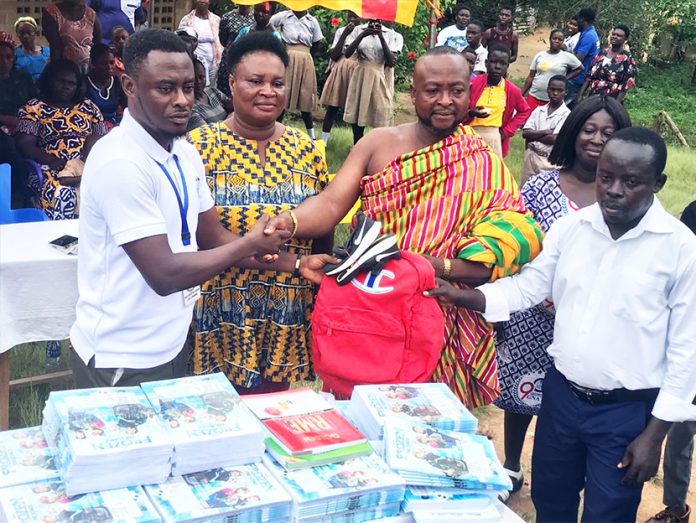
Chief Executive Officer (CEO) of As I Grow Mr. Isaac Debrah Bekoe (in white polo shirt) presenting the books to Boafo Kwaku Okanta III, the chief of Okanta whilst others looked-on.jpeg

An Akuapem-Larteh based Non-Profit Organisation, ‘As I Grow’, has donated school items to three (3) schools – Okanta Presby Basic school, Okanta Sraa Methodist Primary School and Prapra Baabida Municipal Assembly (MA) Basic school.

The items are 1000 exercise books, school uniforms, footwears and textbooks to the school children and their schools.

Speaking with The Chronicle, the Chief Executive Officer (CEO) of As I Grow, Mr Isaac Debrah Bekoe said he was touched by the plight of the children and, therefore, decided to help them.

According to him, poor infrastructure, lack of technology, textbooks and other learning materials often result in lower grades and test scores.

He continued that when students do not feel supported by their learning environment, they are more likely to disengage and drop out, leading to cycles of poverty and limited future opportunities.

Mr. Bekoe noted that underfunded schools often serve marginalised communities and thus exacerbating existing inequalities, which could limit access to quality education for disadvantaged groups.

To him, poor working conditions could lead to low morale and high turnover rates among teachers, which could affect the quality of education and ability of school children to compete in sports, arts and other extra-curricular activities, which are vital for holistic development.

The children expressing their joy

This, among others, he disclosed, motivated him to support the children and their schools to reduce feelings of shame, low self-esteem and social stigma because of the wearing of tattered clothes to school.

The CEO of the Akuapem-Larteh Non-Governmental Organisation broke down in tears when he spotted one of the children at Okanta Sraa Methodist Primary School, who was wearing a tattered cloth to school.

The young boy who should have probably stayed at home because of his situation, told the As I Grow team that he felt more comfortable coming to school in that state, than to stay at home.

In response, the CEO gave him a new uniform, books and school bag, and promised to get him a pair of shoes.

A teacher who spoke with this paper, on a condition of anonymity, expressed happiness for the mental condition of these young children, regardless of their situation.

According to the teacher, the children are not perturbed about their current conditions and that they are always focused when it comes to classroom work.

Boafo Kwaku Okanta III, the chief of Okanta, on his part, thanked management of the NGO for the kind gesture and further appealed for at least two computers for Okanta Presby Basic School.

According to the chief, insufficient facilities such as classrooms, libraries and laboratories have contributed to students’ ability to learn effectively, overcrowding and a lack of resources, citing some of the challenges of their Junior High School and the Kindergarten.

He described the state of the Junior High School as a death trap, with flying roofing sheets, visible cracks in the building, poor environment which needs immediate renovation or new structure.

Prapra Baabida Municipal Assembly (MA) Basic school

The Okanta chief continued that teachers of the school have to use the canopy created by some huge trees as a makeshift staff common room, a situation that exposes the teachers to the mercy of the weather.

Monkeypox Treatment in Ghana and Africa: Can Tecovirimat Be the Answer?

0
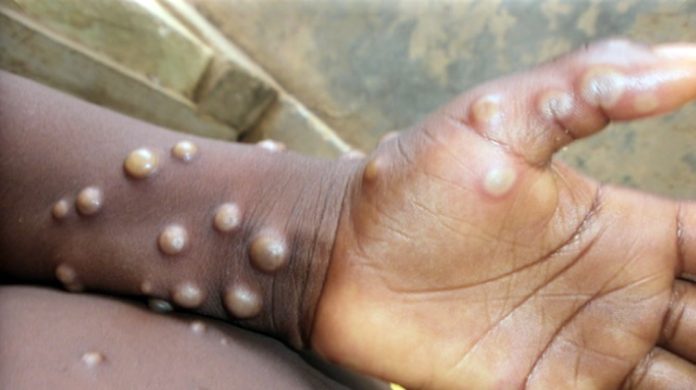
Monkeypox

Monkeypox (Mpox) has been a persistent health concern across West, Central, and East Africa for decades, with the first human case reported in 1970. Two distinct types of Mpox virus have been identified: Clade I and Clade II. Clade I, endemic to Central Africa, is associated with severe illness, while Clade II, primarily found in West Africa, generally causes milder symptoms. The global Mpox outbreak in 2022 was caused by a subtype Clade IIb. Vulnerable populations, including individuals with compromised immune systems, children, and pregnant women, are at a high risk of developing severe Mpox.

The alarming spread of Clade Ib in the Democratic Republic of the Congo (DRC) and other African nations prompted the World Health Organization (WHO) to declare a public health emergency of international concern on August 14, 2024. As of August 9, 2024, data from the Africa Centres for Disease Control and Prevention (CDC) reveals that 13 African countries have reported a total of 17,541 Mpox cases and 517 deaths this year, with the DRC alone accounting for 16,789 cases and 511 deaths. Currently, the Clade Ib variant is spreading across Africa and is considered more lethal than Clade II.

In response to these developments, the Ghana Health Service (GHS) activated its emergency response plan shortly after the WHO issued its alert. This proactive measure aligns with global efforts to combat the spread of Mpox. On October 3, 2024, GHS confirmed a case of Mpox in the Bia West District of the Western North Region involving a 15-year-old boy who presented with symptoms including fever, body aches, sore throat, and rashes on his palms and face. In a public health advisory, GHS reported that 230 suspected Mpox cases have been identified across 88 districts nationwide.

Given these recent developments and the absence of specific antiviral treatments for this aggressive viral infection in Ghana, the GHS emergency response plan aimed at preventing further spread of Mpox.

Tecovirimat, an antiviral drug, was first identified by high-throughput phenotypic screening against vaccinia virus and later found to exhibit broad-spectrum antiviral activity against other orthopoxviruses (OPV), including smallpox, cowpox, monkeypox, ectromelia, and camelpox viruses with EC50 values in the submicromolar range.

Tecovirimat has been approved by the European Medicine Agency (EMA), U.S. Food and Drug Administration (FDA), and Health Canada for the treatment of various OPV infections, and for Mpox under an expanded access investigational new drug protocol managedby the U.S. Centers for Disease Control and Prevention. It works by blocking the release of virus particles from infected cells, inhibiting the protein p37 present in orthopoxviruses, which significantly reduces virulence.

Following animal studies demonstrating its efficacy, Tecovirimat underwent safety evaluations in randomized controlled trials, showing positive results with mild, placebo-like side effects such as headache and abdominal pain from oral use, and infusion site reactions from intravenous use. Emerging evidence indicates that the drug is effective against Mpox, particularly the Clade II variant.

A UK study reported that a patient treated with Tecovirimat had a shorter disease duration, reported no adverse effects, and was discharged faster than six untreated patients. The drug is authorized for emergency use in severe Mpox cases, even for immunocompromised individuals.

Tecovirimat is currently supplied primarily to the United States, selected European countries, and economically stable nations by SIGA Technologies. Its limited availability is due to high production costs and challenges in its synthetic manufacturing process, as outlined in U.S. patent 2008/0004452. This process faces issues such as diastereoselectivity (endo vs. exo), low yields, and difficulties in sourcing the essential starting material cycloheptatriene. Many middle-to-low-income countries in Africa lack the infrastructure to support advanced biopharmaceutical laboratories required for further developing a cost-effective method, limiting access to this life-saving treatment for vulnerable populations.

To address these challenges, Vigonvita Life Sciences and Shanghai Institute of Materia Medica, Chinese Academy of Sciences in Chinahave developed a sustainable and cost-effective synthesis method for Tecovirimat(published in Organic Process Research & Development journal: doi.org/10.1021/acs.oprd.3c00151).

The innovative four-step process optimizes reactive distillation conditions to safely produce cycloheptatriene, the starting material for Tecovirimat, balancing safety, yield maximization, and sustainability. This development aims to make the drug more accessible to middle and low-income countries.

This process has been successfully used to produce the drug substance with yields four times greater than those achieved by the original inventor’s method. Notably, three 60 kg batches have been produced for clinical investigations, and the DMF for the API have been submitted to NMPA (National Medical Products Administration, China) and FDA respectively.

Researchers at Vigonvita Life Sciences in China have made Tecovirimat capsules available in generic form for clinical investigations, recognizing the diverse clinical manifestations of Mpox across different populations. This accessibility is crucial for middle and low-income countries in Africa, supporting ongoing clinical trials like the STOMP trial.

Such initiatives will enhance Ghana’s response to current outbreaks by improving surveillance, increasing laboratory testing, acquiring and distributing oral doses, and negotiating additional supplies. These efforts are vital for establishing a standard of care to reduce Mpox mortality.

By Dr Emmanuel Mintah Bonku

(The writer is Researcher in the field of Medicinal Chemistry & Drug Development)

Email:emmanuel.bonku@mails.ucas.ac.cn

The views expressed in this article are the author’s own and do not necessarily reflect The Chronicle’s stance.

Editorial: Police Must Probe Deeper Into The Use Of Their Stickers By RSMSL Truck

0
Ghana Police

Over the weekend, news broke of a truck with registration number ER 765–17, having a police sticker involved in an accident. This vehicle was allegedly transporting illegal mining equipment to Nkonsa, in the Ashanti region.

In the video circulating on social media, which the police statement addressed, voices were heard saying the vehicle had brought the mining equipment into the community, but the residents resisted that they would not condone illegal mining, also called galamsey.

It was alleged in the video by a faceless male that a police vehicle had been used for galamsey.

However, a statement from the police dated Saturday, October 5, 2024 debunked the allegation that its vehicle was aiding galamsey activities.

In a time where misinformation can spread rapidly, the police acted promptly to prevent further confusion, as that allegation could have easily tarnished the image of the service.

The police’s statement also disclosed that preliminary investigation showed that the vehicle belongs to the Road Safety Management Service Limited (RSMSL).

While this timely clarification by the police is welcome, it raises other pressing concerns. We need to know the source of that sticker, whether or not it is an official sticker from the Ghana Police or a fake one being sold around. It is also necessary to unveil the motivation behind such a sticker on the said vehicle.

Against this background, there is an urgent need for a full investigation into the matter, especially considering the serious implications of criminal activities possibly linked to the vehicle.

The involvement of the RSMSL, a company whose role is to enhance road safety, adds another layer of concern. Their vehicle, allegedly involved in criminal activity of misrepresentation, raises serious questions about the company’s oversight and operational integrity.

RSMSL improves road safety and reduces accidents across the country. Their services typically include providing towing and recovery services, offering technical support in road incident management, and supporting enforcement of road safety regulations.

These, in our view, are vital functions in a country where road accidents claim many lives every year. Given their mandate, RSMSL’s silence on the matter is troubling. Their alleged involvement, as the police statement attributed the ownership of the vehicle to them, must not be swept under the carpet.

For us, both the police and the company must be interested in getting to the bottom of the matter. On the part of the police, they have the onerous duty to clear their name by fishing out who caused their sticker to be placed on a vehicle that does not belong to them and ensure sanctions are meted out to the culprit.

The incident is synonymous with some vehicle owners placing stickers of the Office of the President on their vehicles. Those are fake stickers, according to Jubilee House. The Office of the President said it does not have any stickers for vehicles.

What that means is that such vehicles could be used to commit crimes and the institution whose sticker was used will suffer the embarrassment through no fault of theirs.

In the case of RSMSL, they need to break their silence and address the issue, particularly why a police sticker is embossed on their vehicle, though it does not belong to the police.

Also, they need to clarify the allegation of aiding galamsey operations by transporting the equipment to engage in galamsey. This happened at a time of public uproar against the activities of galamsey. The company cannot continue to be silent.

We urge the RSMSL to issue a statement addressing these concerns and to cooperate fully with the investigation by the police to restore public confidence in their operations.

If it is proven after a thorough probe that the vehicle was indeed transporting galamsey equipment to a site for illegal mining, it will only shed light on the broader and more troubling issue of galamsey.

Again, if it is proven that the residents, being convinced that the equipment had come to the community to engage in galamsey, prevented its movement, leading to the accident, it speaks of the desire of the citizens to put an end to the devastating effect of galamsey. Their compatriots were also demonstrating in Accra against galamsey at the time they also blocked the vehicle at Nkonsa.

While we commend the Ghana Police Service for their quick clarification, it is crucial that the investigation into this incident is thorough and transparent.

The involvement of RSMSL, as the statement of the police indicated, must be scrutinised and if the vehicle truly belongs to the company, then they owe the public an explanation about having the sticker of the police on their vehicle.

GEPA records over 11% growth in Non-Traditional Exports

0
CEO of GEPA, Dr. Afua Asabea Asare

The Ghana Export Promotion Authority (GEPA) has reported an impressive 11.75% growth in Non-Traditional Exports (NTEs) for the period from January to December 2023.

At a Minister’s Press Briefing in Accra, the Chief Executive Officer (CEO), Dr. Afua Asabea Asare I, announced that NTEs generated $3.944 billion, up from $3.531 billion in 2022.

Dr. Asare highlighted that the growth was primarily driven by products like iron and steel circles, rods and billets, which alone contributed $447.8 million.

Other strong performers included cocoa paste ($340.6 million), cashew nuts ($263.5 million) and cocoa butter ($241.3 million).

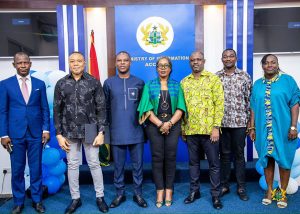
Dignitaries present at the press briefing in a group photo

She noted that agri-business, manufactured goods, arts and crafts and services are the main contributors to NTEs, with agribusiness making up 12.56% of the total.

A significant factor in this growth is Ghana’s alignment with the African Continental Free Trade Area (AfCFTA), which accounted for $1.78 billion in NTE earnings in 2023.

“AfCFTA offers a tremendous opportunity for Ghana’s export sector and we are actively positioning local businesses to take advantage of this continental market,” Dr. Asare stated.

Additionally, GEPA is committed to empowering women in the export industry through its SheTrades Ghana Hub, aimed at helping women-led businesses access international markets.

In the agricultural sector, Dr. Asare emphasised efforts to expand Ghana’s export supply base.

She highlighted the Coconut Revitalisation Programme which has distributed one million disease-resistant coconut seedlings over 15,625 acres, with plans for an additional 500,000 seedlings by 2025.

This initiative is expected to create 350,000 jobs in the coconut value chain.

Dr. Afua Asabea Asare I also announced the significant strides her outfit is to foster youth involvement in the country’s export sector through its “Youth in Export” programme.

Dr. Asare said that the initiative is designed to empower the next generation of exporters and create sustainable employment opportunities for young Ghanaians, while providing them with hands-on experience and mentorship in various industries.

“The Youth in Export programme is a game-changer for our country. By investing in our youth, we are not only empowering them with the skills and knowledge needed to succeed but also ensuring that Ghana’s export sector remains competitive on the global stage”, She said.

She explained that the programme offers a six-month intensive mentorship led by seasoned exporters. So far, two cohorts of young participants have successfully graduated from the programme.

“The first cohort, which focused on agribusiness, saw 20 young entrepreneurs launching their first exports, while the second cohort is expected to create more than 500 direct employment opportunities”, the CEO emphasised.

Dr. Asare mentioned that the upcoming third cohort will include participants from all regions of the country and across all sectors and it is expected to generate over 4,000 jobs for young Ghanaians.

These efforts, she added, are part of a broader plan to transform the youth into key players in the export industry.

She added that the Youth in Export initiative also aligns with the African Continental Free Trade Area (AfCFTA) agreement, which provides new markets and opportunities for Ghanaian businesses to expand their reach across the continent.

“As Ghana positions itself as a key player in regional trade, GEPA’s focus on youth engagement is expected to be a vital pillar in achieving sustainable export growth”, the CEO stated.

Govt expresses shock over Organised Labour intended strike

0
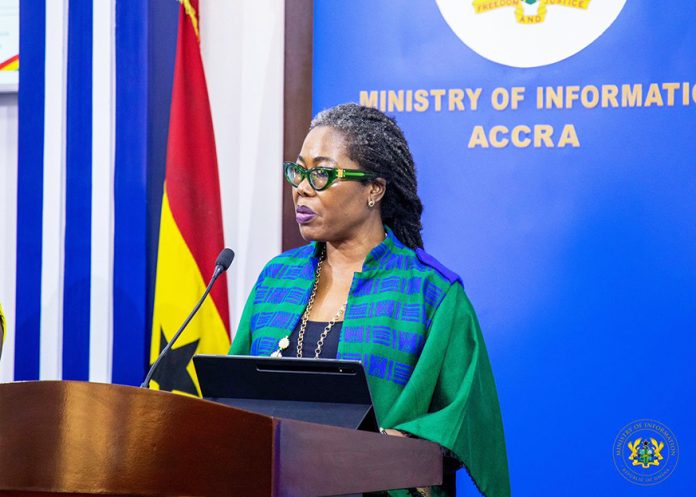
Minister for Information, Fatimatu Abubakar

The government says it is surprised at the decision by Organised Labour to proceed with an industrial action despite its engagements.

In a statement issued on Monday, October 7, 2024, and signed by the Minister for Information, Fatimatu Abubakar, the government indicated that it is concerned about the issues of illegal mining.

“The government is surprised by the decision of Organised Labour to proceed with industrial action, given the steps that have been taken to address the concerns raised,” a statement read.

This follows a meeting between President Nana Addo Dankwa Akufo-Addo and Organised Labour on October 3, 2024, where both parties discussed the long-standing issue of illegal small-scale mining, commonly known as ‘galamsey.’

The meeting, held at Jubilee House, resulted in several key agreements aimed at addressing the environmental damage caused by illegal mining activities.

Among the measures discussed, the government pledged to collaborate with stakeholders, including Organised Labour, to combat illegal mining.

Additionally, the statement indicated that the government is committed to revoking the Environmental Protection (Mining in Forest Reserves) Regulations, 2023 (L.I. 2462) when Parliament reconvenes this month.

According to the Ministry, water bodies and forest reserves remain red zones for mining, and all forms of mining in water bodies, as well as reconnaissance, prospecting, exploration, and/or small-scale mining in forest reserves, remain banned.

She has also noted that the two parties agreed that the Attorney-General will collaborate with the Chief Justice to ensure swift adjudication of illegal mining cases.

“Government supports the call for all presidential candidates to sign a pact committing to the fight against illegal mining so as to depoliticise this national problem,”  the statement added.

The Ghanaian Chronicle