Home Blog Page 1061

What Happens to Your Body When You Relax

0

What Is the Relaxation Response?

It’s one name for what happens when your parasympathetic nervous system is in charge of your body functions. This part of your nervous system regulates the work of your organs and glands while you’re at rest. Your relaxation response kicks in when you feel safe. It can actually block effects from your body’s response to stress. These changes are good for your mental and physical health.

Your Heart Rate Slows

Stress triggers activity in your sympathetic nervous system, which is in charge of your body functions in dangerous situations. This “fight or flight” response sends out hormones called catecholamines to speed up your heart. But relaxation lets your body know it’s OK to save energy. Your parasympathetic system takes over and  releases a hormone called acetylcholine. That slows your heart rate down.

Your Blood Pressure Goes Down

Stress hormones can speed up your heart rate and tighten your blood vessels. That  temporarily raises your blood pressure. The opposite happens when you relax. If you have high blood pressure, relaxation methods like meditation may help you manage stress and lower your chances of heart disease. (But don’t stop taking your medicine unless your doctor says it’s OK.)

Your Digestion Gets Better

When stress causes the “fight or flight” reaction, your digestion gets put on hold as blood moves toward your larger muscles. Relaxation reverses this process. It also lowers inflammation that can hurt your gut. Stress plays a role in many digestive problems, like irritable bowel syndrome (IBS). Calming techniques like deep breathing or meditation might help with your symptoms

Your Breathing Slows Down

“Take a deep breath,” you might tell someone who’s in a panic. There’s a good reason for that. When you’re stressed, breathing speeds up. Breathing too fast may lead to low levels of carbon dioxide in your blood, which could make you dizzy and weak. But relaxation slows your breathing rate. You can also help yourself relax with slow, controlled breathing, around 6 breaths a minute.

Your Muscles Relax

Your body stiffens when you feel threatened, whether from a bear in the woods or a deadline at work. Usually, muscle tension eases when you calm down. But long-lasting stress can lead to tense muscles nearly all the time. If you have a hard time relaxing, ask your doctor about biofeedback. It uses sensors to give you feedback about your body’s functions. That helps you learn how to release muscle tension.

You Hurt Less

Relaxation doesn’t get rid of your aches, but it can turn down the volume a little. Relaxed muscles hurt less. And relaxation prompts your brain to release endorphins, chemicals that act as natural painkillers. Studies show relaxation techniques like meditation can lessen pain from conditions like fibromyalgiamigraine, chronic pelvic pain, and irritable bowel syndrome (IBS).

You Have Better Blood Sugar Control

Stress hormones can make your blood sugar rise. And if you have diabetes, the effort it takes to manage your condition may amp up your stress. Relaxation can help you get a handle on your blood sugar (though it can’t take the place of medicine). To get there, exercise regularly and get enough sleep. Try relaxation practices like meditation or yoga to help you mellow out further.

Your Immune System Works Better

Long-lasting stress makes it harder for your body to fight off infections. But deep relaxation can help your immune system recover. You can get there with the help of techniques like progressive muscle relaxation. That’s where you tense, then relax, each muscle group one by one. It’s even more important to manage your worries as you age. Your immune function naturally declines over time.

You Sleep Better

Sometimes, you might be unable to doze off even when you’re worn out. This “tired but wired” state is a sign you’re still in “fight or flight” mode. Relaxation techniques like deep breathing can help switch on your relaxation response. They’re sometimes used as a treatment for insomnia.

How Can You Relax?

Some people unwind while they garden, cook, or read. Others pray or meditate. Or you can explore techniques like:
•    Visual imagery
•    Progressive muscle relaxation
•    Massage
•    Deep breathing
•    Biofeedback
If you’re not sure how to get started, ask your doctor to refer you to a specialist who teaches relaxation training.

Credit: webmd.com

Feature: Election 2024 And The Battle Of The Three Economies

0
Feature

On Saturday, December 7, 2024, Ghana Decides. This election will field three economies.

They are Digital Economy of the NPP; Enterprise Economy of Alan Kyerematen and 24 Hour Economy by the NDC. What does each one hold for Ghana?

Digital Economy: This refers to the economic activities that emerge from connecting individuals, businesses, devices, data and operations through digital technology. It encompasses the online connections and transactions that take place across multiple sectors and technologies, such as the internet, mobile technology, big data and information and communications technology.

The digital economy differs from a traditional economy because of its reliance on digital technology, online transactions and its transformative effect on traditional industries.

Digital economy is the economic activity that results from billions of everyday online connections among people, businesses, devices, data, and processes. The backbone of the digital economy is hyperconnectivity which means growing interconnectedness of people, organisations, and machines that results from the Internet, mobile technology and the internet of things (IoT).

Digital economy has given rise to many new trends and start-up ideas. Almost all of the biggest companies in the world (Google, Apple, Microsoft, Amazon) are from the digital world. Some of important merits of the digital economy include, 1). Promotion of the use of the internet; 2).

Rise in e-Commerce; 3). Promoting digital goods and services: days when one must buy DVDs and CDs are gone and these days one does not need to go to the bank, insurance company, etc, since the services are available digitally, and 4). Transparency in transactions and payments online, since cash transactions are coming rare. This reduces corruption in the market.

The demerits include, 1). Lack of employment; 2). Lack of experts especially in the rural communities and 3). Need for Heavy Investment: Digital economy requires a strong infrastructure, high functioning Internet, strong mobile networks and telecommunication. All of this is time consuming and investment heavy process. In a developing country like ours, development of the infrastructure and network is a very slow, tedious and costly process.

Only last week, on behalf of government, the Minister for Communications and Digitalisation, Mrs Ursula Owusu-Ekuful, launched a Digital Economy Policy to transform the nation into a regional digital hub. The policy which is a vital roadmap to achieving a competitive and inclusive digital economy, aims to harness digital technologies to drive inclusive economic growth, enhance public service delivery and position Ghana as a leader in digital innovation.

The minister stated that, “Having access to digital technologies and services is no longer a luxury for the privileged few but a Human Right for All, irrespective of social status or geographical location.”

With digitalisation, one need not go out to pay utility bills, but can do so online. One need not go out to purchase passport forms before filling it, but can do all online. With digitalisation, online transactions have made living much easier.

Dr. Bawumia, flagbearer of the NPP who also leads Ghana’s digitalisation agenda, promises to take Ghana further into the digitalisation world, to rub shoulders with leading nations and turn our economy around.

The ways the nation is benefiting fromdigitisation include, making payments online. Now it will be impossible for someone to give out to fake receipt and pocket the money. So, funds meant for the state go directly to the state.

Enterprise Economy: Alan Kwadwo Kyerematen, one of Africa’s pillars of trade and development and initiator of Africa Continental Free Trade Area, AfCFTA, is running independently for the seat of president in this December’s election. He has pledged to transform Ghana through enterprise economy, if he is elected president. Enterprise economy is based on enterprises which are businesses that offer products and services.

Free enterprise economy,is an economy where the market determines prices, products and services rather than the government.

Businesses and services are free from government control in a free enterprise environment. Free enterprise is characterized by different factors, including private property rights. Alternatively, free enterprise could refer to an ideological or legal system whereby commercial activities are primarily regulated through private measures.

Examples of free enterprise economy are the product market which most consumers are familiar with and it offers goods and services. The second is financial economy which refers to the place where individuals trade assets like stocks, bonds and currencies among others.

Among the advantages of free market economy are, 1). Economic growth: New products and services created by entrepreneurs can generate new wealth and boost national income.  2). Investment in human capital: Higher earnings from entrepreneurship can lead to more government spending and tax revenue. This can result in investment in human capital and struggling sectors.

3). Innovation: Entrepreneurship can lead to the creation of new products and services, which can drive innovation.  4). Job creation: Entrepreneurship can create new jobs. 5). Skill development: Entrepreneurship can help people develop a variety of useful skills. 6). Competition: This can make the stakeholders thrive to improve quality of goods and services to get good hold of the market.

Among its disadvantages are, 1) Social welfare neglected: In a free market system, businesses are mainly focused on making profits. This can sometimes lead to neglect of social welfare issues. For example, companies might prioritize profit over consumer safety and sell dangerous products if there is a demand for them.

2) Insufficient production of social goods: The free-market system may not produce all the goods and services that are beneficial to society as a whole. Some goods, like public parks, provide benefits to everyone but may not generate enough profit for private businesses to produce them. 3) Negative externalities: Uncontrolled industrial growth in a free-market system can cause negative effects on the environment, such as pollution.

The cost of pollution is often borne by the local community, impacting their well-being. 4) Wastage of resources:  In a competitive free market, businesses spend money on advertising to attract customers.  If these advertisements are ineffective, it leads to wasted resources and higher costs.

5) Monopoly: Free competition between businesses can sometimes result in a monopoly, where one company dominates the market. This can lead to higher prices, limited choices, and lower-quality goods due to the absence of competition. 6) Price instability: In a free market system, prices of goods are determined by supply and demand without government control. This can result in price instability, with prices going up and down frequently.

In all these, free enterprise economy will be very ideal for a growing economy like Ghana. With very sound government regulations that can check the disadvantages without harming productivity and services, the free enterprise economy is very ideal. Having said that, if the Ghanaian businessman is fully protected the economy will grow and accompanied with exporting of goods and services, it will reflect positively on our economy.

24-Hour Economy: Former President John Dramani Mahama of the NDC is hoping to be re-elected into office so that he can implement a 24-Hour economy in Ghana.

A 24-hour economy is an economic system where businesses and services operate continuously, 24 hours a day, 7 days a week. This model aims to increase productivity and efficiency by extending working hours and using resources more. The 24-hour economy has become more prominent due to technological advancements, globalization, and changing consumer behaviour.

Some benefits of a 24-hour economy include: 1). Economic growth: A 24-hour economy can contribute to economic growth by meeting the needs of a diverse consumer base and maximizing productivity. 2). Increased flexibility: A 24-hour economy can provide more flexibility for workers, consumers, and other stakeholders.  3). Improved policy outcomes: Proper planning, resource allocation, and prudent disbursement of resources can lead to improved policy outcomes.

Its disadvantages include, the following: 1). Work-life balance: People may have less time for family and friends, and more difficulty separating work from personal life. 2). Sleep disruption: People may experience sleep deprivation, which can lead to drowsiness and fatigue. 3). Family challenges: Nonstandard work schedules can make it difficult for families to spend time together. 4).

Increased criminal activity: A 24-hour economy may lead to more crime, especially at night. There will high level of insecurity. 5). Infrastructure damage: Equipment and infrastructure may deteriorate more quickly. 6). Environmental impact: A 24-hour economy may lead to increased resource depletion, and 7). Government support: A 24-hour economy may require more government support.

In all this and in times like this, a 24-hour economy cannot take off without digitalisation and free enterprise. Also, Ghana being a very religious country, the Muslims will want to have Fridays off and the Christians, who are most dominant will want to have Sundays off, so that they can worship God, in spirit and in truth. This can affect productivity.

In all these three forms of economy, preparing for battle on December 7, efficiency in policy implementation will be the key.

By Hon. Daniel Dugan

Midweek European Leagues Fixtures & Previews

0
Robert Lewandowski, Barcelona

Barcato return to winning ways as they head to Mallorca

Barcelona will be aiming to return to winning ways in Spain’s top flight when they head to Mallorca on Tuesday evening.

Hansi Flick‘s side remain top of the La Liga table, but they suffered a 2-1 defeat to Las Palmas on Saturday, while Mallorca will enter the intriguing contest off the back of a 2-1 home success over Valencia.

Mallorca’s position of sixth in the La Liga table is surprising considering that they have only scored 15 times in their 15 league games this season, with their success this term being built on a strong defence.

Indeed, Jagoba Arrasate‘s side have only conceded 13 times, which is the joint third-best defensive record in the division, and they will enter this match off the back of successive wins over Las Palmas and Valencia.

Mallorca are only two points behind fourth-placed Athletic Bilbao and will certainly have their eye on a European spot this term, although they will surely need to start hitting the back of the net on a more regular basis if that is to be the case.

The Pirates have not actually beaten Barcelona since May 2009, but the points were shared in the corresponding match during the 2023-24 campaign, and Mallorca will be welcoming a team that are currently struggling for form in the league.

Barcelona have only picked up one point from their last three league fixtures, and they will enter this match off the back of a shock 2-1 home defeat to Las Palmas.

The Catalan outfit remain top of the La Liga table, with a record of 11 wins, one draw and three defeats from 15 matches bringing them 34 points, but they are now just one point above second-placed Real Madrid, who have a game in hand.

This is a really tough match for Barcelona, and it would not be a surprise to see the Catalan outfit drop more points on Tuesday; Flick’s side need a response after a difficult run in the league, though, and we are backing the division leaders to navigate their way to a crucial three points at Estadi Mallorca Son Moix.

Credit: sportsmole.co.uk


Kudusis back! -as Leicesterhost West Ham United

The Ruud van Nistelrooy era at the King Power Stadium commences on Tuesday evening, when Leicester City host fellow bottom-half battlers West Ham United in the Premier League.

Both sides have weekend wrongs to right on December 3, as the Foxes were pummelled 4-1 by Brentford on Saturday, a couple of hours before Julen Lopetegui‘s side were on the wrong end of a 5-2 scoreline versus Arsenal.

Mohammed Kudus, West Ham

Watching on from the comfort of the stands Van Nistelrooy – who was confirmed as Steve Cooper‘s replacement on a three-year contract on Friday – was given plenty to ponder as he witnessed the Foxes fumble a one-goal lead at the Gtech Community Stadium.

Indeed, the Foxes have now conceded at least three goals in four of their previous six matches in all competitions, although the King Power faithful almost always have something to cheer; Tuesday’s hosts have scored in all seven of their home matches in all competitions so far this season, albeit netting just once in six of those contests.

Leicester’s defensive efforts on Saturday were not aided by an early injury to Caleb Okoli, who was involved in a collision with his own goalkeeper Mads Hermansen while trying to prevent Wissa from equalising for Brentford.

Okoli’s status remains unclear at this juncture, but Van Nistelrooy should introduce Jannik Vestergaard into the first XI for his inaugural game.

As for West Ham, Lopetegui will receive a significant attacking fillip for Tuesday’s game in the shape of Mohammed Kudus‘s return from a five-game suspension, and the Ghana international has every right to expect an immediate recall to the XI.

Crysencio Summerville was sacrificed at half time in the Arsenal defeat and will likely make way for the eligible-again Kudus, and there is still a slim chance that Niclas Fullkrug (calf) could be fit to face Leicester.

Credit: sportsmole.co.uk


Ipswich Town and Palaceclash in a crucial bottom-half battle

Separated only by goal difference in the lower echelons of the Premier League tableIpswich Town and Crystal Palace clash in a crucial bottom-half battle at Portman Road on Tuesday evening.

The Tractor Boys’ unbeaten streak was snapped in a 1-0 reverse at Nottingham Forest on Saturday, while the Eagles were seemingly consigned to the same fate against Newcastle United before dramatically rescuing a point from a 1-1 draw.

Daniel Munoz, Crystal Palace

The battle for attacking supremacy between Forest’s Chris Wood and Ipswich’s Liam Delap promised to be an intriguing one before Saturday’s City Ground encounter, although both sets of supporters may have felt unfulfilled after a disappointing goalless first half.

However, with just four minutes gone after the restart, Sammie Szmodics felled Jota Silva in the box, and Wood paid homage to the old-style of penalties with a thunderous effort down the middle to settle a closely-contested battle, one in which Kieran McKenna‘s men were far from outplayed but lacked that killer instinct in the final third.

Defeat on Forest’s turf represented a rude awakening for Ipswich following their applaudable three-game unbeaten sequence against Tottenham Hotspur, Manchester United and Leicester City, and they have slipped back down to 19th place in the standings as a result.

Only one of Palace’s last six games has ended in defeat as Glasner’s men seek to kickstart a winter revival, and the Eagles have recently discovered a knack for netting on the road, scoring twice in each of their last three away matches across all competitions.

A first clean sheet of the season on rival turf is still eluding the visitors, but Palace did come out on top in their most recent showdown with Ipswich, a 2017-18 EFL Cup second-round contest in which James McArthur scored both Eagles goals in a 2-1 win.

Ipswich have taken on the role of stalemate specialists in this Premier League campaign – especially at their Portman Road headquarters – and neither goalkeeper should add to their clean sheet totals given both defences’ respective frailties.

However, as the Eagles have started to find a clinical edge on the road and also have Eze fit and firing again, we have faith in Glasner’s side to edge an incredibly tight battle, boosting their survival prospects at the expense of their hosts.

Credit: sportsmole.co.uk

FIXTURES

Premier League

Ipswich Town 19:30 Crystal Palace 

Leicester City 20:15 West Ham

Spanish La Liga

Mallorca 18:00 Barcelona 

STC Bounces Back …Through Support Of GH-Express

0
Joseph Sackey, CEO of GH-Express

Intercity STC Coaches Limited and GH Express have jointly commissioned an Ultra Modern Bus Terminal in Kumasi.

Asafohene cuts the ribbon to commission the facility

The facility was constructed under a Public Private Partnership (PPP) deal by GH-Express and will be operated by Intercity STC Coaches Limited, with the sole intention of providing “comfortable, reliable, safe and convenient” bus services to their esteemed customers at the terminal.

The new STC bus terminal, situated at Labour Roundabout, at Asafo, which boasts of Rest rooms, shopping mall, Barbering shop, Restaurant, Sick Bay and Event Centre will facilitate trips between Kumasi and Accra, Takoradi, Nandom, Kintampo and Ouagadougo in Burkina Faso, among other routes.

The new STC terminal

Mr Joseph Sackey, Chief Executive Officer of GH-Express, disclosed that the “Terminal”, being the first of its kind in the Ashanti Region, is the ‘brainchild’ of Mr. Isaac Ofori Poku, Chairman of IOP Group of Companies.

He noted that the “need” for such projects in the region and for that matter all regional capitals is long “overdue” and assured that more of such projects would be established across the country towards transforming the landscape of our road transportation system.

The Chief Executive Officer of GH-Express explained the importance of providing a serene environment and state-of-the-art edifice for passengers.

Transport Minister, Kwaku Ofori Asiamah, expressed his profound gratitude to management of GH-Express for partnering the government to improve the transport system.

The Minister emphasised that any nation that has a “bad transport system” has a “problem”, the reason why the Akufo-Addo-led NPP government is constructing two major road projects in the region.

The Transport Minister indicated that our “maintenance culture” as a country is “low”, hence partnering with the private sector under the PPP to ensure that public properties are protected.

Mr Kwaku Ofori Asiamah, emphasising the crucial role of partnering with the private sector to enhance Ghana’s transport system, noted that a poor transport system not only affects the economy, but also hinders the country’s progress.

Mr Asiamah acknowledged the significant contribution of the private sector to the transport system, which he pegged at 95% of public transport services and stressed the need for collaboration between the government and private sector to prioritise the transport sector and drive economic growth.

The Transport Minister also announced that the government was working to introduce more eco-friendly transport systems, including electric buses.

This move is expected to reduce Ghana’s carbon footprint and promote sustainable transportation solutions.

The Minister’s emphasis on partnering with the private sector recognises the critical role that private investment can play in driving growth and development in the transport sector.

Nana Akomea, the Chief Executive Officer for Intercity State Transport Company, was optimistic about government’s plans of reducing challenges facing the transport industry.

He commended the government for the electric buses, which he said was in the right direction to change the narrative of the transport sector. The Asafohene, Akyamfour Asafo Boakye Agyemang Bonsu, who presided over the commissioning of the facility, expressed his excitement and commended the management of the State Transport agency (STC).

Achamfour Asafo Boakye Agyemang Bonsu lauded the government for rebranding State transport Company making it one of the enviable transport companies in the country and appealed to the government to put measures in place to sustain the transport sector especially with the state owned.

Nana Bonsu urged STC to look at other alternative and “sustainable transport” systems and recommended “hydrogen buses”, which he said, are eco-friendly besides convenience and the benefit of a reliable transport system.

From Oswald Pius Freiku, Kumasi

December 7 Elections: ‘Consider Competence Over Religion’

0
Dr Mahamudu Bawumia

A former Minister for Gender and Social Protection, Sarah Adwoa Safo, has pleaded with Ghanaians, especially those who will be voting in the December 7 presidential election, to consider competence over religion.

To her, the issue of religious affiliation should be relegated to the background and that, what Ghana needs at the moment is a competent person who can lead the country for the next four years.

Hon Sarah Adwoa Safo

Speaking at the ‘Dr. Bawumia Youth Connect campaign’ at Efigyase-Asokore in the Ashanti Region recently, Adwoa Safo, who is the Member of Parliament for Dome-Kwabenya said the competence level displayed by the flagbearer of the New Patriotic Party (NPP), Dr. Mahamudu Bawumia, far outweighs that of his opponents, urging the electorate to vote massively for him.

She emphasised the need for unity and support for capable leaders, irrespective of their faith.

“I keep hearing on the airwaves that Vice President Dr. Mahamudu Bawumia is a Muslim, so he should not be given power. Hoot at anyone who comes here to engage in that propaganda!” she declared, drawing loud cheers from the crowd.

Citing the shared Abrahamic roots of Christianity and Islam, Adwoa Safo reminded the enthusiastic crowd that religious differences should not divide Ghanaians.

“Christianity and Islam both trace their roots to Abraham, the father of Isaac and Ishmael. Despite having different mothers – Sarah and Hagar – we all come from the same source.”

She described Dr. Bawumia as a leader with a proven track record, capable of steering Ghana towards greater development.

Building on her message of unity and support for capable leaders, Adwoa Safo expressed optimism about the NPP’s chances in the upcoming December 2024 general elections.

“The crowd I see here gives me hope that we have already won. Today, I speak to the youth and women of Efigyase-Asokore, and the entire Ghanaian population. This election is about your future.”

She highlighted the pivotal role of women and youth in national development, stating “Women and children make up over 52% of the population. Let us throw our support behind Dr. Bawumia and Dr. Ayew Afriyie.

“My father, Prophet Kwadwo Safo, once said if you want a church to stand the test of time, you need the support of women. The same applies here – women must stand firm with our incoming president.”

Adwoa Safo assured the party faithful that Dr. Bawumia would prioritise women’s empowerment by providing capital to support their businesses.

“He is a man of possibilities. He has proven time and again that where there is no way, by the grace of God, he will make a way,” she said.

Drawing comparisons with past administrations, she criticised the opposition National Democratic Congress (NDC) for doubting the feasibility of NPP’s landmark policies.

“When then-President Kufuor discovered crude oil, the NDC called it palm kernel oil. They said Free SHS was impossible, yet we delivered it. The NDC is a party of impossibilities, while the NPP delivers results.”

She also highlighted the successes of NPP initiatives, including free maternal healthcare, Free SHS, and skills development under Technical and Vocational Education and Training (TVET). “The beneficiaries of these programmes are proof of our commitment to the future of this nation.”

The Dome-Kwabenya lawmaker appealed to the electorate to re-elect the parliamentary candidate for the area, Dr. Ayew Afriyie, praising his exceptional performance in Parliament. “Dr. Ayew Afriyie’s sterling performance in the 8th Parliament deserves another term. Let us not disappoint him,” she urged.

By Stephen Odoi-Larbi

GSA Must Adapt To The Dynamic Shipping Environment –Asiamah

0
Kwesi Baffour Sarpong, CEO, GSA and Kwaku Ofori Asiamah, Minister for Transport

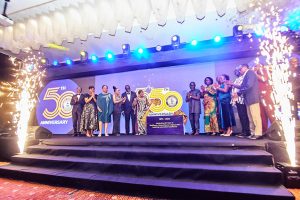
The Ghana Shippers’ Authority (GSA) has commenced its 50th anniversary celebrations with a launch event in Accra, where key stakeholders, industry veterans and government officials gathered to commemorate the Authority’s contributions to Ghana’s shipping and logistics industry.

The event was graced by the Minister for Transport, Kwaku Ofori Asiamah, who highlighted the passage of the Ghana Shippers’ Authority Act, 2024 (Act 1122).

The new legislation replaces the Ghana Shippers’ Authority Act of 1974 (NRCD 254), addressing longstanding challenges in the commercial shipping sector.

Delivering the keynote address, Mr Asiamah emphasised on the necessity of modernising the legal framework governing the GSA to adapt to the dynamic shipping environment.
“This Act creates a viable shipping ecosystem that fosters fairness, efficiency and competitiveness while ensuring the interests of shippers are adequately protected,” he said.

The Minister praised the GSA’s historical achievements, including negotiating competitive freight rates for cocoa exports, facilitating the Boankra Inland Port project and providing warehousing facilities at Tema Port.

He also acknowledged the Authority’s role in reducing shipping costs and resolving disputes within the sector.

The Minister for Transport expressed optimism about the Authority’s future, urging stakeholders to focus on sustainable growth and technological innovation to ensure Ghana remains competitive in the global shipping industry.

Kwesi Okyere Baffour Sarpong, CEO of the Ghana Shippers’ Authority, lauded the organisation’s resilience and adaptability over the past five decades.

Reflecting on the GSA’s transformation, he noted the strategic alignment of its mandate with modern demands through digitization and stakeholder engagement.

“The GSA is no longer just a regulator; we are a partner in progress, connecting Ghana to the global economy,” he said.

Mr. Sarpong outlined recent milestones, including digitized complaint resolution platforms and tailored services for different categories of shippers.

He also spotlighted the Boankra Inland Port, which is 50% complete, as a game-changer for Ghana’s logistics infrastructure.

The Board Chairperson, Madam Stella Wilson, acknowledged the GSA’s commitment to good corporate governance, transparency, and innovation, which have positioned the Authority as a model institution in Ghana.

“Our vision is to remain a beacon of excellence, not just in Ghana but globally, as we navigate the complexities of the shipping and logistics industry,” she remarked.

Honouring Pioneers

The event also paid tribute to past leaders and retirees who laid the foundation for the Authority’s achievements. Former Chief Executives, including Dr. Kofi Mbiah, were celebrated for their pioneering efforts.

The 50th anniversary celebrations, themed “Celebrating 50 Years of Resilience; Honouring Our Legacy and Inspiring Innovative Excellence,” will include a series of activities aimed at reflecting on the GSA’s journey and charting its future path.

Kanawu Leader Jailed 10yrs For Threatening IGP, Minister

0
Law Court Complex, Accra

Evelyn Asamoah, a High Court Judge with additional responsibilities in the Circuit Court, Accra has sentenced Mohammed Ibrahim, a self-identified farmer, to a total of 10 years in prison on three counts, following a day-to-day trial.

The court delivered its judgement on Friday, November 30, 2024, after evidence was presented that Ibrahim’s actions were intended to incite fear, threaten public officials, and disturb public peace ahead of Ghana’s December 7 general elections.

Ibrahim was sentenced to four years for publishing false news with intent to cause fear and alarm, three years for the threat of harm and another three years for offensive conduct conducive to a breach of peace.The sentences are to run consecutively, totaling 10 years in prison.

Details of the Charges

Count One: Publication of False News

Ibrahim was found guilty under Section 206 of the Criminal Offences Act, 1960 (Act 29), for publishing a video on September 3, 2024, falsely alleging that the Ghana Police Service, under the direction of the Inspector-General of Police (IGP), Dr George Akuffo Dampare and the Minister for the Interior, Henry Quartey, were recruiting fake police officers to harm citizens during the elections. The court deemed the video capable of causing fear and alarm to the public.

Count Two: Threat of Harm

Under Section 74 of the Criminal Offences Act, Ibrahim was convicted for threatening to harm the Minister for the Interior, Henry Quartey. In the same video, Ibrahim claimed he and his associates knew the Minister’s residence and threatened to shoot him if violence erupted.


Count Three: Offensive Conduct

The court also convicted Ibrahim for offensive conduct under Section 207 of the Criminal Offences Act.

He was found guilty of using threatening, abusive, and insulting language against IGP Dampare during a public gathering, comments later shared widely on social media.


Background of the Case

Ibrahim, who identified himself as the leader of a Revolutionary group called Kanawu (“Speak and Die”), published the contentious video on Facebook, X and TikTok. Wearing a red beret, he accused the police and government officials of conspiring against the public.

His inflammatory remarks included direct threats of violence during the upcoming elections.

Following the video’s circulation, the Ghana Police Service declared Ibrahim wanted on September 10, 2024.

He was subsequently arrested at his Sowutuom residence, where police retrieved the beret featured in the video. Ibrahim admitted to creating and sharing the video during interrogation.

GPHA boss charges GIFF to be transparent

0
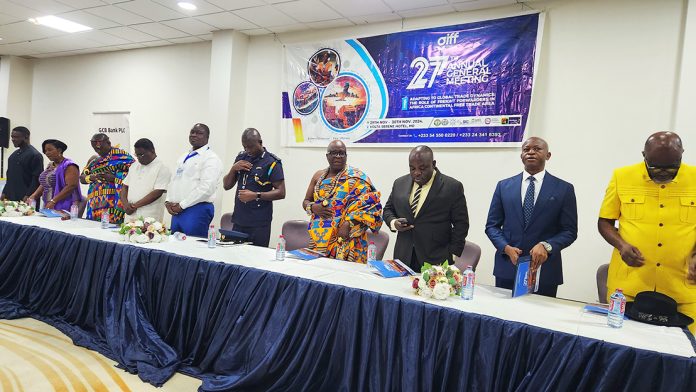
Special guests at the 27th GIFF AGM

The Ghana Institute of Freight Forwarders (GIFF) has held its 27th Annual General Meeting (AGM) in Ho, with key discussions centring on the evolving role of freight forwarders in the context of global trade dynamics, particularly in relation to the African Continental Free Trade Area (AfCFTA).

The Director-General of the Ghana Ports and Harbours Authority (GPHA), Mr Michael Luguje, urged freight forwarders to prioritise transparency by accurately declaring the contents of all imported cargo.

According to Mr Luguje, such practices will foster trust between freight forwarders and Customs officials, consequently making the clearance process smoother and faster.
“Once Customs trust you that whatever you say you have in there, even if they waste their time opening it, it’s the same; if they scan it, it’ll be the same.

Over time they will trust you and say maybe forty or fifty per cent of containers will be scanned, while the rest can move out because we believe everything is fine,” Mr Luguje said, emphasising the importance of building this trust for the smooth facilitation of trade.
He explained that failure to establish trust and cooperation would impede the effectiveness of initiatives like AfCFTA, which aims to increase intra-African trade.

“AfCFTA may open new markets, but goods won’t cross borders smoothly without the trust and cooperation needed to facilitate trade,” he noted.
Mr. Luguje also underscored the need for a strong partnership between freight forwarders and truck owners, stressing that only road worthy trucks should be allowed to transport cargo to and from the ports,” he said.
Addressing operational challenges, he cautioned that inefficiencies in cargo transportation could hinder the ability of producers to meet market demands, even with the benefits of AfCFTA.

“Without addressing these operational issues, even with the opportunities presented by AfCFTA, producers may struggle to meet demand due to inefficiencies in cargo transportation,” he warned.
He highlighted recent advancements in Ghana’s port infrastructure, including significant improvements at the Tema and Takoradi ports, with the latter now handling large vessels as the Tema Port.

Mr Luguje also mentioned the ongoing feasibility studies for a third port in Keta, expected to further enhance Ghana’s port capabilities.

The GPHA Director-General revealed plans to launch a commercial partnership campaign next year to support ongoing development projects at the ports.

He also discussed a major road improvement project funded by the Port Infrastructure Development Fund, which would help ease the flow of traffic to and from the Port of Tema.
“Together, we should look forward to a future of enhanced trade facilitation, economic prosperity, and continental integration,” he added.

Dr Emmanuel Kofi Mbiah, a private legal practitioner and Chairman of the Chamber of Shipping, called for stricter enforcement of Customs sanctions to deter traders who fail to fully declare their cargo. He noted that in countries like Singapore, stringent sanctions act as an effective deterrent.
“In Singapore, if ammunition is found in a container and it is discovered that it belongs to you, the sanction regime that is applied is a deterrent, and no one will dare do it again,” he averred.

He urged the industry to adopt benchmarking and best practices, emphasising that Ghana is not an island.
“It is only best practices that can carry the industry forward; otherwise, we will only be thinking about the negatives and consequently apply policies that do not give us positive outcomes,” he stated.

The President of GIFF, Mr Stephen Adjokatcher, urged members to stay informed about both local and international regulatory changes, as well as the emerging trends of the Fourth Industrial Revolution.

He emphasised that staying ahead of these developments was essential for guiding clients through complex trade dynamics and ensuring the success of the freight forwarding industry.
“Staying knowledgeable about these evolving dynamics is essential for ensuring compliance, helping clients navigate the trade landscape, and guaranteeing the continued success of our business,” Mr Adjokatcher noted.

There were solidarity messages from the Customs division of GRA, the Ghana Union of Traders Association, the Ghana Maritime Authority and the Ghana Shippers’ Authority, who underscored the important role of the freight forwarders in trade facilitation.

Drive with caution on Obestebi Interchange -Akufo-Addo

0
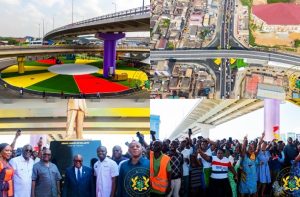
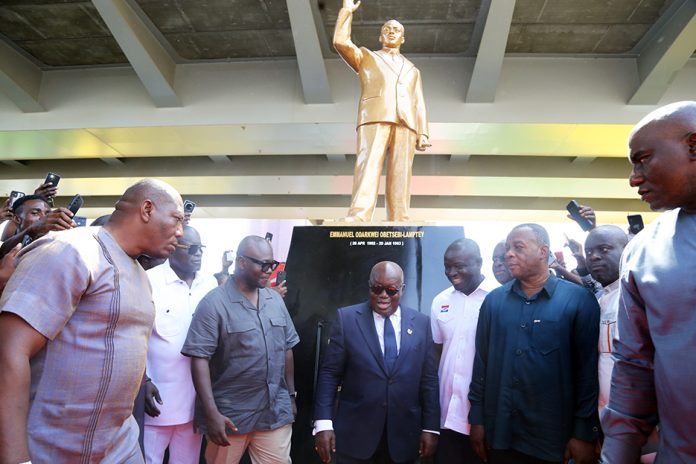
The President and his officials in front of the statue of Obetsebi-Lamptey mounted at the roundabout

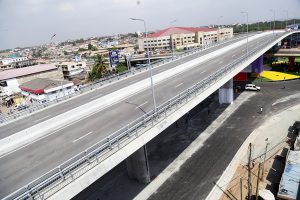
The President, Nana Addo Dankwa Akufo-Addo, has urged motorists to exercise caution while using the newly constructed Obetsebi-Lamptey interchange, near Abossey Okai. He gave the advice when he inaugurated the project on Friday, November 29, 2024, in Accra.

“I urge all motorists to exercise caution while driving and adhere to road safety principles of responsible driving to ensure the safety of all road users, President Akufo-Addo said.

The inaugurated project, which, according to him enhances mobility, also drives economic growth and improves the quality of life for all Ghanaians.

TRAFFIC

The President said the interchange would significantly enhance the flow of traffic to the Korle Bu Teaching Hospital, as well as along the Ring Road West, Kaneshie and Accra Central corridors.

“By reducing travel times and vehicle operating costs, it will increase productivity for businesses and transform the daily commute for thousands of Ghanaians.”

ECONOMIC GAINS
Describing it as a catalyst for economic vibrancy in the capital, he noted that the interchange “will facilitate the seamless movement of goods and services, thereby reducing the cost of doing business and attracting much-needed investments to the region.
“It is, indeed, a cornerstone of our broader vision to establish an integrated, modern transportation network that underpins Ghana’s socio-economic transformation,” he added.

A section of the Obetsebi Lamptey interchange

President Akufo-Addo mentioned the Pokuase Interchange – the largest of its kind in West Africa – whose completion has eased congestion and improved connectivity; the historic Tamale Interchange, the first in northern Ghana and the Bechem-Techimantia-Akomadan road, which has unlocked vital agricultural hubs, enhancing trade and livelihoods.
Additionally, the government has delivered six interchanges nationwide, with thirteen others currently underway, progressing steadily towards completion.

The project was constructed by QG Construction UK Limited and supervised by FAS Consult Limited on behalf of the Urban Roads Division of the National Roads Authority.

President Akufo-Addo was happy to note that one of the great figures of Ghana’s independence journey, Emmanuel Obetsebi Lamptey, whom he knew as Uncle Tsebi, “continues to enjoy the admiration of successive generations of Ghanaians by continuing to name this interchange after him.”

OVERVIEW

Presenting a detailed overview of the key components of the project, Minister for Roads and Highways, Francis Asenso Boakye said the third tier of the interchange features a 389-meter bridge that provides a direct link for traffic on Ring Road West across the Obetsebi Lamptey Circle and descending to the Abossey Okai traffic lights.

A collage of the Obetsebi Lamptey interchange

This, he explained, is ensuring seamless movement for commuters and effectively eliminating delays caused by cross-traffic.
He disclosed that a newly constructed roundabout underneath the flyover facilitates ground-level access to Abossey Okai Road (Agbogbloshie Market Road), with provisions made for safe pedestrian crossings to ensure the safety of all road users.

The project has also seen a reconfiguration along the Nii-Teiko Din intersection on the Kaneshie-Mallam Road to allow right-in and right-out movements on the route.

Asenso Boakye said a pedestrian footbridge over Ring Road West at the Awudome-Adjuma Crescent junction has been incorporated to ensure safe and efficient pedestrian movement across this busy corridor.
He added that the longstanding flooding concerns in the area have also been addressed by a comprehensive storm drainage system that incorporates existing drainage infrastructure, including the Awudome Storm Drain, Kaneshie Drain and Mataheko Drain.

Kudos To Police For Stemming The Indiscriminate Firing Of Toy Guns

0
Toy guns

The Ghana Police Service arrested 26 persons for brandishing and indiscriminate firing of toy guns in a public place.According to the statement signed by the police, the suspects are currently assisting with investigations and will be put before court to face justice. Meanwhile, a quantity of toy guns has been retrieved from the suspects, as part of Police investigations.

The police cautioned the youth to desist from this act, as it constitutes offensive conduct conducive to breaches of the peace, contrary to section 207 of the Criminal Offences Act, 1960 (Act 29) amongst others.

Toy guns, once considered harmless playthings, are now becoming weapons of disturbance and potential violence. While the youth involved in these incidents may have been engaging in what they thought was playful behaviour, their actions have inadvertently contributed to a growing menace that threatens public safety and peace.

The Police have also seized a significant quantity of toy guns from the suspects, as part of their investigations, signaling that this issue is not a mere isolated incident, but part of a larger trend.

As the Police continue their special operations to apprehend other perpetrators, it’s clear that there is a need for a broader societal conversation about the use of toy guns and the impact they have on our communities.

Toy guns, which were traditionally a source of entertainment for children, have now become instruments of disorder and fear in some areas of the country. When fired indiscriminately in crowded places, even if they are not real guns, they can cause panic, trigger false alarms and in some cases, lead to unintended violence.

Though this might seem like a relatively minor issue, the consequences can be far-reaching. Public spaces should remain safe for everyone and actions that create fear or disorder need to be scrutinised and discouraged.

There is a pressing need for both stricter regulations on the sale and use of toy guns, as well as more awareness and education to prevent such dangerous behavior from becoming the norm.

An important part of this issue lies in the ease with which toy guns are sold in the country. These toys are often marketed as harmless replicas of real weapons, with little attention paid to the potential harm they can cause when misused.

The proliferation of toy guns in markets, shops and online stores without proper regulation or warning about their dangers is contributing to their misuse.

In many cases, these toy guns closely resemble real firearms, making it difficult for bystanders or law enforcement to distinguish between a toy and an actual weapon in a high-stress situation. This is especially problematic in an era where security concerns are at an all-time high, and any sight of a gun, real or fake, can lead to panic or even violent confrontations.

Sellers of these toy guns must shoulder a portion of the responsibility in ensuring that they are not only complying with existing laws but also considering the social implications of selling products that can be misused.

It is important for parents, and schools to come together and instill in the youth a sense of responsibility and respect for public spaces. Engaging children and teenagers in open discussions about the implications of their actions is key to preventing further incidents of this nature.

The Police have a critical role to play in ensuring that those who disrupt the peace are held accountable, but we must all work together to prevent these types of incidents from becoming a more widespread problem.

The Ghanaian Chronicle