Home Blog Page 1008

Feature: Why Ghana’s Medical Drone Delivery System Needs Digital Evolution

0
Zipline drone

Yaa Boatemaa, a 49-year-old woman was on a journey to her farm in Afijase in the Ashanti Region, with her thoughts fixed on the work ahead, when in an instant, her routine that Wednesday morning unraveled into a life-or-death struggle.

“I felt a sharp sting on my left leg as I walked through the bush,” Yaa recalled, her voice laced with lingering fear. “I looked down and saw the snake slithering away. My heart sank. I knew it was serious.” Panic set in as the venom began its swift and silent attack on her body.

When she was rushed to the Kona Health Center, her worst fears were confirmed: the clinic was out of anti-venom. It was a blow as devastating as the bite itself.

“I thought that was the end for me. I felt scared because I’ve heard stories of others who didn’t make it after snakebite.”

But Yaa’s story took a miraculous turn when Emmanuel Kofi Brantuo, a Deputy Chief Physician Assistant picked up his phone and swiftly contacted Zipline, a drone delivery service firm that delivers critical medical supplies.

Within fifteen minutes, a small drone appeared in the sky, whirring like a tiny savior. For Yaa, the sight was surreal. “A drone? Bringing medication? I couldn’t believe it,” she said, her expression a mix of disbelief and hope.

The package was retrieved, and the anti-venom was immediately prepared. As the injection coursed through her veins, Yaa felt relief replacing the venom’s deadly grip. “It was like my life was given back to me,” she said, gratitude shining in her eyes.

Emmanuel Kofi Brantuo, the Deputy Chief Physician Assistant at the Kona Health Center in the Ashanti Region said the health center was out of anti-venom, a grim reality in many rural healthcare facilities.

He knew time was critical. “When she came in, we didn’t have anti-snake venom,” he recalls. Acting quickly, he reached out to Zipline, a drone delivery service specializing in medical logistics. “I sent the request, and within 15 to 20 minutes, the drone arrived with the medication.”

The anti-venom arrived just in time to save Yaa’s life. But the day wasn’t over yet. “Shortly after Yaa left, another snakebite case came in,” Brantuo says. “Fortunately, we had requested two doses, and the second was used for this patient. That day, Zipline helped us save two lives.”

Now recovered, Yaa reflects on her ordeal with a mix of awe and conviction. “This technology saved my life,” she said. “Without it, I wouldn’t be here today. For rural areas like ours, where healthcare resources are limited, this is a blessing.”

“If drones can bring life-saving medication in minutes, imagine what else they can do,” Akosua said passionately. “They bring hope where there was none.”

A Game-Changer for medical delivery

Mr. Brantuo’s reliance on drone delivery for medical supplies goes beyond emergencies. “We’ve been using Zipline for the past two to three years, a system backed by Ghana’s government to improve upon its medical supply systems for health facilities.

Zipline’s service operates 24/7, including weekends and holidays, providing consistent support for healthcare delivery in rural Ghana.

“You send a request, and within seconds, you receive feedback,” Brantuo shares. The service operates around the clock, delivering supplies even on holidays and weekends, often within minutes.

Over the past two to three years, Kona Health Center has relied on Zipline for a variety of essential medications, including insulin, anti-rabies vaccines, and even basic supplies like dextrose and paracetamol. “Previously, when we ran out of such drugs, we had to depend on regional facilities, which was both costly and time-consuming,” he explained.

The impact has been profound. “They have saved countless lives and reduced the financial and logistical stress on our facility.”

“This service has not only saved lives but also empowered rural health facilities to deliver care more effectively.”

The need for digital evolution

For the Zipline drone delivery system to function properly, first, health workers or customers place an order using text messages, or via WhatsApp and Phone call. Once the request is received, the fulfillment process begins where the Zipline team promptly picks and packages the requested supplies with precision.

Following this, the packed items are loaded into a drone, and the launch takes place. The drones, equipped with advanced navigation systems, autonomously head toward the designated delivery points. Upon arrival, the delivery phase ensures the safe and accurate release of the package using a parachute mechanism.

Finally, the drone returns to the hub, where it is recovered, recharged, and prepared for subsequent missions. This efficient workflow, which typically takes 40 minutes from order to delivery, addresses critical healthcare needs, particularly in remote and underserved areas.

But the platform needs other forms of evolution. The current platform lacks a modern system such as a digital application that allows health workers to make request for supplies, offering real-time data exchange opportunities to improve the entire program.

There have been hopes that Ghana will soon launch an app for these purposes, but Ebenezer Abankwa, said that won’t happen in Africa anytime soon due to operational challenges.

Speaking in an interview with this reporter, he highlighted that Zipline engineers explored developing an offline version of the app that could sync seamlessly with the company’s fulfillment system. However, the initiative failed to meet expectations.

Mr. Abankwa emphasized that unreliable internet connectivity, could affect the efficiency of such a digital evolution. “Imagine if there’s an emergency, and the order has to go through an app, but we face internet challenges—it could lead to delays,” he explained.

Zipline hopes its current arrangements can still be efficient but operating a system that is more digitally integrated and inclusive, is needed.

A seamless, automated, and data-driven healthcare delivery system that can enable real-time data sharing, digital payments and inventory tracking are critical for scaling healthcare delivery.

Rwanda and the U.S., where Zipline operates with digital systems have seen enhanced efficiency, reduced delays, and improved accessibility to medical supplies.

Replicating this system in Ghana would transform healthcare delivery, allowing for real-time coordination, reducing errors associated with manual systems, and streamline payments for such medical delivery services.

For Ghana to achieve its Universal Health Coverage goals by 2030, integrating such technologies across the health sector is essential, as it enhances equity and responsiveness to medical emergencies.

However, scaling up DPI technologies like drones requires deliberate policies and investments. “Governments must establish clear regulations to foster innovation while ensuring security, privacy, and data interoperability,” Gabi Adotevi, Regional Head for West Africa at MOSIP, said.


This report is produced under the DPI Africa Journalism Fellowship Programme of the Media Foundation for West Africa and Co-Develop.

Denzel Washington apologizes for spilling ‘Black Panther 3’ news

0
Denzel Washington

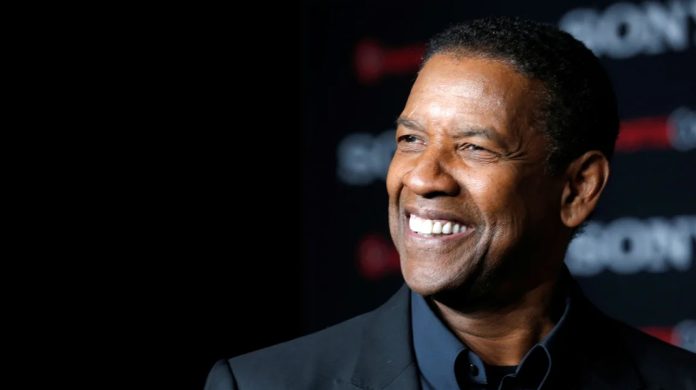
While promoting his new film, “Gladiator II,” the Oscar-winning actor had an interview with Australia’s “Today” show, where talked about his career and upcoming projects.

Washington said that at this point he is “only interested in working with the best” and dropped some news about what he’ll take on following his upcoming Broadway run in Shakespeare’s “Othello,” in which he’ll play the titular character.

“After that, I’m playing Hannibal. After that, I’ve been talking with Steve McQueen about a film,” he said. “After that, Ryan Coogler is writing a part for me in the next Black Panther.”

Problem is Marvel had not yet officially announced a third film in the “Black Panther” franchise.

Washington addressed that during a recent appearance on Variety’s Awards Circuit Podcast, during which he referred to Coogler as “a genius.”

“I called him and apologized for talking about the movie, and right there sitting with him was his beautiful wife,” Washington said. “He’s still Ryan, humble and full of ideas. Whatever he writes, I’ll read.”

The esteemed actor also talked to Variety about his health journey. He recently made headlines when he shared that he gave up drinking.

“I’ve been on a two-year program to get healthier. At the Academy Awards, I looked at myself and thought, ‘I’ve got to change,’” Washington told Variety. “I worked with Doug Romero, a trainer. It’s been my birthday gift to myself — getting to a place where I feel okay looking in the mirror.”

Credit: cnn.com

National Blood Service donates Centrifuge machine to KATH 

0
NBS and KATH officials in a pose at the donation ceremony

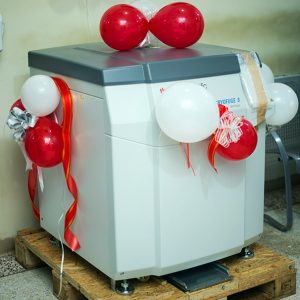
The National Blood Service (NBS) has, in line with its mission to improve access to safe blood and related services nationwide, donated a Centrifuge Heraeus Cryofuge 8 to the Transfusion Medicine Unit (TMU) of the Komfo Anokye Teaching Hospital (KATH), in Kumasi.

The equipment is typically used for separation of plasma, red blood cells or platelets for transfusion purposes.

Ernest Asante, Head of Administration NBS presenting the machine to KATH CEO

The donation of the state-of-the-art equipment, valued at over GH¢1,000,000 has come to strengthen NBS’ commitment to enhanced healthcare at the hospital towards speedy process and separate blood components, which is a critical aspect of modern transfusion medicine.

The Chief Executive of NBS, Dr. Mrs. Shirley Owusu-Ofori, at the handing over ceremony highlighted the importance of the Centrifuge in ensuring the availability of high-quality blood products for needy patients.

Dr. Mrs. Owusu-Ofori commended the Transfusion Medicine Unit of the hospital for its hard work, making it the best performing among the three Blood Service Centres in the country.

The Chief Executive of KATH, Prof. Otchere Addai-Mensah, expressed profound gratitude to the Service, emphasising that the Centrifuge will enable the unit to handle larger volumes of blood donations more efficiently and thus save countless lives.

Centrifuge Heraeus Cryofuge 8 machine

He noted the donation has come to save the hospital the huge cost associated with procuring one and revealed the determination of management to put a good maintenance plan for it to enhance its lifespan.

Mr Prince Ernest Asante, Head of Administration NBS, speaking on behalf of the board, stated that after a periodic assessment by the Board at the Central Zonal Blood Center, found it necessary to provide the unit with a new Centrifuge machine, as it was a critical intervention needed.

“We were here with the Board of Blood Service to assess the state of the Central Zonal Blood Centre and interact with the staff”, he said.

Dr. Lesley Osei, head of KATH TMU was elated with the donation, explaining how the Centrifuge machine would help the unit to work effectively by collecting and storing greater amounts of blood.

She called on all Ghanaians to donate blood during the festive season, as a gift to support those in need.

INEC Says Chairman Mahmood Yakubu Not Dead

0
INEC Chairman, Professor Mahmood Yakubu

The Independent National Electoral Commission (INEC) has asked the public to disregard reports on the death of its Chairman, Mahmood Yakubu.

A statement by the Chief Press Secretary to the INEC Chairman, Rotimi Oyekanmi on Saturday said Yakubu is alive.

The clarification was necessitated following reports that the INEC Chair had died in London.

“Our attention has been drawn to a fake news narrative circulated by a section of the social media claiming the purported death of the INEC Chairman, Prof. Mahmood Yakubu at a London hospital. The story first appeared on Monday, 9th December 2024.

“We hereby appeal to the public to disregard the rumour. Prof. Yakubu is alive, hale and hearty. In fact, he has not travelled to London in the last two years.”

Credit: channelstv.com

Army Rescue Three Kidnapped Victims In Taraba, Recover Weapons

0
Troops Destroy Bandits Camps In Taraba

Troops of 6 Brigade, Nigerian Army/Sector 3 Operation Whirl Stroke have rescued 3 kidnap victims in Manzala village of Yorro Local Government Area of Taraba State. Acting on a distress call regarding bandit activities in the said community on 13 December 2024, the troops immediately mobilized to the location, and after a hot pursuit of the kidnappers, successfully rescued 3 victims.

A statement by the Acting Assistant Director 6 Brigade Army Public Relations, Olubodunde Oni, said the rescued victims have since been reunited with their respective families.

Troops, thereafter, conducted aggressive fighting patrols around mountainous terrains and identified flashpoints in Ardo-Kola and Yorro Local Government Areas, further consolidating efforts to neutralise threats and maintain law and order.

Additionally, troops on 12 December 2024, while conducting aggressive patrols along the Takum Katsina Ala express road, encountered an ongoing robbery incident near Kasuwan Shanu in Takum town.

The swift intervention led to the arrest of an armed robbery suspect identified as Emmanuel Thomas Oryiman. The suspect was found in possession of one locally fabricated pistol and two rounds of 9mm ammunition.

The Commander of 6 Brigade Nigerian Army, Brigadier General Kingsley Uwa, said that the successes recorded under the operation GOLDEN PEACE is to ensure peace and stability within Taraba State and parts of Benue state aimed at denying criminal elements freedom to operate and fostering security within the brigade’s area of responsibility.

While commending the bravery, professionalism, and swift response of the troops, the commander also assured the public that the Nigerian Army will remain resolute in its commitment to safeguarding lives and property.

He also encouraged residents to continue supporting the troops by providing credible information to assist in the fight against criminal elements.

Credit: channelstv.com

66th ECOWAS Session: Nigeria Pays ₦85bn, $54m Levy

0
ECOWAS meeting

Nigeria has paid its accrued debt owed the Economic Community of West African States (ECOWAS) to the tune of ₦85 billion.

President of the ECOWAS Commission, Omar Touray, disclosed this in his statement at the opening of the 66th Ordinary Session of the ECOWAS Authority of Heads of State and Government in Abuja.

He said while the community had suffered slow response from member states in remitting their levies, Nigeria under the leadership of President Tinubu had cleared its levies from 2023 to date.

According to Touray, this is the first time in 19 years that Nigeria will pay 100% of its ECOWAS levy.

The ECOWAS President also lauded the efforts of President Bola Tinubu, the Federal Government of Nigeria for always supporting the efforts of the regional body.

He also thanked the efforts of the outgoing President of Ghana, Nana Akufo-Addo, who would leave office on January 7, 2025.

“This needs to be reversed. The good news is that for the first time in 19 years, Nigeria has decided to pay 100 per cent of its community levy from 2023. I am therefore pleased to announce that on Friday, December 13th, Nigeria paid ₦85 billion and 54 million representing 100 per cent of the 2023 levy and the levy of 2024 up to July 2024.

“We all agree that this payment underscores the leadership and commitment of President Ahmed Tinubu, the government and the people of Nigeria to our community.

At a more personal level, it represents a mark of confidence on the management that I have been privileged to lead since 2022. My colleague and I are deeply grateful and I thank you for your attention,” Touray stated.

Credit: channelstv.com

Learn From Ghana’s Democratic Practice, Tinubu Urges ECOWAS Leaders

0
President Bola Tinubu and Nana Addo

President Bola Tinubu has urged leaders of the Economic Community of West African States (ECOWAS) to emulate Ghana’s democratic practice following a successful presidential and parliamentary elections in the country.

Former President John Mahama was reelected to lead Ghana once again last Saturday, defeating the incumbent Vice President, Mahamud Bawumia, who called to congratulate the winner even before the official results were declared.

In his opening speech at the 66th Ordinary Session of the ECOWAS Authority of Heads of State and Government in Abuja on Sunday, Tinubu who is the Chairman said that what happened in Ghana is worthy of emulation by other countries in the region.

He hailed the incumbent President of Ghana, Nana Akufo-Addo, who is attending the ECOWAS Authority of Heads of State and Government for the last time as President, for the successful election.

“Just a week ago on the 7th of December 2024, presidential election and parliamentary elections took place in Ghana which is the second largest democracy in our region. One of the leading candidates who happens to be the incumbent Vice President, His Excellency Mahamud Bawumia, together with the leading party, New Patriotic Party (NPP) conceded defeat and accepted the outcome of the election by congratulating the President-elect, His Excellency John Dramani Mahama of National Democratic Congress (NDC) for his victory even before the announcement of the official results.

“This gesture as it happened in Nigeria in 2015 demonstrated political maturity and respect for the wish of the people of Ghana. Today, we have the man I will refer to as Mr Democrat, I congratulate the President Nana Akufo -ddo and the people of Ghana for the successful elections and urge all of us in the region to learn from this good democratic practice and prioritise our countries’ national unity to ensure political stability of the region that this manner of peaceful transition recalls the culture of democracies not only in West Africa but also in the entire African continent,” Tinubu said.

The Nigerian leader also commended Senegal for a successful conduct of parliamentary elections recently.

Tinubu called for cooperation among the ECOWAS member states in protecting their citizens and providing an enabling environment for the citizens to thrive.

Credit: channelstv.com

AngloGold Ashanti empowers pupils in Obuasi on career choices

0

AngloGold Ashanti Obuasi Mine has rolled out a comprehensive academic guidance and personal development programme for selected schools in Obuasi, with a goal of aiding pupils to choose the right course of study, as they progress to Senior High School and beyond.

Most students in Basic Schools lack the right guidance to enable them make informed decision about choosing courses that align with their strengths and interests leading to appropriate career choices.

The programme, which is in line with AngloGold Ashanti’s Educational Improvement Programme, under its 10-year Socio-Economic Development Plan, seeks to eliminate challenges that pupils face in choosing their career paths.

Ms. Ester Agyeiwaa Akoto, Social Development Officer, AngloGold Ashanti Obuasi Mine, explaining the rationale behind the programme at a session held for pupils of JimisoKakraba M/A, said the programme sought to address numerous challenges that impeded the academic performances and personal growth of the pupils.

She said the programme also sought to help students to develop effective study skills, time management and organisational strategies.

Through the Mine’s Employee Volunteer Programme (EVP), which encourages staff members to engage and support the host communities, employees of AngloGold Ashanti were on hand to take the students through various academic guidance and coaching strategies.

The involvement of staff members is aimed at strengthening ties with the communities, while empowering the pupils to take charge of their educational journeys and personal growth.

On the possible outcome of the intervention, Ms. Akoto said it would help improve academic performance and retention rates of students and also enhance their personal skills that contribute to overall well-being and success.

Mr. Joseph Nunoo, a Circuit Supervisor at the Obuasi East Municipal Education Directorate, talked about the relevance of guiding students at the pre- senior high school level to make good career choices.

He said in the world of abundant opportunities, it was important for students to get the right coaching to enable them to navigate that path seamlessly.

“This is where career guidance and counselling are essential for these children at this level. I commend AngloGold Ashanti for coming out with this programme which will serve as a beacon of light to shape the students to make good decisions about their career path”, he added.

The participating students said the programme had broadened their horizon on how to manage their time and make good decisions.

The career guidance and counselling programme is one of several interventions implemented by AngloGold Ashanti Obuasi mine to improve quality of education in Obuasi.

These include the construction of a modern 9-unit classroom block at Sanso, training of teachers at the basic level, supply of text books to basic schools, donation of sanitary pads to school girls and the construction of examination printing centres.

From Yussif Ibrahim, Obuasi

GNA

FDA engages bar operators on tobacco control measures 

0
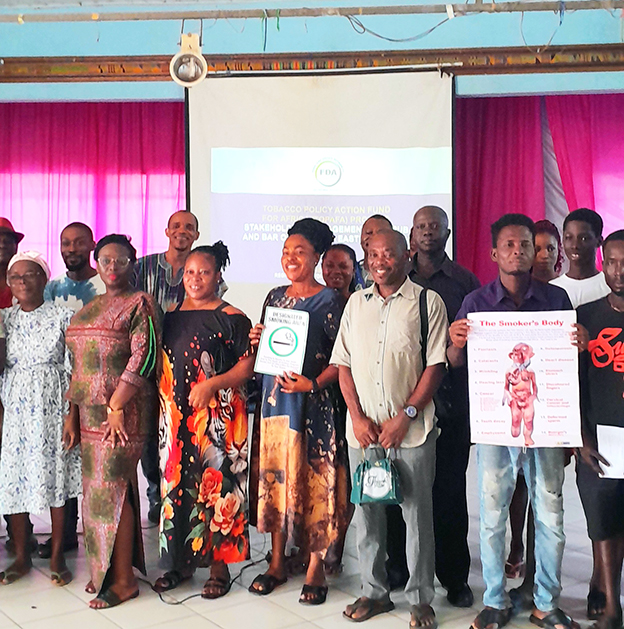
The stakeholdsers who attended FDA Workshop

As part of the Tobacco Policy Action Fund for Africa (TOPAFA) project, the Food and Drugs Authority (FDA) has organised a stakeholder engagement on tobacco control measures in the Eastern regional capital, Koforidua.

The meeting brought together hotel management, bar owners, restaurant operators, food vendors and other entertainment service providers to discuss strategies to combat tobacco use.

The TOPAFA project takes a unique approach to assisting qualifying governments in sub-Saharan African nations that have signed the World Health Organisation (WHO) Framework Convention on Tobacco Control.

About 34 tobacco vendors and students attended the one-day programme to learn more about the dangers and consequences of smoking tobacco.

Ms. Anita Owusu Kuffour, the Eastern Regional Director of FDA, warned about the dangers of tobacco use, stressing that “It is so dangerous that there is nothing safe about it, and it can ruin everything from the crown of your head to the soles of your feet.”

Unfortunately, she observed that many people were unaware of the significant harm caused by tobacco products.

She urged for better control of their use to minimize these negative effects.

As the Christmas season approaches, she emphasised the importance of engaging bar operators to raise awareness about the relevant norms and regulations, as well as the harmful effects of tobacco.

She explained that one of the FDA’s mandates was to prohibit smoking in public places and everyone must adhere to these regulations.

She referenced the Public Health Act of 2012, Act 851, Section 58, which states that a person is not allowed to smoke tobacco or any tobacco product or hold a lighted tobacco product in enclosed indoor areas of workplaces or public areas, except in designated smoking areas.

She emphasised that these public areas include transportation terminals, markets, social gatherings and other entertainment venues where large crowds congregate.

“The authority has been conducting a monitoring operation, and it frowns on tobacco products that do not bear warning signs; if you are caught selling such products, your items will be confiscated and you will face the full force of the law,” she said.

Ms. Kuffour urged all stakeholders to adhere to the guidelines for selling tobacco at their facilities, stating that if they do not have a designated smoking area, they could not operate and that allowing customers to smoke in public places posed a hazard to non-smokers.

She warned that failure to display a “No Smoking” notice in your establishment to deter smokers and protect the health of non-smokers could result in closure by the FDA and serious legal consequences.

Ms. Margaret Gbadago, a participant, stated that she had limited knowledge about the risks associated with tobacco use.

She noted that the information provided today would help reduce health risks, especially for those exposed to second hand smoke.

Another participant, Mr. Yaw Amponsah Isaac, added that the education would help both dealers and smokers in minimizing the health risks related to smoking.

He further noted that while their businesses might be affected, their health was paramount, and it made no sense to prioritize profit over well-being, “so it’s crucial to follow FDA guidelines to ensure the safety of non-smokers.”

Statistics from the Tobacco Atlas indicate that over 6,700 Ghanaians die each year due to tobacco-related diseases, with 66 per cent of these deaths occurring in individuals under the age of 70.

By Kamal Ahmed

GNA

Resilience, key to long term success in hospitality industry -Nduom 

0
Groupe Nduom Ghana

Dr. Nana Kweku Nduom, President of Groupe Nduom Ghana, says resilience is key to long-term success in the hospitality industry in Ghana.

He said that the industry had faced major threats throughout the years, ranging from global health pandemics to safety issues, which might have rendered businesses unprofitable, leading to their collapse.

The President said this at the Coconut Grove Regency Hotel’s 25th anniversary of Nine Lessons, Carols and Musical Concert, which was held at the hotel’s premises in Accra.

The event, ministered by Father Pallu Donatus, was graced by sterling musical performances by the Winneba Youth Choir.

Dr. Kweku Nduom said global health challenges, including the Ebola and COVID-19 pandemics pushed hospitality businesses, such as the Coconut Grove Regency Hotel beyond the limit.

He noted that the business was forced to rotate staff and integrate them into other businesses of the company, instead of subjecting them to any other forms of dismissal.

The President said in the midst of all these challenges, what had sustained the business all these years was resilience.

He noted that faced with these obstacles, especially the fire outbreak that devastated the hotel some years ago, the hotel had to strategise by integrating resilient practices to ensure that business bounced back.

Highlighting the 25-year journey of the hotel, Dr. Kweku Nduom said that through discipline, perseverance and building good business habits, the hotel had provided services to the delight of the customers.

He noted that based on the resilience of the hotel throughout the COVID-19 and Ebola periods, the hotel could survive anything that nature could bring.

Mr. Ralph Ayitey, General Manager, Coconut Grove Regency Hotel, said the hotel would continuously prioritise workers’ welfare and ensure that the hotel recorded the lowest levels of attrition.

He said the hotel would demonstrate the highest levels of professionalism by ensuring that customers get the best professional care and service.

The general manager noted that the hotel would only advance if customers provided constructive feedback and recommendations on how they could enhance their services.

He said the hotel still remained committed to local content initiatives through the prioritisation of using local artisans, furniture and bricks in all improvements targeted at ensuring Ghanaians were fruitfully employed to the betterment of Ghana.

By Jibril Abdul Mumuni 

GNA

The Ghanaian Chronicle