A Water Resources Senior Official has stated that human activities and over-reliance on rainwater are heavily contributing to the negative impact of climate change in Ghana.
Poor drainage systems, building on waterways, and the felling of trees along watercourses are all human actions said to be affecting our existence.
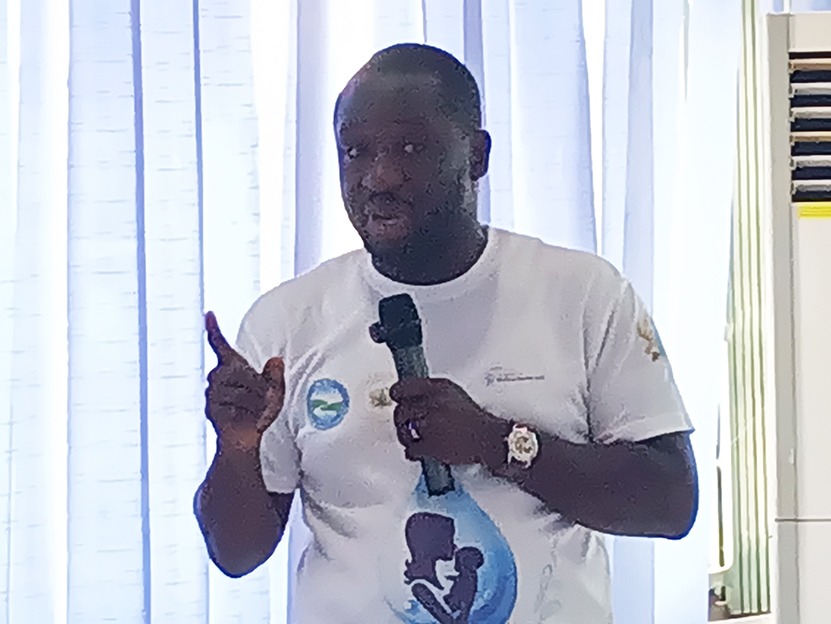
Mr. Jesse P. Kazape, Head of the White Volta Basin, disclosed this at a training workshop for 30 Water, Sanitation and Hygiene (WASH) journalists on climate change reporting in Bolgatanga.
The training was organised by the Belim Wusa Development Agency (BEWDA) in partnership with WaterAid Ghana under the SIDA CLIMB Better WASH Partnership.
He noted that climate is not just an environmental story, but a human rights and development story. People doing what they are not supposed to do just to survive is also contributing to environmental problems.
He urged the media to intensify public education on the effects of climate change and the environmental impact of indiscriminate building on waterways through human activities.
He explained that what is driving climate change is mostly human activities that increase greenhouse gases.
Mr. Kazape outlined key terms for climate reporting which includes mitigation, reducing emissions to slow climate change, adaptation which is adjusting to changes that are already happening, resilience, the ability to withstand and recover from shocks and vulnerability.
He stated that the people suffering most are often those who contributed least to the problem adding that industrial nations are larger emitters, while poor countries bear the impact.
Mr. Kazape said climate change refers to long-term weather patterns assessed over decades, usually 30 years or more.
He noted that global evidence includes a 20cm rise in sea levels since 1880 and accelerating, melting glaciers and ice caps, and more frequent extreme weather events.
According to him, in Ghana, drying of the Volta Basin, shifting rainfall patterns with shorter, more intense wet seasons, rising temperatures faster than the global average at 0.6°C per decade in northern Ghana, increasing frequency of floods and droughts, rising sea levels leading to coastal erosion and saltwater intrusion.
He said climate change affects water availability and water quality, including groundwater and surface water. It also contaminates wells and increases water demand.
He disclosed that climate change affects water security in Ghana and directly affects water, sanitation and hygiene (WASH).
Mr. Kazape urged journalists to understand the full context of climate stories: the cause, who was affected, why the location was vulnerable, what data supports the claim, who has responsibility for reducing the risk, and what can be done differently.
He stressed that accurate reporting is critical to holding duty bearers accountable and helping communities build resilience to climate shocks.
For more news, join The Chronicle Newspaper channel on WhatsApp: https://whatsapp.com/channel/0029VbBSs55E50UqNPvSOm2