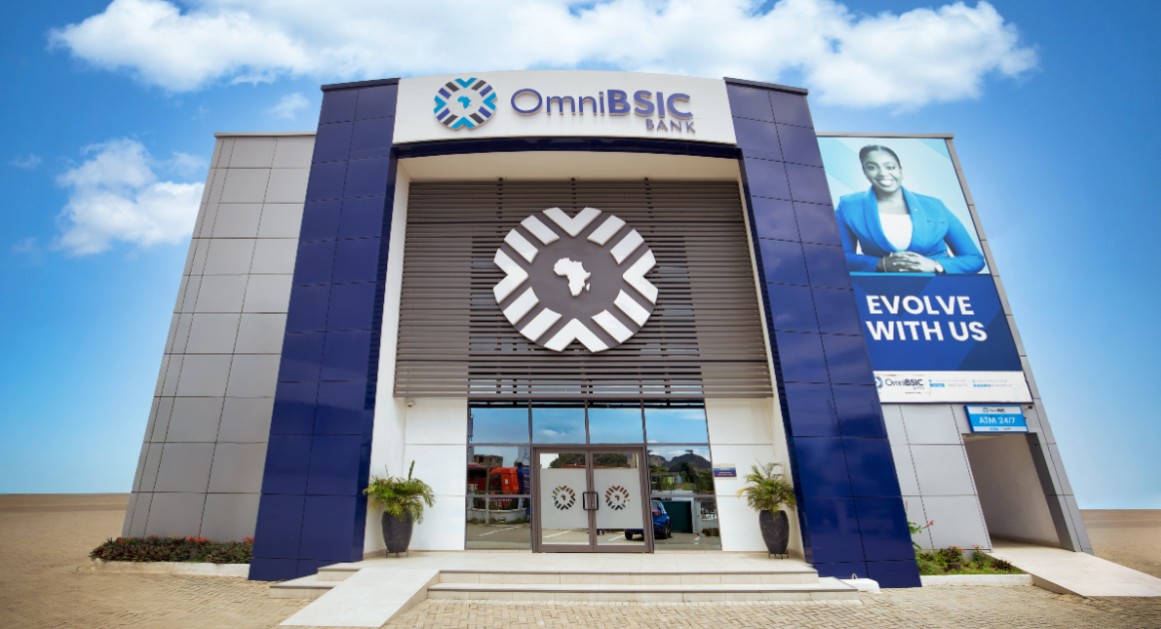
OmniBSIC Bank, in partnership with the Council for Scientific and Industrial Research–Institute of Industrial Research (CSIR-IIR) and Ocean Tribe Foundation, has launched the Plastic Waste Innovation Project, a student-led initiative aimed at transforming plastic waste on school campuses into a valuable resource, while nurturing the next generation of environmental innovators.
The project was officially launched in Accra with the participation of five Senior High Schools (SHSs). Through a structured system of recovery, reuse and recycling, the partners are targeting a 70 percent reduction in plastic waste generated on participating campuses this year.
Speaking at the launch, Mr. George Tetteh Ocansey, Divisional Head and Executive Committee Member of OmniBSIC Bank, described plastic waste management as one of Ghana’s most pressing environmental challenges.
According to him, tackling the problem requires collective action involving education, innovation and active youth participation.
“Addressing this challenge requires collaboration, education, innovation and, most importantly, the active involvement of the youth who are the future leaders of our nation,” he stated.
Mr Ocansey said the initiative goes beyond environmental conservation and reflects the partners’ commitment to developing future leaders capable of driving sustainable solutions.
“This initiative represents our shared commitment to nurturing the next generation of innovators and leaders who will drive sustainable solutions for Ghana and beyond,” he added.
The project, themed: “Recovering Plastics for Industry and Sustainable Environment,” aligns with Ghana’s Sustainable Banking Principle Six and contributes to the achievement of Sustainable Development Goals (SDGs) Four and Seventeen, which focus on Quality Education and Partnerships for the Goals respectively.
Providing insight into the scale of the plastic waste challenge, Dr. Boniface Yeboah Antwi, Senior Research Scientist and Project Lead at CSIR-IIR, noted that an estimated eight million tonnes of plastic waste enter the world’s oceans annually.
He disclosed that plastic accounts for about 60 percent of waste generated on Ghanaian school campuses, largely from discarded water sachets and plastic bottles.
“One plastic bottle takes over 1,000 years to decompose in a landfill. That is not waste disposal; that is debt our children’s children will pay,” Dr. Antwi remarked.
He revealed that the five participating schools alone generate more than 44,000 pieces of plastic waste each day, a volume comparable to the seating capacity of the Accra Sports Stadium.
“We are reframing plastic waste from a disposable nuisance into a valuable reclaimable resource,” he said, adding that the project seeks to convert “trash into treasure” by reducing campus plastic waste by 70 percent through systematic recovery, reuse and recycling.
The year-long programme will begin with awareness campaign in June to educate students on responsible plastic waste management.
As part of the initiative, metal recovery cages will be installed in all participating schools to facilitate plastic collection.
Sustainability Clubs, supervised by designated tutors, will be established to oversee collection and storage activities.
Recovered plastics will be sold through a buy-back arrangement with recycling company SeSa, which will make regular visits to the schools to purchase the collected materials.
In October 2026, participating students will showcase innovations developed from reused plastic materials during a Plastics Challenge competition. Winners will be honoured at a Special Awards Day scheduled for November 2026.
Awards will be presented to outstanding members of the Sustainability Clubs, winners and runners-up of the Plastics Challenge, schools that recover the highest quantities of plastic waste, and the overall best-performing school.
The five participating schools are St. John’s Grammar Senior High School, Odorgonno Senior High School, Accra High School, Mfantsipim Reilly Senior High School and Armed Forces Senior High Technical School.
Project Lead for Ocean Tribe Foundation, Mr. Bright Selorme, expressed optimism that the initiative would attract additional partnerships aimed at promoting responsible plastic disposal and environmental sustainability.
The launch also featured the unveiling of a Plastic Waste Management Booklet for Teens, designed to equip students with practical knowledge on pollution, waste management and environmental stewardship.
Mr. Ocansey encouraged students to take full advantage of the programme, stressing that it would help build a generation capable of developing innovative and sustainable solutions to environmental challenges.
With students at the forefront of the recovery process, the Plastic Waste Innovation Project is expected to contribute to a cleaner environment, advance Ghana’s circular economy agenda and create lasting social and environmental benefits.
For more news, join The Chronicle Newspaper channel on WhatsApp: https://whatsapp.com/channel/0029VbBSs55E50UqNPvSOm2z