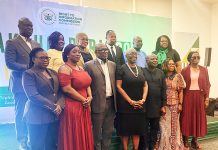
Social and environmental advocate and farmer, Nana Dwomoh Sarpong, has called for a radical overhaul of Ghana’s agricultural sector, saying the country must urgently rethink how it produces food and manages its agricultural resources.
He said Ghana could draw valuable lessons from countries that had successfully transformed their agricultural sectors through technology, irrigation, innovation, research and investment in human capital.
According to him, adapting successful agricultural practices to Ghana’s own conditions would help the country improve food security, create jobs and reduce its growing dependence on imported food.
“If you want to do something, you have to look at who’s doing it best and learn from them,” Nana Sarpong said in an interview with The Chronicle.
Learn from Israel
Nana Sarpong cited Israel as a notable example of a country that had developed a productive agricultural system despite significant limitations in land and water resources.
He said Israel’s experience demonstrated how technology, efficient water management, irrigation, research and innovation could be deployed to overcome agricultural challenges.
Ghana, he noted, had a long history of agricultural cooperation with Israel, particularly during the early years of the country’s independence.
He recalled that Israeli agricultural experts had worked with Ghanaian counterparts, while Ghanaian farmers and agricultural professionals had travelled to Israel for training and exposure to modern farming techniques.
Nana Sarpong said Ghana should revive and deepen such cooperation, particularly in areas such as irrigation, greenhouse farming, agricultural research, water management, modern farming technologies and farmer training.
He, however, stressed that Ghana should not attempt to replicate the Israeli system wholesale.
Rather, he said, the country should identify the practices that had worked, adapt them to Ghanaian conditions and invest in the infrastructure and expertise required to make them sustainable.
He argued that a modern agricultural system should not only produce enough food for the population but also create employment, protect the environment and make the country better prepared for future economic and environmental shocks.
“If there’s a crisis, how do we survive?” he asked, stressing the importance of developing Ghana’s capacity to feed itself.
Galamsey threatens food security
Nana Sarpong also expressed concern over the increasing destruction of agricultural lands, particularly through illegal small-scale mining, popularly known as galamsey.
He warned that the continued degradation of farmlands and contamination of water bodies posed a serious threat to the future of agriculture.
“We are losing our lands to galamsey, which will destroy the land and eventually agriculture. Agriculture is under threat,” he said.
He added: “We cannot revolutionize our agriculture while we lose our farmlands.”
Nana Sarpong therefore called for stronger measures to protect agricultural lands from activities that undermine their productivity.
He also urged the government to make irrigation a major component of its agricultural development strategy, arguing that Ghana could not achieve meaningful transformation while much of its farming remained heavily dependent on rainfall.
He said the country’s increasing reliance on imported food should serve as a warning that urgent action was needed to strengthen domestic production.
“So we have to think about tomorrow, not today,” he stated.
Revive self-sufficiency drive
Nana Sarpong further called for a renewed focus on agricultural self-sufficiency, saying Ghana could draw lessons from initiatives implemented under previous administrations.
He cited Operation Feed Yourself, introduced during the Acheampong era, as an example of a national agricultural programme that placed emphasis on domestic food production.
He also encouraged policymakers to examine agricultural development initiatives pursued during the early years of the Rawlings administration and identify lessons that could be applied to current challenges.
He questioned why Ghana’s agricultural sector, which he said had been more productive and robust during certain periods in the past, had struggled to maintain that momentum.
He called for policies that would improve farmers’ access to irrigation, technology, finance, research and other essential inputs while protecting agricultural lands from degradation.
According to him, empowering local farmers should be at the centre of efforts to strengthen Ghana’s food system.
Beyond food production, Nana Sarpong said agriculture had an important role to play in tackling unemployment and promoting sustainable development.
He argued that a properly modernized agricultural sector could generate jobs, improve rural livelihoods, encourage responsible land management and contribute to environmental protection.
He also said making farming more productive and profitable could help restore dignity to rural communities and encourage more young people to view agriculture as a viable economic opportunity.
“We need to revolutionise our agriculture. The time is now,” Nana Sarpong stated.
For more news, join The Chronicle Newspaper channel on WhatsApp: https://whatsapp.com/channel/0029VbBSs55E50UqNPvSOm2z