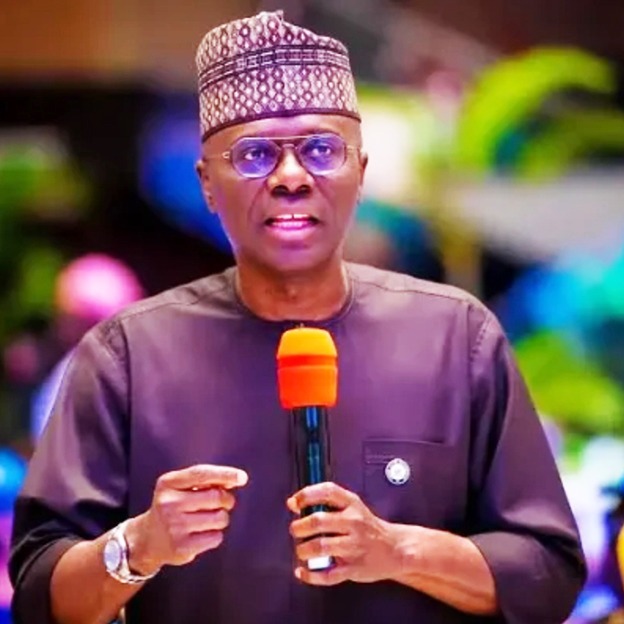
Lagos State Governor, Babajide Sanwo-Olu, has challenged stakeholders in the electricity sector to take decisive steps towards ending persistent blackouts in the state, saying dependable power supply is essential to building a stronger and more competitive economy.
Sanwo-Olu spoke at a high-level strategic town hall meeting held at the State House, Marina, with the theme: ‘Ending the Culture of Blackouts and Building a Sustainable 24/7 Power Economy in Lagos State’.
The meeting brought together representatives of government agencies, regulators, investors and private-sector operators to develop practical measures for achieving a stable electricity supply across Lagos.
The state’s Deputy Governor, Kadri Hamzat, members of the State Executive Council and other senior government officials attended the forum.
Among the organisations represented were the Nigerian National Petroleum Company Limited, Nigerian Upstream Petroleum Regulatory Commission, International Finance Corporation, Africa Finance Corporation, Lagos State Electricity Regulatory Commission and the Independent System Operator.
The governor said resolving the state’s persistent electricity challenges was critical to unlocking long-term economic growth and creating a power market capable of supporting businesses, industries and households.
He urged participants to approach the challenge with a greater sense of urgency and responsibility, calling on stakeholders to put aside institutional interests and confront the obstacles limiting progress in the sector.
Sanwo-Olu said, “We need to drop corporate egos, abandon long-standing excuses, and confront the harsh realities obstructing progress in the power sector.”
He acknowledged growing frustration over repeated meetings and discussions that had produced limited tangible results, stressing that the sector now required concrete action rather than another round of promises.
The governor also pointed to the changes introduced by the decentralisation and regulatory restructuring of Nigeria’s electricity sector, which gave states greater authority to develop and manage their own power systems.
He said the reforms had removed the excuse of excessive centralisation that previously prevented state governments from taking greater responsibility for electricity supply.
Against this backdrop, the governor called for a closed-door engagement among the stakeholders to examine the structural weaknesses affecting the sector, identify areas where government had fallen short and address performance gaps within the private sector.
He said the objective was to produce a practical and measurable roadmap rather than another set of recommendations that would remain unimplemented.
Credit: dailypost.ng