Ghana’s economy continues to face mounting pressure from illicit trade and smuggling, a challenge that has steadily eroded government revenue and undermined legitimate businesses.
The Institute for Liberty and Policy Innovation (ILAPI), in partnership with government agencies and civil society groups, has intensified calls for urgent action following a nationwide awareness campaign across Tamale, Kumasi and Accra.
The initiative engaged traders, students, transport operators, and market women, highlighting the social, economic, and health consequences of smuggled and counterfeit goods. More than 720 participants over twice the initial target took part, signalling growing public concern over the threat illicit trade poses to Ghana’s revenue and livelihoods.
Smuggling: A Threat to Revenue and Enterprise
“Illicit trade is not a victimless crime,” said Mr Peter Bismark Kwofie, Chief Executive Officer of ILAPI stated in a media interview . “It weakens our economy, erodes government revenue, and exposes consumers, particularly young people, to unsafe products.”
“When illicit trade thrives, legitimate businesses are crowded out, and government loses critical revenue needed for national development,” Mr Kwofie added.
Multi-Sector Impact
The roadshow highlighted how smuggling affects multiple sectors of the economy, including pharmaceuticals, alcohol, tobacco, processed foods, textiles, and other consumer goods. Beyond economic losses, these illicit products pose serious public health risks, with counterfeit drugs, unregulated alcohol, and unsafe food products circulating widely.

Despite Ghana’s strengthened border controls and inter-agency enforcement efforts, porous borders, wide tax differentials, and increasingly sophisticated smuggling networks continue to frustrate regulators.
“The fight against illicit trade requires more than enforcement; it demands coordination between government agencies, civil society, and the public,” Mr Kwofie said.
Engaging the Public Directly
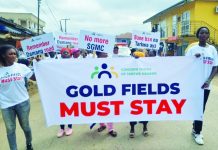
Unlike conventional awareness campaigns, ILAPI’s initiative brought the discussion directly to the streets and market centres the frontlines where smuggling is most visible. Participants carried placards warning of revenue losses and economic damage, distributed educational materials, and engaged market operators and transporters on the implications of illicit trade.
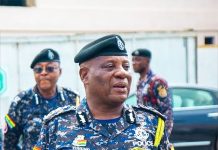
The Ghana Police Service provided security, while regulatory agencies including the Ghana Revenue Authority, Food and Drugs Authority, and Environmental Protection Agency used the platform to inform the public about compliance obligations, enforcement mechanisms, and legal penalties.
Accra recorded the highest turnout, reflecting heightened awareness in the nation’s commercial hub.
Sustaining Momentum
For ILAPI, awareness is only the first step. The group emphasised that enforcement, policy coordination, and public vigilance must follow to effectively curtail illicit trade.
“The success of this campaign shows what is possible when institutions and citizens work together. But without sustained action, smuggling networks will continue to drain revenue and threaten public safety,” Mr Kwofie warned.
The organisation reaffirmed its commitment to promoting legitimate trade, youth empowerment, public health, and economic integrity. It also urged government agencies, civil society, and citizens to build on the gains of the campaign to protect national revenue and ensure fair competition in the market.
“Illicit trade is not a distant problem — it affects the livelihoods of Ghanaians today. Immediate, coordinated action is essential for the future of our economy,” Mr Kwofie concluded.