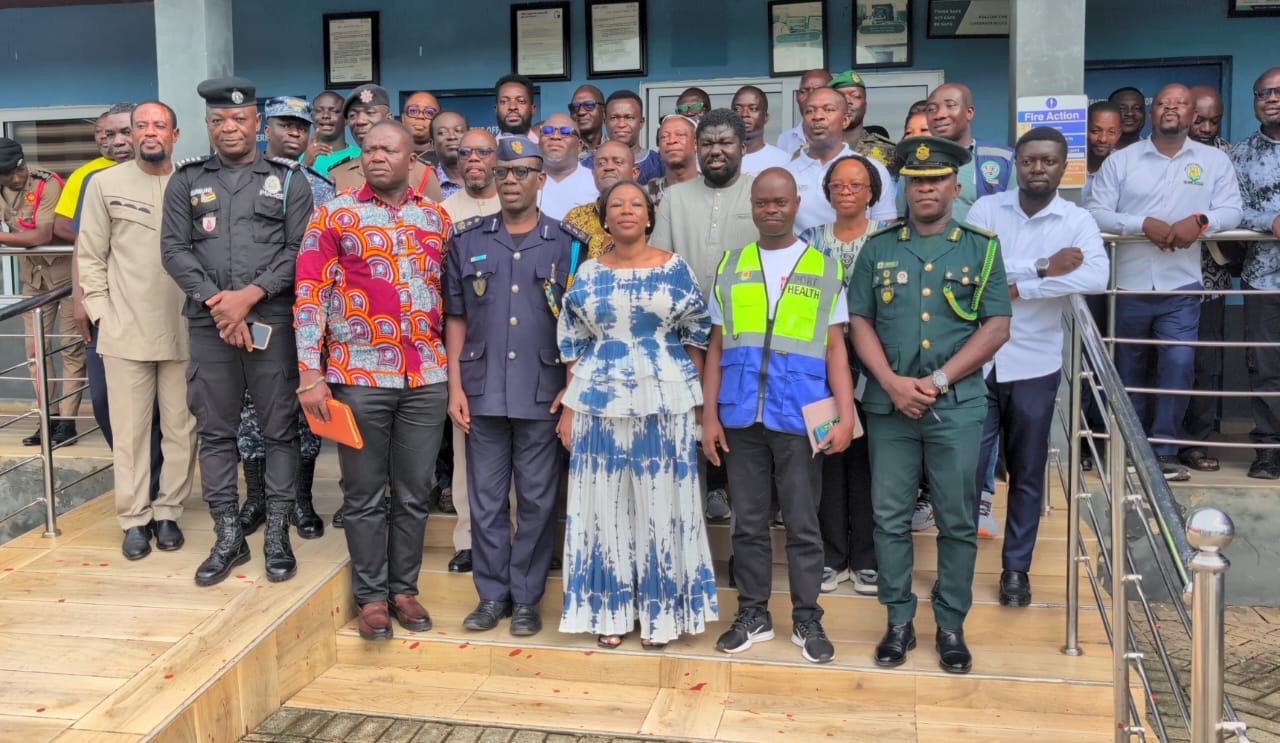
The Government has activated surveillance and isolation systems at major border entry points as part of efforts to detect and prevent the possible spread of the Ebola virus disease into Ghana.
The Deputy Minister of Health, Dr. Grace Ayensu-Danquah, disclosed this during a tour of the country’s two busiest border crossings at Elubo in the Western Region and Aflao in the Volta Region to assess Ghana’s preparedness against the deadly disease.
The visit follows reports of an Ebola outbreak in the Democratic Republic of Congo in mid-May, raising concerns about the risk of cross-border transmission within the region.
Dr. Ayensu-Danquah, a clinician and surgeon, assured health officials and border authorities that government would move swiftly to address identified challenges and strengthen the country’s response mechanisms.
She noted that President John Dramani Mahama had directed the Ministry of Health to ensure that Ghana remains fully prepared to respond to any potential outbreak.
“As a government, it is our duty to ensure that our country and citizens are safe, and that is exactly what we are doing by assessing our response mechanisms to this deadly disease,” she said.
The deputy minister’s inspection forms part of broader government efforts to reinforce disease surveillance and emergency response capacity amid increasing regional health risks.
The World Health Organization (WHO) in May classified the Ebola outbreak as a Public Health Emergency of International Concern, noting that the need for countries to strengthen preventive measures and preparedness systems.
At both the Aflao and Elubo border posts, Dr. Ayensu-Danquah met with border security personnel, port health officials and local authorities to evaluate screening procedures, isolation facilities and inter-agency coordination systems designed to detect and contain suspected Ebola cases.
Briefings from health officials indicated that screening, surveillance and isolation protocols were already operational, placing Ghana in a strong position to respond to any imported case.
However, officials also highlighted several challenges, including inadequate personal protective equipment (PPE), limited staffing levels and deteriorating infrastructure that had been established during the COVID-19 pandemic.
In response, Dr. Ayensu-Danquah pledged immediate government intervention, revealing plans to establish modern and fully equipped border health facilities while increasing investments in personnel, logistics and essential medical supplies.
“The government remains committed to ensuring robust surveillance, screening and response mechanisms are in place to protect the health and safety of Ghanaians,” she stated during inspections of screening points, isolation centres and municipal health facilities.
The tour reflects the Mahama administration’s broader commitment to strengthening national health security, particularly at border points where trade and human movement increase the risk of disease importation.

President Mahama has identified investments in primary healthcare, disease surveillance and frontline health infrastructure as key priorities of his administration.
As part of these efforts, government has introduced flagship initiatives such as the Mahama Cares Programme and the Free Primary Healthcare Policy, while continuing to retool health facilities and enhance the capacity of health workers across the country.
Beyond assessing infrastructure, the deputy minister’s visit also sought to improve collaboration among key agencies, including the Ghana Immigration Service, the Customs Division of the Ghana Revenue Authority and regional health directorates, while identifying training and resource needs to bolster emergency response capacity.
The government says these measures are aimed at ensuring Ghana remains vigilant and well-prepared to prevent and respond effectively to any potential Ebola outbreak.
For more news, join The Chronicle Newspaper channel on WhatsApp: https://whatsapp.com/channel/0029VbBSs55E50UqNPvSOm2z