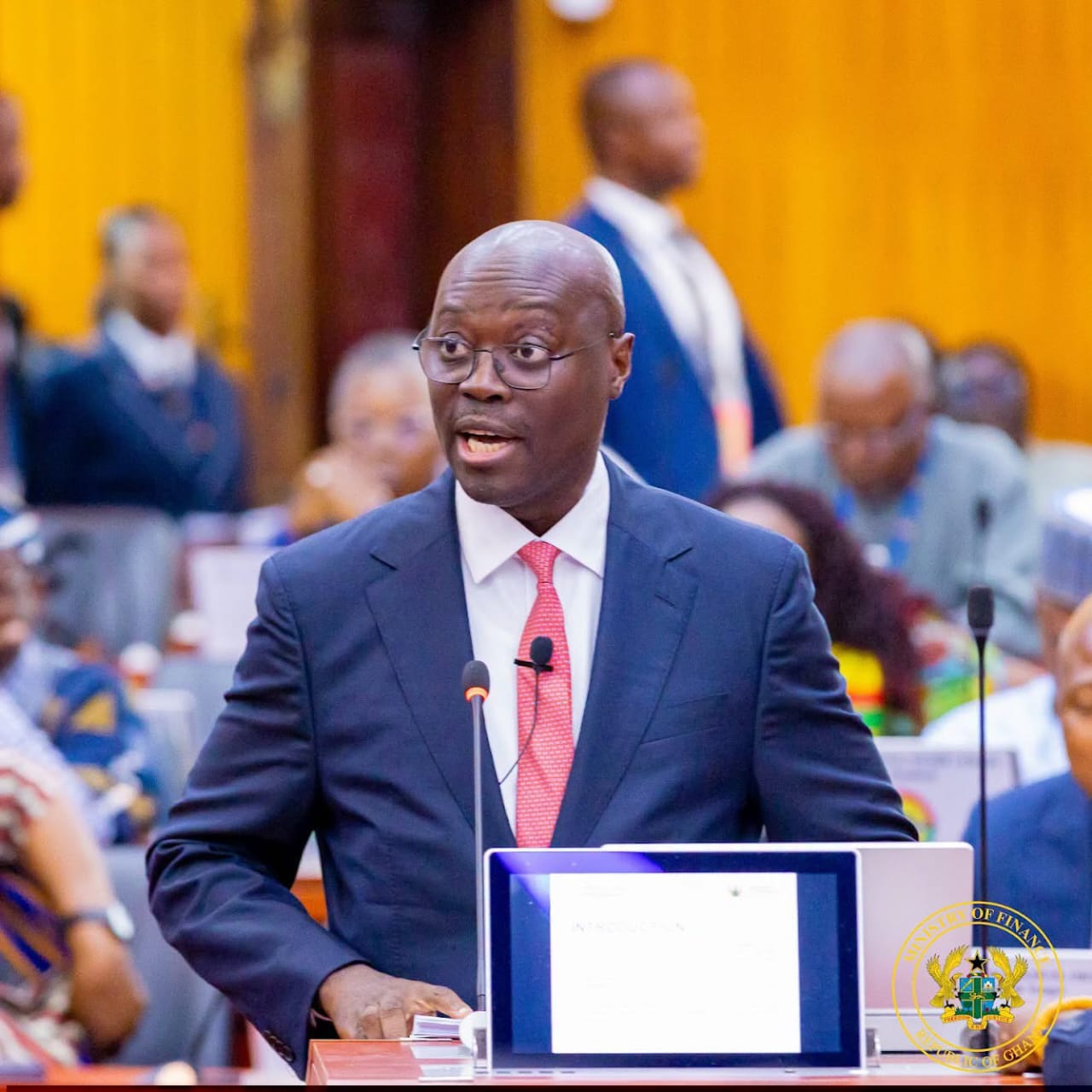
Government has ring-fenced US$1.7 billion for the construction of the Accra–Kumasi Expressway, the flagship project under its Big Push Infrastructure Programme, Finance Minister Dr. Cassiel Ato Forson has announced.
Presenting the 2026 Mid-Year Fiscal Policy Review to Parliament, Dr. Forson said the funds had already been deposited into a dedicated Accra–Kumasi Expressway Account at the Bank of Ghana, and would only be accessed after the award of the main construction contract.
The 176-kilometre six-lane expressway, which links Ghana’s two largest commercial cities, is expected to reduce travel time between Accra and Kumasi to about two hours, improve road safety, ease congestion and lower transportation costs.
“As of 22nd July 2026, US$1.7 billion had been deposited into the dedicated Accra–Kumasi Expressway Account at the Bank of Ghana,” the Minister told Parliament, adding that the funds had been ring-fenced exclusively for the project.
Dr. Forson said preparatory work on the project was progressing steadily, with the Ghana Armed Forces clearing 122 kilometres, representing about 70 per cent of the required right-of-way within 12 weeks.
The remaining corridor is expected to be cleared by the first week of September, while feasibility studies, engineering designs, environmental assessments and compensation processes are ongoing. Procurement for the main construction contract is expected to commence in September.
The Accra–Kumasi Expressway is designed as a modern economic corridor to improve connectivity between the southern and northern parts of the country, strengthen regional trade and support ECOWAS transit activities.
The access-controlled highway will feature major interchanges, electronic tolling systems, emergency facilities and modern rest areas, while reducing congestion and improving the movement of passengers and freight along one of Ghana’s busiest transport routes.
The project forms the centre piece of the Big Push Infrastructure Programme, under which work has commenced on 87 projects across all 16 regions. These include 74 trunk roads and bridges, 10 urban roads and three feeder roads.
According to the Finance Minister, 13 projects had reached at least 50 per cent completion by the end of June, 2026 including six that had exceeded 75 per cent completion, while another 15 had progressed beyond 25 per cent.
Beyond infrastructure, the Mid-Year Review announced major reforms for the cocoa sector, with government preparing to submit a new COCOBOD Bill to Parliament to replace the Ghana Cocoa Board Act, 1984 (PNDCL 81).
The proposed legislation will introduce a producer pricing mechanism that aligns cocoa producer prices with international cocoa prices, exchange rate developments and other market conditions.
Dr. Forson said the reforms were aimed at modernising the governance and financing of the cocoa industry, which remains a major source of export earnings and livelihoods for millions of Ghanaians.
The Minister also outlined measures to strengthen revenue mobilisation, including reforms to the VAT, Customs and Excise regimes.
He urged Parliament to support measures to crack down on businesses that collect Value Added Tax (VAT), but fail to remit it to the State, saying the deployment of Fiscal Electronic Devices would improve compliance and reduce revenue losses.
Government is also seeking approval for revised Customs and Excise Bills to tighten controls over bonded warehouses, reform the free zones regime and introduce the First Port Duty Rule to curb tax evasion through false transit declarations.
As part of the reforms, bonded warehouses will be required to operate electronic inventory systems linked directly to Customs, while statutory limits will be placed on warehousing periods.
Dr. Forson also highlighted the impact of the Publican AI Trade Solution, which has increased assessed customs collections by more than US$300 million since its rollout in March, representing a 17.5 per cent increase over values originally declared by importers.
He said the platform had analysed about 366,000 import declarations, with nearly one in four flagged for valuation risks. Monthly customs revenue has subsequently increased from an average of GH¢4 billion in 2025 to between GH¢5.3 billion and GH¢5.5 billion this year.
In the energy sector, the Minister reported that the Gas-to-Power Strategy had generated GH¢3.08 billion in fuel cost savings during the first half of 2026 by replacing light crude oil with natural gas for electricity generation.
The Review also announced the reallocation of GH¢400 million for high-capacity buses for Metro Mass Transit and the State Transport Company, while GH¢350 million has been redirected to support emergency flood response following the June floods.
For more news, join The Chronicle Newspaper channel on WhatsApp: https://whatsapp.com/channel/0029VbBSs55E50UqNPvSOm2z