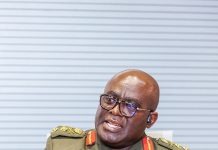
The former United Nations governance adviser and Chief Executive Officer of the John A. Kufuor Foundation, Prof. Baffour Agyeman-Duah, has cautioned that despite recent macroeconomic stability, Ghana’s economy remains structurally neocolonial and highly vulnerable to external shocks.
Speaking on Joy FM’s current affairs programme, NewsFile, over the weekend, which was monitored by The Chronicle, the former United Nations official argued that Ghana’s economic fundamentals continue to reflect deep vulnerability to global market forces.
His comments come amid renewed debate over the performance of the administration of John Dramani Mahama, following recent gains in macroeconomic indicators, a pattern often associated with the early phase of new governments in Ghana.
Sustainability, Not Stabilisation
While acknowledging the importance of short-term macroeconomic improvements, Prof. Agyeman-Duah stressed that sustainability remains the real test.
“So those things, we can live with it. But more seriously, after achieving these initial macroeconomic successes, the challenge for me is sustainability,” he stated.
According to him, Ghana’s economic structure remains overly dependent on primary commodities whose pricing and demand are determined externally.
“And all the commodities that are driving us currently are commodities that we do not control. That’s where the danger is,” he noted.
Beyond Aid – Policy Intent Versus Structural Change
Reflecting on the “Ghana Beyond Aid” initiative championed by former President Nana Addo Dankwa Akufo-Addo, Prof. Agyeman-Duah described it as a “beautiful policy,” but suggested it lacked structural depth.
He urged the current administration to ensure that macroeconomic gains do not become a mirage, but rather translate into long-term structural transformation.
The Food Security Imperative
Central to his argument is the need for deliberate policies aimed at self-sufficiency, particularly in agriculture.
He questioned Ghana’s continued dependence on imported food products, citing tomatoes imported from Burkina Faso as a troubling example of structural weakness.
“That Ghana should sit here today and go to Burkina Faso to import tomatoes with all the fertile land around us, we cannot produce enough. Just think of that alone. Without their tomatoes, we are already getting into trouble,” he observed.
He described the situation as a “dependency syndrome,” warning that reliance is not only global but increasingly regional.
“If you’re talking about the dangers of dependency — not even on the global level — this is it,” he stressed.
Call for Aggressive Industrial Policy
Prof. Agyeman-Duah called for a paradigm shift toward targeted self-reliance policies, particularly in sectors where the country spends substantial foreign exchange.
“I would like to see a more aggressive policy towards achieving certain self-sufficiency in areas where we’re spending so much money and resources,” he said.
He expressed optimism about the government’s Feed Ghana agricultural initiative, noting that such programmes must move beyond rhetoric to measurable output expansion and value addition.