Ghana is seeking to rewrite its relationship with Chinese mining investors, calling for partnerships that go beyond extracting minerals and exporting them as raw materials to building processing industries, transferring technology and creating skilled jobs at home.
The Minister for Lands and Natural Resources, Emmanuel Armah-Kofi Buah, made the call at the Ministerial Forum on International Mining Cooperation and the opening of the 28th China Mining Conference and Exhibition in Tianjin.
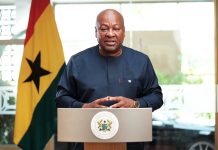
Representing President John Dramani Mahama and the Ghanaian government, Buah said Ghana was ready for a new generation of mining partnerships in which the country’s mineral wealth would become a foundation for industrialisation rather than simply an export commodity.
“The next chapter of mining must be measured not simply by what we take from the ground, but by what we leave above it: industries, skills, technology, restored land, stronger communities and a more prosperous nation,” he said.
The appeal comes as mineral-rich countries across Africa seek to capture more of the economic value generated from resources increasingly important to manufacturing, energy and advanced technologies.
For decades, Ghana and other resource-producing countries have exported raw minerals while much of the processing, technology and higher-value manufacturing took place elsewhere. Buah said Ghana wanted to change that pattern.
“For the young Ghanaian looking for work, value addition is not an economic theory. It is a job. It is a skill. It is a career. It is the possibility of building a life at home,” he said.
Ghana is seeking deeper Chinese investment in processing, technology, infrastructure and local supply chains, rather than investment focused primarily on extraction.
Buah cited the presence of Chinese mining companies including Chifeng Gold Group, Shandong Gold and Zijin Mining in Ghana as evidence of the potential for stronger cooperation.
But he said the next phase should be more ambitious. “We want the next generation of partnerships to go further into processing, technology, skills development, infrastructure and local supply chains,” he said.
China’s experience in linking natural resources to processing, manufacturing and infrastructure, he added, presented an opportunity for Ghana. “The question is no longer only, ‘Who will buy our resources?’ The more consequential question is: ‘What can we build together from them?’” he said.
The minister stressed that Ghana’s proposed model was intended to benefit both sides. The country must receive fair value from its resources, he said, while investors must have a stable, predictable and commercially viable environment.
Ghana is reviewing its mining regulatory framework, formalising artisanal and small-scale mining and strengthening transparency across the gold value chain, according to Buah.
Ghana has been battling illegal mining, which has damaged waterways and land in several parts of the country. Buah cited the National Anti-Illegal Mining Operations Secretariat and the Responsible Cooperative Mining and Skills Development Programme as part of the government’s response.
“A river is not simply an environmental statistic. It is drinking water. It is farming. It is the livelihood of a community. It is an inheritance held in trust for a child not yet born,” he said.
He called for greater Ghana-China cooperation in mine reclamation, tailings management and land restoration, areas in which he said China could bring significant technological experience.
For more news, join The Chronicle Newspaper channel on WhatsApp: https://whatsapp.com/channel/0029VbBSs55E50UqNPvSOm2z