Friends of Rivers and Waterbodies (FRWB), a leading environmental non-governmental organisation, has called on the government to take urgent steps to protect road reservations across the country, warning that widespread encroachment is increasing the cost of infrastructure development and posing a serious threat to sustainable urban planning.
The group expressed concern that road reservations, which contain spaces designated for future road expansion, public utilities, pedestrian walkways and utility lines, are increasingly being occupied by developers and informal traders.
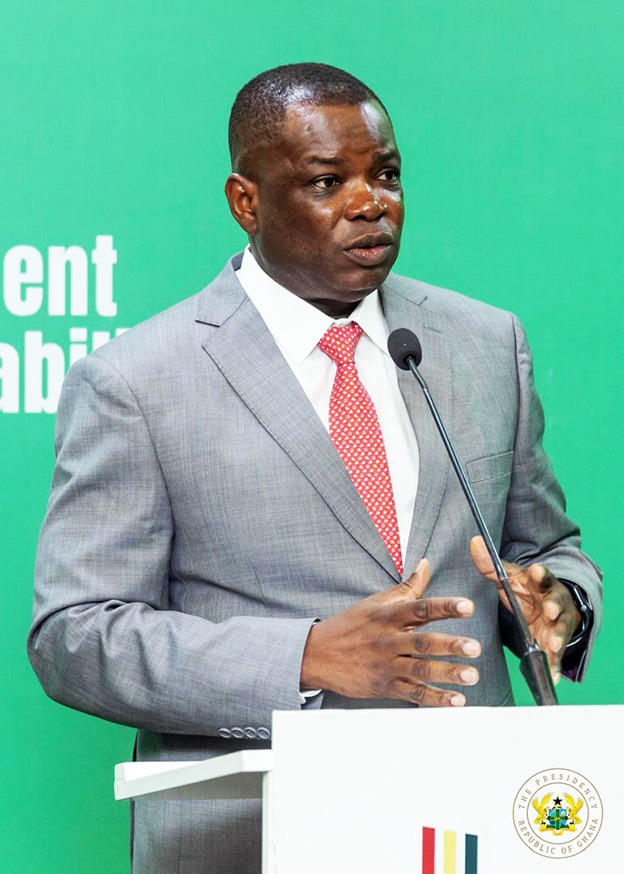
“This is not just an Accra problem, it is happening across the country. People continue to put up structures on road reservations, with little regard for planning regulations,” the President of FRWB, Nana Dwomoh Sarpong, said in an interview with The Chronicle.
He described the situation as alarming, noting that many developments now extend right up to drainage channels, leaving little or no space for sidewalks, blocking drains and exposing pedestrians to danger.
“We have encroached right up to the gutters. Sidewalks have disappeared, drains are being obstructed and buildings are being erected only a few feet from busy roads. This is not sustainable,” he stated.
Critical functions
Nana Sarpong stressed that road reservations serve purposes far beyond accommodating future road expansion.
He explained that, they provide space for public utilities, pedestrian walkways, drainage systems and public transport infrastructure, while also supporting groundwater recharge and improving air circulation.
He stated that when these areas are built over or paved, the natural movement of water is disrupted, increasing the risk of flooding and undermining effective urban planning.
The FRWB President said the continued encroachment on road reservations is placing a significant financial burden on the State.
He explained that whenever roads are expanded or reconstructed, the government is often compelled to pay substantial compensation for structures that should never have been erected within the reservations.
“In many countries, road reservations are protected for future road expansion, walkways, landscaping and public transport infrastructure.
“They are valuable public assets. By allowing encroachment, we are making infrastructure development unnecessarily expensive for ourselves,” he observed.
Stronger enforcement
Nana Sarpong attributed the growing problem to weak enforcement of planning regulations and, in some instances, the issuance of development permits for structures located within road reservations.
He, therefore, called on the Ministry of Roads and Highways, the Land Use and Spatial Planning Authority (LUSPA), the Metropolitan, Municipal and District Assemblies (MMDAs) and other relevant institutions to work together to safeguard road reservations and reclaim encroached areas where necessary.
He emphasised that protecting these public spaces would reduce future compensation costs, improve road safety, minimise flooding and support orderly urban development.
“The decisions we take today will determine the quality of our infrastructure tomorrow. Protecting road reservations is not merely a planning issue; it is an investment in Ghana’s future development,” he said.