
The Board and Management of Ghana Integrated Aluminium Development Corporation (GIADEC) have come under severe pressure following an intent of alleged marginalisation of Ghanaian Mining firms from allocation of the Nyinahin Bauxite Block C in the Atwima Mponua District of the Ashanti Region.
The Nyinahin bauxite deposit is seen as a major national asset, both in scale and in economic potential, with a total reserve of about one billion metric tonnes, making it one of the largest known deposits in the sub-region.
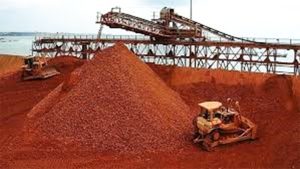
This positions Nyinahin as a critical component in Ghana’s long-term ambition to build a fully integrated aluminium industry.
The Ghana Integrated Aluminium Development Corporation (GIADEC) is established by an Act of Parliament, the Ghana Integrated Aluminium Development Corporation Act, 2018 (Act 976) to develop and promote a globally competitive Integrated Aluminium Industry (IAI) in Ghana.
But sources claim that there are plans to allocate the three main compartments of the Nyinahin deposits to foreign investors and that such arrangement may be presented as partnerships with Ghanaian entities, effectively masking foreign control.
Industry players claim GIADEC is actively steering the allocation of the Nyinahin bauxite Block C toward expatriate companies, sidelining Ghanaian firms with proven capacity.
As a result, GIADEC has come under criticisms over their handling of the process amid concerns about fairness, transparency, and the protection of national interest as competent local firms are being overlooked while foreign investors are being positioned to take control of one of Ghana’s most valuable untapped mineral resources.
Critics contend that such actions not only undermine confidence in the system, but also contradict the broader national agenda of empowering indigenous businesses raising deeper concerns about whether the country is fully committed to supporting its own companies in strategic sectors.
At a broader level, the situation appears to run counter to the policy direction often championed by President John Dramani Mahama.
The President has consistently emphasised the need to strengthen indigenous enterprises as a foundation for sustainable economic growth.
He has argued that Ghana must focus on boosting its Gross National Product (GNP), which reflects the value created by its citizens.
They say the current posture of GIADEC does not reflect the President’s vision and that the silence surrounding the verification of applications submitted by indigenous firms has only deepened public concern.
Many industry watchers say the lack of transparency risks eroding trust in the institutions responsible for managing the sector.
The critics argue that if the leadership of GIADEC allocates the Nyinahin Bauxite Block to foreign investors without restraint, the approach will only go to reduce local companies to secondary players rather than true beneficiaries.
They cautioned that prioritising foreign investors in such a critical industry could limit Ghana’s ability to fully benefit from its natural resources.
Local sources therefore recommended that GIADEC rethinks its position to ensure that Ghanaian companies are given a fair chance since examples abound that local firms are capable of delivering results.
They cited the Ghana Bauxite Company Limited (GBC), operating at Awaso in the Western North Region as a strong example of indigenous success in the sector having demonstrated efficiency and reliability in its operations.
“Beyond production, the company has made significant contributions to community development and investment in the areas of education, healthcare, and employment in Awaso and surrounding communities” they said adding that such examples strengthen the case for prioritizing indigenous companies in the Nyinahin project.
Meanwhile, the Chief of Nyinahin, Nana Dr. Amanpene Boateng Twum II, has strongly advocated for indigenous companies with proven capacity to be given priority in major mining contracts, rather than defaulting to foreign firms.
Nana Boateng Twum, a former board member of the Ghana Integrated Aluminium Development Corporation, stressed the need for fairness in the award of contracts.
The chief was reacting to recent criticism over allegations that foreign firms are being favoured in bauxite contracts at the expense of qualified Ghanaian companies by GIADEC.
According to him, Ghanaian-owned companies that meet all technical and financial requirements should not be side-lined stressing that competence must remain the key consideration and that local participation should not come at the expense of quality or efficiency.
“If a Ghanaian company has the capacity, it deserves the opportunity,” he indicated adding that prioritising capable indigenous firms will ultimately benefit the country economically.
Nana Dr. Boateng Twum ll supported his argument pointing to the example of the Ghana Bauxite Company at Awaso in the Western North Region. He praised the performance of the Ghana Bauxite Company Limited, describing its journey as successful.
The company, which is largely Ghanaian-owned, currently operates the country’s only active bauxite mine saying GBC’s contribution rivals that of the cocoa sector, which has long been a major source of income in the region.
Historically, bauxite mining in Ghana dates back to 1921, when the mineral was first discovered at Awaso. Commercial operations began in the 1940s, establishing the area as a key centre of mining activity.
Today, Awaso remains the country’s only active bauxite mine producing high-quality trihydrate bauxite with about 52 percent alumina content and low silica levels. Currently, about 1.2 million tonnes are exported annually through the Takoradi Port to international markets.
GBC operates as a joint venture, with 80 percent owned by the indigenous Ofori-Poku Company Limited and 20 percent by the Government of Ghana.
The government’s interest is held through GIADEC, placing the corporation at the centre of both oversight and participation.
According to the chief of Nyinahin, GBC’s story has changed significantly since local ownership took over from a foreign company who were running loss. He added that the previous foreign operators struggled and recorded losses during their tenure.
In contrast, the current operators have demonstrated efficiency and progress and noted that more local youth have been employed in various areas including site operations, security, transportation and administrative work.
Beyond employment, the chief said the company has also shown commitment towards improving community relations and supporting local development, giving residents confidence that indigenous firms can successfully manage such major projects while ensuring that the benefits are felt directly by the people.
It is for these potentials and benefits that calls for greater accountability and transparency in its decisions have intensified lately on GIADEC for urgent attention.
At the time of filing this report, GIADEC had not responded to The Chronicle’s enquiries regarding its position on the accusation of marginalisation of local participation in the mining of bauxite at the Nyinahin bauxite Block.
For more news, join The Chronicle Newspaper channel on WhatsApp: https://whatsapp.com/channel/0029VbBSs55E50UqNPvSOm2z