Africa’s demand for permanent seats on the UN Security Council has rarely been louder. At the 81st General Assembly, President Mahama declared that reform is “not a favour to Africa” but a condition of the UN’s own legitimacy. Weeks earlier, Africa won a different kind of recognition: by 164 votes to 1, the General Assembly backed equal-area world maps that show the continent at its true size.
The moral case behind both campaigns is overwhelming. Africa is home to 54 of the UN’s 193 members and some 1.5 billion people, more than 18 per cent of humanity. In 1945 most of the continent was still colonised and had no say in shaping the post-war order. Much of the Council’s agenda concerns Africa, and African troops carry a large share of peacekeeping, yet Africa has no permanent voice in authorising those missions. The Ezulwini Consensus asks for at least two permanent African seats with the same rights as existing members, including the veto.
I support both causes. But the job of an Intelligence Analyst is to ask what a decision will actually change, not only whether it is just. Symbols follow power far more often than they create it. Without changes in Africa’s underlying weight, permanent seats are likely to inherit the same pressures that bend our elected members today, and they would arrive just as many consequential decisions move out of the Council altogether. On that path, the seat, like the map, risks becoming an ornament of recognition rather than an instrument of power.
The map: a victory of perception
The map resolution is narrower than the headlines suggest. It is nonbinding, calls Equal Earth “a relevant option” and recommends it for classrooms depending on use. In intelligence language, it is a perception campaign, and a legitimate one, aimed at how the next generation of students, investors and policymakers see Africa.
The fact though is that power has never been the function of land area. The Democratic Republic of Congo is vast and weak; Singapore is tiny and formidable. A bigger Africa on a classroom wall builds no refinery, balances no trade account and adds no capability. The real danger is substitution. Symbolic victories are cheap for political elites, and they can be celebrated at summits while the harder work is postponed.
This is not to dismiss one genuine dividend. African diplomacy assembled 164 states and left a superpower isolated. That coalition-building capacity is a real asset, but only if it is reused on issues with material weight, including reform of the Council itself.
What the A3 record tells us
Africa already holds three elected seats, known as the A3. Their history is the best evidence of how African members behave under pressure.
The record is sobering. In 2003, as Washington and London sought a second resolution on Iraq, Angola, Cameroon and Guinea found themselves among the undecided members courted intensively by both sides of a great-power quarrel. In 2011, all three African members voted for Resolution 1973 authorising force in Libya, although the African Union had opposed foreign military intervention. The AU’s position did not survive contact with the permanent five!
Researchers at the Security Council Report note that A3 members still face significant external pressure from powerful states. Analysts at Amani Africa observe that when coordination weakens, national positions displace collective ones and exposure to permanent-member pressure rises. That pressure does not come from the seat. It comes from dependence: on aid, debt relief, security assistance, trade access and diplomatic favour.
The record is not all bleak. A cohesive A3 has become a force on African files, to the point that its support is now regarded as a de facto requirement for Council products on African issues. Its signal achievement was Resolution 2719 in 2023, which opened the door to financing AU-led peace operations from UN assessed contributions.
The lesson is precise. African influence on the Council has come from unity and preparation, not from the type of seat. And the vulnerability has come from dependence, which a permanent seat does nothing to reduce.
The seat: a stage, not a source of strength
A Council seat is a stage. It amplifies power that already exists; it does not conjure it. Four questions show why.
Can we pay? The permanent five carry heavy burdens, especially for peacekeeping. African assessments are small by comparison. Algeria, one of the continent’s larger economies, is assessed at 0.087% of the regular budget for 2025 to 2027. The African Union has struggled to meet its own target of funding 25% of its peace support operations. A continent that cannot fund its own security architecture will struggle to carry the expectations of permanence.
What does it confer? The veto is a blocking tool that protects states which already have interests worth protecting. A permanent member without economic, military or intelligence depth becomes a target, lobbied and pressured by great powers on every vote.
Will we even get the veto? Probably not. In 2024 Washington backed two permanent African seats but opposed giving them the veto. A seat with the veto requires a Charter amendment ratified by all five permanent members. A seat without it creates a second tier that carries the burdens of permanence without the one instrument that forces others to bargain.
Who sits, and for whom? Nigeria, South Africa and Egypt, among others, have rival claims. Whoever is seated will be a sovereign state first. France and UK have never voted as “Europe’s seat”, and no African permanent member will be bound by an AU mandate it cannot enforce.
A seat at a shrinking table
The United Nations has never been a power in its own right. It is an arena where powers meet and an instrument they use when their interests align. Where the permanent five disagree, as over Ukraine and Gaza, the Council has been paralysed.
This year, its influence decline accelerated. The Secretary-General warned of a “race to bankruptcy” and cut the 2026 regular budget by about 15 per cent, eliminating nearly a fifth of posts. Washington withdrew from 66 international organizations, 31 of them UN-linked, and launched a Board of Peace that some allies fear could rival the Council. Consequential decisions increasingly happen in the G20, BRICS and coalitions of the willing.
The most likely future for the UN over the coming decades is a hollowed arena: a forum for legitimacy and a network of technical agencies, while hard security is settled in smaller clubs. In that world, the permanent five keep what matters most, the ability to block, and newcomers receive the chair without the room’s former authority.
The counter-argument deserves a fair hearing. A diminished Council is not an irrelevant one. It still authorises peacekeeping, imposes sanctions and confers legitimacy on the use of force, and most of that business concerns Africa. Legitimacy matters too: a permanent African presence would give the continent a standing claim to be consulted. But these benefits flow largely from cohesion and preparation, which Africa can build now from its elected seats.
Where power actually comes from
If maps and seats do not create power, what does? Five levers matter more than any resolution.
Fiscal self-reliance. Money given can be money withdrawn, and funding is the most reliable leash in international affairs. A state that pays its own way can vote its own way.
Market integration. Fifty-four fragmented markets are fifty-four small bargaining positions. A fully implemented African Continental Free Trade Area would turn scale on a map into scale at the negotiating table.
Processing our own minerals. The energy transition runs on African cobalt, copper, lithium and manganese. Exporting them raw hands the value, and the leverage, to others.
Competent security and intelligence services. A state that cannot see threats cannot deter them, and a state that cannot secure itself will have its security managed by others.
Sovereignty over strategic data. Pathogen samples, genomic data and population health records are strategic assets. Ghana’s recent refusal of a US health compact on data grounds was a practical exercise of power, more consequential than any map.
Making the seat an instrument
Alongside these levers, Africa can strengthen its hand in the Council today, from the seats it already holds.
-
Institutionalise A3 cohesion through binding coordination with the AU Peace and Security Council, shared drafting capacity and joint analysis.
-
Pay for African security, so that the promise of UN financing under Resolution 2719 rests on Africa carrying its share.
-
Invest in the clubs where decisions now happen, starting with the AU’s seat at the G20.
-
Give New York missions shared analytical and intelligence support. Small delegations facing well-resourced permanent members lose before the vote.
-
Agree in advance how a permanent seat would be used, so that it does not become a prize that divides the continent.
Seen differently, or needed differently
The map campaign and the seat campaign share one aim: they ask the world to see Africa differently. But nations are not respected for how they are seen. They are respected for what others cannot do without.
The record of the A3 is clear. Influence has followed unity and independence, and vulnerability has followed dependence. A permanent seat changes neither. If Africa builds the weight, the seat will amplify it, and even a weakened Council will have to listen. If it does not, the seat will be a chair at a shrinking table, admired at summits and lobbied in corridors, while the real decisions are taken elsewhere.
Let us celebrate the vote and press the claim. Then let us get back to the harder work, so that when the door opens, Africa walks in as a power and not as a guest.
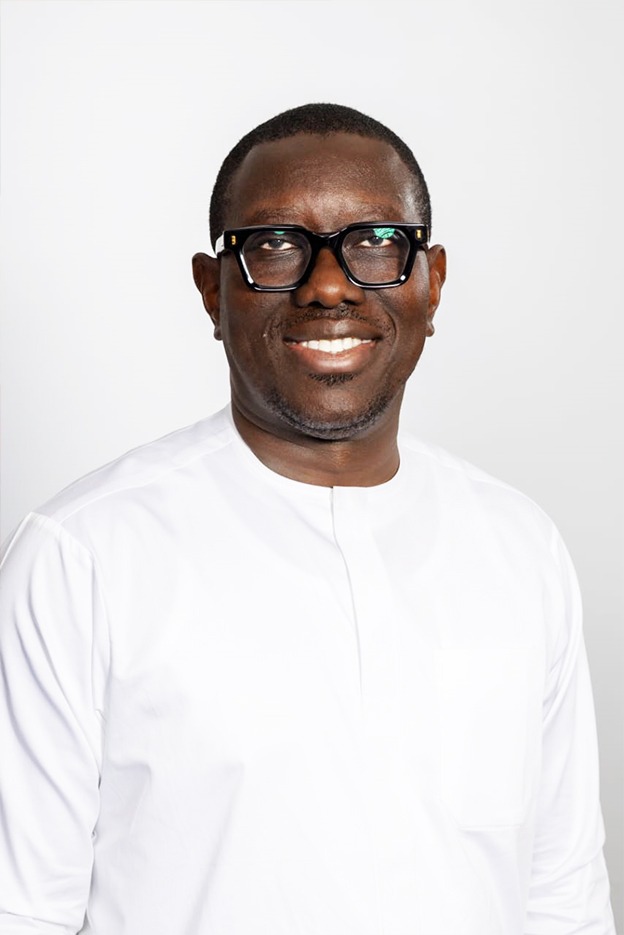
By Nana Attobrah Quaicoe
Nana Attobrah Quaicoe is an Intelligence and National Security Analyst and former Director General of the Bureau of National Intelligence (2022–2025). He writes on national security, intelligence sector reform, risk and integrity assessment, and institutional governance in the Ghanaian context.
For more news, join The Chronicle Newspaper channel on WhatsApp: https://whatsapp.com/channel/0029VbBSs55E50UqNPvSOm2z