Heavy metal contamination once considered a marginal environmental issue is emerging as a serious public health threat in Ghana, with far-reaching implications for child development, maternal health, food safety, and long-term national productivity.
Recent investigations by the Food and Drugs Authority (FDA), supported by UNICEF and reinforced by environmental health studies from Pure Earth Ghana and the Environmental Protection Authority (EPA), show that hazardous metals are entering the Ghanaian food system through cookware, crops, water, and food processing equipment.

At the centre of concern are metals such as lead, mercury, arsenic, cadmium, chromium, and nickel highly toxic substances known to damage the brain, kidneys, blood, immune system, and DNA even at low levels of exposure. Public health experts warn that the cumulative effect of these metals, rather than sudden poisoning events, poses the greatest danger.
The alarm was raised after UNICEF-backed studies detected elevated blood lead levels among Ghanaian children, prompting the FDA to investigate possible sources of exposure. According to the FDA’s Deputy Chief Executive for the Food Division, Mr. Roderick Daddey-Adjei, the findings revealed a disturbing link between everyday consumer products and long-term health risks.
“Lead is a chemical that in very small quantities can be detrimental to health. Chronic exposure poisons the blood and leads to long-term complications, especially in children,” Mr. Daddey-Adjei
Children are particularly vulnerable because their bodies absorb lead more efficiently than adults, and their developing brains are far more sensitive to neurotoxic damage. Even low-level exposure has been associated globally with reduced intelligence, learning difficulties, behavioural disorders, and lower lifetime earnings—outcomes that quietly erode a nation’s human capital.
Multiple Pathways into the Food Chain
In an effort to trace exposure pathways, Mr. Adaddey-Adjei told The Chronicle in an interview that the FDA and UNICEF analysed a broad range of consumer and environmental samples, including children’s cereal mixes, spices such as turmeric, fruits, vegetables, cosmetics, and bentonite clay locally known as Ayimol. Although Ayimol is not classified as food, its widespread consumption by pregnant women made it a critical focus of the investigation.

The results were troubling. Some cereal products commonly consumed by children recorded contamination levels regulators described as “not encouraging,” raising immediate concerns about food safety and early-life exposure.
The studies found that heavy metals enter the food chain through interconnected routes that span agriculture, processing, and household use. Crops grown on polluted soils—particularly in areas affected by illegal mining and industrial activity—absorb metals that persist through harvest and consumption.
Contaminated water used for irrigation further compounds the problem, while food processing introduces additional risks through worn grinding machines, locally known as nikanika, and roasting equipment that shed metal particles into food.
Dadesen Cookware: A Household-Level Exposure Risk
Yet one of the most significant and preventable exposure routes lies inside the home. Locally manufactured aluminum cookware, popularly called Dadesen, is often produced using scrap metals such as car batteries and radiator parts that contain high concentrations of lead. Under high cooking temperatures, these metals can leach directly into food.
“When these pots are exposed to heat, metals leach straight into what people eat,” Mr. Daddey-Adjei warned. “Even if your grains are clean, once the cookware is contaminated, the food becomes contaminated.”
Peer-reviewed studies from Ghanaian universities and international institutions consistently support this concern, showing that artisanal aluminum cookware can release dangerous amounts of lead, particularly under acidic cooking conditions common in local diets.
Dadesen Cookware: A Household-Level Exposure Risk
Assessing the scale of exposure nationwide remains difficult because risk is unevenly distributed. Communities located near industrial zones, artisanal mining areas, and e-waste sites face significantly higher exposure.
In Agbogbloshie, a suburb of Accra, once described as the world’s largest e-waste dump, previous EPA studies detected heavy metals in soil, water, air, and even breast milk—clear evidence that exposure begins early in life and can persist across generations.
Ghana’s Public Health Act empowers the FDA to regulate heavy metals in food and consumer products through market authorisation and surveillance. However, experts caution that regulation alone cannot resolve a problem rooted in informal manufacturing, environmental degradation, weak enforcement, and limited public awareness.
Heavy metal contamination does not announce itself through sudden outbreaks or dramatic emergencies. Instead, it quietly erodes cognitive capacity, strains healthcare systems, shortens life expectancy, and undermines economic productivity. As Mr. Rodrick Daddey-Adjei put it bluntly, contaminated food is one of many invisible risks that collectively shape national health outcomes.
Protecting Ghana’s public health will require coordinated action—safer cookware production, stronger environmental controls, routine food monitoring, sustained public education, and effective enforcement across the entire food system. Without decisive intervention, heavy metals will remain an unseen but powerful force shaping the nation’s health for generations to come.
New Evidence from Mining Communities
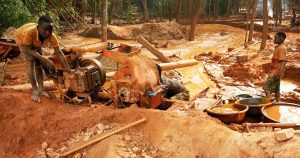
These concerns are reinforced by new findings from Pure Earth Ghana, working in collaboration with the EPA. A large-scale environmental health assessment conducted in artisanal and small-scale gold mining communities across six regions between August 2024 and September 2025 , which the report has published on the website of Earth Ghana , it revealed extensive contamination of soil, water, air, crops, and fish.
In Konongo Zongo in the Ashanti Region, mercury levels in soil exceeded internationally accepted safety guidelines by more than 560 percent, while arsenic concentrations reached extreme levels incompatible with safe agriculture and long-term habitation.
Nearby water sources in Konongo Odumase contained arsenic concentrations hundreds of times above global drinking water limits, exposing households that rely on untreated water to chronic poisoning.
Elsewhere, similar risks were identified. At Asiakwa in the Eastern Region, unsafe lead levels were detected in community water sources, while air quality measurements in Wassa Kayianko in the Western Region showed dangerously high mercury vapour concentrations during gold smelting, posing acute inhalation risks to miners and nearby residents. Most troubling was evidence that contamination had already entered the food supply. Vegetables such as kontomire and pumpkin leaves, along with fish consumed from affected water bodies, were found to contain lead, arsenic, and cadmium, threatening food safety and nutrition.
The Science of Accumulation and Irreversible Harm
From a medical perspective, the danger of heavy metals lies in their persistence. Dr. George Oduro, a Senior Medical Officer at Komfo Anokye Teaching Hospital, explained that metals such as lead and mercury accumulate in the body and are extremely difficult to eliminate.
“Lead travels through the bloodstream and can cross the placenta into unborn children, where it settles in the brain.The damage can be severe and irreversible.”
Dr. Oduro described the process of bioaccumulation, where small environmental concentrations gradually build up in human tissues over time. Metals disrupt vital biological processes, damaging the brain, blood, immune system, kidneys, liver, bones, and DNA. Because symptoms often resemble common illnesses—such as abdominal pain, fatigue, or unexplained fever—exposure frequently goes undetected until serious harm has already occurred.
“There are treatments,” he noted, “but if detection comes late, the damage is often permanent.”
For more news, join The Chronicle Newspaper channel on WhatsApp: https://whatsapp.com/channel/0029VbBSs55E50UqNPvSOm2z