
Government has been urged to provide Metropolitan, Municipal and District Chief Executives (MMDCEs) with adequate funding, legal authority and operational support to strengthen the fight against illegal mining, popularly known as galamsey.
A new study has warned that assigning district assemblies greater responsibility for monitoring and controlling illegal mining without the necessary institutional and financial backing could undermine efforts to address the menace.
The study, conducted by Globe and Systems Consulting (Canada) and SysGlo Solutions Ghana Limited, in collaboration with researchers from the University of Ghana and two Canadian universities, argues that district assemblies are better positioned to monitor mining activities because of their proximity to affected communities.
It maintains that national regulatory institutions, including the Minerals Commission and the Environmental Protection Agency (EPA), cannot effectively monitor the hundreds of scattered and constantly changing mining sites across the country without the active involvement of local authorities.
According to the researchers, district assemblies have daily access to mining communities and possess local knowledge and legal authority over land use and development, making them critical partners in mining monitoring and enforcement.
The findings come amid renewed calls for MMDCEs to assume greater responsibility in the fight against illegal small-scale mining, following the maiden National Conference of MMDCEs on Illegal Small-Scale Mining, held in Kumasi on November 2.
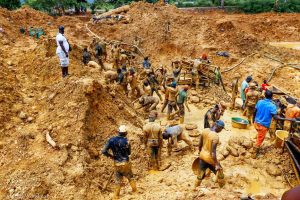
At the conference, the chief executives were tasked with supporting operations by the National Anti-Illegal Mining Operations Secretariat, promoting cooperative mining, prioritising land reclamation and establishing district-level anti-illegal-mining coordination mechanisms.
However, the researchers cautioned that these responsibilities would be difficult to discharge without clearly defined mandates, dedicated budgets and effective accountability structures.
Assemblies lack resources
The study found that although some district assemblies already monitor mining sites, respond to complaints, support enforcement operations and undertake reclamation activities, much of the work is conducted informally.
It identified the absence of specific legal mandates, standard operating procedures, mandatory reporting requirements and dedicated budgets as major weaknesses in district-level mining governance.
In some districts, task forces have undertaken activities including registering and mapping mining operations, removing miners from river bodies and enforcing land reclamation.
However, the researchers observed that the effectiveness of such interventions often depended on the personal commitment of individual District Chief Executives rather than established institutional arrangements.
The study also raised concerns about alleged complicity, irregular fee collection and political interference in some districts, warning that weak monitoring systems make it difficult to assess the performance of assemblies.
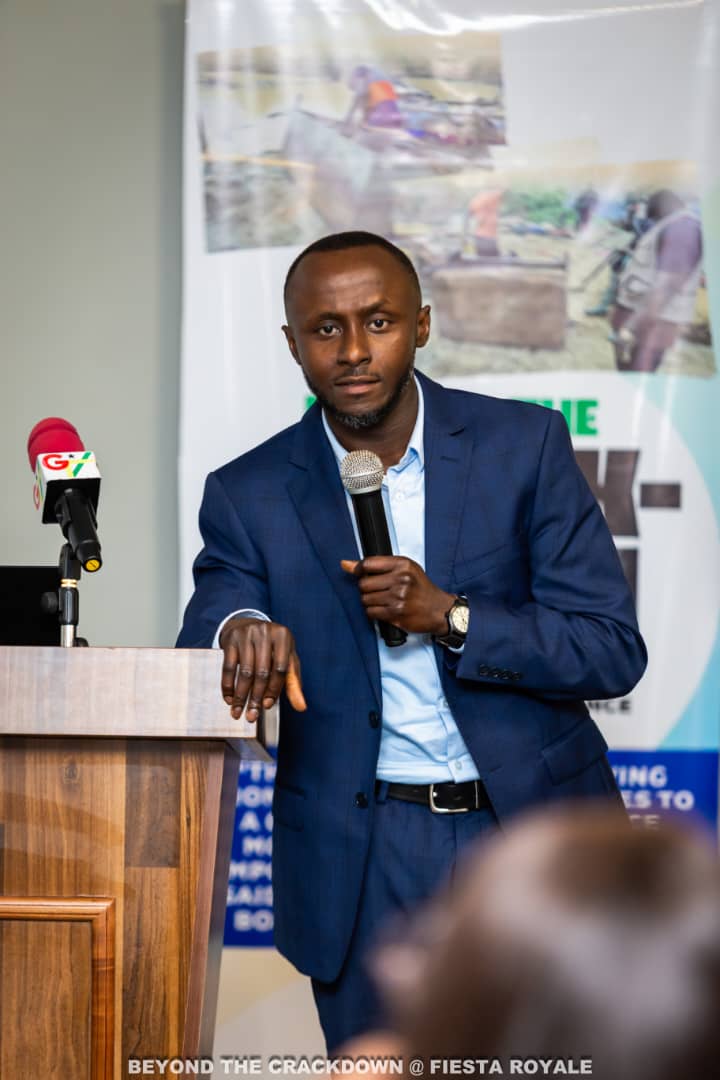
Lead Researcher, Dr John Boakye-Danquah, said assigning responsibility to local authorities without establishing the necessary governance structures would not produce the desired results.
“Mining is local, so the lead in enforcement and monitoring should also be local. That is the governance fit Ghana needs but currently lacks,” he said.
Prof Yaw Agyeman Boafo, of the Centre for Climate Change and Sustainability Studies at the University of Ghana, also stressed the importance of transparency and accountability in district-level mining governance.
“Assemblies need clear rules, digital records and independent oversight so that good performing districts can prove their performance and weak ones cannot hide,” he said.
Funding and accountability
Another major concern identified by the researchers was the inactivity of District Mining Committees, which they said had largely become dormant shortly after their inauguration and training.
The study attributed the situation partly to inadequate operational funding, unclear powers and the absence of reporting obligations.
A district finance officer interviewed during the research explained that organising committee meetings involved financial commitments, including fuel, transportation and allowances for members, which some assemblies struggled to meet.
To address these challenges, the researchers recommended a dedicated funding arrangement for district mining oversight, alongside clearly defined responsibilities for assemblies in monitoring, registration, licensing support, community engagement, reclamation and enforcement.
They also proposed that national regulators and security agencies be formally required to collaborate with district assemblies through joint inspections, information sharing and coordinated enforcement activities.
Additionally, the study recommended common performance indicators for mining districts, monthly reports on mining operators and their locations, as well as independent audits of district mining records, accounts and reclamation activities.
The proposed district mining registers, according to the researchers, could also provide the foundation for a national gold traceability system under the Ghana Gold Board.
Crackdowns not enough
Dr John Boakye-Danquah (Adjunct Lecturer, University of Saskatchewan, Canada) called for a rapid national assessment of district mining governance to determine the capacity of individual assemblies before assigning them additional responsibilities.
“Government does not yet know which districts are ready for this role and which are not. A rapid national assessment of district mining governance, followed by targeted training for MMDCEs and core officials, would show where to begin and where support is most needed,” he said.
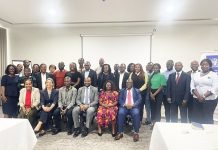
The study followed a policy dialogue organised by the research team under the theme, “Beyond the Crackdown: Putting District Assemblies at the Heart of Mining Governance in Ghana”, at the Fiesta Royale Hotel in Accra on March 26, 2026.
Following the dialogue, the researchers presented their findings and a district-level implementation plan to the Ministries of Lands and Natural Resources; Local Government, Chieftaincy and Religious Affairs; and the Ghana Gold Board.
Dr Boakye-Danquah maintained that repeated military and security operations alone would not provide a lasting solution to illegal mining.
“It is time to stop pretending that the next crackdown will end galamsey,” he said, stressing that although enforcement remained necessary and mining in water bodies must remain prohibited, sustainable solutions must also address the livelihoods of people in mining communities.
For more news, join The Chronicle Newspaper channel on WhatsApp: https://whatsapp.com/channel/0029VbBSs55E50UqNPvSOm2z