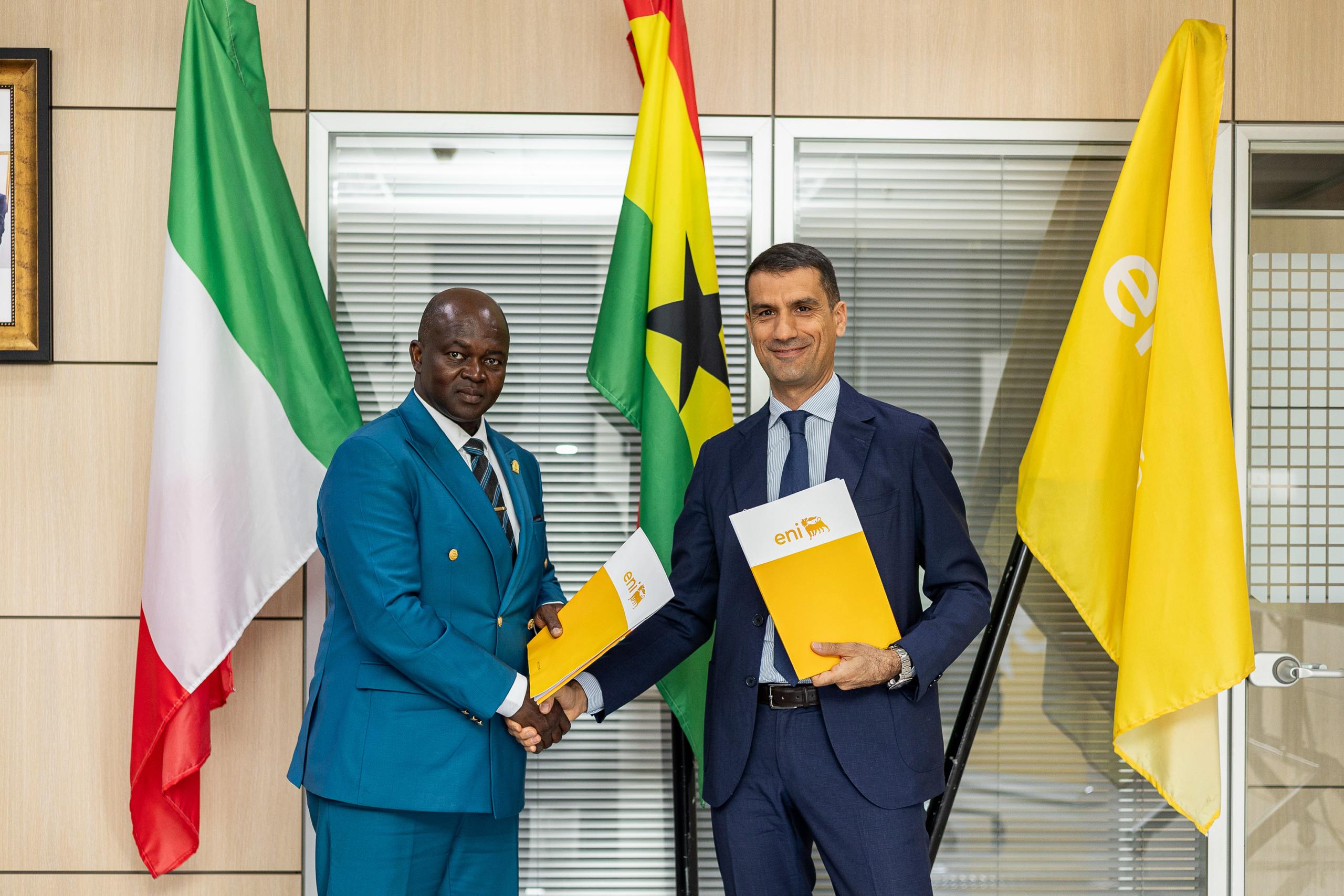
A major healthcare initiative is set to transform primary health delivery across Ghana’s Western Region after energy giant Eni Ghana and its Offshore Cape Three Points (OCTP) partners, Vitol Upstream Ghana Ltd and the Ghana National Petroleum Corporation (GNPC), signed a Memorandum of Understanding with the Ghana Health Service (GHS) on Wednesday.
According to a statement issued by Eni Ghana, the agreement was announced in Accra on April 16 and establishes a structured four-year programme running from 2026 to 2029, with an immediate reach of approximately 180,000 people and the potential to extend benefits to up to 380,000 residents across the region.
A Three-Pronged Approach
The statement said the programme is anchored on three priority areas. First, upgrading physical health infrastructure, including reliable electricity supply and safe water access at facilities, to bring remote communities within reach of functional primary healthcare.
Second, building the technical capacity of frontline healthcare workers in Emergency Obstetric and Newborn Care (EmONC), clinical governance, safe surgery, and vaccine cold-chain management. Third, driving community-level behavioural change through education on water, sanitation and hygiene (WASH), waste management, vector control and nutrition.
Women and children are explicitly centred as the programme’s primary beneficiaries, a focus that, per the statement, reflects both the acute maternal and newborn health challenges that persist in rural Western Region communities and Ghana’s broader ambitions under Universal Health Coverage.
Sustainability Built In
Eni Ghana noted in the statement that the initiative places deliberate emphasis on community ownership rather than dependency, with strengthened community-based committees set to anchor local participation.
This design signals an intent to embed lasting impact beyond the programme’s four-year window, though whether the governance structures prove robust enough to outlast the MoU will be the real test. Donor-led health programmes in sub-Saharan Africa have historically struggled with sustainability once external funding lapses.
A Decade in the Making
The statement also recalled Eni’s longstanding engagement with Ghana’s health sector, describing a portfolio of community health initiatives spanning more than a decade, one the company says has contributed to Ghana’s progress toward Universal Health Coverage.
Eni entered the Ghanaian market in 2009 through offshore hydrocarbon exploration and production, and currently operates the OCTP project with a 44.4% stake, alongside Vitol (35.6%) and GNPC (20%), producing around 40,000 barrels of oil equivalent per day.
The OCTP joint venture’s broader social investment footprint spans training, economic diversification, water and sanitation, and energy access, with Wednesday’s MoU representing its most structured healthcare commitment to date.
The Bigger Picture
The signing arrives at a moment when Ghana’s government is under pressure to accelerate progress on healthcare access disparities between urban centres and rural regions. The Western Region, despite hosting significant oil revenue-generating infrastructure offshore, has communities that remain underserved by basic health services, an irony that initiatives like this one are positioned, at least in part, to address.
For the Ghana Health Service, the partnership brings external resourcing to a system that continues to operate under significant fiscal constraints. The capacity-building component, in particular, could yield dividends that outlast the programme itself, provided the training translates into retained, deployable expertise at the facility level.
For more news, join The Chronicle Newspaper channel on WhatsApp: https://whatsapp.com/channel/0029VbBSs55E50UqNPvSOm2z