The assertion by the Ashanti Regional Minister, Dr Frank Amoakohene, that the government must review the operations of the National Anti-Illegal Mining Operations Secretariat (NAIMOS) before the governing National Democratic Congress (NDC) is sent into opposition is misguided and deeply disappointing.
According to the state-owned Daily Graphic, Dr Amoakohene warned that political opponents could push the government to fight galamsey with lethal force, only to exploit the consequences for political advantage.

“They will push you to fight galamsey with lethal force, then turn around to make political gains out of it. These are the same people who are calling for a state of emergency. NAIMOS and their operations must be reviewed before they send NDC back to opposition,” he was quoted as saying.
Days later, the newly elected Ashanti Regional NDC Chairman, Augustus Andrews Nana Kwesi, also joined the debate, urging President John Dramani Mahama to reconsider NAIMOS’s operations.
Their interventions follow the deadly confrontation at Manso Keniago in the Amansie South District of the Ashanti Region, on November 11, 2026 during an anti-illegal mining operation. The incident reportedly resulted in multiple deaths and injuries, including gunshot wounds sustained by two NAIMOS personnel.
NAIMOS maintains that its personnel came under attack while transporting a seized excavator and acted in self-defence. Traditional authorities and residents, however, have disputed this account, alleging that security personnel used excessive force.
The Chronicle insists that the incident deserves an independent and transparent investigation. No state institution should be above the law and the circumstances surrounding the deaths and injuries must be established.
However, what we find particularly disturbing is that some regional leaders of the governing party appear more concerned about the electoral consequences of fighting galamsey than the devastating effects of the menace on the country. This is a dangerous political calculation that must have no place in a government entrusted with protecting the national interest.
Illegal mining remains one of Ghana’s gravest national challenges. Its consequences extend beyond the destruction of forests and water bodies. It threatens food security, public health, economic development and the livelihoods of millions of Ghanaians.
Major rivers, including the Pra, Ankobra, Offin and Birim, have suffered extensive pollution from mining activities. A baseline study by the United States Geological Survey (USGS) found that mercury concentrations in sampled waters of the Pra and Ankobra rivers were more than 55 times the average levels recorded in streams in the United States. Mercury concentrations in river sediments were also between two and 25 times the US stream average.
Beyond water pollution, illegal mining has destroyed portions of forest reserves, degraded agricultural lands and threatened cocoa production. The removal of topsoil and destruction of vegetation have left communities with damaged ecosystems and diminished prospects for sustainable agriculture.
The Chronicle holds the view that health implications are equally worrying. Exposure to mercury and other hazardous substances used in gold extraction can cause serious neurological and developmental damage. Communities depending on contaminated water and affected natural resources are particularly vulnerable.
The economic consequences cannot be overlooked. The destruction of cocoa farms, declining agricultural productivity and revenue losses associated with illicit gold trading impose enormous burdens on the country.
It is against this background that we consider the comments of the Ashanti Regional Minister and the newly elected regional NDC chairman deeply troubling. Indeed, we believe both officials should be invited by National Security for questioning to explain the basis of their pronouncements and whether they have reservations about the government’s anti-galamsey policy.
As senior regional officials of the governing party, their public comments on an issue as consequential as illegal mining deserve closer examination. National Security should seek clarification on whether their concerns relate to the conduct of NAIMOS or a broader disagreement with the government’s anti-galamsey agenda.
We are not suggesting that everything NAIMOS does is right. Its personnel are not above the law, and allegations of misconduct must be investigated. But accountability must not become an excuse for weakening the fight against illegal mining. There is a difference between demanding lawful conduct and undermining an institution’s mandate.
The NPP government struggled to decisively confront galamsey despite its promises while in office. The NDC must not repeat that mistake. The Catholic Bishops Conference has also called on the government to consider declaring a state of emergency in illegal mining-affected areas, while civil society organisations have sustained similar calls. These interventions demonstrate the depth of public concern.
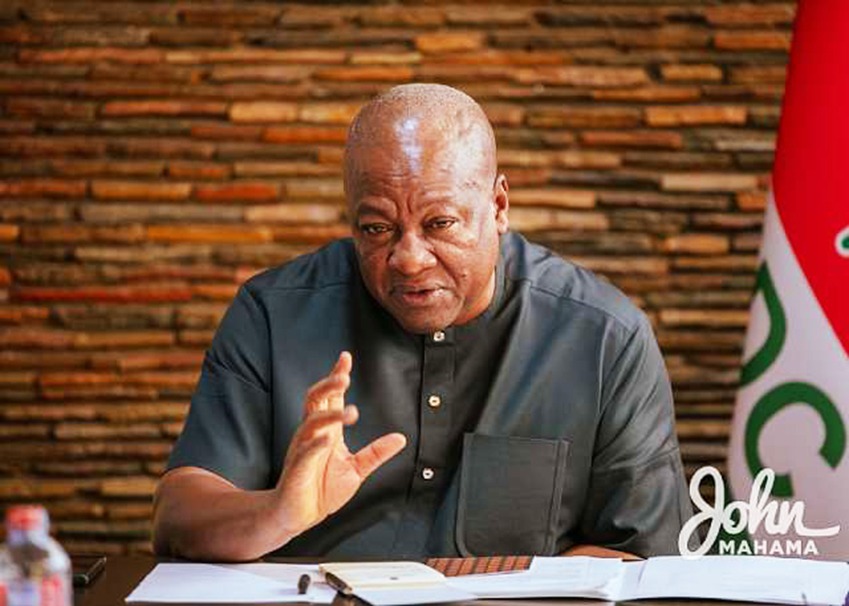
President Mahama must certainly reject any advice that places partisan political calculations above the national interest. The Chronicle urges him to strengthen NAIMOS, provide the necessary resources and insist on professionalism, discipline and respect for human rights. Anyone found culpable of misconduct must face the law, just as those engaged in illegal mining must be brought to justice.
Ghana cannot sacrifice its rivers, forests, farmlands and future generations on the altar of partisan political expediency. President Mahama must stand firm. The fight against galamsey must be sustained, not negotiated away for political convenience.
For more news, join The Chronicle Newspaper channel on WhatsApp: https://whatsapp.com/channel/0029VbBSs55E50UqNPvSOm2z