The Bank of Ghana has organised a media capacity-building training programme for journalists drawn from the Central, Volta, Eastern and Ashanti regions to deepen their understanding of monetary policy, financial markets, banking sector developments and responsible economic reporting.
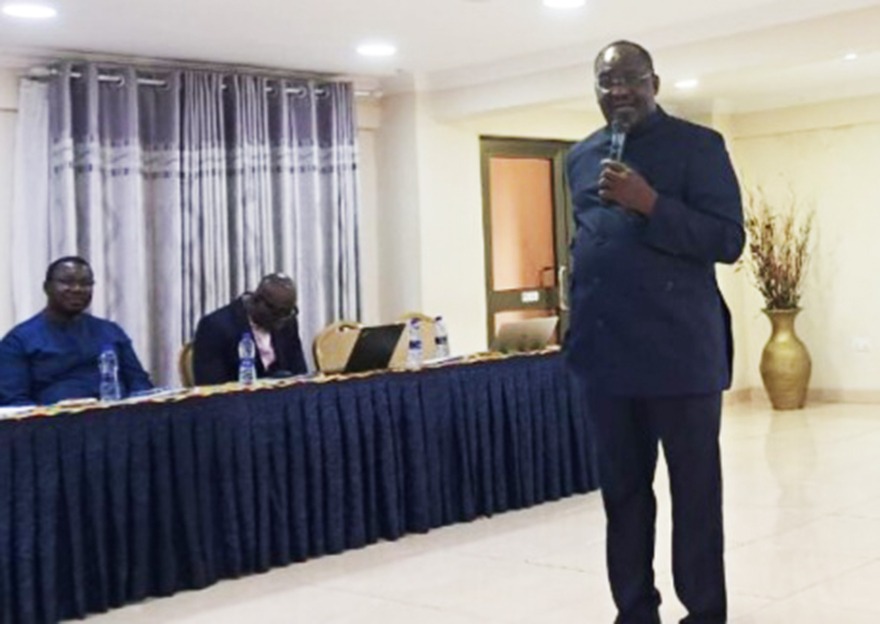
The three-day training programme held at the Eastern Premier Hotel in Koforidua was informed by the fact that the media serves as a vital bridge between economic policymakers and the public.
The Director of Communications at the Bank of Ghana, Mr. Bernard Otabil, at the opening ceremony stressed that it behoves on journalists to report economic issues with accuracy, context and balance.
He has, therefore, challenged the media to play a more strategic role in enhancing public understanding of economic policies, warning that misinformation and inaccurate reporting can have far-reaching consequences for the economy.
Mr. Otabil raised concern about the dangers of misinformation and disinformation clothed in fake news describing it as a major challenge facing communication professional communicators today.
He warned that inaccurate reporting on sensitive issues such as inflation, exchange rates and currency performance could trigger panic-driven decisions among businesses and individuals.
Citing developments in the foreign exchange market, Mr. Otabil explained that speculative reporting can fuel unnecessary demand for foreign currencies, distort market behaviour and exacerbate economic pressures.
“The media has a powerful responsibility. Through accurate, balanced and responsible reporting, journalists can help build understanding, confidence and resilience within our economy,” he said.
Mr. Otabil, therefore, urged journalists to rigorously verify information and avoid sensationalism, stressing that responsible reporting is essential to maintaining public confidence and economic stability.
Mr. Otabil noted that the success of the training programme would ultimately be measured by the quality, accuracy and depth of economic reporting by participants after the training.
According to Mr. Otabil understanding of and reportage on economic policies would go a long way to shape public confidence, investor sentiment and behaviour in the financial sector, hence BoG-media partnership to ensure reporting on monetary policy, financial stability and the economy is accurate, contextual and solution-focused.
Mr. Otabil noted that Ghana’s economy continues to demonstrate resilience despite both global and domestic challenges and revealed that the Composite Index of Economic Activity expanded by 12.6 per cent in March 2026, while inflation remained relatively at 3.7 per cent.
He further disclosed that Ghana’s gross international reserves currently stand at approximately US$14.4 billion, providing a significant buffer against external economic shocks.
He, however, cautioned journalists against relying solely on headline figures without examining the human impact behind the statistics explaining that much as economic data is importance stressing that “numbers alone do not tell the full story because behind every statistic are people, livelihoods and businesses.”
He noted that the role of the media is to explain how policy decisions affect access to credit, the cost of doing business, employment and household welfare.
Mr. Otabil also called for stronger collaboration between journalists and policymakers in advancing Ghana’s economic development agenda.