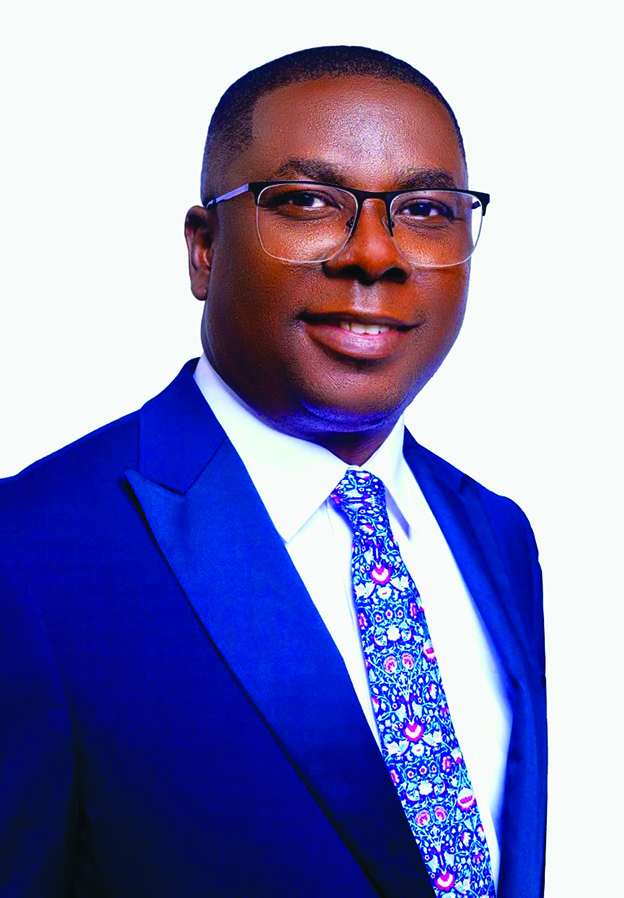
Former Economic Adviser and spokesperson to former Vice President Dr. Mahamudu Bawumia, Dr. Gideon Boako, has questioned the quality of Ghana’s economic recovery, arguing that improving macroeconomic indicators have yet to translate into significant improvements in the lives of ordinary citizens.
Dr. Boako made the observation in the latest edition of his Gboako Economic Digest, titled “Growth Without Progress? Why Ghanaians Are Still Waiting for the Economy to Reach Their Doorsteps.”
His comments followed the latest inflation figures released by the Ghana Statistical Service (GSS), which showed that headline inflation declined from 5.3% in June to 4.6% in July 2026.
While acknowledging the improvement in the headline figure, Dr. Boako argued that lower inflation and other positive macroeconomic indicators should not, on their own, be treated as evidence that economic recovery was being broadly felt by Ghanaians.
He cited what he described as persistent challenges with unemployment, food prices, fuel prices, transport fares and general living costs, saying there was a growing disconnect between official economic indicators and the experiences of households and businesses.
“Economic growth should not only be measured in percentages,” he argued, saying the quality of recovery should also be assessed by job creation, completion of infrastructure projects, recruitment of health and education workers, expansion of businesses and improvements in household welfare.
Dr. Boako further questioned the government’s fiscal consolidation strategy, arguing that improved budget performance could partly reflect expenditure falling below levels approved by Parliament.
“This raises an important question. Is government genuinely becoming more efficient, or are projects simply not being implemented as planned?” he asked.
The former adviser also referred to what he attributed to an International Monetary Fund (IMF) report concerning the cancellation and rephasing of government projects. He claimed that about 1,800 ongoing projects had been cancelled and around 2,000 others rephased.
However, the specific figures could not be independently verified from the IMF material reviewed for this report and are therefore presented as Dr. Boako’s claim.
He argued that delayed or cancelled projects could affect communities through slower infrastructure development, citing roads, drainage systems, schools, health facilities, agricultural warehouses and electricity infrastructure as examples.
Dr. Boako likened the government’s fiscal approach to a household improving its finances by postponing essential repairs and other necessary expenditure. In his view, such an approach could make the accounts appear healthier while underlying problems remain unresolved.
He maintained that fiscal discipline was important but cautioned against pursuing it at the expense of development. “Fiscal discipline should never become an excuse for development paralysis,” he said, identifying employment as his “greatest concern.”
According to him, the ultimate test of economic policy should be whether growth generates decent jobs and improves incomes and living standards.
“A young graduate does not celebrate a lower fiscal deficit if there is no job waiting after university,” he said, adding that farmers, traders and contractors similarly needed tangible economic opportunities rather than improved macroeconomic indicators alone.
Dr. Boako’s comments come against the backdrop of the government’s emphasis on fiscal consolidation and macroeconomic stability. Ghana completed its latest IMF-supported programme in May 2026, with the government describing the development as a major milestone in its economic recovery and fiscal consolidation efforts.
The Finance Minister, Dr. Cassiel Ato Forson, has also rejected claims that the government was simply underspending to achieve favourable fiscal figures. Presenting the 2026 Mid-Year Budget Review, he said the government had deployed substantial resources to compensation, debt servicing, education, health, agriculture, infrastructure and social protection while adhering to the principle of spending on only available resources.
Dr. Boako, however, contended that macroeconomic stability should be regarded as a foundation for development rather than an end in itself.
For more news, join The Chronicle Newspaper channel on WhatsApp: https://whatsapp.com/channel/0029VbBSs55E50UqNPvSOm2z