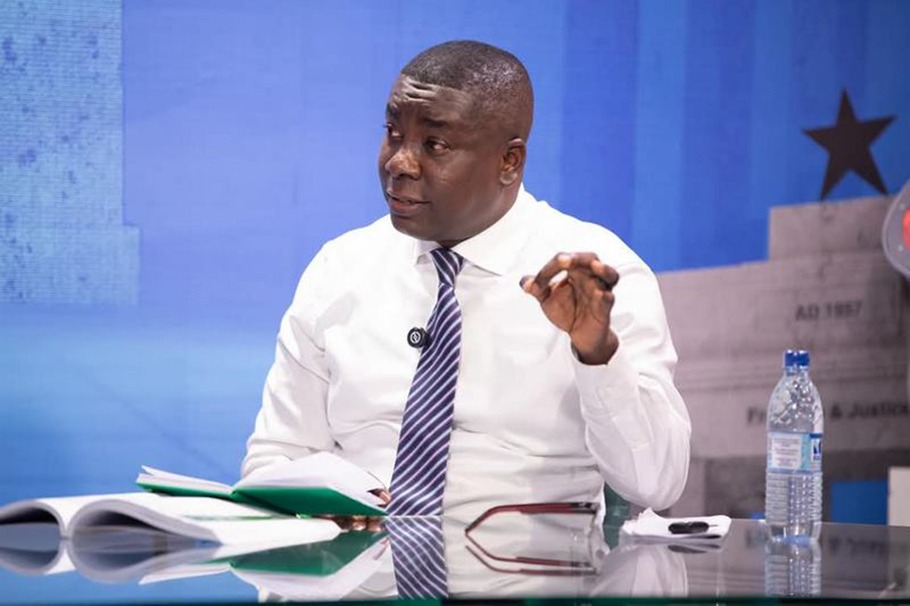
Ghana’s growing dependence on gold to generate foreign exchange and build international reserves faces a sustainability test as the new Ghana Gold Board (GoldBod) financing model comes under pressure to maintain consistent FX flows, Dr Gideon Boako, Member of Parliament for Tano North, has warned.
Dr Boako said the country’s ability to accumulate reserves should no longer be the only measure of the strength of its external position, arguing that Ghana must also demonstrate its capacity to generate foreign exchange when economic conditions become difficult.
He made the observation in an analytical article titled: “When the Gold Engine Stutters: What Ghana’s Cedi and Reserves Are Telling Us About the New Economic Architecture,” in which he examined the implications of the transfer of the Domestic Gold Purchase Programme (DGPP) from the Bank of Ghana (BoG) to GoldBod.
The new arrangement has placed GoldBod at the centre of Ghana’s gold-to-FX system, with the state institution relying increasingly on commercial banks and private off-takers to finance domestic gold purchases.
Strong FX generation
GoldBod has already demonstrated significant capacity to generate foreign exchange under the new financing structure.
It reported generating US$1.315 billion in FX in August, its first full month under the new model.
Of the amount US$668.21 million was sold directly to commercial banks, while US$646.59 million was made available to the BoG for reserve accumulation.
Dr Boako said the figures showed the potential of the new arrangement but cautioned that strong initial performance should not be mistaken for evidence that the model had been fully tested.
He said the real test would come if financing conditions tightened, gold production declined, gold prices weakened or private off-takers reduced their financing.
“Reserve accumulation asks: How many dollars does Ghana have?” he wrote. “External resilience asks: How reliably can Ghana generate dollars when conditions deteriorate?”
BoG exits gold financing
The restructuring followed concerns about the financial burden of the DGPP on the central bank.
According to the International Monetary Fund (IMF), the programme facilitated US$10.9 billion in artisanal gold exports in 2025, equivalent to 9.5 per cent of Gross Domestic Product (GDP).
However, the IMF estimated that the programme generated losses of about US$1.7 billion, equivalent to 1.5 per cent of GDP, in the same year.
From July 2026, GoldBod assumed responsibility for domestic gold purchases, while the BoG exited the quasi-fiscal financing of the programme.
The IMF said the change removed the central bank’s exposure to incremental operational losses associated with gold purchases, although GoldBod and the government would carry the related costs.
Dr Boako said the restructuring could improve the separation between monetary policy and commercial gold operations, but warned that it could also create a new vulnerability around financing capacity.
He said any disruption to financing, production or gold exports could have wider implications because of GoldBod’s growing role in supplying foreign exchange to commercial banks and contributing to reserve accumulation.
Beyond Gold
Dr Boako also called for Ghana to broaden its foreign exchange base instead of relying heavily on gold.
He said gold could strengthen the country’s reserves but could not by itself diversify the productive economy or shield Ghana from commodity-market shocks.
He identified manufacturing, agriculture and agro-processing, tourism, digital services, traditional exports and remittances as areas that could provide additional sources of foreign exchange.
He also called for greater scrutiny of GoldBod’s purchase prices, financing costs, margins, operational expenses and FX generation, as well as the question of who would ultimately bear losses if the economics of the programme deteriorated.
Dr Boako said Ghana’s objective should be to build an economy capable of generating foreign exchange from multiple sources, maintaining adequate reserves and absorbing external shocks without repeatedly placing pressure on the central bank or the sovereign balance sheet.
For more news, join The Chronicle Newspaper channel on WhatsApp: https://whatsapp.com/channel/0029VbBSs55E50UqNPvSOm2z