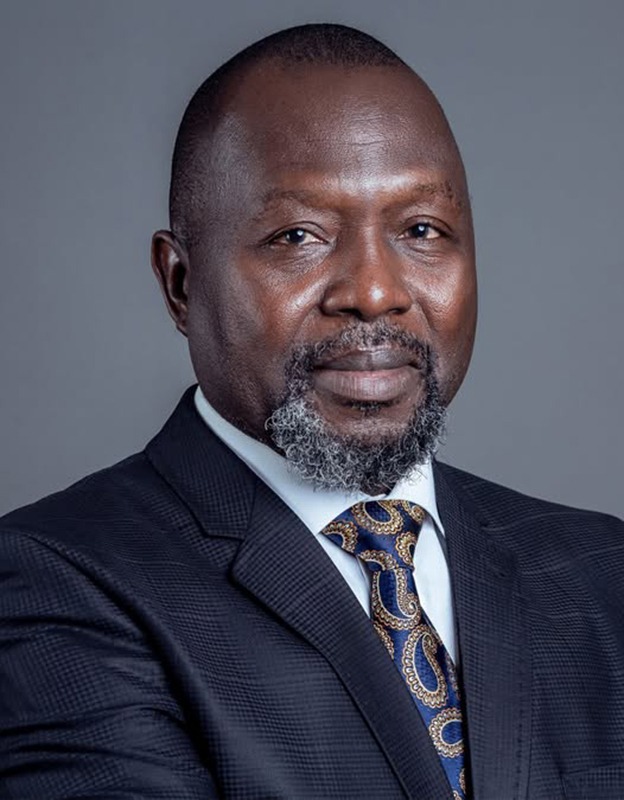
The Attorney-General has announced plans to investigate persons in Ghana allegedly implicated in a bribery scheme surrounding a power plant project, involving Turkish energy company, Aksa Enerji.
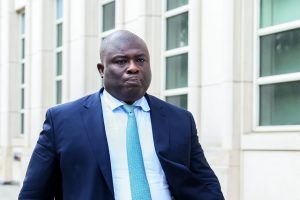
The move follows the conviction of Ghanaian-American former Goldman Sachs Investment Banker, Asante Kwaku Berko, by a United States federal jury in Brooklyn, New York, for his role in an alleged scheme to bribe Ghanaian government officials to facilitate the project.
Deputy Attorney-General and Minister for Justice, Justice Srem Sai, said the Attorney-General was working with U.S. authorities to bring persons implicated in the scheme to book.
In a statement posted on his X account, Justice Sai said: “The Honourable Attorney-General is working with his United States counterparts to bring to book persons who are implicated in the bribery scheme related to the 2014-2017 power plant development contract between a Turkish energy company and the Government.”
He said the action followed Berko’s conviction on charges including conspiracy to violate the United States Foreign Corrupt Practices Act (FCPA), violation of the FCPA and money laundering conspiracy.
U.S. details alleged bribe payments
The U.S. Department of Justice has provided details of the alleged payments and how they were distributed.
“During the scheme, Berko and his co-conspirators paid and conspired to pay bribes to individuals at numerous levels of the Ghanaian government to ensure that Aksa won its bid to build and operate the power plant,” the U.S. authorities said.
According to the U.S. Government, in April 2015, Berko and his associates discussed paying “$1 million to the Ghanaian Minister of Power” and “$250,000 to his senior adviser” to secure key approvals for the project.
The authorities further said: “Bribes were also paid to five Ghanaian officials during an all-expenses-paid trip to Turkey to view equipment for the power plant.”
After Parliament ratified the agreement in July 2015, the U.S. Government said the conspirators exchanged communications concerning further payments.
“For example, in August 2015, they discussed $250,000 in bribe payments paid to various individuals, including $46,000 to members of the Ghanaian Parliament,” the authorities said.
The U.S. Government alleged that Berko himself paid the $46,000 to Members of Parliament who had ratified the agreement between Aksa and the Government of Ghana.
The authorities also cited a communication in which an alleged recipient was said to be waiting for the “holy rain”, which prosecutors said referred to a bribe payment, and “would appreciate it sooner rather than later.”
The U.S. Department of Justice further alleged that the payments were concealed and laundered.
“To conceal the scheme from Goldman and others, Berko lied to the compliance team at Goldman that was responsible for vetting the deal,” it said.
The authorities added that Berko “used his personal email account, instead of his Goldman business email account, to discuss the deal and the bribe payments.”
They further alleged that Berko and his associates “concealed and laundered the bribe payments using shell companies, sham invoices, nominee account holders and cash withdrawals.”
“Payments in furtherance of the bribery scheme were laundered through U.S. and foreign bank accounts,” the U.S. Government said.
Goldman Sachs subsequently withdrew from the transaction over corruption concerns, according to the U.S. authorities. Berko faces up to 30 years in prison when sentenced and has been remanded, pending sentencing.
Dr Donkor denies wrongdoing
Former Energy Minister, Dr Kwabena Donkor, has meanwhile denied wrongdoing in connection with the project.
In a Facebook post attributed to him, Dr Donkor said there was no bidding process in which an official or minister had to be bribed to secure the contract.
He said he never dealt with Berko, whom he described as neither the known agent nor local partner of Aksa in Ghana.
Dr Donkor also denied travelling to Turkey for negotiations, saying the government negotiating team comprised representatives of the Ministry of Power, ECG, PURC, the Attorney-General’s Office, GRIDCo and other institutions.
He said the negotiated tariff was the cheapest among the emergency power plants at the time and cheaper than some existing thermal plants. Dr Donkor further stated that no payment was made to him or received in his name.
Prof Bokpin warns of corruption culture
Meanwhile, Professor of Finance and Economics at the University of Ghana, Prof. Godfred Bokpin, has raised broader concerns about the normalisation of corruption.
Speaking on Newsfile over the weekend, Prof. Bokpin said politicians appeared to exploit national crises for their benefit.
“It looks like bribery has become a part of the lifestyle today. Giving or receiving bribes no longer prick our conscience,” he said.
He warned that bribery could attract the wrong type of investors because those willing to pay their way through systems could gain an advantage over investors competing on efficiency and value.
The Berko conviction has consequently renewed attention to corruption risks in Ghana’s public procurement and energy sectors.
However, the conviction of Berko does not by itself establish the guilt of any Ghanaian official allegedly implicated in the scheme. Such persons would have to be investigated as the AG has promised to do and, where appropriate, prosecuted under Ghanaian law.
For more news, join The Chronicle Newspaper channel on WhatsApp: https://whatsapp.com/channel/0029VbBSs55E50UqNPvSOm2