The Ahanta Language (Ayinda), has officially been approved for teaching and examination in Ghanaian schools, following clearance by the Ministry of Education and the Bureau of Ghanaian Languages (BGL). This milestone brings to 17 the number of local languages taught in Ghanaian schools.
Among the languages spoken and taught are Nzema, Fante, Asante Twi, Akuapem Twi, Ewe, Ga, Dangme, Kusaal, Likakpaaln, Gonja, Dagaare, Dagbani, Kasem, Gurene, Sisaali, and now Ayinda.
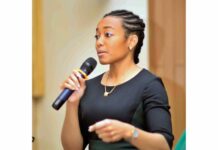
The National Democratic Congress (NDC) MP for Ahanta West, Hon. Mavis Kuukua Bissue, announced this achievement at the Ayinda language launch at the Bureau of Ghanaian Languages (BGL) in Accra on January 22, 2026. She described the approval as an “important landmark” in Ahanta’s cultural and educational journey.
On June 2, 2025, Bissue brought to the attention of Parliament, endangered local languages, urging the House to ensure that they are quickly integrated into the national curriculum to ensure its safety and survival.
She noted that the Ayinda language had faced a real risk of extinction, citing decades of linquistic neglect and a lack of formal documentation.
“Today, that call has become a reality. To lose Ayinda would not merely mean losing a means of communication; it would mean losing the cultural memory of who we are as a people,” she noted.
Referencing UNESCO’s 1953 report, Bissue noted that children learn more effectively when taught in their mother tongue, therefore, including Ayinda language in curriculum was very necessary.
Ayinda is classified as a Central Tano language within the Kwa branch of the Niger-Congo language family and is closely related to languages spoken in south-eastern Cote d’Ivoire.
Ayinda, according to Bissue, embodies Ahanta identity, governance systems, moral values, folklore, chieftaincy traditions, and spirituality. Its approval clears the way for teacher training, curriculum development, academic research, and employment creation.
The Executive Director of the Bureau of Ghana Languages (BGL), Mr. Ebenezer Ahiator, described the approval as a major milestone in Ghana’s efforts to preserve and promote indigenous languages.
The endorsement of the Ayinda orthography, he noted, marks a significant milestone in BGL’s mission to develop and standardize the written forms of Ghanaian languages.
He paid glowing tribute to the Ahanta West MP, Madam Bissue for the role she played in getting the language approved.
“If you know what went into this achievement, her name will be written in golden letters in the history of Ahanta and Ghana as a whole”, he noted.
Professor Alhassan Samuel Issah of the University of Education, Winneba, described the approval of the Ayinda language as a serious movement for cultural empowerment, revealing that UEW has already developed and submitted course structures for level 100 to 400, with the program uploaded for implementation.
This means that Ayinda will be studied at the degree level as well, ensuring a steady pipeline of trained teachers and researchers.
The Paramount Chief of Lower Dixcove, Nana Kwesi Agyeman IV, described the occasion as emotional and historic, revealing that Ayinda was nearing extinction.
He lauded Madam Bissue for he boldness and leadership style and urged Ahantas in the diaspora to support the next phase of the implementation financially and technically.