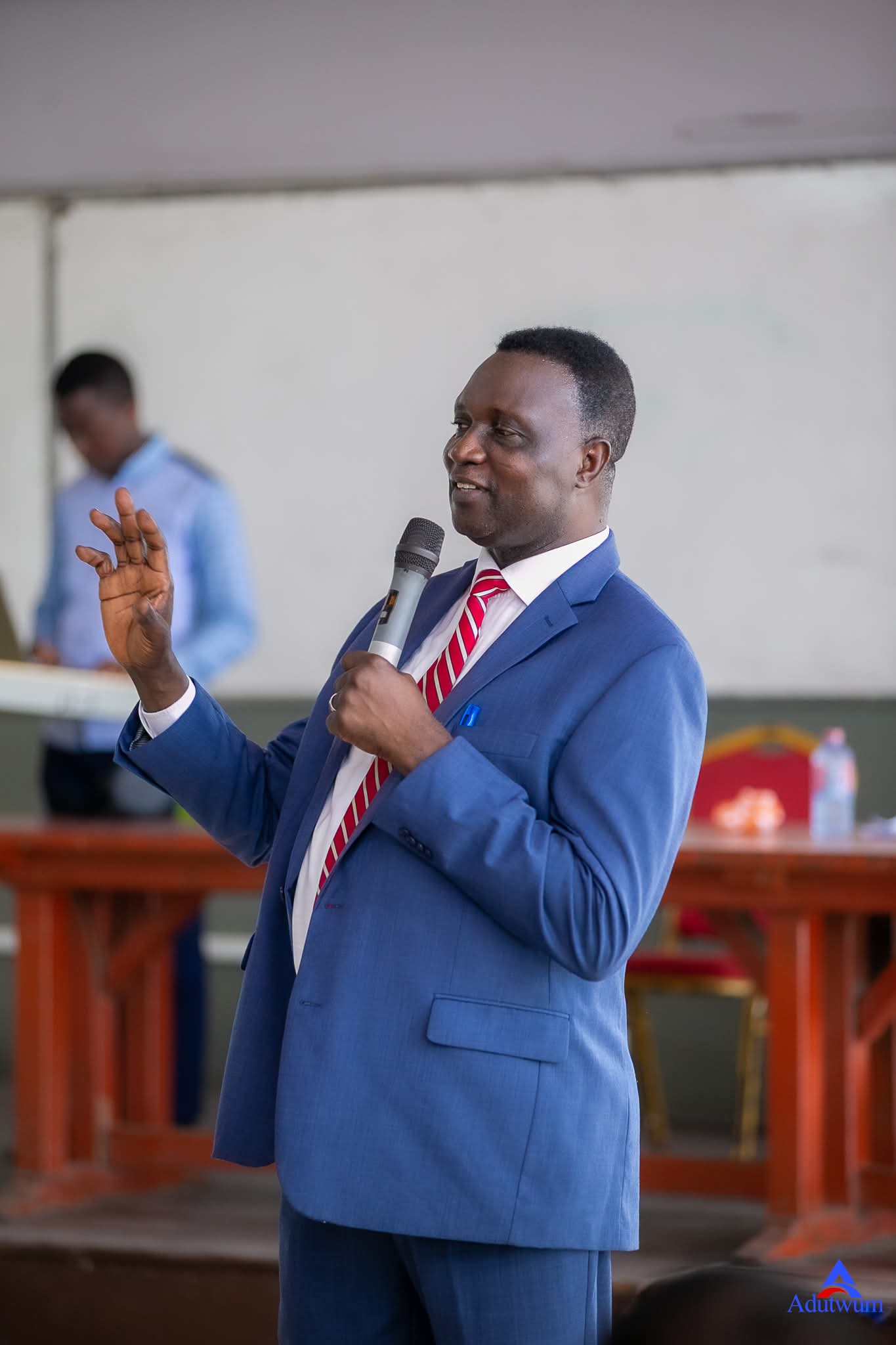
Former Education Minister and Ranking Member of Parliament’s Education Committee, Dr Yaw Osei Adutwum, has criticised the 2027 Budget for failing to prioritise education and human capital development, arguing that the government’s economic transformation agenda lacks the foundation needed to build a modern economy.
He said a development strategy that did not explicitly place education and skills development at its centre was inconsistent with the demands of the Fourth Industrial Revolution and the development of a knowledge-based economy.
Contributing to parliamentary debate on the 2027 Budget Statement presented by the Finance Minister, Dr Adutwum, who is the Ranking Member of Parliament’s Select Committee on Education and MP for Bosomtwe in the Ashanti Region, described the government’s proposed economic agenda as outdated.
According to him, education must be central to any meaningful attempt to transform Ghana’s economy, particularly at a time when the country continues to grapple with learning deficiencies, inadequate teacher recruitment and skills mismatches.
“When the Finance Minister was talking about the eight pillars, and he did not explicitly mention education, I knew it was an old economy, as old as you could get, that he was describing. It was not a new economy,” he told Parliament.
“The new economy is about human capital development. Education is front and centre of the new economy.”
Questions the National Standardised Test
Dr Adutwum also raised concerns about what he described as a significant reduction in the number of pupils assessed under the National Standardised Test (NST), warning that the change could undermine efforts to monitor learning outcomes and measure Ghana’s human capital development.
He said the previous administration had expanded the assessment to cover large numbers of pupils across the country, with approximately 800,000 Primary Four and Primary Six pupils assessed in 2024.
However, he claimed that the current administration had reduced the exercise to a sample of 16,000 pupils in 2026.
He argued that the shift from a nationwide census assessment to sample testing could limit the country’s ability to track learning outcomes comprehensively and identify pupils who require targeted educational interventions.
Dr Adutwum said the NST was introduced to establish a reliable assessment framework that would help teachers identify learning gaps and improve pupils’ reading and learning proficiency.
He further claimed that UNESCO had approved the assessment for international comparison, describing it as an important step towards improving the measurement of Ghana’s educational performance.
He recalled that the previous administration had also engaged the World Bank on the assessment framework, which he said the institution accepted because of its census-based approach.
Teacher recruitment concerns
The former Education Minister further questioned the government’s commitment to improving education, citing concerns about teacher recruitment and the number of trained teachers who remained unemployed.
He referred to the Education Minister’s statement to Parliament that the country required 50,000 additional teachers, arguing that the recruitment figures did not reflect the scale of the classroom staffing challenge.
Presenting figures to support his argument, Dr Adutwum said 14,949 teachers were recruited in 2017, 1,445 in 2019 and 27,000 in 2020.
He further claimed that cumulative teacher recruitment reached 124,120 by 2024.
He questioned why trained teachers from the 2023 and 2024 cohorts were still awaiting employment while schools continued to experience staffing shortages.
According to him, the failure to recruit available teachers had consequences for pupils, particularly those who struggled with reading and required additional support in the classroom.
He said Ghana could not claim to be transforming its economy while qualified teachers remained unemployed and children continued to face learning difficulties.
STEM education and economic transformation
Dr Adutwum also accused the government of reversing gains made in Science, Technology, Engineering and Mathematics (STEM) education, insisting that investment in science and technical skills was essential to preparing young people for the changing demands of the economy.
He called for stronger alignment between education and industry, arguing that Ghana needed an education system that equipped graduates with the skills required by employers and the manufacturing sector.
He also maintained that economic transformation required more than macroeconomic stabilisation and the export of primary commodities, including gold.
Although he acknowledged improvements in economic stability, he argued that a genuinely transformed economy must be driven by manufacturing, exports, innovation and a skilled workforce.
“You cannot transform this country without transforming education,” he stressed.
He warned that the country’s failure to prioritise education and skills development could jeopardise the future of young people, insisting that policymakers must demonstrate a stronger commitment to addressing the challenges confronting the education sector.
For more news, join The Chronicle Newspaper channel on WhatsApp: https://whatsapp.com/channel/0029VbBSs55E50UqNPvSOm2z