Ghana’s inflation rate rose to 5 per cent in August 2026, up from 4.6 per cent in July, as rising prices of services, housing and other domestically produced items increasingly replaced food as the main source of inflationary pressure in the economy.
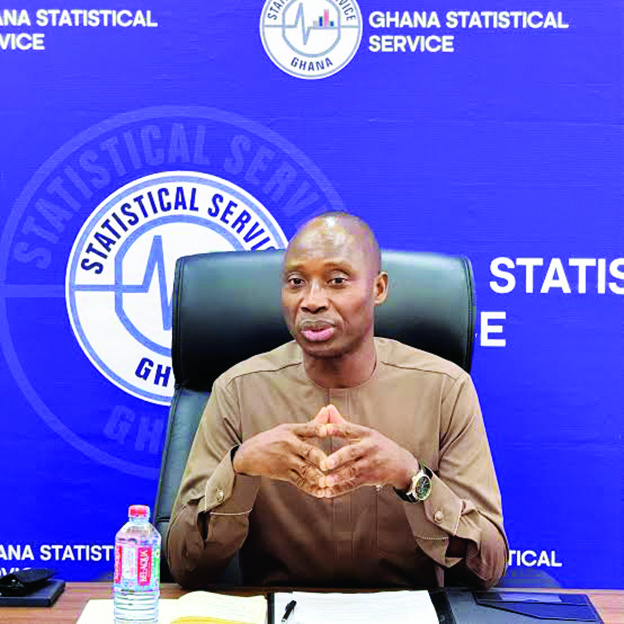
Government Statistician, Dr. Alhassan Iddrisu, who announced the latest Consumer Price Index (CPI) figures, said the August increase represented a 0.4 percentage-point rise in annual inflation.
Despite the monthly uptick, however, the broader inflation picture remained significantly improved, with the rate falling by more than half from the 11.5 per cent recorded in August 2025.
The latest figures point to a changing character of inflation in Ghana. While food inflation has eased considerably, services are proving much harder to contain. Services inflation increased marginally from 8.5 per cent in July to 8.6 per cent in August, compared with goods inflation of 3.8 per cent.
Dr. Iddrisu said the figures showed that Ghana’s inflation was “no longer mainly a food story” but increasingly a “non-food services story”. Housing, water and energy recorded inflation of 11.6 per cent, up sharply from 8.3 per cent in July, and accounted for 29.5 per cent of total inflation.
Transport contributed another 13.2 per cent, while education services accounted for 7.5 per cent and restaurants and hotels 4.8 per cent. Together with food and beverages, which contributed 29.1 per cent, the five divisions accounted for about 84 per cent of the total inflation recorded in August.
Food prices provide relief
Food inflation, meanwhile, continued to provide some breathing space for households. Food and non-alcoholic beverage inflation fell to three per cent in August from 3.1 per cent in July, and was dramatically lower than the 14.8 per cent recorded a year earlier.
On a month-on-month basis, food prices declined by 2.5 per cent. Some food items recorded substantial annual price reductions. Lime prices fell by 33.7 per cent, maize by 31.3 per cent, cocoyam leaves by 24.8 per cent, sweet apple by 23.5 per cent and fried fish by 23.2 per cent.
However, the relief was uneven, with some food items recording exceptionally high price increases. Fresh tomatoes recorded the highest year-on-year inflation at 158.3 per cent, followed by ginger at 128.3 per cent, shrimps at 67.1 per cent and mango at 57.7 per cent.
Domestic costs drive inflation
Another striking feature of the August figures is the dominance of locally produced items in the inflation basket. Inflation for locally produced items increased from 5.9 per cent in July to 6.1 per cent in August, while imported inflation rose only marginally from two per cent to 2.2 per cent.
Locally produced items now account for about 86 per cent of total inflation. Dr. Iddrisu said the figures suggested that domestic factors, including transport, energy, wages and rent, were having a much greater influence on prices than international market pressures. The relatively low imported inflation also pointed to greater stability in the exchange rate, he said.
Prices fall on monthly basis
Despite the increase in annual inflation, the average price level actually fell during August. Month-on-month inflation stood at negative one per cent, reversing the 0.1 per cent increase recorded in July.
It was the sharpest monthly fall in prices recorded so far this year. The development means that while the average basket of goods and services cost five per cent more in August than it did a year earlier, it cost one per cent less than in July.
Regional disparities remain wide
The national inflation figure also masks significant differences in the cost of living across Ghana. Central Region recorded the highest inflation at 11.1 per cent, followed by Western Region at 8.7 per cent.
Greater Accra recorded five per cent, while Eastern Region saw its rate fall from 6.1 per cent to four per cent. Northern Region also recorded a sharp decline, from 2.1 per cent to 0.6 per cent. The Statistician said regional differences demonstrated that where consumers lived could significantly influence their experience of inflation.
Ashanti and Greater Accra, because of their combined market weight of 63.6 per cent, also exerted significant influence on the national inflation figure.