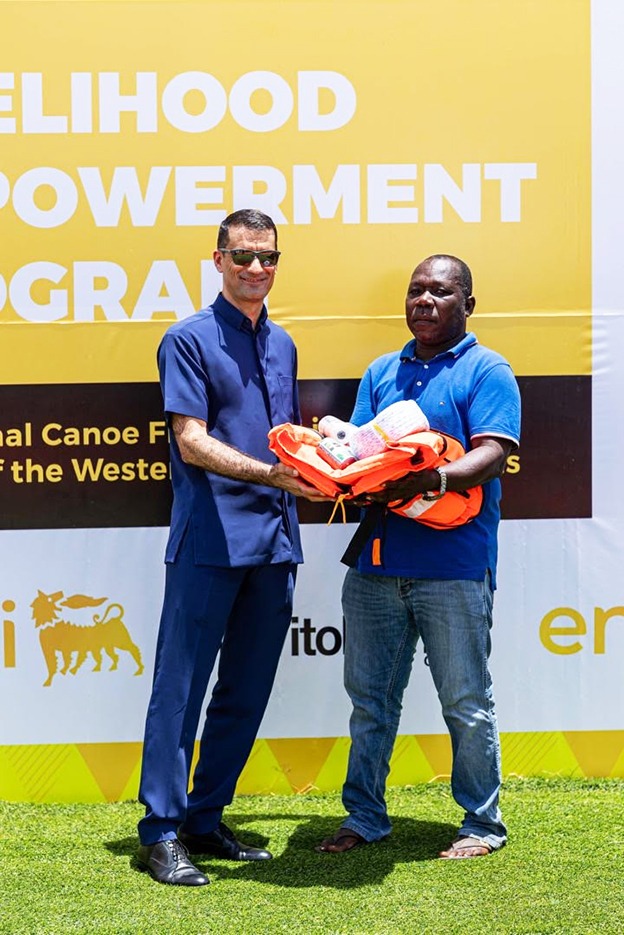
Eni Ghana, in partnership with Vitol Upstream Ghana Ltd and the Ghana National Petroleum Corporation (GNPC), has launched a major livelihood enhancement programme aimed at revitalising artisanal canoe fishing along Ghana’s coast.
The initiative, unveiled in Accra, is expected to benefit more than 1,000 verified canoe owners across 14 coastal districts and municipalities, spanning the Western and Central Regions.
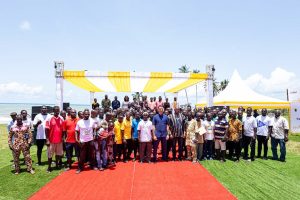
The beneficiary areas include Jomoro, Ellembelle, Nzema East, Ahanta West, Sekondi-Takoradi and Shama, as well as Effutu, Gomoa East, Gomoa West, Mfantseman, Cape Coast, Abura-Asebu-Kwamankese, Komenda-Edina-Abrem and Ekumfi.
According to the partners, the programme is designed to improve employment opportunities within coastal communities while boosting domestic fish supply, in line with Ghana’s local content regulations in the petroleum sector and international environmental standards.
Managing Director of Eni Ghana, Maurizio Pinna, said the intervention would provide modern fishing inputs and build the capacity of fisher folk to operate safely and sustainably.
He noted that the programme would supply upgraded fishing gear, including nets and towing equipment, while also delivering training in sustainable fishing practices, marine biodiversity conservation, safety at sea and basic business management.
Industry observers say the intervention directly targets structural constraints within the artisanal fishing sector, where ageing equipment, inefficient engines and unsafe practices continue to limit productivity and incomes.
The support package will be tailored to the operational realities of each community, with beneficiaries receiving items such as multifilament nets, weaving threads, buoys, lead weights and dragging ropes that comply with national maritime safety standards.
Eni has operated in Ghana since 2009, focusing on offshore exploration and production. It currently leads the Offshore Cape Three Points (OCTP) project, holding a 44.4% stake, alongside Vitol (35.6%) and GNPC (20%).
Beyond hydrocarbons, the joint venture has implemented a range of social investment programmes in training, water and sanitation, energy access and economic diversification, particularly within host communities
The latest initiative adds to growing pressure on extractive firms to demonstrate measurable local impact, especially in coastal economies where oil and gas operations coexist with traditional livelihoods such as fishing.
For more news, join The Chronicle Newspaper channel on WhatsApp: https://whatsapp.com/channel/0029VbBSs55E50UqNPvSOm2z