Ghana risks undermining its long-term economic growth prospects unless urgent steps are taken to create jobs for its youthful population and ease the transition from education into employment, the World Bank has warned.
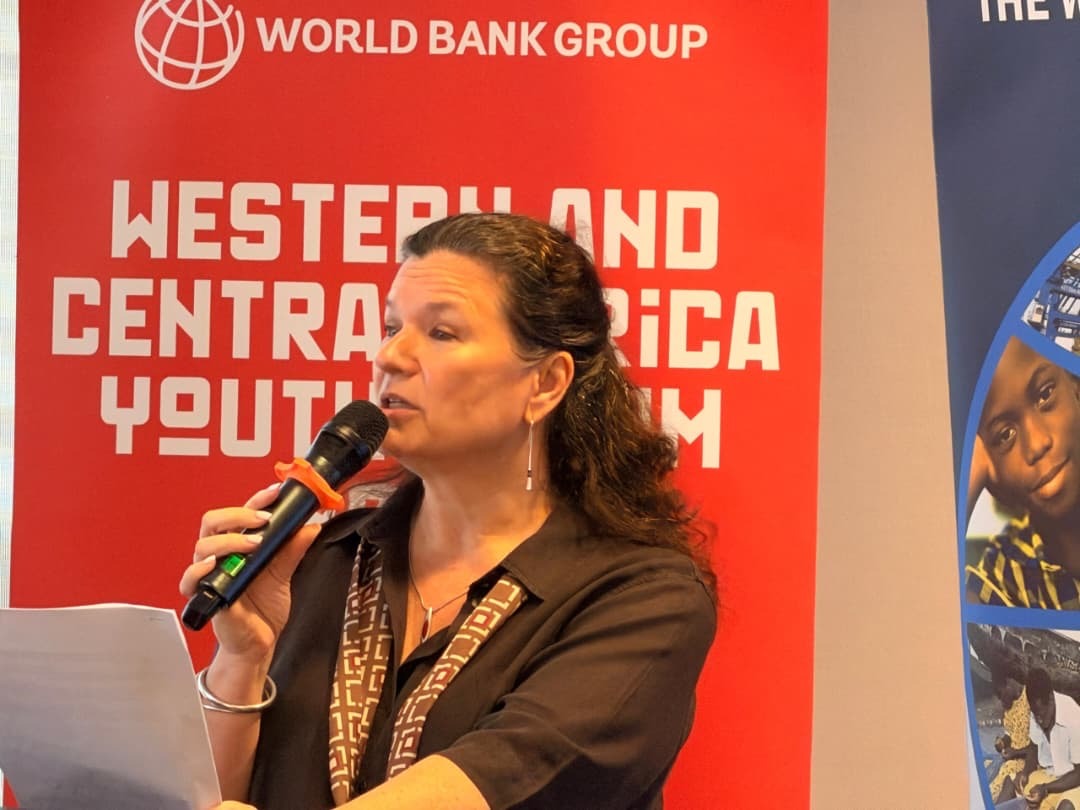
The caution came at the 2026 Africa West and Central Youth Forum on Jobs held in Accra on Monday, where the international development institution stressed that the country’s economic future would largely be determined by how effectively it harnesses the potential of its young people.
Speaking at the forum, the World Bank’s Operations Manager for Ghana, Liberia and Sierra Leone, Michelle Keane, said Ghana’s growth trajectory would depend on the ability of young people to move successfully from education into productive employment, transform ideas into viable businesses and convert ambition into tangible opportunities.
“Here in Ghana, this conversation is very relevant. The country’s growth trajectory will largely depend on how successful young people transition from education into productive employment, from ideas to enterprises and from ambition into concrete opportunity,” she stated.
Ms Keane noted that although many young Ghanaians were already demonstrating strong entrepreneurial instincts through small-scale businesses, the scale and urgency of the youth employment challenge required coordinated action from both the public and private sectors.
She called for deeper collaboration between government and businesses to help youth-led enterprises grow into sustainable and job-creating ventures.
According to her, the youth unemployment challenge extends beyond Ghana and remains a pressing concern across the African continent, warning that Africa’s rapidly growing youth population could become an economic liability rather than an asset if adequate opportunities are not created.
Addressing the forum’s theme, “Youth Works, Africa Thrives,” Ms Keane said discussions centred on creating sustainable opportunities for young people while ensuring that institutions, policies and investments were aligned with their aspirations.
She observed that Ghana’s vibrant entrepreneurial culture, expanding digital ecosystem and growing small and medium-sized enterprise (SME) sector provided a solid foundation for economic transformation.
However, she pointed to World Bank findings showing that many SMEs continue to face obstacles to growth and productivity, including limited access to finance, weak market linkages, skills gaps, inadequate mentorship and restricted digital access.
Ms Keane urged policymakers to place entrepreneurship, SMEs and youth-led innovation at the heart of the country’s development agenda, describing them as critical drivers of large-scale job creation. “These are not peripheral issues but central to Ghana’s economic recovery and inclusive growth,” she emphasised.
She further highlighted ongoing World Bank support for Ghana in areas such as human capital development, education and skills training, digital connectivity, business environment reforms and the economic inclusion of women and young people.
Among the interventions, she cited a US$300 million World Bank-supported project aimed at eliminating the double-track system in Senior High Schools while strengthening skills development for students transitioning into tertiary education or the job market.
Ms Keane also disclosed that the International Finance Corporation (IFC), the World Bank Group’s private sector arm, was partnering financial institutions and businesses to expand access to finance for SMEs and support job creation.
She concluded by calling for stronger alignment between government policy, investment and entrepreneurship, stressing that sustainable solutions to youth unemployment would emerge from the intersection of those three areas.