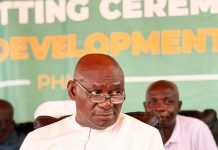
My admiration for the military, and for Jerry John Rawlings, began long before I ever wore the uniform for 26 years. I first saw him in Ho during the early days of the Revolution. The crowd surged toward him with an affection that seemed almost spiritual. In my village, where television was non-existent and only the privileged owned radios, seeing him in person was like witnessing history.
By fate, I later joined the Ghana Armed Forces and was posted to the Second Battalion of Infantry in Takoradi. Writing became my hobby. Friends praised my articles, and a cousin once compared my style to the late GTV reporter, Francis Sasu. Their encouragement eventually pushed me towards journalism.
During a 1991 UNIFIL pilgrimage from South Lebanon to Israel, while serving with a Ghanaian Battalion, I documented my experiences, shared notes and photos with friends back home.
Their feedback strengthened my resolve, and with inspiration from Ex Sgt. Nana Fofie (then Cpl) of the Armed Forces Public Relations Directorate, I applied to the Ghana Institute of Journalism. My Commanding Officer, Brig Gen. George Amamoo, (Rtd), (then Lt Col.) allowed me to attend the school even before my study leave was approved from Burma Camp. I am forever grateful to him.
In 1998, my project work took me to Dzemeni in the Volta Region for data gathering. There, I encountered two children who had dropped out of school and desperately needed medical attention. Their guardians couldn’t afford the surgery. I, therefore, petitioned some organisations, including the 31st December Women’s Movement (31DWM) – A movement headed by the late Nana Konadu Agyemang- Rawlings
Only this Movement responded by forwarding my appeal to the Ministry of Health, which followed up to the village and had one of them successfully operated upon at the Peki Government Hospital. The second child, a girl, couldn’t be helped because her stepfather refused cooperation, fearing complications.
The 31DWM’s letter, dated 10 June, 1999, signed on behalf of its President, by its Director of Administration, K. Ofosu-Darkwa, was copied to my Commanding Officer and commended me.
Years later, after President Rawlings had left office, I finally met him personally and eventually presented this letter to him. True to his word, he gave it to his wife, Nana Konadu Agyeman-Rawlings, who invited me to her office. Our conversation lasted nearly an hour.
She wanted to know why only one of the two children got help. I explained it. She further asked about the boy who had been saved. When I told her that he eventually completed Senior High School and was now a barber, she expressed joy and wished to support him with capital to expand his business and help others.
To my dismay, she revealed what many Ghanaians may not know. According to her, the collapse of the 31st December Women’s Movement was not natural; it was engineered by an individual within the NDC. The Movement’s main source of income, she hinted, came from supply contracts with the Ghana Armed Forces; gari, kenkey, “sabola,” ‘dzomi,’ bread and more. These contracts, she noted, employed thousands of women who fed their families through the work.
When the contracts were abruptly cancelled, she lamented, not only did these women lose their jobs, but also the Movement itself was financially crippled. She insisted this act by that individual, was the real reason she fell out with the party, an internal sabotage she described as painful but decisive.
Had the Movement survived, she said, it could have helped transform the barbering career of the rescued boy and many others like him. Before Ieaving her presence, I gently suggested the need for forgiveness and reconciliation. With a calm smile, she said, “Oh yes, I have forgiven everyone!” adding that some people didn’t really understand the price paid by loyalists for the survival of the party.
Speaking with her that day, I sensed the burden she carried; not bitterness, but the calm sorrow of someone who had given her all and watched an entire movement she built with thousands of Ghanaian women crumble from the decision of an individual.
It was a revelation that changed how I understood her public battles and deafening silence. Today, as Nana journeys beyond this life, I feel compelled to honour more than her public image. I honour the woman who paused to ask about two needy children in Dzemeni; the woman who wanted to help a young barber she had never met; the woman who carried wounds she had never broadcast, and forgiveness she offered even when it was not requested.
Ghana may debate her politics for generations, but those who ever encountered her humanity will remember something deeper. May her soul find the peace she long sought, and may her legacy; both the known and the untold, continue to inspire those who labour quietly for the good of others. Rest in peace, Nana Konadu Agyemang-Rawlings
By Ex WOI Bright Segbefia.
(Dip, BA, MA, MPhil, LLB). (re.shuffle@yahoo.com).
Editor’s note: Views expressed in this article do not represent that of The Chronicle