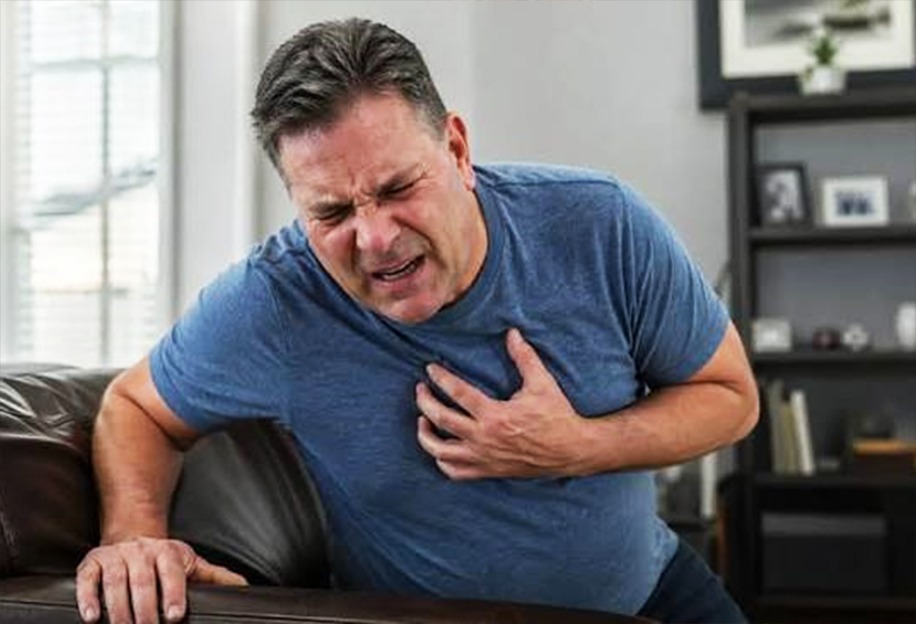
Heart attacks can be deadly, and the widowmaker is one of the deadliest kinds. It can happen suddenly when a key artery that moves blood to the heart gets almost or completely blocked. The left anterior descending (LAD) artery provides blood to a large part of your heart. Cutting off that blood flow can cause damage to your heart muscle. Without emergency treatment, you may not survive.
Despite its name, the widowmaker strikes women and those assigned female at birth, too. However, it’s more common in men and those assigned male at birth, and it can strike younger people.
The medical term for a heart attack is “myocardial infarction,” and the medical term for a widowmaker is “ST-segment elevation myocardial infarction,” or STEMI.
How Does a Widowmaker Heart Attack Occur?
Your heart muscle needs a constant supply of blood. When something cuts off the flow, you have a heart attack. Without oxygen, the cells in your heart muscles start to die in minutes.
The blood supply can be reduced when fat, cholesterol, and a substance called plaque build up in the arteries that supply blood to your heart. The medical term for narrowed arteries is atherosclerosis.
Plaque can break apart in your artery, causing a blood clot. A clot can block your artery completely.
A widowmaker is when you get a big blockage at the beginning of the left main artery or the LAD. They’re a major pipeline for blood. The LAD carries about 50% of your heart’s blood supply. If blood gets 100% blocked at that critical location, it may be fatal without emergency care.
Widowmaker Heart Attack Symptoms
The warning signs and symptoms for all heart attacks are the same. There’s no way to tell whether you’re having a widowmaker heart attack from your symptoms.
- Chest pain or discomfort. This is the most common symptom for women and men. You may feel pain, pressure, squeezing, or fullness in the center of your chest for several minutes. The feeling might go away and then return
- Upper body pain or discomfort. You might feel it in one or both arms, your back, neck, jaw, or stomach.
- Shortness of breath. You feel like you can’t catch your breath. This can happen with or without chest discomfort. Women report this more often than men do.
- Nausea
- Cold sweat
- Lightheadedness
- Pain in the back of the jaw
Quick treatment can save your life. Call 911 right away. That’s almost always better than having someone drive you to the ER. Paramedics can try to restart your heart immediately if it’s stopped.
What Causes a Widowmaker Heart Attack?
Heart attacks, including widowmakers, usually happen because of a combination of lifestyle and genetic reasons. Cholesterol and fatty plaque clog your arteries over time and choke off blood. Plaques can break open, which could lead to a blood clot that may block your artery.
Who Is at Risk for Widowmaker Heart Attacks?
You’re more likely to have a heart attack if you:
- Smoke
- Are obese
- Eat a lot of unhealthy foods
- Are older than 45 (men) or 55 (women)
- Don’t exercise
- Have high blood pressure
- Have uncontrolled diabetes
- Have a family history of heart disease
- Have a high level of lipoprotein(a), a type of fatty particle, in your blood. This inherited condition isn’t picked up on standard cholesterol tests.
- Use illegal stimulants, such as cocaine or methamphetamine
- Have an autoimmune condition such as rheumatoid arthritis or lupus
- Are under a great deal of stress
- Have a history of preeclampsia, high blood pressure during pregnancy
Diagnosing a Widowmaker Heart Attack
If your health care team thinks you’ve had a heart attack, they may use several tests to confirm the diagnosis:
Electrocardiogram (EKG). Electrodes are placed on your body using sticky patches, and they record your heart’s electrical signals. The signals will show up as waves on a screen or a paper printout.
Blood tests. When a heart attack damages the heart muscle, certain proteins leak into your bloodstream. A blood test will show whether you have these proteins, called cardiac markers.
Chest X-ray. An X-ray shows the condition of your lungs and heart. It will show if your heart is enlarged.
Echocardiogram. This is a type of ultrasound. It uses sound waves to create images of your heart. It can show how well blood is moving and whether any parts of your heart are damaged.
Cardiac CT or MRI. These scans can help detect any damage to your heart. CT uses X-rays, while MRI uses a magnetic field and radio waves.
Credit: webmd