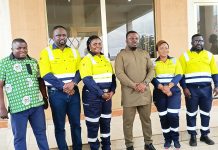
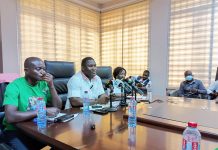
The Metropolitan Chief for Sekondi-Takoradi, Frederick Faidoo, has announced plans to convert waste generated in the city into electrical energy through a partnership with a Chinese company.
Speaking at a news conference in Sekondi recently, Mr Faidoo disclosed that the Sekondi-Takoradi Metropolitan Assembly (STMA) was in discussions with development partners and a Chinese waste management company, SUS Environment China, to establish a waste-to-energy plant in the metropolis.
According to the Mayor, the proposed project forms part of efforts to transform waste from an environmental burden into an economic resource.
“We are in talks with our development partners. Not long ago, we had the opportunity to travel to China where we met SUS Environment China, which has been in the waste-to-energy business for a very long time with factories spread around the world. They have agreed to assist us to establish one of their factories in the metropolis,” he said.
Mr Faidoo revealed that officials of the Chinese company are expected in Ghana by the end of the month to conclude discussions and complete the necessary documentation required for the project to take off.
He explained that because the project will generate electricity, agreements would have to be signed with the Ministry of Energy, GRIDCo and other stakeholders in the energy sector.
“They are so eager to come, except that we have to complete the paperwork first before they can take off,” he added.
The announcement comes at a time when the STMA is facing intense scrutiny over the state of sanitation in the metropolis. Both Western Regional Minister, Joseph Nelson and Local Government Minister, Ahmed Ibrahim have publicly expressed dissatisfaction with waste management in the city, with the sector minister reportedly giving the Assembly two weeks to improve sanitation conditions.
However, the Mayor maintained that the Assembly is pursuing long-term solutions aimed at improving environmental management while creating value from waste. He said poor waste disposal practices continue to contribute significantly to flooding in the metropolis, noting that refuse dumped into open drains obstructs the free flow of storm water during heavy rains.
According to him, the Assembly, in collaboration with officials of the National Disaster Management Organisation (NADMO), has identified major drains requiring desilting and has commenced works on critical flood-prone areas.
Mr. Faidoo cited sections of the Ese Lagoon and the stretch between the Boundary Road and Police Station traffic light area as some of the drains currently being cleared to facilitate the discharge of rainwater into the sea.
He stressed that proper waste management and regular desilting of drains remain essential in addressing perennial flooding in parts of the metropolis. The proposed waste-to-energy project, if realized, is expected to convert municipal waste into electricity while reducing pressure on the Assembly’s engineered landfill site.
Background
The Sekondi-Takoradi Metropolitan Assembly manages the only engineered landfill site in the Western Region, located at Sofokrom. Mayor Frederick Faidoo has repeatedly argued that maintaining the facility places enormous financial pressure on the Assembly, whose sanitation budget comes largely from the statutory allocation of the District Assemblies Common Fund.
The Mayor’s latest announcement comes against the backdrop of growing public concern over overflowing refuse containers and poor environmental sanitation in parts of the metropolis. The proposed waste-to-energy project would mark one of the most ambitious environmental initiatives undertaken by the Assembly if agreements with the Chinese company materialize.
For more news, join The Chronicle Newspaper channel on WhatsApp: https://whatsapp.com/channel/0029VbBSs55E50UqNPvSOm2z