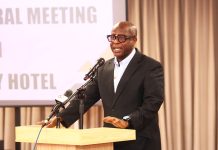
West Africa’s considerable mineral potential will translate into sustained investment only where companies, governments and communities can operate within stable, secure and predictable environments, Australian High Commissioner designate to Ghana, Keara Shaw has told the West Africa Mining Security Conference in Accra.
Addressing the sixth edition of WAMS, Shaw placed investment confidence within a much broader security conversation, arguing that the conditions affecting mining operations now extend well beyond physical threats to personnel and infrastructure.
The region continues to attract significant interest because of its reserves of gold, lithium, manganese, bauxite and other minerals. But the operating environment is being shaped at the same time by political uncertainty, security pressures emanating from the Sahel, organised crime, community expectations, environmental concerns and changing regulatory frameworks.
Shaw’s message was that a mine can be physically secure while operating in a wider environment that is becoming less predictable. That makes governance, transparent rules, community relationships and the ability of institutions to manage risk increasingly important to investment decisions.
Her remarks also placed responsibility on both governments and industry. Governments have an interest in ensuring that investment frameworks are clear and consistently administered, while mining companies must understand that their licence to operate extends beyond formal permits to how they engage communities, manage environmental impacts and respond to legitimate national expectations.
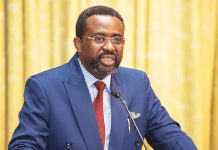
The importance of that balance was also reflected in remarks by Ghana’s Deputy Minister for the Interior, Ebenezer Okletey Terlabi. Terlabi said Ghana remained committed to building a mining sector in which security protects legitimate investment, investment creates opportunity, opportunity strengthens communities and stronger communities reinforce national and regional stability.
He told participants that West Africa’s mineral wealth could make an important contribution to industrialisation and the global economy, but said protecting that opportunity would require coordination across security, finance, border management, natural resource governance and host communities.
That point goes to the heart of the WAMS proposition: security is not simply a cost attached to mining operations. Increasingly, it is part of the environment that determines whether long term investment remains commercially and socially viable.
Nigel Stanier, Assistant Secretary for the Africa Branch at Australia’s Department of Foreign Affairs and Trade, also took part in this year’s WAMS programme alongside Shaw and other Australian, African and international speakers.
Australia has a significant interest in the issue. Its relationship with Ghana already includes cooperation in trade, investment and resources, while Australia’s diplomatic engagement across West Africa also encompasses regional stability and security.
For Shaw, that combination makes mining security a shared economic and policy concern: protecting investment cannot be separated from the stability, institutions and communities on which that investment ultimately depends.
For more news, join The Chronicle Newspaper channel on WhatsApp: https://whatsapp.com/channel/0029VbBSs55E50UqNPvSOm2z