Home Blog Page 89

Gaza food prices soar as crossing closures deepen shortages amid Iran war

0
Gaza food prices soar

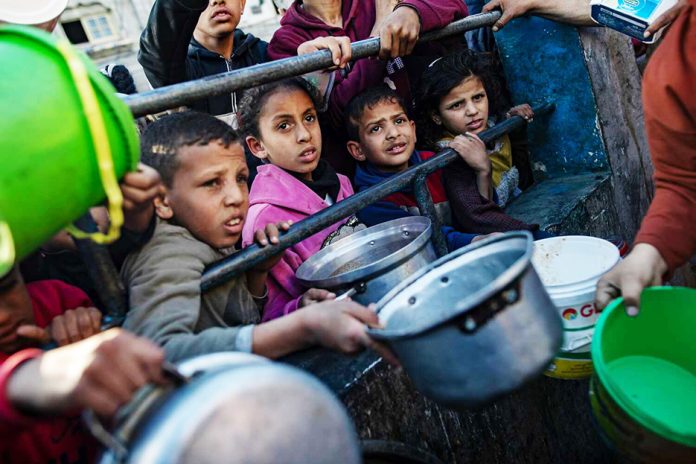
People in Gaza are once again rushing to markets to buy whatever food they can afford, as the regional war involving the United States, Israel and Iran sends shockwaves through an enclave already dependent on fragile aid and commercial lifelines.

Residents and traders say prices have jumped in a matter of days, while some staples have become scarce or disappeared altogether.

Reporting from Gaza City, Al Jazeera’s Hani Mahmoud said that “the latest escalation is being felt in the most immediate way possible: through shrinking supplies and tightening access at border crossings”.

In local markets, shoppers are trying to secure food before stocks run lower, fearing that whatever is available today may not be there tomorrow.

That anxiety reflects Gaza’s dependence on crossings with Israel and Egypt. Nearly all food, fuel, medicine and other basic goods enter the territory by truck. When those crossings are shut or operate at reduced capacity, the impact is quickly felt in markets, hospitals and water systems.

Israel closed Gaza’s crossings on February 28, as Israeli and US forces attacked Iran, halting humanitarian access in and out of Gaza and the movement of patients in need of medical evacuation. Israeli authorities later reopened the Karem Abu Salem (Kerem Shalom to the Israelis) crossing for the “gradual entry” of aid, but access has remained restricted.

The Rafah crossing with Egypt has stayed shut, and aid agencies say the current volumes are far below what is needed.

Hanan Balkhy, World Health Organization (WHO) regional director for the Eastern Mediterranean, told Reuters this week that only about 200 trucks a day were entering Gaza, compared with roughly 600 needed daily to support the territory’s population. She also said about 18,000 people, including wounded children and patients with chronic illnesses, were still waiting to be evacuated.

Credit: aljazeera.com

Americans express dismay over rising gas prices after attack on Iran

0
Gas prices in the United States have soared

Surging energy prices caused by the US-Israel war on Iran could ripple across the United States economy, heaping further strain on consumers at a time when cost-of-living issues are already a primary concern.

The price of crude oil increased from about $67 per barrel before the war began on February 28 to nearly $97 on Monday, as the conflict snarls production and transport in one of the most energy-rich regions on earth. Oil temporarily passed $100 per barrel on Sunday before slightly easing back.

The price tracker GasBuddy reported on Monday that the average price of gas in the US has risen by 51 cents per gallon over the last week.

“Yes, yes, definitely,” said 52-year-old Alma Newell when asked if she was worried about price increases at a gas station in the coastal city of Goleta, California.

Newell said she is out of work with a shoulder injury and worried that rising costs could stretch her already limited budget.

Rising prices could deepen frustration with the administration of US President Donald Trump and put greater political pressure on the White House, already struggling to address cost-of-living issues with the crucial midterm elections set to take place later this year.

The highest recorded average for gas prices at the pump was in June 2022, when prices soared to $5.034, months after the Russian war on Ukraine started, according to Gas Buddy, which tracks fuel prices going back to 2008.

Credit: aljazeera.com

Canada police investigate reports of shots fired at US consulate in Toronto

0
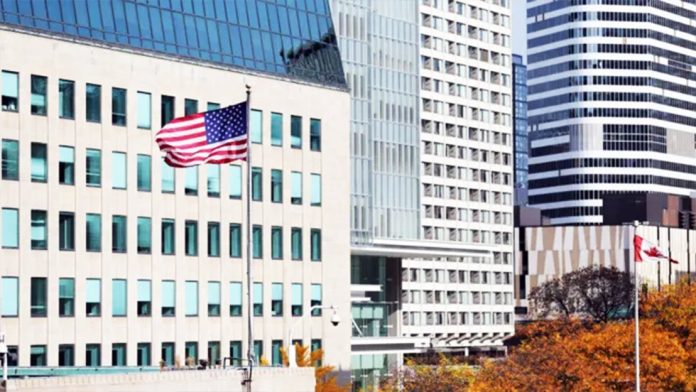
US consulate in Toronto

Canadian police say they are investigating reports that a gun was fired at the US consulate in Toronto.

“Evidence of a firearm discharge has been located,” Toronto Police Operations posted on X on Tuesday, adding that the report of gunfire was received just before 05:30 local time (09:30 GMT).

No injuries have been reported, and no suspect has been identified, the police statement adds.

It comes as Norwegian police investigate an explosion that occurred outside the US embassy in Oslo on Sunday. Officials there are seeking a suspect who they believe may have placed the improvised device in a possible act of terrorism.

They are investigating a possible link to the ongoing conflict in the Middle East that involves the US.

In Toronto, streets have been closed in the vicinity of the US consulate as police investigate.

Several buildings in Toronto have been shot at since the US-Israeli operation against Iran began on 28 February. Three separate Jewish synagogues in Toronto have been struck by bullets in the past week.

A Toronto boxing gym owned by an Iranian-Canadian critic of the Iranian government was also struck by bullets last Monday.

Meanwhile, police in Norway have released images of a person who is believed to be linked to the explosion there, which caused minor damage to the building and did not cause any injuries.

The US state department is also investigating the incident.

It comes amid fears of attacks against Americans and Jewish organisations by Iranian proxy groups.

Credit: bbc.com

Feature: Who Is an African in a World Built for States?

0
Obed Kog, the writer

An African is someone the world met before it knew how to explain itself.

Before borders toughened. Before states learned how to pretend they were natural. Before rules were written, broken, and rewritten to protect those who wrote them. An African learned survival before theory arrived. Community before contracts. Endurance before power. This is not a romantic claim. It is a structural one, and the distinction matters enormously for how we understand the African condition in world affairs.

What the World Assumed

Most theories of international relations begin with a tidy premise: the world is made of states, states seek survival, and the system is anarchic. This is the architecture Kenneth Waltz built in Man, the State, and War, one of the most influential frameworks in global political thought. From this foundation, conflict can be traced through three sources: human nature, the behavior of states, and the structure of the international system.

This framework is elegant. It is also quietly Eurocentric. It assumes that states and systems evolved together, that borders emerged from political communities rather than being imposed upon them, and that sovereignty is something earned through internal struggle before it is recognized externally.

In much of Western Europe, that sequencing roughly held. The state preceded the system. Social contracts evolved before sovereignty was fully formalized. Power, however imperfectly, was largely endogenous.

Africa received none of that sequencing.

What Africa Actually Experienced

Africa did not enter the international system gradually. It entered it violently. The system arrived before the state. The state arrived before legitimacy. Legitimacy arrived, and in many places is still arriving, before consent was ever genuinely sought.

Colonial extraction, imperial rivalry, and the imperatives of global capitalism preceded the African state. Borders were drawn not around political communities but around European convenience. Sovereignty was declared before legitimacy was cultivated, and independence was granted before its economic foundations were secured.

This is the insight Kwame Nkrumah pressed with urgent clarity in Africa Must Unite. He called it “flag independence”: symbols without substance, sovereignty without choice. A small, fragmented African state negotiating alone in a hostile global system is not weak because Africans are incapable. It is structurally disadvantaged because the system punishes isolation and rewards scale. That is not ideology. That is realism, applied honestly.

What resulted was what might be called stacked insecurity: the insecurity of the person, the insecurity of the state, and the insecurity of a system that rarely pauses to explain itself to those it excludes. But there is a second, deeper story, one that classical realism consistently misses.

Realism assumes the individual as the foundation of politics: fearful, rational, self-interested. From that individual, the state emerges. But across Africa, political life did not begin with the isolated individual. It began with community. Identity preceded territory. Belonging preceded borders.

“I am because we are” was not poetry. It was governance.

Conflict existed, it always does, but it was mediated through kinship, reciprocity, and moral obligation. Power was relational before it was coercive. Security was social before it was territorial. When the modern African state arrived, abruptly and externally, it demanded loyalty without conversation. It asked people to trade living communities for inherited institutions.

Africa did not fail the state. The state was imposed on Africa before the conditions for its success were present. This was not an African failure. It was an ontological collision.

Pan-Africanism emerged as Africa’s structural answer to this condition. Too often, it is reduced to emotion, memory, or nostalgia. That dismissal misunderstands its purpose. Pan-Africanism was a recognition, argued with force by George Padmore and others that if the international system rewards scale, then fragmentation is fatal. If power concentrates, unity is not optional. Pan-Africanism was not anti-state. It was state survival, scaled up: a realist argument dressed in the language of solidarity.

In a little more than a century, Africa endured what took others three: pre-colonial order without Westphalian states, colonial domination without consent, forced statehood without preparation, and globalization without insulation. And still survived. That survival is not accidental. It is intelligence under pressure.

What That Means Now That the World Is Catching Up

Here is the uncomfortable truth that the current global moment is forcing into view: the world is becoming what Africa has long known. Rules are weakening. Multilateral institutions are under strain. Power is increasingly unapologetic. The rules-based international order, that careful, post-1945 architecture, is showing cracks that realists always predicted but liberals preferred to minimize.

The Global South is navigating great-power rivalry, economic coercion, and the collapse of neutral institutions. Smaller states are learning what African states have always known: that sovereignty without leverage is performative, that dignity without power is precarious, and that survival in a hostile system requires negotiating from the margins with creativity rather than the center with comfort.

What was once dismissed as African weakness now looks like African experience. What was called disorder now looks like adaptation. Africa was not behind in history. It was exposed to the future too soon.

Constructivist thinkers remind us that power is not only material but also shaped by ideas, identity, and meaning. Africa has been misunderstood partly because it was misdescribed: defined by lack, measured against standards it did not design, judged by timelines it did not choose. But compressed history is not the same as failed history. Africa’s experience is a record of political intelligence operating under conditions of maximum constraint.

The African Union’s Agenda 2063, the continental free trade frameworks, and the renewed push for African representation on the UN Security Council are not sentimental gestures. They are strategic responses by states that understand, from hard experience, that structural disadvantage requires structural remedy.

So, Who Is an African?

An African is not simply someone born on a continent.

An African is someone shaped by endurance, trained in negotiation, and fluent in survival without guarantees. An African understands that power is not only taken but shared; that sovereignty without scale is fragile; that dignity without leverage is vulnerable; and that community can outlast institutions when institutions fail.

International relations theory long treated Africa as the place where theory failed to travel well, an anomaly, an exception, a problem to be explained. But what if Africa was never the exception? What if it was always the test?

Long before the rules-based order began to crack, Africans were navigating systems they did not design, borders they did not choose, and hierarchies they could not escape. They developed, across generations, a political intelligence suited to instability: an understanding that unity is strategy, that scale is survival, and that the world rarely rewards those who wait politely for their turn.

Nkrumah’s warning still echoes: fragmentation turns independence into performance. He was not being idealistic. He was being a realist about structure.

The tragedy is not that Africa struggled within international relations theory. The tragedy is that international relations theory never truly listened to Africa. Now, as the world enters an era of fragmentation, rivalry, and uncertainty, it is arriving at conditions Africa has navigated for generations. The question is no longer whether Africa can fit into the world.

The question is whether the world is finally ready to stop explaining Africa and start learning from it. In a system where rules are fading and power is unapologetic, those who have survived without illusions may yet prove to have the clearest vision.

Africa has never survived by illusion.

By Obed Kog

 (okog@gimpa.edu.gh)


The writer is a Graduate Student in International Relations and Diplomacy, GIMPA, and Public Policy Analyst



Drooling into your pillow could be a sign of a more serious issue

0
Drooling into your pillow

The evidence is irrefutable — a pile of drool atop a drenched spot on your pillow. As you awake with a start, you might even wipe that bit of spittle still dangling from your mouth.

Drooling can be embarrassing, especially if you’re waking up to a newly minted lover beside you. But if you’re sleeping alone or next to a seasoned partner who isn’t disturbed by bodily functions, experts say it’s not a big deal — unless it’s a frequent occurrence.

What causes drooling

There are numerous causes of drooling — some benign, others less so, experts say.

“If you’re concerned, the first thing I suggest is an at-home sleep study to determine if there is a more serious reason behind the drooling,” said Dr. Neil Hockstein, founder and the chief medical officer of Parallel ENT & Allergy and a clinical assistant professor of otolaryngology at Sidney Kimmel Medical College at Thomas Jefferson University in Philadelphia.

Sleep apnea: A potentially dangerous reason for drooling is sleep apnea, in which people stop breathing multiple times an hour for up to a minute during the night. In severe cases of sleep apnea, people stop breathing hundreds of times each night.

“When that happens people often switch to breathing through their mouth to get more air, which allows saliva to pool and escape,” Duyka said. “Sleep apnea is a serious medical condition — if your partner tells you that you snore at night or you often wake up with a dry mouth or drooling, consider seeing a sleep specialist.”

About 23.5 million people in the US who have sleep apnea are undiagnosed, according to the American Academy of Sleep Medicine. Yet the condition can lead to heart disease, diabetes, stroke, depression and even premature death if left untreated.

Mouth breathing: Being a mouth breather is a key cause of drooling, experts say. Some people are born with a tendency to breathe through their mouth, due to extremely small nasal passages or a recessed jaw. A congenital deviated septum, where the thin wall between the nostrils is displaced, blocking one of the airways, can also be a cause.

“If you suspect you might have a blockage due to a deviated septum, enlarged adenoids or the like, it’s a good idea to see an ear, nose and throat specialist who can decide if surgery would be helpful,” Hockstein said.

Celebrities and TikTok influencers frequently recommend mouth tape to limit breathing through the mouth. However, the science is still out on any benefits of mouth taping — and there are harms, especially for people with sleep apnea, according to experts.

Acid reflux: Having a nasty taste in the mouth, chest pain and regurgitation are all signs of acid reflux, the backward flow of stomach acid or food into the esophagus. It occurs when the lower esophageal sphincter muscle fails to close properly and can be a cause of drooling.

“A lot of patients with acid reflux will notice they have more coughing at night because they are making more saliva,” Duyka said. “They may wake up in the morning with a throat full of mucus. That’s a protection mechanism, in which your body is trying to compensate by changing the pH of your esophagus to neutralize and wash away the acid.”

Stuffy nose: Seasonal allergies, colds, strep throat, tonsillitis and sinus infections can inflame nasal tissues and block airways as well, leading to increased drooling, Duyka said.

“An infection like a tonsillitis is going to make you salivate more and then drool; even a cold sore in your mouth will do that,” Duyka said. “The body will produce more saliva as a defense mechanism to flush out bacteria.”

Dental issues: Drooling can also be caused by dental issues, such as teeth grinding or a misalignment between the upper and lower teeth that might be affecting how your mouth closes at night.

“I suggest people speak with their dentist and see if there’s something going on with their bite, to make sure that there isn’t something simple that could be done with an oral appliance,” Hockstein said.

Sleeping position: Side and stomach sleepers are most likely to see signs of drooling as gravity will pull the excess saliva onto the bed or pillow. For back sleepers, saliva may either stay in the mouth or travel down the throat.

Credit: cnn.com

‘Big Push’ Finally Brings Mpohor Road Project to Life

0
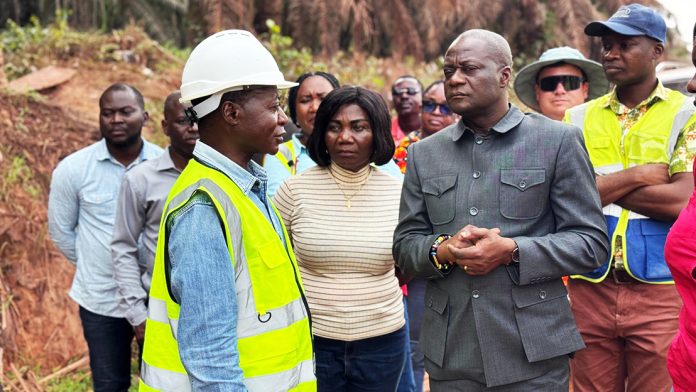
Minister Joseph Nelson ( in kaftan suit) together with Dr. Justice Armoh popularly known as Justmoh on site

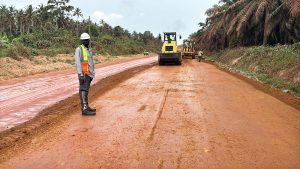
For many residents of Mpohor and surrounding villages in the Western Region, the sight of construction equipment returning to the long-neglected Kejabil -Mpohor road has stirred emotions of relief, hope and cautious optimism.

After years of broken promises, hope appears to rise in Mpohor, a farming District  as Big Push finally breath life into the 13km abandoned and deplorable Mpohor road project.

Earth moving machines busy at work

For years, commuters, farmers and traders in the district have endured the harsh reality of navigating the deplorable stretch linking Kejebir through Mpohor to Adum Banso.

Despite two separate sod-cutting ceremonies in 2018 and 2021 under the previous administration, the road remained largely unmotorable, leaving many residents feeling abandoned most particularly during rainy season.

But that narrative is now expected to change. Under President John Dramani Mahama’s ‘Big Push’ infrastructure initiative, the long-awaited road project has finally been awarded to Justmoh Construction, with preparatory works already underway.

A section of the road

The renewed activity has brought a wave of excitement to the Mpohor District, an area known for its vast palm plantations and mining activities, but hampered for decades by poor road infrastructure. For farmers, the road is more than just a transport route. It is a lifeline that connects them to markets, health facilities and schools.

During a site visit on Monday, March 9, 2026, Western Regional Minister, Joseph Nelson inspected the initial works and expressed optimism about the project’s progress.

According to him, while the return of the contractor signals renewed commitment from government, the real satisfaction will come when the road is fully completed.

He noted that the government was determined to ensure that the mistakes of the past—where sod-cutting ceremonies did not translate into actual construction—are not repeated.

The contractor, Justmoh Construction, is expected to pave the 13-kilometre road within a 24-month period, a development that many residents believe could transform the district’s economic fortunes.

Chief Executive Officer of the construction firm, Justice Amoh, assured residents that his company was committed to delivering the project within schedule, adding that the road will significantly improve mobility in the area.

Construction work ongoing

Beyond government officials and contractors, the project carries deep meaning for traditional leaders who have repeatedly appealed for the road’s completion over the years. The Safohene of the Mpohor Traditional Area, Twaah Kwame, described the development as a long-awaited breakthrough for the people.

He said the poor condition of the road has for years slowed economic activities, discouraged investment and made transportation extremely difficult for residents.

Many motorists who ply the route say the road has been a nightmare, particularly during the rainy season when vehicles often get stuck in deep mud, forcing passengers to abandon their journeys.

Residents believe the construction of the road will open up the district, making it easier for farmers to transport oil palm, cocoa and other produce to nearby commercial centres.

Improved road access is also expected to enhance healthcare delivery, reduce travel time for students commuting to school and attract new businesses to the district.

For now, the people of Mpohor are watching closely, hopeful that this time the project will move beyond ceremonial promises to tangible results.

After years of waiting, many believe the ‘Big Push’ initiative may finally deliver the road they have long dreamed of—and with it, a new chapter of development for the district.

Today’s Last 16 UEFA Champions League Previews

0
Antoine Semenyo, Man City (R)

Real Madrid, Manchester City in clash of the titans at the Bernabeu

The 16th Champions League instalment of Real Madrid vs. Manchester City takes centre stage at the Bernabeu today, when both sides butt heads for the first leg of their last-16 tie.

This eagerly-anticipated fixture will become the first in the competition’s history to be played in the knockout stages in five consecutive campaigns.

Seeking to win a record-extending 16th European crown this season, Real Madrid were forced into the Champions League knockout round playoffs after finishing ninth in the League Phase, one place and one point behind Man City, after losing three of their final five fixtures.

Real Madrid return to the Bernabeu, where they have won four and lost just one of their five Champions League home games this season, scoring 12 goals in the process – though that solitary defeat was against Man City in December, losing 2-1 on matchday five of the League Phase.

The Spanish giants have, in fact, lost each of their last four UEFA games against English opposition, but they have been beaten in only three of their last 25 Champions League home matches (W19 D3) against all clubs. They should also take comfort from the fact that they have prevailed in 13 of their last 15 UCL last-16 ties, winning the first leg in 10 of their last 12 ties at this stage.

Guardiola is now gearing up for his 190th Champions League game as a manager, which will see the former Barcelona boss draw level with Sir Alex Ferguson.

Los Blancos should never be written off in any contest, especially in the Champions League, but we feel that Guardiola’s men may just do enough to take a slender advantage back to the Etihad Stadium for next week’s second leg.

Credit: sportsmole.co.uk


Chelsea set to test their mettle against PSG

Chelsea will test their mettle against Champions League holders Paris Saint-Germain in the first leg of their last-16 tie at the Parc des Princes on Wednesday night.

Ousmane Dembele, PSG

The two teams lock horns for the first time since the 2025 FIFA Club World Cup final last summer when Cole Palmer inspired the West Londoners to a 3-0 victory in the United States.

Just like last season en route to lifting their first ever Champions League trophy, PSG missed out on automatic last-16 qualification this term and were forced to enter the knockout round playoffs after finishing 11th in the League Phase, winning just one of their final five matches (D2 L2).

PSG have experienced contrasting results in Ligue 1, with a narrow 1-0 away victory over Le Havre followed by a 3-1 home defeat to Monaco – their second league loss in as many months that has allowed second-placed Lens to reduce the gap at the summit to just one point with nine games left to play.

Instead of facing Nantes this weekend, PSG have been granted time off from Ligue 1 action to concentrate solely on their 14th successive last-16 tie in the Champions League, with Les Parisiens bidding to win a two-legged tie in Europe’s premier club competition for the sixth time in a row.

PSG head into their clash with Chelsea having lost only one of their last eight games against English opposition in UEFA competition (W5 D2) and have won their last three two-legged ties against Premier League sides, all in last season’s Champions League.

Chelsea are one of six English clubs competing in the last 16 of this season’s Champions League after finishing sixth in the 36-team League Phase standings, winning five, drawing one and losing two of their eight matches.

Credit: sportsmole.co.uk


Bayer Leverkusen welcome Arsenal to the BayArena

Two Invincibles of the 21st century collide in the last 16 of the 2025-26 Champions League, as Bayer Leverkusen welcome Arsenal to the BayArena for Wednesday’s first leg.

Viktor Gyokeres, Arsenal

The 2023-24 Bundesliga champions navigated a two-legged playoff with Olympiacos to set up a date with the Gunners, who were the dictionary definition of flawless in the league phase.

Always the bridesmaid and never the bride in all forms of continental competition – barring one UEFA Cup Winners’ Cup in 1994 – Arsenal laid down no fewer than eight early markers with eight straight wins in a dominant league-phase campaign.

Mikel Arteta masterminded successes against the likes of Atletico Madrid, long-time nemeses Bayern Munich and 2024-25 runners-up Inter Milan as the Gunners clinched first place unchallenged, with both the best offensive (23 goals scored) and defensive (four goals conceded) in the 36-team league phase.

As the knockout draw was also especially kind to Arsenal – who cannot meet any of Real Madrid, Liverpool, PSG, Bayern or Manchester City before the final – the expectation that 2026 will finally be the year of red and white ribbons on the Champions League trophy is only growing.

Still in pursuit of a never-before-seen quadruple, Wednesday’s visitors continue to face incessant criticism for their well-documented reliance on set-plays, but as long as the wins keep on flooding in, it matters little.

Credit: sportsmole.co.uk


Bodo/Glimt set to continue fairytale journey against Sporting Lisbon

Norwegian upstarts Bodo/Glimt will continue their fairytale journey in the Champions League on Wednesday when they welcome Sporting Lisbon to Aspmyra Stadion for the first leg of their round-of-16 tie.

Luis Suarez, Sporting CP

The Super Team once again defied the odds to eliminate last season’s runners-up Inter Milan in the playoffs, while the Portuguese visitors secured direct passage to this stage of the competition.

The standout surprise of this season’s European elite, Glimt have taken the competition by storm in their first foray into the Champions League proper, a journey that has already featured a series of giant-killing acts.

The Norwegian outfit produced a late surge to secure a rare playoff berth after going unbeaten in their final three league-phase matches, first drawing 2-2 at Borussia Dortmund before victories over Manchester City (3-1) and Atletico Madrid (2-1) lifted them to 23rd place in the 36-team table.

Having become the first Norwegian club to record four consecutive victories in the Champions League proper, as well as the first side from the country to win a knockout-phase tie in the competition, Glimt will certainly not sell themselves short of extending their remarkable run.

Credit: sportsmole.co.uk

BoG Rolls Out Another Robust Strategy … Domestic Securities And Foreign Reserve Assets To Be Reinvested Upon Maturity

1
BoG Governor, Dr Pandit Asiama addressing the Committee on Economy and Development

The Governor of the Bank of Ghana, Dr Johnson Pandit Asiama, has outlined a series of strategic measures aimed at gradually strengthening the financial position of the Central Bank, following the economic stabilisation efforts undertaken recently.

The BoG has tabled at least six measures to improve the financials of the Central Bank in the medium term.

Speaking before a parliamentary committee on Economy and Development, the Governor noted that one of the key drivers of improvement will be the gradual repricing of the bank’s earning assets.

He explained that when domestic securities and foreign reserve assets mature, they will be reinvested at prevailing market yields, which are expected to generate stronger investment income for the central bank.

“The natural turnover of the Bank’s asset portfolio will support a gradual recovery in investment income over time,” he said.

Committee Members and BoG officials at the meeting

The Governor also indicated that improvements in reserve asset management are expected to further strengthen the bank’s income position as global interest rate conditions evolve and returns on foreign reserve assets improve.

Another major factor expected to support the Bank’s finances is the easing of liquidity management costs.

During the period of tight monetary policy, the Bank of Ghana intensified open market operations to absorb excess liquidity in the banking system, which resulted in higher interest expense.

However, the Governor indicated that as inflation continues to decline and policy interest rates gradually normalise, the cost associated with absorbing excess liquidity will reduce naturally.

The central bank is also implementing reforms within the domestic gold purchase programme to reduce operational costs.

According to the Governor, improvements in the programme’s cost structure have already been made and are expected to have a more significant positive impact on the bank’s finances from 2026 onwards.

He added that the government will also partner with the central bank in sharing part of the programme’s operational costs as the initiative evolves into a key national strategy for strengthening the country’s international reserves.

The Governor of the Bank of Ghana further explained that greater exchange rate stability will help limit valuation swings on the bank’s foreign currency assets.

He explained that exchange rate movements can sometimes produce accounting valuation losses when the domestic currency strengthens against foreign currencies.

However, a more stable exchange rate environment is expected to reduce the magnitude of such fluctuations in the Bank’s financial statements.

The governor said these measures are expected to progressively improve the financial position of the Bank of Ghana over the medium term.He noted that despite the financial costs associated with stabilisation policies, the broader economic outcomes have been positive.

Inflation has fallen sharply from above 23 per cent in 2024 to 3.3 per cent in early 2026, while the exchange rate has stabilised and credit growth in the economy is gradually recovering.

“For ordinary Ghanaians, the real measure of this progress is simple: prices are stabilising, the cedi is steadier and the economy is moving back toward normal,” the Governor told the committee.

He assured Parliament that the Bank of Ghana will continue to pursue prudent, disciplined and data-driven monetary policies to sustain macroeconomic stability while strengthening its financial position over time.

WORK DONE

Dr Johnson Pandit Asiama recalled how the economy was suffering when he assumed office and what was done to remedy the situation.

To reverse the trend, he said the central bank adopted a series of aggressive policy measures aimed at restoring macroeconomic stability and rebuilding confidence in the economy.

The governor said the Bank of Ghana maintained a tight monetary policy stance throughout 2025 to bring inflation under control and anchor market expectations.

At the same time, the bank intensified open market operations to mop up excess liquidity within the financial system.

The move was necessary because excess reserves held by commercial banks were weakening the effectiveness of monetary policy transmission.

Measures included increased issuance of liquidity-absorbing instruments, active sterilisation of foreign exchange inflows and closer coordination with the Ministry of Finance on government cash management.

GOLD REVERSES REBALANCED

The central bank also moved to strengthen Ghana’s external buffers, including the expansion of the domestic gold purchase programme launched in 2021.Gold reserves rose significantly from about 8.7 tonnes before the programme to over 40 tonnes by October 2025.

However, the governor revealed that the bank later converted part of its gold holdings into foreign exchange assets to maintain a balanced reserve portfolio.

He stressed that the move did not represent a loss of national assets but rather a strategic diversification measure.

“Gold had come to represent about 42 per cent of our gross international reserves, which created portfolio concentration risk,” he explained.

155 Diaspora Africans Granted Ghanaian Citizenship

0
Minister Muntaka and Veep Naana Opoku-Agyemang at the ceremony

The Government of Ghana has formally granted One hundred and fifty five (155) Africans in the diaspora Ghanaian citizenship at a colourful ceremony in Accra yesterday.

The ceremony, held at the Accra International Conference Centre, symbolically and legally reaffirmed that while history may have scattered African peoples across continents, it cannot erase their identity or sever their ties to the homeland.

Swearing of Oath of Allegiance by Members of the African Diaspora Community as Ghanaian Citizens

Addressing the event, Vice President Naana Jane Opoku-Agyemang said the ceremony was more than an administrative formality. She framed it as a profound declaration of historical restoration and moral reconnection:

“Today is not simply a legal ceremony. It is a declaration that history may scatter a people, but it cannot erase their identity.

“Distance cannot sever the bond between Africa and its descendants. Ghana remains committed to being a home for the global African family,” she said.

Confronting a Painful Past

Prof. Opoku-Agyemang highlighted the enduring legacy of the transatlantic slave trade as one of the darkest chapters in human history.

She emphasised Ghana’s leadership at the United Nations in seeking formal recognition of the slave trade as one of the gravest crimes against humanity—not merely symbolic, but a commitment to truth, remembrance, justice, and restoration for peoples of African descent worldwide.

“The dungeons of Cape Coast and Elmina castles still stand today as silent witnesses,” she said, adding “places where millions of our ancestors were held before being forced across the Middle Passage. Yet from that tragedy emerged extraordinary resilience, creativity and cultural brilliance among the descendants of Africa.”

Quoting President John Dramani Mahama, she described Diaspora communities as “branches of the same ancestral tree,” bound together by a shared history that cannot be erased, and a destiny that must now be reclaimed together.

Nkrumah’s Vision Lives On

The Vice President framed the event within Ghana’s Pan-African heritage, noting that Osagyefo Dr. Kwame Nkrumah envisioned Ghana as a gateway for the unity, dignity and advancement of African people worldwide.

“Ghana’s independence in 1957 was not meant for Ghana alone. It was meant to inspire freedom and opportunity for Africans and their descendants across the globe. That vision continues to guide our national policy today.”

Prof. Opoku-Agyemang further underscored the Diaspora as a vast reservoir of talent, knowledge, innovation and economic strength.

Ghana’s Diaspora Engagement Policy aims to transform historical connection into practical partnership through investment, entrepreneurship, cultural exchange, education and innovation.

“Our goal is simple but profound: to build a Ghana where Africans everywhere, whether on the continent or in the Diaspora, can contribute meaningfully to our shared prosperity.”

Citizenship as Reconnection

Transitioning to the legal and policy framework, Minister of Interior Muntaka Mohammed-Mubarak emphasized that the ceremony marked the formal completion of the citizenship process for individuals with strong ties to Ghana, but its significance extended beyond legal recognition.

“Your conferment of citizenship represents not only a legal act, but also a gesture of reconciliation, healing, and the restoration of a connection that history unjustly disrupted. Ghana was both a source and a passage in the transatlantic slave trade. By welcoming you today as citizens, we reaffirm that the descendants of those who were taken away remain part of our extended national family.”

The minister also noted that Ghana increasingly regards the Diaspora as the country’s “seventeenth region” and Africa’s “sixth region,” acknowledging its vital role in national development and global engagement.

Beyond Symbolism: Structured Engagement

Minister Mohammed-Mubarak highlighted that Ghana is moving beyond symbolic gestures toward structured, institutionalized ties with the Diaspora.

Initiatives such as the Diaspora Birthright Certificate framework, which has received Cabinet approval, provide formal pathways for descendants abroad to reconnect with the country, ensuring shared heritage is accompanied by enduring legal and policy frameworks.

“Through these pathways, we are transforming historical recognition into practical partnership, ensuring that your expertise, investments and cultural connections can contribute directly to Ghana’s progress,” he said.


Gifty Oware Files Another Application Seeking To Stay Proceedings Until…

0
Gifty Oware-Mensah

The embattled former Deputy Executive Director of the National Service Authority (NSA), Gifty Oware-Mensah, has filed yet another application before the Criminal Division of the High Court in Accra seeking a stay of proceedings in her ongoing trial.

The application is intended to halt the trial to allow the Court of Appeal to determine an interlocutory appeal she has filed, challenging an order by the trial court directing her to disclose the names and addresses of her witnesses.

When the matter was called on Monday, before the High Court, presided over by Her Ladyship Audrey Kocuvie-Tay, Counsel for the accused, Gary Nimako Marfo, moved the application for stay of proceedings.

Mr. Nimako Marfo told the court that the appeal filed at the Court of Appeal raises serious constitutional questions regarding the requirement for an accused person to submit a list of witnesses and their addresses during the case management stage of a criminal trial.

According to him, the directive, which is based on the 2018 Practice Direction on Case Management and Disclosure in Criminal Proceedings, compels an accused person to disclose the nature of their defence even before the prosecution has closed its case.

“We submit that the practice direction asking an accused person to file a list of witnesses and their addresses at the case management stage is an attempt to compel an accused person to disclose the nature of the testimony they intend to lead in their defence even before the prosecution has closed its case,” Counsel argued.

He further contended that such a requirement undermines the constitutional presumption of innocence as provided under Article 19(2)(c) of the 1992 Constitution.

Mr. Nimako Marfo also argued that Article 19(10), which states that no person tried for a criminal offence shall be compelled to give evidence at trial, is being eroded by the practice direction that compels an accused person to disclose witness details.

He maintained that under the law, an accused person can only be called upon to open their defence after the prosecution has closed its case and established a prima facie case.

Counsel told the court that the appeal also seeks to have the Court of Appeal refer the matter to the Supreme Court of Ghana for constitutional interpretation regarding the compatibility of the practice direction with the provisions of the Constitution.

He argued that if the constitutional issues raised are not resolved by the appellate court to guide the trial, it could result in a grave miscarriage of justice against his client.

For that reason, he urged the court to exercise its discretion to stay proceedings pending the determination of the appeal.

However, the application was strongly opposed by the Director of Public Prosecutions, Yvonne Atakora Obuobisa.

Relying on an affidavit in opposition filed on February 16, 2026, the DPP argued that the trial court’s directive was properly grounded in the 2018 Practice Direction designed to ensure orderly and efficient criminal trials.

She noted that the order was made in compliance with the Constitution, the Criminal and Other Offences Act, 1960 (Act 30), and the applicable practice directions governing criminal proceedings.

The prosecution further argued that a stay of proceedings is only granted under special circumstances and should not be granted merely because a party disagrees with a procedural ruling of the court.

Citing decisions of the Supreme Court, the DPP submitted that the mere filing of an appeal does not automatically result in a stay of proceedings and that the applicant must demonstrate exceptional circumstances.

According to her, the accused person had failed to establish such circumstances or show that the appeal had strong prospects of success to justify halting the trial.

She added that staying the proceedings would prejudice the prosecution’s case and undermine the public interest in ensuring the timely administration of justice.

The DPP also pointed out that the appeal was interlocutory and not against a conviction, noting that even if the appeal eventually succeeds, the trial itself would not be rendered invalid.

She, therefore, urged the court to dismiss the application.

Gifty Oware-Mensah has pleaded not guilty to multiple charges including stealing and money laundering involving about GH¢38 million.

The court has adjourned the matter to March 23, 2026 at 8:00 a.m. for a ruling on the application.


For more news, join The Chronicle Newspaper channel on WhatsApp: https://whatsapp.com/channel/0029VbBSs55E50UqNPvSOm2z

The Ghanaian Chronicle