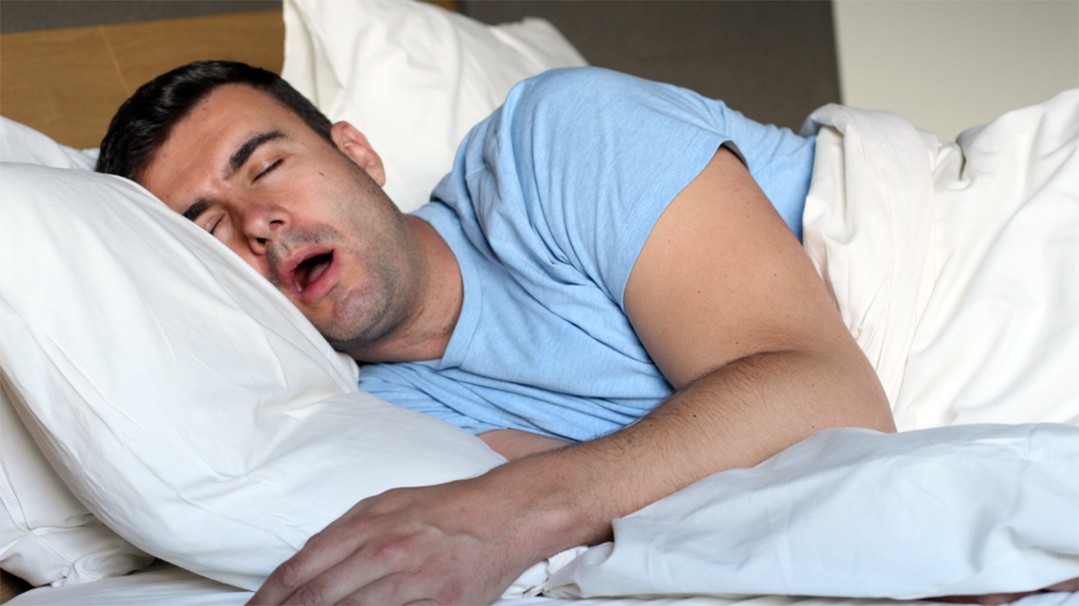
The evidence is irrefutable — a pile of drool atop a drenched spot on your pillow. As you awake with a start, you might even wipe that bit of spittle still dangling from your mouth.
Drooling can be embarrassing, especially if you’re waking up to a newly minted lover beside you. But if you’re sleeping alone or next to a seasoned partner who isn’t disturbed by bodily functions, experts say it’s not a big deal — unless it’s a frequent occurrence.
What causes drooling
There are numerous causes of drooling — some benign, others less so, experts say.
“If you’re concerned, the first thing I suggest is an at-home sleep study to determine if there is a more serious reason behind the drooling,” said Dr. Neil Hockstein, founder and the chief medical officer of Parallel ENT & Allergy and a clinical assistant professor of otolaryngology at Sidney Kimmel Medical College at Thomas Jefferson University in Philadelphia.
Sleep apnea: A potentially dangerous reason for drooling is sleep apnea, in which people stop breathing multiple times an hour for up to a minute during the night. In severe cases of sleep apnea, people stop breathing hundreds of times each night.
“When that happens people often switch to breathing through their mouth to get more air, which allows saliva to pool and escape,” Duyka said. “Sleep apnea is a serious medical condition — if your partner tells you that you snore at night or you often wake up with a dry mouth or drooling, consider seeing a sleep specialist.”
About 23.5 million people in the US who have sleep apnea are undiagnosed, according to the American Academy of Sleep Medicine. Yet the condition can lead to heart disease, diabetes, stroke, depression and even premature death if left untreated.
Mouth breathing: Being a mouth breather is a key cause of drooling, experts say. Some people are born with a tendency to breathe through their mouth, due to extremely small nasal passages or a recessed jaw. A congenital deviated septum, where the thin wall between the nostrils is displaced, blocking one of the airways, can also be a cause.
“If you suspect you might have a blockage due to a deviated septum, enlarged adenoids or the like, it’s a good idea to see an ear, nose and throat specialist who can decide if surgery would be helpful,” Hockstein said.
Celebrities and TikTok influencers frequently recommend mouth tape to limit breathing through the mouth. However, the science is still out on any benefits of mouth taping — and there are harms, especially for people with sleep apnea, according to experts.
Acid reflux: Having a nasty taste in the mouth, chest pain and regurgitation are all signs of acid reflux, the backward flow of stomach acid or food into the esophagus. It occurs when the lower esophageal sphincter muscle fails to close properly and can be a cause of drooling.
“A lot of patients with acid reflux will notice they have more coughing at night because they are making more saliva,” Duyka said. “They may wake up in the morning with a throat full of mucus. That’s a protection mechanism, in which your body is trying to compensate by changing the pH of your esophagus to neutralize and wash away the acid.”
Stuffy nose: Seasonal allergies, colds, strep throat, tonsillitis and sinus infections can inflame nasal tissues and block airways as well, leading to increased drooling, Duyka said.
“An infection like a tonsillitis is going to make you salivate more and then drool; even a cold sore in your mouth will do that,” Duyka said. “The body will produce more saliva as a defense mechanism to flush out bacteria.”
Dental issues: Drooling can also be caused by dental issues, such as teeth grinding or a misalignment between the upper and lower teeth that might be affecting how your mouth closes at night.
“I suggest people speak with their dentist and see if there’s something going on with their bite, to make sure that there isn’t something simple that could be done with an oral appliance,” Hockstein said.
Sleeping position: Side and stomach sleepers are most likely to see signs of drooling as gravity will pull the excess saliva onto the bed or pillow. For back sleepers, saliva may either stay in the mouth or travel down the throat.
Credit: cnn.com