Home Blog Page 821

ABL Appeals To Government To Ratify Nyinahin Mining Lease

0
Ashanti Bauxite Limited

The Ashanti Bauxite Limited (ABL), a joint venture between the Ghana Integrated Aluminium Development Corporation (GIADEC) and Rocksure International Limited has appealed to the government of Ghana to expedite action on the ratification of the Nyinahin Block B Bauxite Mining Lease Agreement.

The joint venture is aiming to develop a bauxite mine and integrated refinery in the Nyinahin-Mpasaaso area of the Ashanti Region.

Complimenting this call to expedite action on the ratification is the people in the Tano Offin Forest Belt, together with main Asante groups (Asante Kotoko Society, ROSACH, etc) of the Ashanti Region, who have expressed strong support for the mining lease agreement between the Government of the Republic of Ghana and Ashanti Bauxite Limited (ABL).

Realisation of this goal, according to ABL,will lead to an immeasurable economic development in the Atwima Mponua and its surrounding communities, and for Ghana as a whole.

In a news release issued and copied to The Chronicle over the weekend, the group explained that on July 16, 2024 Parliament was presented with the mining lease between ABL and the government of Ghana, however, the agreement has not been ratified.

It has, therefore, asked the government to give their lease a top priority and ratify it for onward operationalisation of the Nyinahin Block B Bauxite Mining Lease Agreement.

“We, the community members, are demanding that this agreement should be ratified for ABL to start work or the government should not bring any other company to their land to extract the bauxite.”

The ABL statement follows a delay in ratification of the Nyinahin Block B Bauxite Mining Lease Agreement,having presented it before the 8th Parliament.

In a daring assertion to Jubilee House,ABL mentioned that they are sending a strong message to the government to see to the ratification of the Mining Lease Agreement, which was laid in the 8th Parliament on 16th July, 2024 and still pending in the 9th Parliament.

“We, the community members, are demanding that this agreement should be ratified for ABL to start work or the government should not bring any other company to their land to extract the bauxite. It subsequently asked authorities to sign up to the mining lease.

“We are, therefore, on this day calling on the government to ensure that the agreement, which was executed on May 14, 2024between the Ghana Government and Asante Bauxite Limited, currently awaiting ratification by Parliament, is ratified during this parliamentary session, before the first rise, to pave way for the company to start work.

Key Highlights of the Agreement

On the composition of the lease, ABL disclosed that the Government, through the Ghana Integrated Aluminium Development Corporation (GIADEC), holds a 30% equity stake in ABL, with 10% as a carried interest.

Local Employment: Projecting employment for local folks in the AtwimaMponua district and its enclave,where the Nyinahin Block B Bauxite Mining will be operationalised, ABL disclosed that during the prospecting phase, approximately 80% of the workforce were local community members.

“This trend is expected to continue, providing significant employment opportunities.Growth and sustainability Levy and Community.”

 Development Fund: it noted that it is committed to pay 3% of its revenue towards Growth and Sustainability Levy to the government which the community will benefit. Additionally, the company is committed to establish a Community Development Fund.

This fund aims to address critical infrastructure and social amenities, including schools, hospitals, roads, water, and electricity in the mining communities.

Refinery Development: As part of its commitment to adding value to Ghana’s bauxite resources, ABL has revealed plans to develop a bauxite refinery in the Nyinahin-Mpasaaso area. This refinery, according to ABL, will process bauxite into alumina, contributing to the establishment of an Integrated Aluminium Industry in Ghana.

Environmental Stewardship:

The company has pledged to adopt measures to prevent environmental degradation, ensuring the protection of local water bodies and ecosystems.

Economic Growth: It indicted that the establishment of the bauxite refinery is anticipated to generate employment and stimulate local economic activities, further enhancing the region’s development,adding that the community leaders commend the transparent and inclusive approach taken by GIADEC and ABL, noting that previous exploration efforts were unsuccessful, making this development particularly significant.

They, therefore, have expressed confidence that the mining operations and refinery development will commence promptly upon parliamentary ratification, bringing tangible benefits to the Ashanti region and Ghana in general.

KGL Group Chair Donates Towards Sports Development At Mfantsipim

0
The presentation

The Executive Chairman of KGL Group, Mr. Alex Apau Dadey, warmly welcomed a delegation from the Mfantsipim Old Boys Association (MOBA) to the KGL House, as part of a courtesy call that underscored a shared commitment to education, sports and youth empowerment.

The visit, graced by some esteemed alumni, including former MOBA President Capt. Paul Forjoe, Newly inducted Abusuapanin of MOBA, Moses Kwesi Baiden Jr and Ambassador Ashim Morton, highlighted the strong bond between Mfantsipim and its distinguished alumni network.
During the meeting, Mr. Dadey, a proud alumnus of Mfantsipim, reflected on his formative years at the school, emphasising the discipline, leadership and competitive spirit that shaped his journey.

As a former top athlete excelling in the 100m and 200m races, he reiterated how sports instilled handwork, resilience and teamwork, values that continue to guide his leadership in corporate Ghana.

In reaffirming his commitment to sports development, he donated GH¢ 100,000 cash prize to support Mfantsipim’s sports initiatives and introduced the Alex Dadey Sportsman of the Year Award, an annual GH¢10,000 prize to be awarded to the most deserving sportsman each year, at Mfantsipim’s Speech and Prize Giving Day.

The esteemed Executive Chairman, Mr. Dadey, announced a mentorship scheme in partnership with KGL Group, designed to equip young MOBA professionals with industry-ready skills for the Ghanaian job market.
Reverend Ebenezer Aidoo, Headmaster of Mfantsipim School, extended heartfelt appreciation to Mr. Dadey for his contribution, underscoring Mfantsipim’s legacy of balancing academic excellence with talent development.

He proudly highlighted the school’s victory in the 2024 National Science and Maths Quiz, a testament to its long-standing commitment to academic and intellectual growth.

However, he emphasised that Mfantsipim’s mission goes beyond just academic excellence, actively identifying and nurturing student-athletes from all corners of the country through grassroots scouting and recruitment.
Speaking on KGL Group’s broader commitment to sports, Mr. Dadey passionately stated:
“Sports is more than just a Corporate Social Responsibility initiative at KGL; it is a key pillar of our corporate strategy.

We are deeply invested in the development of grassroots football through the Inter-Regional U17 Colts Championship, led by the KGL Foundation, to nurture young talent from across the country. We are also proud sponsors of the Black Stars, reinforcing national pride and the promotion of Ghanaian culture through sports.”

“Beyond football, we have also made strategic investments in other sports disciplines. Through NLA 590 Mobile, we continue to support the promotion of boxing, expanding our impact on the broader sports industry in Ghana.”
Abusua Panyin Moses Baiden, in his address, called for streamlining MOBA’s processes, particularly in funds acquisition and dissemination, to ensure sustained development.

He advocated for the sustenance of the MOBA Secretariat, a dedicated body to drive effective alumni engagement.

As a former school goalkeeper, he emphasised the holistic learning approach Mfantsipim upholds, blending academics with sports and expressed profound gratitude to Mr. Dadey for his unwavering support, particularly his instrumental role in the Mfantsipim Sports Complex project – a symbol of excellence fostering young athletes.

Former MOBA President Capt. Paul Forjoe and Ambassador Ashim Morton commended Mr. Dadey for his generous support, stressing the long-term impact of the donation on Mfantsipim’s sports infrastructure and the continued growth of MOBA as a prestigious alumni brand.

The event concluded with a call for deeper collaboration between KGL Group and MOBA to foster youth empowerment and national development through sports and education.


Naa Torshie Throws Weight Behind New DACF Boss

0
Nii Lante Vanmderpuye (L), Naa Torshie (2nd L), with the new DACF boss (M) and the Local Government Minister

The immediate past Administrator of the District Assemblies Common Fund (DACF), Irene Naa Torshie Addo, has thrown her support behind the newly appointed Administrator, Michael Harry Yamson, expressing confidence in his ability to succeed.

Speaking to the press in Parliament after attending Mr. Yamson’s vetting,  Naa Torshie stated that she is optimistic he will receive the necessary support to effectively carry out his responsibilities.

Notably, she is the first former DACF Administrator, since the adoption of the 1992 Constitution, to attend the vetting of a new Administrator.

Her gesture reflects a level of maturity rarely seen, as previous officeholders have typically not extended such public support, particularly during a change in government.

Naa Torshie served as the DACF Administrator under former President Akufo-Addo, earning widespread recognition for spearheading numerous infrastructure projects nationwide.

President Nana Addo Dankwa Akufo-Addo commended her efforts, particularly for her role in the construction of court buildings and residential quarters for judges across the country.

She also played a key role in the District Road Improvement Programme (DRIP), an initiative aimed at enhancing road networks to foster local economic growth and improve the quality of life for citizens.

The Administrator-designate, Mr. Yamson, gave the assurance that he will support auditing of the funds sourced from the DACF for the acquisition of equipment under the District Road Improvement Programme (DRIP) last year.
The DRIP equipment refers to heavy machinery and tools used for road construction and maintenance works including water tankers, backholes, motor graders, rollers and tipper trucks.

He explained that although the DACF budget disbursements for the year 2024 would be audited as the law required, he would also support auditing of the monies taken from the Fund to purchase the equipment when the need arose.

His response emanated from a question posed by Rockson-Nelson Dafeamekpor, the Member of Parliament for South Dayi and Majority Chief Whip, who inquired whether the nominee upon his approval, would audit funds taken from the DACF for acquisition of the DRIP equipment by the previous New Patriotic Party government in 2024.
This was because of the failure of the previous government to set up Management Committees in some districts to manage the equipment.

The nominee said he would design a formula in consultation with the ministers of Finance and Local Government, Chieftaincy and Religious Affairs to ensure 80 per cent of the DACF funds were disbursed to the various metropolitan, municipal and district assemblies (MMDAs) for development purposes.

The move was in response to President Mahama government’s policy to ensure that 80 per cent of the DACF funds were released to the Assemblies.
“My duty is to be non-partisan and respond to the inequities in development across the country,” MrYamson assured.

He also emphasised the need for the various Assemblies to tap into the e-commerce platforms to enhance their internally generated funds (IGFs) to minimise the reliance on the central government’s support.

The nominee expressed his commitment to ensuring timeous disbursements of the funds to the Assemblies and collaborate with the Regional Coordinating Councils and other sector ministries to ensure accountability and transparency in the utilisation of the funds.

Mahama to dismiss appointees who indulge in mining activities

0
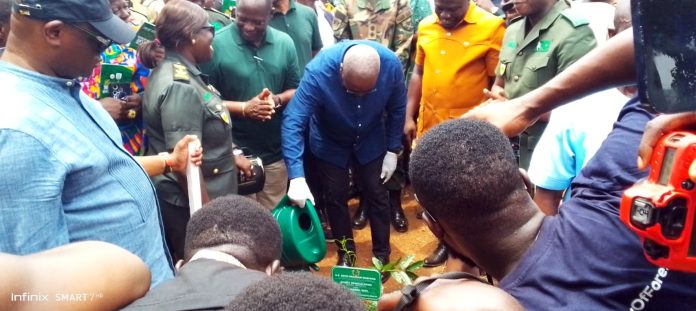
President Mahama planting a tree to officially launch Tree for Life Initiative

President John Dramani Mahama has cautioned all government appointees against involvement in any form of mining activity or face sanctions, including dismissal.

He emphasised that any appointee who is interested in any form of mining business must either resign to avert his wrath.

The President gave the admonition last Friday, at Nkawie, in the Nwabiagya South Municipality at the launch of the Tree for Life Initiative.

The Tree for Life Reforestation Initiative is an intervention by the National Democratic Congress (NDC) government aimed at embarking on transformational landscape restoration efforts to heal and harness the environment by turning areas heavily degraded by illegal mining and other drivers of deforestation and forest degradation into ecological functional landscapes.

The initiative aims at promoting sustainable forest management, conservation and reforestation to address the issues of biodiversity loss, pollution of water bodies, climate change and environmental degradation which have an existing threat.

The objective is to raise environmental awareness on the importance of trees and environmental conservation, enhance biodiversity by promoting ecosystem restoration, combat climate change and its adverse impacts, restore polluted water bodies to their Blue natural colour (Blue water initiative) and restore watersheds.

It also seeks to promote sustainable livelihoods through job creation, in agroforestry interventions and ecosystem; fish farming, apiculture and urban greening by integrating tree planting in the cities.

The initiative involves massive education and awareness outreach on the importance of trees and the need to plant and preserve them using community durbars , consultation with chiefs and traditional leaders, radio and television programmes , events for school children, churches and professional bodies as well as production of flyers and posters.

President Mahama said he has instructed the Regulatory and Security Agencies to intensify their operations against illegal mining, as the government has made significant progress following the reclamation of seven out nine no go zones and are on course to reclaim the remaining two.

He mentioned that 55 Excavators, two bulldozers, three Pickups, four raffles and 11 motorbikes have been seized from illegal miners.

He said 71 individuals who were caught engaging in illegal mining within Forest Reserves have been remanded, adding that the Minister for Environment, Science and Technology successfully laid L.I. 2462 before Parliament and when it is matured in 21 days the President and any other president would no longer have the power to authorize mining in forest reserves.

The President disclosed that the government would be reclaiming the degraded lands, a pilot by private groups successfully restored sixteen (16) acres of land and the expectation to extend the programme to Five Hundred (500) acres reclaim lands annually.

He stressed that the Tree for Life Initiative is about sustainability not about calling people out to plant trees but ensuring that the trees grow, strive and provide long term benefits for our communities.

He said the programme would prioritise rehabilitating lands that have been destroyed by illegal mining, work with Traditional leaders, local communities and youth groups to restore those lands into productive green spaces that support agriculture, eco-tourism and sustainable timber production.

Rails of Promise or Rust: Can Our Railway System Overcome its Challenges?

0
Wisdom Klu, the writer

Our railway systemhas faced years of decline due to neglect, poor management, and changing governmental priorities. Historically, the railway network was essential in linking key economic cities like Accra, Kumasi, and Takoradi. This promoted trade, lowered transportation expenses, and fostered significant industrial growth.

However, a lack of investment in maintenance and expansion has led to its near downfall. This results in an overreliance on road transport. As a fact, the dependence has caused severe traffic congestion, increased accidents, rising fuel costs, and rapid infrastructure deterioration-all of which could have been alleviated with a functioning railway system.

In response, the government launched the Ghana Railway Master Plan. It aimed at rehabilitating and modernizing critical railway routes. A flagship project under this initiative is the Tema-Mpakadan railway line, which is anticipated to enhance trade efficiency and relieve pressure on the road networks. The arrival of the long-expected trains for this project has sparked optimism; however, a key setback arose when one of the new trains was involved in an accident during the testing phase. This unfortunate event has raised alarm about safety, operational preparedness, and project management.

Thus, while there is a renewed commitment to railway transport, several urgent questions remain: What safety measures are being implemented to ensure these trains are ready for full operations? When will commercial services begin? What lessons have been learned from the recent accident, and how are they being addressed? Most importantly, is there a solid plan to prevent this initiative from suffering the same fate as previous railway projects? The government must clarify these issues and take decisive action to guarantee that this investment benefits the citizenry.

The Need for Government Action

A functional railway system will transcend infrastructural development.Itwill act as an economic game-changer. It will providean efficient and cost-effective transportation method, especially for businesses needing to transport goods in bulk. Compared to trucking, rail transport largely lowers logistics costs, makes essential goods more affordable and improves our market competitiveness.

Additionally, a well-run railway network can alleviate congestion on major highways, shorten travel times, and reduce accident rates, which are currently among the highest in the country.  By shifting freight from roads to rail, the we can extend the lifespan of our road infrastructure and save millions on maintenance. Furthermore, railway development can create thousands of direct employment opportunities in train operations, engineering, maintenance, and administration, as well as indirect jobs in logistics, tourism, and activities surrounding railway stations.

Moreover, a modern railway network can attract foreign investment and drive industrial growth. Many multinational firms regard reliable transport infrastructure as a crucial factor in their location decisions. As a country if we can successfully revamp our railway system, it will strengthen our position as a strategic trade and commerce hub in West Africa. Given these potential benefits, the government needs to take prompt and strategic action to ensure the railway system operates again.

Strategic Interventions

To transform the railway system into a dependable and sustainable transportation mode, I suggest the following interventions:

Firstly, maintaTransparent communication with the public is critical to building trust and ensuringaccountability. As citizens, we should receive regular updates on project milestones, operational challenges, and timelines. Establishing an online platform that provides real-time information alongside periodic press briefings will keep us informed. Additionally, engaging local communities along railway routes through stakeholder meetings will help address concerns and foster public support.

Secondly, comprehensive safety audits must be carried out to assess the infrastructure readiness before full operations begin. Each railway line, bridge, and station should undergo thorough inspections to meet international safety standards. Moreover, specialized safety training should be provided to train operators, engineers, and emergency response teams to enhance risk management and accident prevention. Emergency response units must also be strategically placed along critical points for prompt assistance during accidents or technical failures.

Thirdly, a phased operational rollout should be employed to ensure efficiency and reliability. This method would allow authorities to test capacity, resolve unexpected issues, and optimize service delivery. Furthermore, strict adherence to maintenance schedules is necessary to prevent infrastructure decay and unplanned breakdowns. Let’s invest in automated monitoring systems, and GPS tracking to facilitate early detection of technical issues, thereby enhancing overall operational efficiency.

In addition, sustainable funding mechanisms must be put in place for long-term railway maintenance and expansion. Public-private partnerships (PPPs) should be pursued to attract private-sectorinvestment and ease the financial load on our state resources.

Furthermore, public patronage for railway transport should be fostered through competitive pricing and service improvements. Affordable fares should be introduced to make rail transport more appealing than road alternatives. Public awareness campaigns can educate citizens on the cost-saving, safety, and efficiency benefits of train transport. Meanwhile, discounted freight rates should be offered to businesses to promote bulk transporting of goods by rail. This shift from road to rail will not only alleviate highway congestion but also lower transportation costs for industries, thereby increasing economic productivity.

Lastly, stringent oversight and accountability measures need to be established to combat corruption and mismanagement in the railway sector. An independent regulatory authority should be formed to ensure compliance with best practices and enforce safety and operational standards. Regular financial audits should take place, with reports made publicly available to enhance transparency.

Conclusion

Our railway sector stands at a crucial juncture. The arrival of new trains and the repair of railway lines provide an opportunity to reinvigorate the sector, but without strategic actions, This investment could fail.

Going forward, the government must take decisive action by implementing rigorous safety protocols, ensuring financial viability, and engaging the public actively. A well-operating railway system is not just a transit solution; it is an economic driver that can boost industrial expansion, create jobs, and strengthen trade competitiveness.

We cannot afford to repeat past mistakes of abandoning infrastructure projects due to poor management and lack of commitment. The railway system needs to be not only functional but also to be maintained, expanded, and integrated into the broader national development framework. Only through proactive leadership and strategic planning.


WRITTEN BY:

Wisdom Koudjo Klu,

Educationist/Columnist,

Greater Accra Region.

wisdomklu@gmail.com

Editorial: Severe Water Crisis In Tamale Must Be Nipped In The Bud

0
Water Crisis

Tamale, the northern regional capital, has been facing severe water crisis for the past three months, forcing residents to rely on untreated water sources for domestic use. The crisis has significantly impacted daily life, particularly for Muslims during Ramadan and students in second-cycle institutions, who spend valuable time searching for water instead of attending classes. 

With taps running dry, many residents are purchasing water at high prices, GH¢5 for a 25-litre gallon of pipe-borne water and GH¢3 for untreated water from unsafe sources. This has increased financial burdens on households and raised fears of waterborne diseases, such as Cholera and Typhoid. Areas worst affected include Sagnarigu, Gumani, Gurugu, Kukuo, Tuutingli, Lamashegu, Koblimahigu and Jakarayili. 

The Ghana Water Limited (GWL) has attributed the crisis to ageing infrastructure and a growing population. The Tamale Water System, built in 1972, has seen only one major expansion in 2008. The ongoing water rationing provides only 35,000–38,000 cubic metres daily instead of the required 90,000–95,000 cubic metres. 

Although a $223 million Tamale Water Project was launched in 2020 to address the issue, the project has yet to commence. Residents are urging authorities to find a lasting solution.

The situation has exposed the failures of infrastructure planning and water resource management, raising urgent questions about the government’s commitment to ensuring access to clean and safe water, a fundamental human right. It is unacceptable that in 2024, residents of a major city are forced to rely on untreated water sources, placing their health and well-being at risk.

One of the most alarming aspects of this crisis is the exorbitant cost of water. With taps running dry, residents have no choice but to buy water at outrageous prices. This financial burden is unbearable for low-income households, who are already struggling with economic hardships. Water, a basic necessity, has become a luxury that many cannot afford, deepening existing socio-economic inequalities.

The 2020 Tamale Water Project, a $223 million initiative expected to supply 29.7 million gallons of water per day has stalled. The government must provide answers regarding the delays and take immediate steps to fast-track the implementation of this vital project. Bureaucratic inertia cannot continue to deprive residents of their right to water.

The long-term solution must include the extension of the Yapei Water Project, as recommended by GWL, and the expansion of water treatment and distribution facilities to meet the growing demand. Additionally, authorities must prioritize maintenance and timely repairs to prevent recurrent shortages caused by faulty infrastructure.

Water is life. The suffering of Tamale residents should not be ignored any longer. Urgent intervention is needed to restore normalcy, protect public health, and uphold the dignity of the people. The time for action is now.

Ashanti Industrial and Commercial Workers’ Union holds 2025 Delegates Conference

0
Morgan Awayine addressing the delegates

The Ashanti Regional Council of the Industrial and Commercial Workers’ Union (ICU) elected new executives at its 2025 Delegates’ Conference held at the SSNIT Conference Hall in Kumasi last Friday.

The delegates elected Youth, Women and Regional Executives who were sworn into office, before adopting resolutions for ICU’s upcoming 12th Quadrennial Delegates’ Conference (QDC), slated for August, this year.

Delivering his Keynote Address, Mr. Morgan Awayine, Chief Executive Officer and General-Secretary, ICU-Ghana, acknowledged the importance and relevance of the conference, which heralds the 12th Quadrennial Delegates’ Conference.

He said the forum would ensure that “collective and right” decisions are taken to reflect the “aims and objectives” of the National Union, in its quest to continue to be the “preferred” trade union organisation in Ghana and one of the best in Africa.

The General-Secretary disclosed that just like the “Phoenix”, the Union has “risen from its ashes” of the COVID-19 Pandemic, which caused huge membership attrition of the Union.

Touching on Union-Management relationship, Mr. Awayine acknowledged that every business endeavour has two in-built system of democracy; which are Labour and Employer, to make the business “operational and profitable”.This requires the “sacrifice, commitment and collaboration” of the two democratic elements, hence the need for equal partnership on the side of Union and Management for effective collaboration.

Mr. Morgan Awayine lauded the 24-Hour Economy initiative, which is intended to open up “new avenues” for employment for the teeming unemployed youth in the country, envisaging that this “lofty idea” is realised for “job creation and sustainability”, to improve income and social protection of the Ghanaian worker.

The General-Secretary, therefore, urged all workers and employers to be guided by “the dictates” of the Collective Agreement and the Labour Law, which are key tools, as well as do the “right thing” at all times so that either party would be justified in the end.

He also entreated Government, Employers and Labour to endeavour to address labour-related concerns with “speed and alacrity” in order to forestall unnecessary industrial actions at the workplace, noting that “productivity suffers when there is no peace and harmony within the arena of labour relations”.

Mr. John Abayah, Regional Officer, ICU-Ashanti, while presenting the Executive Summary Report, disclosed that three personnel have been employed to augment the staff strength in order to provide efficient, timely and quality service to members.

The Regional Officer disclosed that the region had an average salary increment of 25% across all 36 locals, with the highest being 35%, hoping that salaries will go up in the future.

Mr. Abayah, also disclosed the region has seen a 25% increment of the inherited membership of 3,600, by the close of 2024 and urged locals to “unionise” their Senior Staff to enhance negotiations.

He assured the Union Leadership of their quest to promote and improve service delivery to members and their respective employers, as well as protecting the “enviable reputation” of the union.

From Oswald Pius Freiku, Kumasi

AGA commissions Community Water System for Diawuoso

1
Stakeholders at the event in a group photograph

Residents of Diawuoso in the Obuasi East Municipal are the proud beneficiaries of a Community Water System, with five mechanised boreholes, that is going to provide them with portable water all year round.

Before this initiative by AngloGold Ashanti Obuasi Mine, the community relied on the Ahensua and Aworapon streams and an old borehole, as their sources of drinking water.

A resident fetches water from the facility after the commissioning ceremony

Commissioning the new water system, which also coincided with the celebration of World Water Day, the Community Relations Manager of AGA, Mr. Edmund Oduro Agyei, noted that the Diawuoso project was initiated alongside one at Sanso and Kokoteasua at a total cost of GH¢3.7 million.

“When we provide access to clean water, we lay a good foundation for improved sanitation facilities, enhanced hygiene practices and a stronger healthier community,” he said.

Mr. Oduro Agyei expressed regret over activities of illegal miners along the Gimi River in Obuasi.

He stated that the dam provides portable water for major facilities of the mine and appealed to stakeholders to help curb the menace.

The Obuasi East Municipal Coordinating Director, Mr. Eric Aboagye expressed regret over attempts by certain individuals to destroy the country’s water bodies and called for strict laws to stop such people in their tracts.

The Odikro of Diawuoso, Nana Kwaku Yaafi Atwemakwaah, on behalf of his people thanked AGA for the gesture.

He pledged to ensure that the water system is protected and maintained to serve the present and future citizens of Diawuoso.

From Frederick Danso Abeam, Diawuoso

Otumfuo restrains Yabihene from installing caretaker chiefs outside his jurisdiction

0
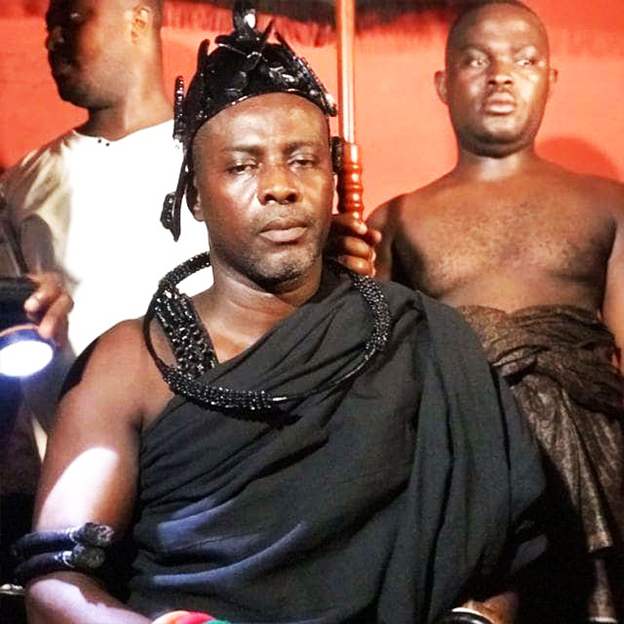
Nana Kwame Frimpong Okotomene II - Chief of Yabi

Otumfuo Osei Tutu II, the Asantehene and Overlord of the Asante Kingdom, has ordered Nana Kontomere Kwame Frimpong II, Yabihene, to take immediate steps to annul all installation of caretaker chiefs (Adikrofo) in areas currently under dispute.

By Otumfuo’s directive, all individuals appointed by Yabihene as traditional Caretakers in the disputed areas must step down.

The Yabi chief cannot enstool any Caretaker until the issues at stake are resolved by a committee appointed by the Ashanti King.

The Asantehene gave the directive at a sitting of the Kumasi Traditional Council (KTC) recently, following complaints lodged by ten traditional leaders.

The complainants are Asafohene, Twediehene, Didahene, OtumfuoBuabasa, Mpataasiehene, AtwimaFoasehene, Apemanimhene, Toasehene, AtwimaKwanwomahene, Trabuomhene and Adomanyahene.

The aggrieved chiefs accused Yabihene of illegally taking over their lands and appointing caretaker chiefs (Dikro) in those areas, without the approval of the Kumasi Traditional Council or the affected stools.

Reacting to the claims by the complainants, Nana Kontomere Kwame, denied any wrongdoing, insisting that the lands in question belong to him, as part of Yaw Nkrumah lands and that installation of caretaker chiefs were lawful and within his rights.

But Otumfuo, on hearing both sides, ruled that Yabihene must revoke all such appointments immediately, while the case is pending and that all such appointments must be annulled with immediate effect.

The Asantehene also stressed that until the dispute is fully settled, no chief should assume control over lands that are under contention.

To ensure a fair and transparent resolution, Otumfuo established three committees, grouping the plaintiffs into four, with Yabihene included in each group.

These committees will thoroughly investigate the claims and determine the rightful ownership of the lands in question.

The Kumasi Traditional Council is, therefore, to oversee the settlement of these disputes, with the appointed committees conducting investigations to establish the legitimacy of the competing claims towards determining the final resolution of the long-standing land and chieftaincy dispute in the area.

Police, Military Rescue Kidnapped Naval Officer, Two Others

0
Police operatives are seen during an operation

A personnel of the Nigerian Navy and two others have been abducted by gunmen in Abuja have been rescued, police authorities said on Sunday.

The female naval officer attached to the Directorate of Media Operations (DMO), Defence Headquarters (DHQ) were kidnapped from their residence in the Mpape area of the Federal Capital Territory on Friday night.

It was gathered that the abductors had already contacted the families and demanded a whopping sum of ₦100 million as ransom for their immediate release. However, it is unclear if any sum was paid to facilitate their release.

But the FCT Police Public Relations Officer, Josephine Adeh, said the release followed a joint operation led by the Police Command’s Anti-Kidnapping Unit and comprising of personnel of the Nigerian military DSS hunters, and members of the local Hunters’ Group.

“At approximately 7:35 PM on the said date, heavily armed assailants attacked the Maman Vatsa Estate gate, blocked Mpape Road, and opened fire on moving vehicles before abducting the three victims. Shortly after the attack, the kidnappers contacted the victims’ families, demanding a ransom of ₦500 million for the naval officer and ₦200 million each for the two civilians,” she said.

“Upon receiving the distress report, the Deputy Commissioner of Police (Operations), FCT Police Command, DCP Isyaku Sharu, in collaboration with military authorities, mobilized a joint operation led by the Police Command’s Anti-Kidnapping Unit and comprising of personnel of the Nigerian military DSS hunters, and members of the local Hunters’ Group.”

She said an intense search-and-rescue operation was conducted across Mpape, Gidan Bawa, Anguwan Mu’azu, and Yelwa Hills, covering areas in the FCT and Nasarawa State.

The Command’s spokesperson stated that acting on credible intelligence, between 2:00 AM and 5:30 AM on March 23, 2025, operatives traced the suspects to a Fulani resettlement in Anguwan Mu’azu and Yelwa Hills, Nasarawa State.

Credit: channelstv.com

The Ghanaian Chronicle