Home Blog Page 820

Transformation of Kumasi requires deliberate Strategic Action -Asenso-Boakye

0
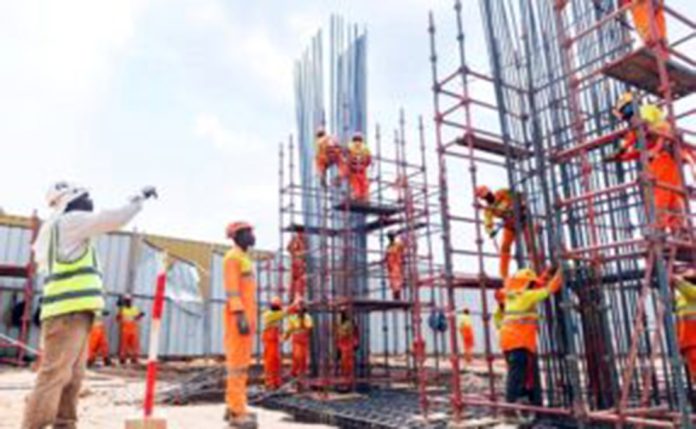
Another stage of construction of the Suame Interchange

Mr. Francis Asenso-Boakye, the Member of Parliament for Bantama and former Minister for Roads and Highways andhas stated that the transformation agenda for Kumasi requires deliberate strategic and urgent action.

According to him, residents in Kumasi, especially stakeholders, including Members of Parliament are not bound by party colours, but by a shared conviction that Kumasi deserves better and that its transformation requires deliberate, strategic and urgent action.

Acknowledging the contributions of past MPs, the Chairman of Kumasi Bloc MPs, emphasised that today’s leaders must build on their foundation to drive the city forward.
The Suame Interchange project

Speaking at Kumasi Bloc Public Dialogue, a high-profile and strategic forum aimed at rigorously assessing the 2025 Budget and examining its alignment with the developmental aspirations of Kumasi, the Bantama MP outlined critical issues confronting Kumasi, including poor land use planning, rising crime and unemployment, inefficient waste management and frequent market fires.

Members of Parliament from Kumasi have formed a united front, the Kumasi Bloc, to champion the city’s development agenda beyond partisan lines.

The dialogue also brings together members of parliament, government officials, business leaders, market associations, civil society organisations and financial institutions, traditional and religious leaders to discuss key issues. These key issues include funding of tertiary education, research and innovation, youth employment and economic opportunities for graduates.

The engagement seeks to gather diverse perspectives from stakeholders, including Members of Parliament, policymakers, business leaders, market associations and civil society groups to critically assess the impact of the 2025 Budget, on the development of Kumasi and the Ashanti Region in general.

Mr. Asenso-Boakye underscored that for the first time, MPs from Kumasi have set aside political affiliations to work together for the city’s progress.

He noted that beyond infrastructure, the Kumasi Dialogue focused on economic opportunities, job creation and access to quality healthcare and education.

He disclosed that just last Friday, fire at the Kumasi Central Market atAdum devastated properties and livelihoods and expressed worry over how inadequate planning and weak enforcements continue to hinder emergency response efforts, causing preventable losses.

The city of Kumasi

He stressed that such tragedies are deeply regrettable and avoidable and that the stakeholders must rethink how our urban spaces are managed, enforce land use regulations and invest in resilient infrastructures.

He expressed the urgent need for the completion of the Accra-Kumasi Highway, which began under President John Agyekum Kufuor, but stalled by successive administrations, before being revived under President Nana Akufo-Addo, who initiated four new by-passes now nearing completion.

Mr. Asenso-Boakye appealed to the current administration for the completion of the highway, which he said, was not a luxury but a necessity to ease congestion, boost trade and attract investment, and urged the government to prioritise it in the 2025 budget.

Mr. Asenso-Boakye emphasized that the city’s development should not be hindered by partisan interests, but the growth that requires strong partnerships built on trust, accountability and a shared vision.

He reiterated that the Kumasi Dialogue is not just a talk shop, but a call to action, and assured the people of Kumasi that their voices would be amplified in Parliament, pushing for a fair share of national development.

“We will ensure Kumasi receives the roads, drainage, efficient transport systems, jobs and healthcare it deserves,” he stressed.

He stated that the maiden dialogue was the beginning of a unified advocacy to make that happen, and urged all stakeholders to play an active role in Kumasi’s transformation.

The Bantama Legislator recommended that the Kumasi Dialogue become an annual forum, serving as a platform for key stakeholders to review the city’s development trajectory and push for sustainable solutions.

Menopause and Your Skin: What Every Woman Needs to Know

0

Aging is a privilege, it means you’re alive! But let’s be real – it can also feel like a bit of a shock when you wake up one morning and notice your skin isn’t behaving the way it used to. All of a sudden, you’re dealing with adult acne, your skin feels dry and as thin as tissue paper, your jawline is playing a game with gravity and losing, and your hair is thinning at an alarming rate. Welcome to menopause – where estrogen levels drop and your body and skin feel the shift.

As a board-certified dermatologist, I see women in my office every day with the same concerns:

“Why is my skin suddenly so dry?” 

“Why am I breaking out in my 50s?” 

“Is there anything I can do to keep my skin looking healthy and vibrant?”

The answer? Absolutely. But first, let’s break down what’s happening to your skin during menopause and what you can do about it.

What Happens to Your Skin During Menopause?

Menopause isn’t just about hot flashes and mood swings – it’s also a time when your skin undergoes some major changes due to declining estrogen levels. Here’s what’s happening beneath the surface:

Collagen drops like a rock: By the time you hit menopause, you’ve already been losing about 1% of collagen per year since your mid-20s. But after menopause? That loss speeds up significantly – up to 30% of your collagen disappears in the first five years. This leads to thinner skin, fine lines, and sagging.

Dryness and sensitivity increase: Estrogen helps your skin retain moisture and stimulates oil production. When it declines, your skin barrier weakens, leading to dry, irritated, and sometimes even itchy skin.

Hormonal acne makes a surprise appearance: Think acne was a teenage problem? Think again. With a relative increase in androgens (male hormones like testosterone), some women experience midlife breakouts, especially along the jawline and chin.

Hair thinning and hair growth in odd places: Estrogen keeps hair growth balanced, but with menopause, you might notice thinning on your scalp and increased peach fuzz or chin hairs. It’s all about shifting hormone ratios.

Hyperpigmentation and sun damage can worsen: Without estrogen’s protective effects, sun damage becomes more visible, and precancers and even skin cancers can develop.

So, What Can You Do?

The good news? There’s a LOT you can do to keep your skin healthy and glowing through menopause and beyond. Here’s your dermatologist-approved menopause skin care game plan:

  1. Hydrate Like It’s Your Job
  • Look for moisturizers with ceramides, hyaluronic acid, and peptides to help restore your skin barrier.
  • If your skin is extra dry, layer a hydrating serum underneath your moisturizer.
  • Consider adding a gentle facial oil for an extra moisture boost.
  1. Embrace Retinoids (Slowly!)
  • Retinoids (like retinol and prescription tretinoin) boost collagen, smooth fine lines, and even skin tone.
  • Start slow – two to three times a week – and layer over a moisturizer to minimize irritation.
  1. Sunscreen, Always and Forever
  • SPF 30+ every single day – yes, even in winter, even if you’re just walking to the mailbox.
  • Mineral sunscreens (zinc oxide/titanium dioxide) are best for sensitive, menopausal skin.
  • Bonus: Sunscreen prevents hyperpigmentation and collagen breakdown.
  1. Combat Acne and Hair Growth With Smart Strategies
  • If hormonal acne is an issue, spironolactone (a prescription oral medication) can help.
  • Azelaic acid and niacinamide are great for calming inflammation and reducing breakouts.
  • For unwanted facial hair, laser hair removal, electrolysis, or topical eflornithine (Vaniqa) can help.
  1. Consider Estrogen Cream (Yes, for Your Face!)
  • Topical estrogen creams (usually prescribed for vaginal dryness) are being studied for their ability to improve facial skin elasticity and hydration.
  • Studies show that using estrogen topically can increase collagen production.
  • If you’re on hormone replacement therapy (HRT), that can also benefit your skin.
  1. Support Your Skin From the Inside
  • Eat more protein to support collagen production (think lean meats, fish, eggs, and collagen supplements).
  • Load up on omega-3 fatty acids (salmon, walnuts, flaxseeds) to keep skin plump and hydrated.
  • Vitamin D, iron, and ferritin levels are crucial for hair growth. Check with your doctor!
  1. Explore In-Office Treatments for a Boost
  • Microneedling: Stimulates collagen for firmer skin
  • Laser resurfacing: Evens out pigmentation and improves texture
  • IPL (intense pulsed light): Targets redness and sun damage
  • Sculptra or Radiesse: Stimulates collagen for natural volume restoration

Aging Is a Privilege, Not a Problem

Menopause isn’t the end of your story – it’s a new chapter. Your skin and body will evolve, but that doesn’t mean you have to battle it. Instead, work with it. Nourish it. Protect it. Invest in what makes YOU feel confident and radiant. And find a doctor, friends, and a community who can support you on your menopause journey!

Credit: Webmd

Transforming Teaching: A Deep Dive into the National Teachers’ Standards for Ghana

0

 The National Teachers’ Standards represent the first ever collectively agreed standards to guide teacher preparation and practice in the country. The standards have been developed as a professional tool to guide teacher educators, teachers, student teachers and other stakeholders in education to identify in clear and precise terms what teachers are expected to know and be able to do, qualities they are expected to possess and some behaviour they are supposed to exhibit (NTS, 2017).

Give honour to whom honour is due. Nothing can be taken away from the instrumental role of the NPP government under Dr. Matthew Opoku Prempeh (minister of education, as was then) in seeing the full implementation of these enterprising standards.

That said, permit me to sharea few traces within this enviable curriculum. The standards are divided into three domains and aspects. These three domains and aspects encompass what teachers should value, know, and do and intersect with one another to develop a teacher competent enough to teach at the end of their four-year initial teacher training.

  1. Professional Values and Attitudes(NTS, 2017; page 13)

Professional Development

The Teacher (s):

  1. Critically and collectively reflects to improve teaching and learning.
  2. Improves personal and professional development through lifelong learning and Continuous Professional Development.
  3. Demonstrate practical growing leadership qualities in the classroom and broader school.

Community of Practice

The Teacher:

  1. Is guided by legal and ethical teacher codes of conduct in his or her development as a professional teacher.
  2. Engages positively with colleagues, learners, parents, school management committees, parent-teacher associations and the broader public as part of a community of practice.
  3. Develops a positive teacher identity and acts as a good role model for students.
  4. Sees his or her role as a potential agent of change in the school, community and country.
  5. Professional Knowledge (NTS, 2017; page 14)

Knowledge of educational frameworks and curriculum

The Teacher:

  1. Demonstrates familiarity with the education system and key policies guiding it.
  2. Has comprehensive knowledge of the official school curriculum, including learning outcomes.
  3. Has secure content knowledge, pedagogical knowledge and pedagogical content knowledge for the school and grade they teach.
  4. At pre-primary and primary school, the teacher knows the curriculum for the years appropriate to multigrade classes; has good knowledge of how to teach beginning reading and numeracy and speaking, listening, and writing; and uses at least one Ghanaian language as a medium of instruction.

Knowledge of students

  1. Understand how children develop and learn in diverse contexts and apply this in his or her teaching.
  2. Takes account of and respects learners’ cultural, linguistic, socio-economic and educational backgrounds in planning and teaching.
  3. Professional Practice (NTS, 2017; page 15)

Managing the learning environment

The Teacher:

  1. Plans and delivers varied and challenging lessons, showing a clear grasp of the intended outcomes of their teaching.
  2. Carriers out small-scale action research to improve practice.
  3. Creates a safe, encouraging learning environment.
  4. Manages behaviour and learning with small and large classes.

Teaching and Learning

The Teacher:

  1. Employs a variety of instructional strategies that encourage student participation and critical thinking.
  2. Pays attention to all learners, especially girls and students with Special Educational Needs, ensuring their progress.
  3. Employs instructional strategies appropriate for mixed ability, multilingual and multi-age classes.
  4. Sets meaningful tasks that encourage learner collaboration and lead to purposeful learning.
  5. Explains concepts using examples familiar to students.
  6. Produces and uses a variety of teaching and learning resources, including ICT, to enhance learning.

Assessment

The Teacher:

  1. Integrates a variety of assessment modes into teaching to support learning.
  2. Listens to learners and gives constructive feedback.
  3. Identifies and remediates learners’ difficulties or misconceptions, referring learners whose needs lie outside the competency of the Teacher.
  4. Keeps meaningful records of every learner and communicates progress clearly to parents and learners.
  5. Demonstrates awareness of national and school learning outcomes of learners.
  6. Uses objective criterion referencing to assess learners.

The National Teacher’s Standards for Ghana has exemplars for use by student teachers, teachers, tutors, head teachers and mentors. For anyone to suggest that this core competency framework requires change needs to offer us what no country has produced.

If not, then it is very obvious that the current curriculum has everything to produce the Ghanaian students we anticipate. The current curriculum places the learner at the centre of teaching and learning by building on their existing life experiences, knowledge and understanding. Learners are actively involved in the knowledge-creating process, with the Teacher acting as a facilitator.

This involves using interactive and practical teaching and learning methods and the learner’s environment to make learning exciting and relatable. To make it even more appealing, the new curriculum focuses on Ghanaian culture, history, and geography so that learners first understand their home and surroundings before extending their knowledge globally.

What could be more beautiful than this? The curriculum also integrates shared Ghanaian values, ensuring that all young people grasp the essence of being a responsible Ghanaian citizen. These values, including truth, integrity, diversity, equity, self-directed learning, self-confidence, adaptability, resourcefulness, leadership, and responsible citizenship, are woven into the fabric of the curriculum.

In an interview, a respected committee member emphasised that the Education Forum also aims to address the foundational knowledge that seems to be lacking. I find this assertion a challenge, as the new curriculum incorporates foundational knowledge as part of 21st-century skills and core competencies.

These include literacy, numeracy, scientific literacy, information and communication and digital literacy, financial literacy and entrepreneurship, cultural identity, civic literacy, and global citizenship. Character qualities such as discipline and integrity, self-directed learning, self-confidence, leadership, and responsible citizenship are all integral to this curriculum. As I always do, the government should focus on implementing the following:

Areas to target

  1. Infrastructural investments (acute infrastructural deficit)
  2. Teacher motivation
  3. Payment of capitation grant
  4. Resourcing the school improvement plan
  5. Providing ICT laboratories
  6. Research Fund for Pre-Tertiary Institution
  7. Digital libraries
  8. Government Assisted Mortgage Scheme (GAMOS)
  9. Initiate a scheme to assist teachers to own vehicles of their choice by offering flexible duty payment arrangements and government guarantees in partnership with teacher unions and the banking sector.

By Felix Oppusu Paapa Agyiri (PhD-Candidate) [Educational Sociologist] Paapafelix160@gmail.com

Egypt to make it back-to-back wins as they host Sierra Leone

0
Mohamed Salah

Egypt will aim to make it back-to-back wins in the 2026 World Cup qualifiers when they welcome Sierra Leone to the Cairo International Stadium on Tuesday for a matchday six encounter.

The Pharaohs took their tally to 13 points with a commanding 2-0 victory over Ethiopia on Friday, maintaining their four-point lead at the top of Group A as they edge closer to securing a place at the finals.

Hossam Hassan‘s side moved a step closer to their first World Cup appearance since 2018, bouncing back from a draw against Guinea-Bissau last June with a dominant performance against Ethiopia.

Egypt’s success has been built on dominance at both ends, scoring 13 times – the joint most in the qualifiers – while they have conceded just twice, making them the toughest side to break down in their group.

Sierra Leone, meanwhile, have shown resilience in their campaign, shaking off a slow start that saw them fail to win their opening two games in November 2023 to turn their fortunes around with a series of strong results, keeping their hopes of qualification alive.

Like their hosts, the Leone Stars come into this clash on the back of a victory, having claimed a 3-1 triumph over Guinea-Bissau in what was a dream start for Mohamed Kallon in his first game in charge, securing their second win in three outings.

Egypt head into this clash as firm favourites, given their impressive campaign and attacking firepower, which is expected to overwhelm Sierra Leone, whose defensive frailties have seen them concede six times in the qualifiers.

Credit: sportsmole.co.uk

Senegal faceoff with Togo in crucial clash

0
Ismaila Sarr, Senegal

Senegal will face Togo in a crucial 2026 FIFA World Cup qualifying clash at Stade Me Abdoulaye Wade, determined to avoid further setbacks in their campaign.

While the Teranga Lions remain unbeaten in the qualifiers, they have already dropped points in three of their five matches, leaving little margin for error.

Senegal’s qualification campaign began under Aliou Cisse, who oversaw two wins and two draws in the first four matches before being dismissed in December 2024, and his departure paved the way for Pape Thiaw to take charge as head coach.

The former striker’s first World Cup qualifier at the helm ended in frustration, as Senegal were held to a goalless draw away to table-toppers Sudan – a match in which both sides squandered major opportunities.

That result saw them slip to third in Group B with nine points, trailing second-placed DR Congo by one and leaders Sudan by two, and with only the group winners securing automatic qualification for the 2026 World Cup, victory on Tuesday is imperative for Senegal to keep their hopes alive.

Senegal may have dropped points in previous matches, but with the World Cup qualifiers now at the halfway stage, their sense of urgency will be heightened, and backed by their home support, we expect their quality to shine through and guide them to victory in this crucial encounter.

When these sides met for the first time enroute Togo’s 2006 World Cup appearance, the visitors battled to a hard-fought 2-2 draw in Senegal, and will be hoping to repeat that result at the very least.

Credit: sportsmole.co.uk

Cameroon aim to reclaim the top spot in Group D

0
Cameroon players

Cameroon will aim to reclaim the top spot in Group D of the CAF 2026 World Cup qualifiers when they host Libya in their matchday six fixture at the Stade Omnisport Ahmadou Ahidjo on Tuesday.

The hosts are second in the standings with nine points, while the visitors are third after amassing eight points across five fixtures.

Cameroon’s quest for a ninth appearance at the FIFA World Cup got trickier after matchday five following a 0-0 draw against the less-fancied Eswatini.

Although the Indomitable Lions dominated large spells of the match, they could not find a way past the hosts, due to profligacy in front of goal, and a resolute Eswatini defence.

Returning to their stomping ground where they claimed their two wins of the qualifying series, Marc Brys‘s team will be aiming for a third victory as they push to reclaim top spot.

Cameroon are unbeaten in the current campaign, and that is largely down to the quality within their squad.

Besides the quality within their ranks, the hosts have been imperious, scoring for fun on their turf and they are currently on a three-game winning streak against their opponents at home.

While Libya have a tendency to defend resolutely, the hosts have just enough quality to edge the visitors, therefore we predict a 1-0 triumph for Cameroon.

Credit: sportsmole.co.uk

Bafana, Benin in top-of-the-table clash

0
Bafana Bafana

South Africa and Benin will have a top-of-the-table group C clash in the 2026 Fifa World Cup qualifiers when they meet at the Felix Houphouet Boigny Stadium in Abidjan on the evening of Tuesday.

South Africa claimed top spot in group C on Friday evening when they defeated Lesotho 2-0 in Polokwane. Bafana Bafana had to endure a frustrating first hour of the match before goals from Relebohile Mofokeng and Jayden Adams took them to victory.

Nigeria’s 2-0 away win over former leaders Rwanda in Kigali on Friday, the results have seen group C take a more definable shape.

South Africa are top with 10 points, with Benin (8), Rwanda (7), Nigeria (6) and even Lesotho (5) still just about in contention for qualification, while Zimbabwe (3) appear destined for the wooden spoon.

In head-to-head stats, Benin and South Africa have met in just two previous matches. The most recent was a World Cup qualifier from earlier in this group C campaign, which Bafana Bafana won 2-1 in Durban in November 2023, while the first was a 2004 Africa Cup of Nations group-stage match won 2-0 by SA.

Credit: supersport.com

Nigeria Super Eagles set to fly over Zimbabwe

0
Victor Osimhen

Nigeria will aim to build on their momentum under Eric Chelle as they continue their mission to revive their 2026 World Cup qualification hopes when they welcome Zimbabwe to Godswill Akpabio Stadium on Tuesday.

The Abidjan-born Malian tactician made a flawless start to his tenure as Super Eagles boss last Friday, guiding them to a commanding 2-0 victory over Rwanda in Kigali. Charged with the task of reigniting Nigeria’s faltering campaign, Chelle ensured his debut on the touchline was one to remember, delivering the team’s first win of the qualifiers after a frustrating run of four winless games.

The three-time AFCON champions had scraped together just three draws from those outings, with frustrations boiling over, especially after a shock 2-1 defeat to Benin in June 2024.

That loss led to the departure of former coach Finidi George, who stepped down amid scrutiny over the team’s struggles and a reported fallout with the nation’s football federation.

The turbulence deepened with the controversy surrounding Victor Osimhen, who missed all previous qualifiers and openly expressed displeasure over an alleged remark from Finidi questioning his commitment.

Back in action and fully fit last Friday, Osimhen wasted no time reminding Nigerians of what they had been missing, netting a brace that propelled the African giants up to fourth in Group C, as they now set their sights on another crucial result against Zimbabwe.

The Super Eagles’s superior record in World Cup qualifiers against Zimbabwe further tilts the odds in their favour, making them strong favourites to claim victory.

Credit: sportsmole.co.uk

Algeria, Mozambique target top spot in Group G

0
Mozambique squad

As one of the most keenly anticipated fixtures in the next set of CAF 2026 Fifa World Cup qualifiers, Algeria and Mozambique will battle it out for top spot in Group G in their matchday six game at the Hocine Aït Ahmed Stadium on Tuesday night.

Algeria powered their way to victory in their last World Cup qualifier after recording a 3-1 win against Botswana at the Francistown Stadium on Friday, 21 March. Goals by Amine Gouiri and Mohamed Amoura (2), saw the Fennecs move to top spot in Group G.

Keeping up with the pace set by Algeria, Mozambique grabbed a 3-1 victory against Uganda at the Cairo International Stadium last time out.

Speaking on Algeria’s win against Botswana, coach Vladimir Petkovic believes his players responded in a professional manner despite the difficulties of playing while fasting.

“All the credit goes to the players. The conditions were very difficult in the middle of Ramadan, but my players responded. We managed the match well, as we got stronger as the game progressed,” Petkovic said.

Both Algeria and Mozambique have no injury concerns from their previous fixture and are expected to name their strongest XI’s for their crucial matchday six encounters.

Riyad Mahrez is expected to be Algeria’s attacker-in-chief on Tuesday, while Geny Catamo will look to add to his 10 goals in 22 games for the Mozambique national team. Credit: supersport.com

Today’s CAF World Cup Qualifiers

FIXTURES

Group A

Egypt 19:00 Sierra Leone

Group B

Sudan 19:00 South Sudan

Mauritania 21:00 Congo DR

Senegal 21:00 Togo

Group C

Benin 16:00 South Africa

Nigeria 16:00 Zimbabwe

Rwanda 16:00 Lesotho

Group D

Angola 16:00 Cape Verde

Cameroon 19:00 Libya

Group E

Morocco 21:30 Tanzania

Group F

Burundi 19:00 Seychelles

Group G

Botswana 13:00 Somalia

Uganda 16:00 Guinea

Algeria 21:00 Mozambique

Group I

Comoros 21:00 Chad

Edudzi Spits Venom On Afenyo-Markin …Over Allegations Of Missing GH¢10k, Jewelry After Addison’s Home Raid

0
Edudzi Kudzo Tameklo , NPA boss

The Acting Chief Executive Officer (CEO) of the National Petroleum Authority (NPA), Godwin Edudzi Tameklo, has expressed his discontent over the Minority Leader, Alexander Afenyo-Markin’s characterisation of the operation at the residence of the former Governor of the Bank of Ghana, Dr. Ernest Addison.

Insisting that his comments were baseless and defamatory, Mr. Tameklo strongly cautioned the Mr. Afenyo-Markin, against disrespecting public officers who hold critical positions.

Speaking on a local television station on Saturday, Mr. Tameklo criticized Afenyo-Markin’s recent remarks regarding a controversial security operation at the residence of the former Governor of the Bank of Ghana, Dr Ernest Addison, where the Minority Leader allegedly described the operatives involved as “hungry party foot soldiers and thieves.”

He argued that Afenyo-Markin was using his parliamentary immunity irresponsibly to make unproven allegations.

“Today, he has the courage to call people hungry NDC party foot soldiers. Senior (Afenyo-Markin), please, you hold a very high position as the Minority Leader. Ordinarily, I wouldn’t say this on air, but when you disrespect other public officers, they have a responsibility to disrespect you in equal manner,” Tameklo stated.

He defended Richard Jakpa, the official at the center of the operation, suggesting that the allegations against him were part of a calculated attempt to frame him and limit his operational capacity.

“It is easier to frame somebody to hinder his operational capabilities,” he argued.

The NPA boss said the Minority Leader has no locus to complain about the operations of the National Security, especially if he himself has skeletons by the name “Double” in his closet.

MOTIVATION

Tameklo further alleged that Afenyo-Markin’s attacks were politically motivated and aimed at embarrassing former President John Dramani Mahama. He called on the Minority Leader to be cautious in his public statements.

“Afenyo-Markin is out there commenting on the arrest of the former National Communications Authority boss. Apparently, this individual had been on the EOCO (Economic and Organized Crime Office) wanted list and was arrested upon arrival in Ghana.

“Very soon, the truth will come out, and we will know whether Afenyo-Markin is working for the state or pursuing a political agenda,” he added.

He challenged Afenyo-Markin’s claim that GH¢10,000 and jewelry belonging to the wife of former Bank of Ghana Governor, Dr. Ernest Addison, were stolen during the security operation.

“Senior, you were not there because Dr. Addison did not call you to witness the search. So whatever you are saying is hearsay,” he stressed.

TRANSPARENCY

Renowned legal practitioner Martin Kpebu called for greater transparency regarding the alleged missing items from Dr. Addison’s residence.

He suggested that security operations should always be conducted with suspects given a copy of the search warrant and that officers should be searched before and after their duties.

Additionally, Kpebu emphasized that searches should be video-recorded to prevent allegations of missing items.

While he acknowledged concerns about Dr. Addison’s tenure as Bank of Ghana Governor, he stressed that any investigations must be fair and just.

Retired security analyst Col. Festus Aboagye also questioned Afenyo-Markin’s motives, asking why the Minority Leader had assumed the role of a legal representative for Dr. Addison.

He challenged the former governor to personally report any missing items to the police instead of relying on third-party claims.

Col. Aboagye also criticized the use of prejudicial language, stating, “Why is Afenyo-Markin calling these operatives ‘hungry’? Is that what Dr. Addison told him—that they were unpaid and looking for food in his kitchen?”

He further clarified that the security operation was legally sanctioned, with a warrant procured beforehand, and that it was conducted in connection with a suspected monitoring device installed in Dr. Addison’s residence, allegedly used to spy on the Bank of Ghana.

In effect, the debate surrounding the security operation continues to generate political tension. While Afenyo-Markin insists that the raid was improper, Tameklo, Kpebu, and Col. Aboagye argue that the Minority Leader’s comments are politically charged and lack evidence.

The Ghanaian Chronicle