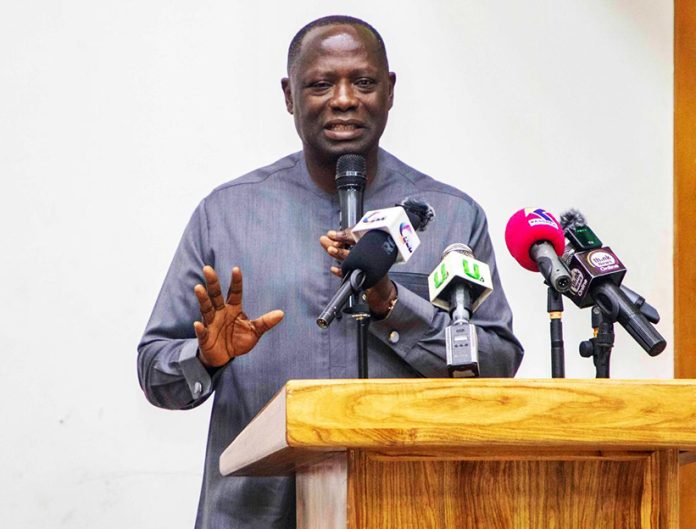
Mr Emmanuel Armah Kofi Buah addressing the Lands Commission officials
Mr Emmanuel Armah-Kofi Buah, the Minister for Lands and Natural Resources, has directed the leadership of the Lands Commission to decentralize its operations to address the longstanding challenges of inaccessibility, bureaucratic delays and land disputes plaguing the system within the next two months.
“Land is a critical asset for our people and it is unacceptable that citizens have to travel long distances to regional capitals to access basic land services. This decentralization will not only enhance efficiency but also restore public trust in the Commission’s ability to manage land resources fairly and effectively,” the Minister for Lands said, whilst addressing officials of the Commission in Accra recently.
The Minister charged the newly appointed Acting Executive Secretary, Prof. Anthony Owusu-Ansah, to spearhead the decentralization process, ensuring that all district offices are fully operational and equipped to handle land registrations, title certifications and dispute resolutions within the stipulated timeframe.
Prof. Owusu-Ansah pledged to uphold the Minister’s vision, stating “We will work to ensure that Ghanaians, no matter where they are, can access prompt and professional land services.
“This decentralization is the first step in rebuilding the Commission’s reputation as a responsive and people-centered institution.”
With this decisive action, the Ministry of Lands and Natural Resources signals a new dawn in Ghana’s land administration sector- one defined by accessibility, efficiency and accountability.
An Accra Circuit Court has ordered mental evaluation for Adina-Akapo Abdou Moudjibou, a businessman extradited from Togo, over a series of robberies.
Moudjibou, charged with robbery, had his plea reserved.
His alleged accomplice, Marzouk Alidu, a motor rider, is facing a charge of abetment of crime.
Assistant Superintendent of Police (ASP) Richard Amoah, prosecuting, told the court that Moudjibou began exhibiting unusual behaviour after his caution statement was taken.
ASP Amoah requested the court to order a psychiatric evaluation, stating that Moudjibou’s condition had worsened, to the extent that he sometimes defecates and consumes it.
The prosecution also sought to amend the charge sheet, which previously indicated Moudjibou was at large, despite his extradition from Togo through police collaboration.
The court, presided over by Basilia Adjei Tawiah, did not take pleas and remanded Moudjibou into National Intelligence Bureau custody.
Alidu was granted bail but has yet to fulfil the conditions.
The case was adjourned to June 3, 2025.
The complainant, Dr Jemimah Asare Morjah, a medical doctor at Accra Regional Hospital, resides in East Legon.
On April 13, 2024 around 03:00 hours, Alidu allegedly entered her bedroom through the washroom window, masked and armed, demanding valuables.
He ransacked the room and stole $200,000 in cash, a gold waist chain worth GH₵20,000, a gold necklace worth GH₵18,000, assorted jewellery worth GH₵5,000 and a registered CZ 75.5P pistol belonging to her husband, Agbenyo Clement Edem.
Alidu packed the stolen items into a backpack, warned the complainant to remain inside and fled.
Police investigations confirmed the robbery, revealing that Moudjibou had transported Alidu to the scene on a motorbike.
On September 4, 2024 Alidu was arrested at East Airport after another robbery involving Moudjibou.
During interrogation, Alidu admitted transporting Moudjibou to the complainant’s house for the robbery and later picking him up.
He provided police with Moudjibou’s contact details and led officers to Madina Libya Quarters, but Moudjibou escaped.
On September 7, 2024 Alidu led police to the crime scene for reconstruction and pointed out where he dropped Moudjibou.
He also directed officers to other locations linked to similar robberies.
An arrest warrant was issued for Moudjibou and Interpol was alerted.
On January 30, 2025 Interpol Togo informed Ghana Police of Moudjibou’s arrest in Lomé.
He was extradited to Ghana on May 14, 2025 for prosecution.
That same day, an identification parade was conducted at CID Headquarters, but Alidu failed to recognise Moudjibou as his accomplice.
However, in his caution statement, Moudjibou admitted involvement in multiple robberies, aided by a motor rider and Mohammed Djando, who remains at large.
Mr Akwasi Opong-Fosu, Governance and Public Policy Analyst says the urgency to reset the economy cannot be overstated, as Ghana enters a pivotal phase of national renewal under a newly-elected government.
He said the country stands at a critical juncture where bold and inclusive economic reforms were essential, not just for short-term recovery but for long-term sustainability and equity.
Mr Opong-Fosu told the GNA that in this context, the establishment of a statutory Economic Advisory Council (EAC) must be seen not as an option, but as a necessity.
He said Ghana’s past was littered with economic conferences, policy dialogues and high-level summits that generated reports, communiqués and headlines, but yielded little in terms of lasting outcomes.
He said the time had come to break this cycle and what was needed was a permanent, institutionalised platform that ensured continuity, inclusivity and accountability in shaping the nation’s economic destiny.
“An EAC, properly constituted and empowered, would provide that platform,” he added.
Mr Opong-Fosu, who was a former Minister of State, said the core value of the Council would be in its capacity to democratise economic policymaking.
He said it would serve as a conduit for citizen engagement, bringing the voices of farmers, traders, entrepreneurs, youth, women, traditional authorities, academia, labour unions, consumer advocates and civil society organisations into the heart of economic governance.
“Such a Council will reflect the reality that economic development is not the sole preserve of technocrats or political elites but it is a shared enterprise that must be informed by the lived experiences of all Ghanaians,” he said.
He said, moreover, the EAC would act as a real-time sounding board for government policy.
The former Minister of State said by monitoring economic trends, evaluating the effectiveness of fiscal and monetary decisions and proposing timely policy adjustments, the Council would help the government to remain agile and responsive in a volatile global environment.
He said this kind of feedback mechanism was crucial to avoid costly policy missteps and to restore public confidence in economic management.
He said incorporating a broad spectrum of expertise and perspectives, the Council would help balance competing priorities – growth with equity, investment with regulation, innovation with stability.
“In doing so, it will promote a more holistic and sustainable approach to development, crucially, this will also deepen transparency,” he added.
He said a statutory EAC, operating with a clear mandate and public accountability, would diminish the risk of economic policy being hijacked by narrow, vested interests.
Ghana’s economic challenges from rising youth unemployment and inflationary pressures to debt sustainability and industrial underperformance require more than political will.
He said the challenges demanded inclusive governance structures that are grounded in trust, participation, and evidence-based decision-making.
Mr Opong-Fosu said an EAC, properly constituted by law and insulated from political manipulation, would be a bold step toward building such a structure.
He said as the nation began this new chapter under the reset agenda, the government must seize the opportunity to institutionalize a Council as a cornerstone of economic transformation.
He said it was only through inclusive, transparent, and responsive governance that Ghana could chart a path to prosperity that truly leaves no one behind.
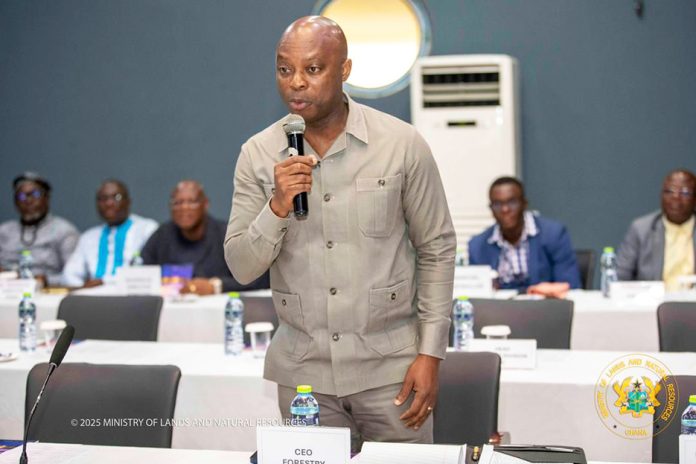
Chief Executive Officer of the Forestry Commission, Dr. Hugh Brown
In ongoing efforts to clamp down on illegal mining activities and protect Ghana’s forest reserves and water bodies, the government has achieved another significant milestone, with the successful reclamation of the Asenayo Forest Reserve.
This feat has once again been achieved through coordinated operations led by the Forestry Commission and Security agencies, under the auspices of the Ministry of Lands and Natural Resources.
This marks the eighth out of nine high-priority “red-zoned” reserves restored from armed illegal miners, reinforcing the state’s zero-tolerance stance on galamsey.
The announcement was made by the Chief Executive Officer of the Forestry Commission, Dr. Hugh Brown, during a just-ended inter-agency retreat organised by the Ministry of Lands and Natural Resources, hailing it as a testament to the effectiveness of interagency collaboration.
The Asenayo reserve, previously overrun by destructive mining operations, has now been fully secured and placed under state protection.
This development highlights the government’s unwavering commitment to protecting Ghana’s vital forest resources, and earlier successes under Mr Emmanuel Armah-Kofi Buah, Minister for Lands and Natural Resources, who confirmed the recovery of seven other reserves through joint military-police-Forestry Commission task force operations.
The systematic reclamation strategy – combining intelligence-led enforcement, community engagement, and ecological restoration – has become a model for sustainable natural resource governance.
With only one reserve remaining under illegal occupation, the Ministry reaffirms its commitment to total recovery, stating “No forest land will be ceded to criminals. We are mobilising all resources to reclaim the final target and ensure lasting protection for these critical ecosystems.
It was absolutely refreshing reading in the newspapers and watching on social media how the Ghana police, under the leadership of Mr Christian Tetteh Yohonu, together with their counterparts in Nigeria, were able to untie the complex web of criminality to not only free the two Ghanaian women lured and kidnapped in Nigeria, but also arrest the suspects and their accomplices.
I enjoyed the narrative so much that even when I got to the end of it, I wish it had continued because everything was more like a movie than a reality. A great job by all standards! Not that the Ghana police were incapable of unearthing complex issues; the surprise emanated from the fact that over the years, some Ghanaians seem to have lost confidence in their dedication to duty.
The police told us of the involvement of an employee of a telecommunication company in Ghana in the crime commission. He was said to be fraudulently registering SIM cards which he sold to some of the suspects. This revelation didn’t shock some of us. This has been the suspicion of many victims of this kind of fraud.
Recently, a popular telecommunication company came out to debunk a wild rumour that its system had been hijacked and that Momo accounts of clients were safe. A state agency, however, intervened to assure clients that it was conducting investigations into the breach for refunds to those who might have suffered some losses.
The discovery of complicity by some telecom staff is telling us something different from that denial. Some of us were extremely happy and supportive of efforts by the previous regime to re-register all SIM cards, feeling that that was going to end the fraud associated with SIM cards. But it was like pouring water on the duck as its biggest punishment.
The government is also telling us that it has plans to make this type of crime a thing of the past through re-registration. We can’t wait to experience that. Sure, cybercrime seems to be a global canker, but its degree in Ghana seems to be at a different level. It’s hoped that Hon Sam George will bring relief to us.
My information is that, in parts of Accra, some people are registering SIM cards in their names for sale to Nigerians, without taking cognisance of the danger they are putting themselves into. I wonder why telecommunication companies will allow an individual to have ten SIM cards registered in their name. Does an individual need even five numbers of same company? The telecommunication companies may only want to boast of a very large customer-base, but some of the registrations are fraudulent and it’s time the government reviewed that.
Some of those who read or heard of this huge success chalked up by the Ghana police will wonder why the same enthusiasm is not shown in certain cases, particularly those that have personally been affected. Since 2017, a man of over 70 years and I have been seeking the arrest and prosecution of some armed men who attacked us in our sleep in our houses at night, leaving us with permanent disabilities and pellets lodged in our body. No arrest has been made. We strongly believe that certain things went zig-zag during police investigations. The case is now with the Cold Case Unit, and like a 10-year-old murder case that was finally unraveled at Golokuati in the VR, we’re optimistic of getting justice one day.
One Senior Police Officer, DSP Sydney Domaka, deserves our eternal gratitude. A driver, whose vehicle was involved in a head-on collision at Peki, VR, and his car owner died, escaped arrest. All the papers were defective. This police man, then an inspector, traced the suspect for over four years, always giving assurances to the surviving victims, most of whom were market women. He did the movements at a cost to himself. He eventually arrested the suspect from his hideout in Yendi to the excitement and disbelief of the victims, who were subsequently given justice at a court in Ho. It was not, therefore, surprising that this policeman is today a Senior Officer. The likes of DSP Domaka keep our hopes alive that we will receive justice, no matter how long it takes.
The John Mahama-led National Democratic Congress administration has officially launched its laudable healthcare policy, the Ghana Medical Trust Fund, also known as the MahamaCare initiative, promised during the 2024 election campaign.
According to the government, the MahamaCare policy will focus on providing financial support to individuals struggling with chronic and debilitating illness, aiming to ensure fair access to healthcare.
Chronic diseases have become a topical public health concern in Ghana, as they significantly affect the quality of life for millions and suffocate the already asthmatic healthcare system.
This situation makes every effort by any government to improve the quality of healthcare commendable, especially one that removes financial barriers.
It is, however, our opinion that, while the vision is to improve the quality of healthcare by tackling financial inequalities, it is important to do away with duplicities, but synchronising similar initiatives for consistent impact.
Here, we are asking whether the National Health Insurance Scheme introduced by President Kufuor and the MahamaCare initiative could be merged to have one national ownership in the health sector. Possibly be called the Ghana Universal Healthcare policy.
While the Ghana Medical Trust Fund’s objectives are laudable and responsive to the healthcare needs of Ghanaians, the branding of the policy as ‘MahamaCare’, as we noted in our previous editorial, raises critical concerns about partisanship, policy sustainability and national ownership.
Considering the political landscape in our country, where successive governments often discard or rebrand their predecessor’s initiatives, which we again raised in our previous editorial, naming a national policy after a political figure, though the vision bearer, may undermine its longevity.
We reiterate that over the years, governments often fail to continue the policies of their predecessors, particularly when those policies are seen as partisan achievements.
In such an environment, branding a national health programme with the name of the president may alienate political opponents and reduce the likelihood of the policy being sustained if power shifts to another political party.
We have seen this play out abroad. In the United States, President Barack Obama’s landmark healthcare policy called the Affordable Care Act, popularly known as ‘Obamacare’, became so politically affected.
It faced relentless attacks and dismantling attempts by his successor, President Donald Trump, who did not just oppose the policy; he sought to replace it entirely with what his administration dubbed Trumpcare.
Even President Joe Biden’s administration preferred subtle rebranding and reforms, occasionally using terms like Bidencare.
The lesson makes it clear that policies named after political leaders easily become battlegrounds for ideological and partisan warfare rather than enduring national assets.
Fortunately, our nation has examples of policy initiatives that have transcended political divisions because they were not personalised.
The National Health Insurance Scheme, School Feeding Programme and Free Senior High School have been embraced by governments across the aisle, because their names and branding reflect national aspirations rather than individual legacies. These programmes are more difficult to politicise precisely because they carry national, not partisan identities.
We are not saying that naming the policy after President Mahama breaches any constitutional provision. It is our position, instead, that national policies should bear neutral and functional names that reflect their purpose.
Already, the Minister for Education, Haruna Iddrisu, had indicated that the government would initiate processes to change all public universities named after persons by former President Akufo-Addo.
Would it be right for the next NPP government to either rename the MahamaCare policy or abandon it because its success projects an individual and his political party?
Maybe it is time for Parliament to enact legislation establishing non-partisan processes for naming public policies, programmes and institutions with the view of ensuring national cohesion and integration.
The name of the seat of the nation’s presidency, Jubilee House, is a clear case study. After the Indians donated it to us under President Kufuor to commemorate Ghana’s 50 years of independence, Kufuor did not put his name on it, but what did we see when power changed?
Jubilee House was renamed Flagstaff House, though the building called Flagstaff House is different from Jubilee House. That building, which shares a wall with Jubilee House, is still there. We have to check the names we give to policies with national connotations.
The Ghana Immigration Service (GIS) has commenced a nationwide operation to repatriate foreign nationals engaged in street begging, an initiative aimed at reducing urban congestion and addressing mounting public safety concerns.
Ghana Immigration arrest undocumented migrants in Accra
As of May 19, 2025 a total of 2,241 foreign nationals, largely Nigeriens, have been arrested and processed for deportation, according to an official press release by the GIS.
The move follows years of public outcry over the growing number of beggars, many of whom are children and women, seen on major streets and intersections in Accra, Kumasi, Tamale and other cities.
Their increasing presence, often accompanied by aggressive begging tactics, has been cited not only as a nuisance but also as a serious challenge to pedestrian and vehicular traffic.
“The Ghana Immigration Service wishes to update the general public on the ongoing removal of foreign nationals engaged in begging on the streets of Accra and other major cities,” the statement said.
The breakdown of the arrested individuals are; out of the 2,241 detained at the GIS Holding Centre, 2,073 are Nigeriens, followed by 138 Nigerians, 28 Burkinabes and one each from Guinea and Mali.
Repatriation processes began on Saturday, May 18, 2025 after profiling, security screening and segregation by gender and age were completed – all carried out in accordance with international human rights standards. So far, 925 persons have already been deported, including 819 Nigeriens and 106 Nigerians.
Because of limited space at the GIS Holding Centre at the National Headquarters, the authorities have temporarily halted further arrests to manage congestion.
“Meals, among other needs of persons in detention, have been provided… and the GIS Clinic is on standby to provide medical services where necessary,” the release assured.
Some street children gathered by the GIS
Despite the humanitarian approach, the Service is firm about continuing the Special Operation in due course, to rid the streets of beggars and clamp down on suspected criminal networks operating behind the scenes.
Street begging by foreign nationals in Ghana, particularly in Accra, has grown steadily over the past five to seven years, with most of the individuals believed to have entered the country through Ghana’s porous northern borders.
The phenomenon became particularly pronounced around 2019 and by 2021, the issue had drawn concern from city authorities, civil society and even Parliament.
The beggars – predominantly women and children – are often seen stationed at traffic lights in areas such as Kwame Nkrumah Circle, Shiashie, Dzorwulu Junction, Tetteh Quarshie Roundabout, Accra Mall, the Airport area and other central business districts.
In Kumasi, they are regularly seen around Kejetia, Adum and Asafo, while in Tamale, they dot the Tamale-Bolgatanga Highway and other urban intersections.
“It’s not just a humanitarian issue anymore. They pose serious safety risks and contribute heavily to traffic congestion. Drivers are distracted and pedestrians are harassed,” he said.
The latest operation by GIS comes just days after the Immigration Service began arresting street children, a development that has sparked mixed reactions.
While some have applauded the effort to protect minors from exploitation, human rights advocates have cautioned that children should not be treated as criminals.
“The state must differentiate between trafficked minors and adults who are part of larger criminal networks,” said Efua Akoto of ChildWatch Ghana, adding that “There must be a child protection component in these arrests.”
While the ongoing repatriation exercise may offer temporary relief to traffic and public order challenges, experts warn that the root causes of illegal migration and street begging must be addressed holistically.
Poverty, lack of education, and porous border controls are often cited as the push factors driving migrants into Ghana’s cities.
According to migration researcher Dr. Abdul Majeed of the University of Ghana, the situation requires “a diplomatic and regional approach.”
“Many of these nationals come from neighboring Sahelian countries facing economic hardship and insecurity. A repatriation program without cross-border development support is only a short-term fix,” Dr Majeed explained.
The Ghana Immigration Service has called on the public, civil society and media to continue supporting the exercise.
“The GIS assures the general public of its commitment to operating fair and firm immigration systems and contributing to national security and development,” the press release emphasised.
“Let us work together to restore order, dignity, and safety on our streets.”
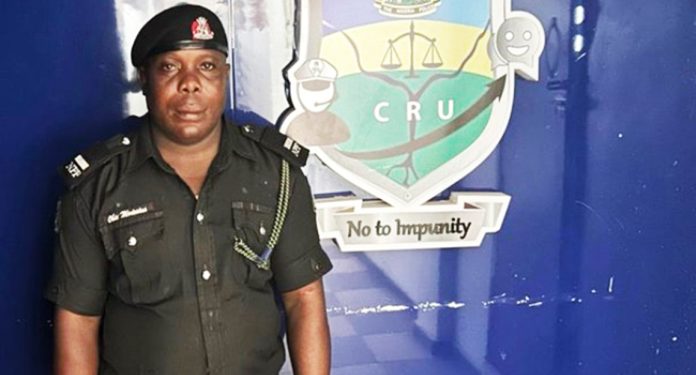
Lagos State Police Command said it has summoned a policeman, Inspector Obic Modestus, after a viral video showed him assaulting a driver.
An X user, @dammiedammie35, who shared a video on the social media platform at 11 am on Monday, said, “A new video of Nigerian police men vi0lently assault!ng an uber driver. Please spread this video cos this is someone’s father they’re beat!ng like an animal like this.”
The Police Officer, Inspector Obic Modestus, has been summoned by the Complaint Response Unit (CRU). He will be handed over to the Provost Department for appropriate disciplinary measures.
In the video, the policeman was heard saying, “Are you mad? Are you mad?” as he slapped the driver while in the car.
However, in response to the video, the Lagos State Police Public Relations Officer, Benjamin Hundeyin, said Modestus would be handed over to the provost department for appropriate disciplinary measures.
He said, “The Police Officer, Inspector Obic Modestus, has been summoned by the Complaint Response Unit (CRU) @LagosPoliceNG. He will be handed over to the Provost Department for appropriate disciplinary measures.
“The Lagos State Police Command, under CP Olohundare Jimoh, will not condone any form of incivility to members of the public.”
On the heels of speculations over a possible coalition among opposition figures ahead of the 2027 general elections, the Obidient Movement has firmly denied claims that Peter Obi, the 2023 presidential candidate of the Labour Party, has been offered a vice-presidential slot with former Vice President Atiku Abubakar as the presidential candidate.
In a statement issued on Monday and signed by its Director of Strategic Communications and Media, Nana Kazaure, the movement described the report as “entirely baseless” and “imaginary to the author”.
“The Obidient Movement has been inundated with calls from our members within and outside the country, including other members of the public, regarding a media publication claiming that our principal, Peter Obi, has been offered a running mate position to Alhaji Atiku Abubakar in the new coalition being formed ahead of 2027.
“Even though the publication is imaginary to the author, we find it appropriate to react in view of possible far-reaching misconceptions in the public space,” the statement read.
While acknowledging ongoing discussions with various political partners and stakeholders, the group insisted that such engagements are solely focused on addressing national challenges rather than power-sharing deals.
“Without any risk of contradiction, we would like to reiterate that Mr Obi has maintained that his objective and his involvement in a coalition is to provide a united front against and to tackle issues of bad governance, corruption, hunger, poverty, poor healthcare, out-of-school children, and the myriad of other problems daily afflicting the people of Nigeria,” the statement added.
“We want politics that is progressive, standing firmly with the people and serving the great people of Nigeria — not politics just for the sake of grabbing power.”
The movement further stressed that Mr Obi remains committed to the Labour Party, stating unequivocally, “At this point in time, Mr Peter Obi remains in the Labour Party, and if ever this changes, he will make that announcement himself.”
The governor of the Central Bank of Nigeria, Olayemi Cardoso, has said the Nigerian economy has stability.
He disclosed this at the press briefing at the end of its 300th Monetary Policy Committee meeting on Tuesday.
According to him, investors’ confidence in the Nigerian economy has improved over the past eighteen months.
Responding to questions on how improved macroeconomic fundamentals of the Nigerian economy are impacting the lives of Nigerians, he said, “Investors do not go to where there is economic instability. They don’t go out to lose money but to make a profit. With that stability comes confidence and then investment and growth.
“What is now being recognised is that the Nigerian economy is not stable. The inflation numbers speak for themselves.”