Nana Kwasi Gyan-Apenteng, distinguished journalist, passed away in London on Monday May 26, 2025 after a short illness with cancer. He was 74.
Nana Gyan-Apenteng, former editor and columnist of The Mirror weekly newspaper, was the Apagyahene of Tafo Eti in the Eastern Region.
He was deputy editor of the erstwhile London-based West Africa magazine in the late 1980s and early 1990s.
Returning to Ghana in the 1990s, Nana Gyan-Apenteng worked with the Third World Network as head of the non-governmental organisation’s communication unit and editor of its monthly magazine, Africa Agenda.
He served as media trainer and communication consultant for several corporate, intergovernmental and non-governmental organizations including: the telecoms giant MTN, some UN agencies, the Media Foundation for West Africa, STAR Ghana and others.
He was a graduate of Apam Secondary School and the University of Ghana, Legon.
He is survived by six children. Burial and funeral arrangements will be announced by the family in due course.
Ghana’s Attorney-General and Minister for Justice, Dr Dominic Akuritinga Ayine has formally opposed a motion for interlocutory injunction filed by Chief Justice Gertrude Araba Esaaba Sackey Torkornoo, who is challenging the ongoing process for her removal from office.
The case, filed under Supreme Court Suit No. J8/113/2025 has gripped national attention, as it pits the country’s top judicial officer against key arms of government.
In the suit, the Chief Justice seeks to halt proceedings by an inquiry committee established by the President, arguing that the process violates her constitutional rights and undermines judicial independence.
Dr Ayine, who is named as the first respondent, filed an affidavit in opposition through State Attorney Reginald Nii Odoi.
He denied all substantive allegations raised by the Chief Justice, describing the motion as lacking merit and urging the court to dismiss it outright.
In the affidavit, the Attorney-General rejected the Chief Justice’s claims of bias, procedural irregularities and inhumane treatment.
He emphasised that the in-camera nature of the hearings is constitutionally mandated to preserve the dignity of the judiciary and to protect witnesses.
“The Applicant cannot waive the constitutional safeguards meant for the judiciary as a whole,” the affidavit stated, countering Justice Torkornoo’s assertions that she is being denied a fair trial.
Dr. Ayine also refuted claims that government-affiliated organisations leaked details of the removal process, instead attributing the publication of proceedings to the Chief Justice herself. He further argued that any dissatisfaction regarding the supply of official records from the Council of State should not be grounds for an injunction.
Significantly, the Attorney-General cited a Supreme Court ruling from May 21, 2025 (Centre for Citizenship Constitutional and Electoral Systems LBG v Attorney-General & 2 Others), to support his position, noting that similar claims had already been deemed insufficient for granting an injunction.
Justice Torkornoo, in her supplementary affidavit, described the inquiry process as a “mockery of justice,” alleging psychological harassment and discriminatory treatment during hearings held at the high-security Castle, Osu – an unusual venue for such proceedings.
She detailed restrictions such as invasive body searches, denial of electronic communication tools for her legal team and exclusion of her family members from the proceedings.
The Chief Justice claims these actions amount to degrading treatment not even meted out to treason suspects.
She also protested the committee’s refusal to recognize her legal counsel during an earlier sitting and alleged procedural violations, such as petitioners declining to testify in person.
The Chief Justice has asked the Supreme Court to intervene by halting the proceedings to protect her tenure and the integrity of the judiciary.
The Attorney-General, however, maintains that all steps taken by the President, Council of State, and inquiry committee are constitutionally sound and must proceed.
The Supreme Court is expected to set a date for hearing the injunction motion. Legal analysts consider the case a pivotal moment in Ghana’s democratic evolution, with potential implications for the separation of powers and the protection of judicial independence.
Barring any unforeseen circumstances, Ghana’s Embassy in Washington, D.C., which was temporarily closed following a financial malfeasance scandal, is scheduled to resume full operations on Thursday, May 29, 2025.
A statement issued by the Ministry of Foreign Affairs and Regional Integration (MFA) and sighted by The Chronicle, confirmed the reopening, assuring the public that necessary measures have been taken to address operational challenges.
“The Ministry wishes to inform the general public that the Embassy is set to reopen on Thursday, 29 May, 2025.
“We assure that measures have been put in place to clear the backlog. Any inconvenience resulting from our necessary interventions is deeply regretted,” the statement said.
The closure of the mission came just days ago, following allegations of misconduct involving some staff of the embassy. In response, the government took decisive steps to restore order and credibility at the diplomatic mission.
“Following the recall of Home-Based Staff and the suspension of Local Staff of the Embassy of Ghana in Washington DC, United States of America, a team of seasoned diplomats led by an astute official from the Ministry of Foreign Affairs has been tasked to run the Mission.
“This is to ensure a total systems overhaul, restore integrity in the Embassy’s operations and complete ongoing structural reforms,” the Ministry stated.
As part of the recovery efforts, an expert team has been deployed to the U.S. to help restore proper administrative functions.
Additionally, the statement revealed that an Information Technology (IT) team has been assigned to reconfigure the Embassy’s website and payment platforms.
The goal is to eliminate all unofficial and unauthorised digital links previously associated with the mission’s IT systems.
The Ministry also confirmed that the matter has been formally referred to the Auditor-General and the Attorney-General for further investigation and potential sanctions.
“The Ministry additionally conveys that the unfortunate circumstances which led to the closure of the Embassy have been brought to the attention of the Auditor-General and the Attorney-General of the Republic of Ghana for further action and appropriate sanctions.”
In conclusion, the MFA reiterated its commitment to transparency, accountability, and service excellence, adding that steps are being taken to protect Ghana’s diplomatic reputation on the global stage.
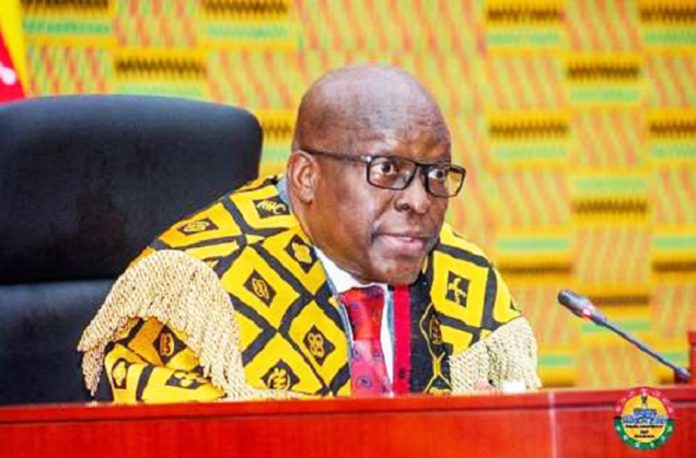
Speaker of Parliament, Alban Sumana Kingsford Bagbin
Speaker of Parliament, Mr Alban Sumana Kingsford Bagbin, has charged Members of Parliament (MPs) to prioritise national interest over partisan politics, saying that the institution must rise above pettiness and focus on delivering for the people.
“Parliament will not stand by while members are subjected to unlawful or politically motivated persecution.
“But neither will Parliament offer protection to those who seek to misuse its privileges to frustrate legitimate investigations,” he emphasised.
Mr Alban Bagbin said this when he welcomed the MPs back to parliamentary business yesterday. He also warned members against misconduct, stressing that “parliamentary privilege is not immunity from lawful inquiry…
“The immunities granted to this House and its members are designed to protect the independence of the legislature, not to obstruct justice.”
The Speaker urged members to conduct themselves with dignity, respect the rules and prioritise committee work, saying that “a Parliament is only as strong as the strength of its committees.”
He added, “Let us rededicate ourselves to the work ahead with patriotism, unity of purpose and collective resolve to secure the interest of the nation,” calling on members to make a worthy impact.
Mahama Ayariga- Majority Leader
The Speaker also officially referred seven Supreme Court nominees to the Appointments Committee of Parliament for thorough vetting and report, as mandated by Article 144(2) of Ghana’s 1992 Constitution.
The nominees, initially appointed by President John Dramani Mahama, will undergo rigorous scrutiny.
The Nominees as announced by the Speaker on the Floor of Parliament on Tuesday are; Justice Sir Dennis Dominic Adjei, Justice Simon Suurbaareh, Justice Senyo Dzamefe and Justice Kweku Tawiah Ackaah-Boafo.
The others are; Justice Philip Bright Mensah, Justice Janapare Bartels-Kodwo and Justice Hafisata Amaleboba.
During the Parliamentary proceedings, Speaker Bagbin emphasised the importance of a collaborative approach, tasking the leadership of the Judiciary Committee and the Constitutional, Legal and Parliamentary Affairs Committee to join the Appointments Committee in vetting the nominees.
NDC gov’t delivers tangible economic results
Meanwhile, the Majority Leader and Leader of Government Business, Mr Mahama Ayariga, has highlighted the National Democratic Congress (NDC) government’s achievements in delivering tangible economic results, making life more affordable for Ghanaians.
“Mr Speaker, this House must support our indefatigable Finance Minister… to continue along the lines of fiscal prudence and his dogged pursuit of appreciating the Ghana Cedi, reducing inflation, prices and interest rates, revitalising our private sector and renewing hope in the Ghanaian.
“We have engineered one of the strongest currency rebounds in recent financial history. The cedi’s strength is putting money back in people’s pockets through transport fare reductions and reduced prices of imported food products,” he said.
Mr Ayariga made the remarks on Tuesday, during the delivery of his opening remarks on the Floor of Parliament, at the Second Meeting of the First Session of the Ninth Parliament.
Touching on the economic highlights, he emphasised a 24.1 per cent appreciation of the Ghanaian cedi against the US dollar since January 2025, and a 16.2 per cent gain against the British pound.
“Mr Speakr, there is also a 14.1per cent strengthening versus the Euro, a significant reduction in fuel prices: Super XP: GH₵15.85 to GH₵13.27 (16.28 per cent decrease),
Diesel XP: GH₵15.99 to GH₵13.87 (13.26 per cent decrease), Super XP 95: GH₵15.96 to GH₵15.27 (4.32 per cent decrease) and transport fare reductions across major routes,” he said.
On the meeting’s legislative agenda, Mr Ayariga told the House that the NDC government planned to introduce several bills and regulations to strengthen Ghana’s financial stability and growth, including Mid-Year review of the Budget, guidelines for the utilisation of the Common Fund, Ghana Investment Promotion Authority Bill, Ghana Deposit Protection (Amendment) Bill, Exemptions (Amendment) Bill, as well as several bills and regulations in the financial sector.
The Majority Leader, also the NDC Member of Parliament for Bawku Central, emphasised the importance of accountability and transparency in government, highlighting the NDC’s commitment to investigating corruption and maladministration, including COVID-19 expenditure, Agyapa Royalties deal, PDS scandal and Sole-sourcing practices.
Parliament resumed business on Tuesday, May 27, 2025 following recess from March 29, 2025.
A major challenge in modern education is ensuring alignment between the written curriculum and the actual instructional practices occurring in our classrooms, known as the operational curriculum. These two elements often differ, resulting in discrepancies in how instruction is delivered and how students perform. George Posner (2004) aptly points out, “The planned curriculum and the implemented curriculum frequently do not align.”
Closing this gap is vital for promoting equitable and effective instruction. One effective approach to tackle this issue is curriculum mapping. A collaborative, data-centred method that clarifies what is taught, when, and to what extent across different classrooms and grade levels.
Curriculum mapping assists educators in documenting and assessing their instructional activities in real-time, thereby aligning daily practices with intended educational objectives and standards. It allows schools to evaluate the coherence, sequence, and quality of their educational programs, while also identifying overlaps and gaps. It ensures a smooth transition of learning from one grade to another.
As Heidi Hayes Jacobs (1997) states, “Curriculum mapping is an ongoing, dynamic process that records the actual content, skills, assessments, and key questions being addressed.” By accurately reflecting classroom activities, it enables educators to take charge of their teaching, enhance consistency, and improve student learning outcomes.
Key Areas for Consideration
A fundamental distinction in curriculum planning lies between the written and operational curriculum. The written curriculum encompasses the formal documentation of standards, goals, and performance expectations set by the National Council for Curriculum and Assessment (NaCCA). In contrast, the operational curriculum pertains to what teachers actually deliver in the classroom, which can vary greatly due to factors like teaching styles, resource availability, time limitations, and prioritization of instruction.
While some educators strictly follow the written curriculum, others may modify it to better serve their students’ needs or interests. These variations can be beneficial as they reflect adaptable teaching. However, without systematic monitoring, they may result in unintended differences in content delivery and student readiness.
Better still, curriculum mapping serves as a useful tool for collecting and examining data on the operational curriculum. Teachers capture specific content, instructional methods, assessments, and the time allocated for each topic, often organized through grids or digital platforms. Some systems incorporate codes like I (Introduced), R (Reinforced), and M (Mastered) to signify the instructional level for each standard, while others document the specific time frames for when content is taught. These detailed records allow teachers and head teachers to assess instructional consistency across various classrooms, examine pacing, and pinpoint any gaps or redundancies.
Another significant aspect is the collaborative and reflective nature of the curriculum mapping process. Rather than being a one-off event, it represents a continuous cycle of documentation, assessment, and improvement. Regular curriculum mapping sessions allow teachers to collectively evaluate the alignment between their instructional approaches and broader school objectives. This process helps answer key questions such as: What has been taught? What is currently being taught? What has been overlooked? Additionally, it encourages reflection on efficiency and alignment: Who is doing what? How do these activities correspond with our standards? Are we functioning effectively across different levels and grades?
It is important to mention that, technology plays a crucial role in enhancing the curriculum mapping process. Digital databases facilitate the input, retrieval, and analysis of mapping data, enabling comparisons across grades and subjects that help identify vertical alignment (skill progression across grades) and horizontal alignment (uniformity across classrooms at the same grade level). Moreover, curriculum maps serve as invaluable resources for on boarding new teachers, as they can refer to previous instructional records to maintain continuity and understand school expectations better.
Recommendations
For a successful Curriculum Mapping Execution it is valid to:
Standardize Processes: Implement curriculum mapping as a regular and uniform practice throughout all classrooms, holding teachers accountable and promoting collaborative discussions in meetings.
Offer Continuous Training: Ongoing professional development is essential for educators to effectively understand curriculum mapping, interpret data, and apply it to improve instruction.
Define Clear Frameworks: Districts should establish consistent standards, tools, and coding systems (such as I, R, M codes along with teaching dates) to ensure coherence and facilitate analysis.
Utilize Technology: Employ digital tools to improve collaboration, enable real-time data monitoring, and make instructional adjustments based on observed trends and performance.
Connect with Broader Initiatives: Ensure that the process is integrated with lesson planning, assessments, and resource distribution to enhance instructional quality and foster equitable learning opportunities.
Conclusion
Curriculum mapping transcends administrative procedures it represents a transformative strategy that injects coherence, clarity, and purpose into instructional practices. It helps synchronize what is intended with what is executed. It ensures that every student regardless of their class or teacher receives consistent, high-quality education. As Jacobs (1997) indicates, “Mapping is not just a record of past activities; it is a forward-thinking strategy for planning what should occur.” Through systematic documentation, collaboration, and analysis, curriculum mapping will translate the conceptual aspirations of the written curriculum into actionable, observable, and measurable practices within our classrooms.
By adopting curriculum mapping as an integral part of instructional framework, our schools can make teaching and learning more transparent, adaptable, and strategic. Thus, curriculum mapping enhances educational quality and fortifies the shared mission of ensuring every student succeeds.
According a report by graphiconline, the Greater Accra Regional Minister, Linda Akweley Ocloo, together with the Regional Security Council (REGSEC), National Security and NADMO, has spearheaded the demolition of illegal structures within the Sakumono Ramsar site structures that were directly contributing to recent severe floods in the Tema West Municipality.
The demolitions were part of a broader presidential directive aimed at tackling perennial flooding across the country. The actions are not only timely but necessary, given the havoc caused by flooding in Accra year after year. As has been clearly demonstrated, wetland encroachments like those at Sakumono compromise natural water flow, reduce the capacity of wetlands to hold excess water, and increase the vulnerability of communities to destructive floods.
The Chronicle commends Minister Ocloo for showing the kind of leadership this country so desperately needs in the area of environmental protection. Her resolve to enforce the law in the face of illegal development, powerful land grabbers, and environmental degradation must be applauded.
For years, residents in Greater Accra and other parts of the country have cried out about the devastating impacts of floods, yet encroachment on wetlands and waterways has persisted mostly unchallenged.
That said, we also raise a pertinent concern: Why does it seem that all the attention and energy are concentrated on Sakumono alone? Sakumono is a Ramsar site and a critical wetland, but it is not the only one. Across Accra, and indeed Ghana, there are numerous other locations facing similar risks due to illegal constructions and poor urban planning.
Communities like Kaneshie, Odawna, Weija and Alajo in Accra, and parts of Kasoa and Kumasi have long suffered from chronic flooding, primarily because of the very same issues – illegal development, encroachment on water channels and disregard for planning regulations. In these areas, wetlands and drains are being filled with sand and concrete to make way for unpermitted buildings, often with the tacit or explicit backing of local officials and well-connected individuals.
What is happening at Sakumono must not become an isolated example. It must mark the beginning of a consistent, widespread and unrelenting campaign to reclaim and protect wetlands and watercourses across the nation. The same political will, coordination among state agencies and media attention that is being channeled into Sakumono should be applied equally to all flood-prone areas.
If we are truly serious about flood mitigation, then the government, through REGSEC and NADMO must decentralise the demolition and monitoring effort. Let us see similar enforcement action in Agbogbloshie, in parts of Madina and Adenta, in Ashaiman and even far beyond the Greater Accra Region—in Takoradi, Ho, Tamale, and Sunyani. Every region has its own “Sakumono,” where the environment is being silently strangled by negligence.
To be fair, the challenges are immense. As highlighted by the Head of the Works Department at Tema West, Richard Ben Debrah, monitoring these illegal developments is no easy task. Confrontations with land guards and interference from powerful persons often frustrate the efforts of local assemblies. But this is why a firm, united front from both regional and national levels is necessary. NADMO’s plan to collaborate with the Forestry Commission to green reclaimed areas is an excellent step in the right direction, but again, this must extend beyond Sakumono.
Moreover, building permits are being bypassed, and state lands are being sold or seized by individuals with access to power. If this country is to survive the growing threat of climate change, such behavior must be punished – not condoned or quietly swept under the rug.
As the rains intensify each year, and the effects of climate change become more pronounced, we must recognize that environmental preservation is not a luxury. It is a necessity for survival. Wetlands are not empty lands to be sold; they are nature’s flood control systems. Destroy them, and we are only preparing for more devastation.
We urge the all relevant stakeholders to extend the same vigor and determination shown in Sakumono to every other part of the country suffering from illegal development and flood risks. This must not be business as usual. It must be a turning point.
Members of the Regional Lands Commission being sworn in by the deputy minister
The Deputy Minister for Lands and Natural Resources, Yusif Sulemana, has inaugurated the Oti Regional Lands Commission Board, emphasising its critical role in national development and land governance. The ceremony took place on Thursday, 22nd May, 2025.
Deputy Minister Yusif Sulemana speaking at the ceremony
Yusif Sulemana highlighted the Commission’s constitutional mandate under Article 258(1) of the 1992 Constitution to manage public and private lands, while advising Government on land policy matters.
“This Board represents one of the most important institutions in our land administration system,” the Deputy Minister stated.
The Board’s composition, as prescribed by the Lands Commission Act, 2008 (Act 767), includes representatives from all Metropolitan, Municipal and District Assemblies (MMDAs), as well as the Ghana Institution of Surveyors.
“This makes it one of the most representative regional bodies,” the Deputy Minister for Lands and Natural Resources noted.
Key directives issued to the Board included: Prioritising public interest over personal gain in land administration decisions; Actively working to reduce land disputes in the region; Supporting the decentralisation of land registration services; Achieving a 30-working-day target for land registration processes; and Appointing a dedicated information officer to assist citizens.
The Deputy Minister expressed concern about persistent land conflicts hindering development and sometimes resulting in fatalities. “Land is the foundation of all development. We must work to eliminate these disputes completely,” he urged.
Yusif Sulemana emphasised that decentralised land registration would reduce transaction costs and increase registration rates, ultimately boosting national revenue.
He reiterated that the 30-day registration timeline is a Key Performance Indicator for the Board.
In response, the Board Chairman, Nana Mprah Besemuna III, pledged the members’ full commitment to improving land administration in the region.
“We recognise the importance of accountability in this role, especially regarding the government’s reset agenda,” he stated.
Nana Mprah thanked the Ministry for the appointment and assured that the Board would work diligently to address land-related challenges in the Oti Region.
The Minister for Lands and Natural Resources, Emmanuel Armah-Kofi Buah, has paid a working visit to the Bogoso-Prestea Mines to assess the state of operations and engage directly with key stakeholders.
Mr Armah Buah ina group photograph with the traditional leaders
During an open interaction with mine workers, the Minister listened to their concerns and assured them of government’s unwavering commitment to addressing their challenges with urgency.
The Lands Minister holding discussions with Nana Nteboa Pra IV, Divisional Chief of the Prestea-Heman
He emphasised the importance of implementing sustainable solutions that prioritise workers’ welfare while safeguarding the future of the mine.
The Lands Minister being briefed about the operations of the mine
He reaffirmed the government’s resolve to revitalise mining operations in a way that contributes significantly to the national economy and brings tangible benefits to the Prestea-Huni Valley area and the broader Western Region.
Mr Armah Kofi Buah listening attentively to the concerns of the workers
As part of the visit, Hon. Armah-Kofi Buah held discussions with Nana Nteboa Pra IV, Divisional Chief of the Prestea-Heman Traditional Area, on the current state of the mine.
He also used the opportunity to elaborate on the government’s cooperative mining scheme aimed at promoting responsible and inclusive mining practices.
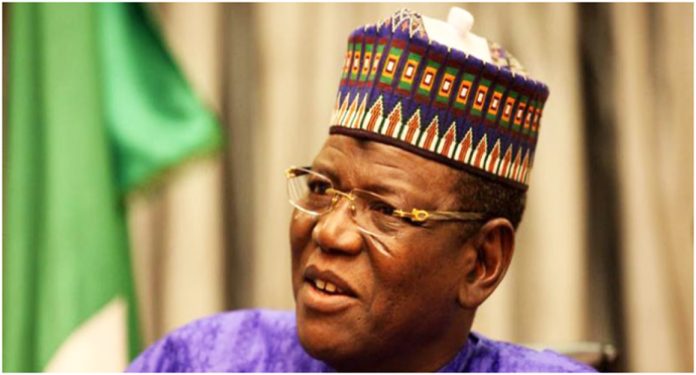
Former Jigawa State Governor, Sule Lamido, says the Peoples Democratic Party (PDP) is an integral part of Nigeria’s democratic history and that the continued existence of the party is tied to the country’s survival.
The founding PDP member, who was a guest on Channels Television’s Political Paradigm programme aired on Tuesday, said should the PDP crumble, Nigeria would breed an emperor as president.
The septuagenarian powerbroker said, “If the PDP collapses, Nigeria will collapse. Where there is no opposition, then there will be an emperor. When the party collapses, then you have an emperor all over Nigeria, and all emperors are destroyed by their greed.
“The PDP is Nigeria’s history in the last 25 years, therefore, look at the bigger picture. If the party collapses, it is Nigeria’s history which collapses.”
Lamido said if the PDP hadn’t restored Nigeria’s democracy in 1999, there was no way ex-military head of state Muhammadu Buhari of the All Progressives Congress (APC) would have taken over power as president in May 2015.
He added that without the PDP laying the foundation for Nigeria’s democracy in the Fourth Republic, incumbent ex-Lagos governor Bola Tinubu wouldn’t have taken over from his party man, Buhari, in May 2023.
The former governor said Tinubu needs the PDP as a focal opposition party to keep him in check.
“More than anybody, Tinubu needs PDP to be chasing him, to be on his toes, but when it collapses, nobody will be chasing him; he will be chasing himself,” he said, equivocally stating that he won’t leave the PDP despite the many crises rocking the party.
Lere Olayinka, the Senior Special Assistant on Public Communication and Social Media to the Minister of the Federal Capital Territory, FCT, Nyesom Wike, has insisted that the sealing of the Peoples Democratic Party, PDP, National Secretariat was a witch-hunt.
On Monday, the FCT Authority sealed the PDP National Secretariat, along with other buildings, for defaulting on ground rent payments. However, Olayinka maintained that the enforcement exercise had no political undertone.
Addressing journalists in Abuja, Olayinka said the exercise would continue until all 4,000 affected properties were sealed.
He said, “We are not here for politics. If you are talking about a political witch-hunt, we have been to Ibro Hotels, we have been to Access Bank, we have been to FIRS, we have been to Total Petrol Station, and tomorrow we will go to other places.
“This exercise will continue as long as we are able to conclude taking possession of those over 4,000 properties. So, are we also going to say all those that I mentioned are political?”
Meanwhile, the PDP’s Acting National Chairman, Umar Damagum, has vowed not to take the sealing of the party’s Secretariat lightly.