Home Blog Page 709

Russian missile strikes kill 17 in Ukraine’s Dnipropetrovsk region

0
The attacks targeted the region's main city Dnipro and the nearby town of Samar

At least 17 people were killed in Russian air strikes on southeastern Ukraine on Tuesday, damaging schools, hospitals and a passenger train, according to Ukranian officials.

The strikes, in the Dnipropetrovsk region, wounded more than 100 others, Ukraine’s President Volodymyr Zelensky said. Three more people, including a toddler, were reported killed in separate strikes on the northeastern city of Sumy.

The rare daytime attack came as Zelensky arrived at the Nato summit in the Netherlands for meetings with European leaders.

Zelensky is also expected to meet US President Donald Trump on the sidelines of the summit to discuss defence arrangements and further sanctions on Russia.

Writing about the Dnipropetrovsk strikes on social media, Zelensky accused Russian forces of a “complete disregard for life”.

“This is not a fight where it’s hard to choose a side,” he wrote. “Standing with Ukraine means defending life. I am grateful to everyone who is helping.”

Emergency services in the region published images of rescuers helping civilians covered in blood after the attack. Although no-one was killed on the train, dramatic footage filmed by a passenger showed her being rocked and bloodied by the moment of impact.

The local military administration said it was damaged by the blast from a ballistic missile that landed nearby.

Dnipropetrovsk has come under threat from Russian battlefield advances in recent weeks, with small units crossing the border into the industrial region and Russia claiming to have gained a foothold there.

Ukrainian military officials say they have been successful in pushing Russian forces back from the border area.

Credit: bbc.com

Israel, Iran ceasefire holding after Trump lashed out at both sides

0
US President-elect Donald Trump

A delicate ceasefire between Israel and Iran appears to be holding, after US President Donald Trump lashed out at both sides in an expletive-laden outburst.

Trump said “Israel and Iran wanted to stop the war, equally!” in a post on his Truth Social platform

The president held a phone call with Israel’s Prime Minister Benjamin Netanyahu, during which he was reportedly “exceptionally firm and direct” about maintaining the ceasefire

Trump earlier expressed anger at both sides, accusing Iran and Israel of violating the ceasefire brokered by the US and Qatar.

The announcement of a ceasefire following 12 days of war with Israel has divided Iranians, who are responding with a mixture of relief, scepticism, fear and frustration.

“I can’t believe the US and Israel made peace with them, especially after all they said about regime change, giving us false hope,” one Tehran resident tells me over a secure messaging app.

Donald Trump says he does not want to see regime change in Iran, after previously floating the idea.

The head of the UN International Atomic Energy Agency (IAEA) says he welcomes announcements today about the situation in Iran.

“Resuming co-operation with the IAEA is key to a successful diplomatic agreement to finally resolve the dispute over Iran’s nuclear activities,” Rafael Grossi says.

He adds that he has written to the Iranian foreign minister to stress the importance of working together and proposing they meet soon.

IAEA inspectors have remained in Iran throughout the conflict and are ready to start working as soon as possible, the organisation says in a statement.

Credit: bbc.com

Ghana Must Enforce Green Mining Laws Now – Expert Calls for Phytoremediation

0
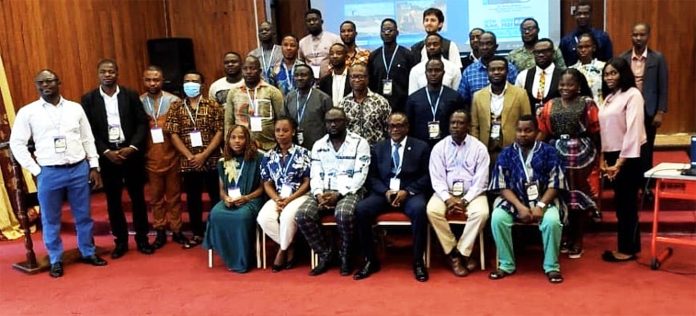
Participants and stakeholders pose for a group photograph after the DAAD Alumni Conference

Dr Jones Mantey, a chartered environmentalist in Ghana’s large-scale mining sector, has called for a national policy shift that incentivizes ecological restoration across the country’s mining landscape, with phytoremediation as a cornerstone strategy.

Speaking at the inaugural DAAD Alumni Conference on Mineral Mining in Ghana and Phytoremediation held at the CSIR-Soil Research Institute (CSIR-SRI) in Kumasi, Dr Mantey urged the government and regulatory agencies to enact and enforce robust green mining laws that particularly target the small-scale mining and galamsey sector.

“We need effective regulations that will guide mining companies, especially small-scale operators, to integrate phytoremediation into their environmental plans. Public-private partnerships are crucial. We must incentivize ecological restoration, support nature-based solutions and hold all stakeholders accountable.”

He explained that phytoremediation, a green technology gaining global traction, involves the use of specially selected plants to clean up environments contaminated by industrial activity, especially mining. According to him, this method is cost-effective, eco-friendly and particularly suited for post-mining landscapes in Ghana.

Dr. Mantey emphasized that phytoremediation is not a one-size-fits-all method, but rather a set of nature-based techniques, each with unique strengths depending on the type of pollutant and environmental condition.

He explained that phytoextraction uses specific plants to draw harmful metals and toxins from contaminated soils into their stems and leaves, which are later harvested and safely disposed off. Phytotransformation, on the other hand, allows plants to take up pollutants and chemically convert them into less harmful forms through internal metabolic processes ideal for breaking down organic toxins.

In areas where removing the contaminants could cause further damage, phytostabilization is used to immobilize pollutants in the soil, preventing them from leaching into water bodies.

Rhizodegradation involves plant roots supporting microbial communities that naturally break down organic compounds such as hydrocarbons. In aquatic environments, rhizofiltration allows plant roots to act as filters, absorbing or binding contaminants directly from polluted water sources.

He also highlighted mycoremediation, a technique that uses fungi, especially mushrooms, to break down complex pollutants, often working alongside plants to enhance environmental clean-up.

“These different methods show how powerful nature can be when guided by science. Each of them offers Ghana a practical tool for cleaning up the legacy of mining, if only we are willing to invest and enforce their use,” he said.

He disclosed that some large-scale mining companies in Ghana have already integrated phytoremediation into their mine closure and land reclamation strategies, especially in rehabilitating tailings storage facilities, landfill sites, and degraded farmlands.


He, however, expressed concern that many small-scale miners who dominate Ghana’s mining sector, fail to adopt such environmentally responsible practices, often leaving land severely degraded.

“We stand at a crucial crossroads, Phytoremediation is not just a scientific breakthrough; it is a commitment to responsible mining. By embracing nature-based solutions, we can restore ecosystems, protect communities, and ensure a sustainable future.”
As a case in point, Dr Mantey cited the experience of Amansie Resolute, a mining company that handed over its site to government after concluding operations. Despite the company’s compliance with closure protocols, illegal miners quickly moved in and ravaged the land, a result he attributed to the lack of community inclusion in the restoration process.

“Without community involvement, any attempt at ecological restoration risks failure and wasted resources,” he emphasized. To prevent such outcomes, Dr. Mantey called for the establishment of long-term environmental monitoring and tracking programmes to ensure restoration efforts are not only implemented but sustained. He also advocated for investment in data-driven environmental management systems and stronger advocacy for policy reforms. “Sometimes reclamation is done without proper follow-up. Monitoring is key,” he said.

CSIR-SRI Backs Scientific Innovation for Restoration

Opening the conference, Dr. Collins Tay, Director of the CSIR-Soil Research Institute, expressed optimism about the potential of phytoremediation to transform Ghana’s approach to environmental protection in mining. “This conference accomplishes our shared goals, it marks a significant step toward financing scientific innovation for sustainable mining and restoration.”

Dr. Tay commended the partnership between Ghanaian researchers and their German counterparts under the DAAD Alumni platform, stating that such collaboration strengthens the country’s capacity to apply scientific principles to environmental recovery.

According to him, phytoremediation represents a cost-effective and scalable scientific tool to rehabilitate degraded landscapes. He revealed that twelve sub-themes were developed from the conference’s core theme, with over 100 abstract submissions, attracting both DAAD alumni and new participants.

“We are particularly enthusiastic about the participation of young men and women, (scholars and non-scholars), students and industry professionals alike. Their energy proves that research and industry can intersect to produce meaningful solutions,” he said.

Environmental Advocate on Why Conversation Matters

In a media interview, Dr. Albert Kobina Mensah, an environmental advocate and the initiator of the conference, described his personal motivation for spotlighting phytoremediation.
“Environmental issues are dear to me, I realized that many Ghanaians don’t even know what phytoremediation is, so I created this platform for a national conversation.”

Dr. Mensah described the initiative as topical and timely, especially in the context of Ghana’s ongoing struggle with illegal small-scale mining (galamsey), which he warned has devastated vast tracts of land, sometimes beyond restoration.

He also raised alarm about chemical pollution in gold mining areas, particularly mercury and cyanide contamination of rivers and aquatic ecosystems.

He noted that even large-scale mining firms sometimes release toxic elements into the environment through collapsing tailings dams.

“There are documented cases of people consuming mercury-contaminated fish from polluted rivers. The health implications are deadly,” he stated.
Dr. Mensah emphasized that unless mining (both legal and illegal) is brought under strict regulation and guided by science, Ghana could face irreversible ecological collapse.
“If mining is done sustainably, the impacts are minimal. But if it’s done indiscriminately and unregulated, as in many small-scale operations, then Ghana is sitting on a time bomb,” he warned.

A Unified Call for Green Mining Policy

All three experts—Dr. Mantey, Dr. Tay, and Dr. Mensah—concluded with a unified message: Phytoremediation must become a mainstream requirement in Ghana’s mining regulations.
Sustainability is not a choice; it is a moral duty.”


Difference Between Dehydration and Migraine Headaches

0

You may already know stress, weather, alcohol, and certain smells and foods can be potential triggers for your migraine headaches. But did you know dehydration can be a culprit, too? The American Migraine Foundation says about one-third of people with migraine say lack of fluid intake or being dehydrated can set off an attack.

Even people who don’t get migraine headaches can have dehydration headaches when they don’t get enough fluids. These headaches may not feel as intense as a migraine attack but can still be uncomfortable.

The truth is, dehydration and head pain can go hand in hand. Some people get dehydration migraine headaches – meaning their migraine symptoms are triggered by dehydration. And some people get dehydrated as a result of their migraine attacks. The relationship can go both ways.

What Is the Relationship Between Dehydration and Migraine Headaches?

Your body needs a certain amount of fluids and electrolytes (minerals that regulate body functions) to work its best. You need to replace minerals like potassium and sodium throughout the day as your body loses fluids through sweat and peeing. Normally, you get the fluid and minerals you need from what you eat and drink.

When you don’t replace enough fluids and electrolytes, dehydration can set in and trigger a migraine headache. One possible reason is that a lack of fluids can make your brain tissues shrink and pull away from your skull, putting pressure on nerves. Another possibility is that dehydration makes you feel all sorts of pain more intensely. The exact cause of the link isn’t known.

When you’re dehydrated, you also can get cranky and have problems concentrating, which might make a headache seem worse.

Even mild dehydration can be a migraine trigger. Some things that can cause dehydration, aside from not drinking enough fluids, include:

You may also be at a higher risk of dehydration if you:

  • Are at a high altitude
  • Are an older adult or a young child
  • Have a chronic illness like diabetes
  • Take medication that makes you pee more
  • Exercise strenuously, especially outdoors in hot weather

You might notice symptoms of dehydration at the same time your head starts to hurt or before your migraine headache starts.

When you’re mildly dehydrated, you may only have a few symptoms. You may feel:

  • Thirsty
  • Tired
  • Sluggish

By the time you feel thirsty, you may already be mildly dehydrated. If dehydration goes on longer, your other symptoms may include:

  • Extreme thirst
  • Confusion and disorientation
  • Dizziness and fatigue
  • Reduced peeing
  • Dark-colored pee
  • Increased heart rate
  • Low blood pressure

Moderate to severe dehydration is a medical emergency. Seek medical help right away if you have any of the above symptoms.

What Do Dehydration-Triggered Migraine Headaches Feel Like?

Migraine headaches triggered by a lack of fluids can come with very specific symptoms for some people. Many describe them as “hangover headaches.” The pain may be pulsing.

As with most migraine headaches, bright lights can make them worse, and bending over or moving your head around also increases pain. You may feel pain on one side only, in the back, front, or all over your head. Some people have pain around their face, sinuses, neck, or jaw.

The headache phase of a migraine attack can last from 4 to 72 hours.

Other symptoms of a migraine attack can include:

  • Mood changes, trouble sleeping, trouble concentrating, and other problems that start up to 24 hours before your headache
  • Auras, which are symptoms such as visual disturbances or ringing in your ears, that start before or during your headache
  • Nausea and vomiting
  • Tiredness, dizziness, a stiff neck, and other symptoms that last for up to 48 hours after your headache

Dehydration Migraine Treatment

You might be able to stop a dehydration migraine headache by drinking a glass of water.

One study found that people who had a dehydration-triggered migraine attack got relief within 30 minutes after drinking fluids.

But migraine is a chronic neurological condition with many potential triggers. So it’s important to talk to your doctor about the best treatments to lessen your headaches and other migraine symptoms, regardless of whether they are triggered by dehydration.

  • Medications you take at the first sign of an attack
  • Medications you take to prevent migraine attacks
  • Lifestyle changes to avoid triggers – which for some people can include not only dehydration, but stress, hormonal changes, weather changes, sleep disturbances, missing meals, and exposure to bright light, noises, or strong smells

Credit: webmd

Feature: Is Someone from Within Determining to Break Up the NPP?

0
Feature

Ever since the event of February 24, 1966 when Nkrumah was overthrown, many Nkrumaists have been vowing to eradicate the UP Tradition from the surface of the earth.

Attacks on the Tradition comes from without but the Tradition always weathered the storms. Even attacks by our radical capitalist reformist, Jerry Rawlings, by way of destroying businesses owned by perceived UP Traditionalists, so as to destroy the financial base of that political family, could not weaken it.

With the formation of the NPP, the party was based on sound leadership with elders who speak unconditionally, solely for the good of the party,keeping the NPPon the path of its original ideology of the principles of separation of powers, independence of mind and system of checks and balances, which had everyone participating fully with freedom of expression, guaranteed.

Unfortunately, now it looks obvious in NPP today, that attention is shifting to the glorification of personalities and this is breaking up the party. Parliamentary candidates and those loyal to the Establishment are imposed on the party. This has begun a paradigm shift from the liberal democratic qualities of the party to the authoritarian socialism of far-left parties.

Today, the NPP, is said to belong to all,but the all, here, belong to a few.

As things are, the NPP at the moment is losing touch with its support base as seen during the recent elections. The party laws are no longer working.

They could be easily flouted to please the Establishment.For example, in August 2009, a National Delegates Conference was undertaken and dubbed “Reflect, Rebuild, Recapture 2012.” It was to among others, consider a proposal for the expansion ofthe Electoral College. Here, the party violated Article 19 (c), which mandates that at least two-thirds (2/3) of the delegates must cast their votes in favour of the amendment. Instead of secret balloting, voice voting was conducted.

And again, Article 11 spells out procedures to remove an elected officer from office. At least forty per cent of the delegates that elected him into office must first petition against him. After that, a delegates’ conference would be conducted and only when at least two-thirds of the delegates vote in favour of his removal, would he be removed from office.

In 2015, Paul Afoko, Sammy Crabbe and Kwabena Agyapong, then National Chairman, National 2nd Vice Chairman and General Secretary, respectively, were suspended from office, not by a National Delegates Conference but by the party’s National Council, which was made up of less than eighty members. This violated the Party’s Constitution.

Then in this month of June 2025, when all sound-minded members of the party are calling for an expansion of the Electoral College, to include at least past officers, former MPs and former government appointees, the National Council came out to propose a “Top-Bottom Approach,” in electing candidates and officers of the party. In December 2025, will come with polling station executive elections, then in January 2026, there will be presidential primary. No news on the expansion of the Electoral College.

One of the reasons given, is to reduce the tension where all aspirants will invade constituencies and push for their choice to be elected into office.

But wait, the December 2025 polling station elections would surely invite aspirants to the constituencies to do what they are known to do. Will the presidential aspirants be locked up in the Head Office from the time nominations are opened to the moment the last ballot is cast?

With 40,975 polling stations across the country, no aspirant will dare joke with 204,875 executives who could form almost ninety-eight percent of the Electoral College.

Article 13 (1) of the NPP Constitution states that, “the election of the Party’s Presidential Candidate shall be held not later than twenty-four (24) months from the date of the national election. The date and venue for the election shall be decided by the National Council, provided, however, that the National Council may, on appropriate occasion, vary the date.” This applies when the party is in opposition And in Article 13 (4) states that “when the Party is in government, the election of a Presidential Candidate shall be held not later than 11 months before the national general election.” Some party members who are in support of this new proposal are saying per Article 13 (1), the National Council have the right to vary the date of the Presidential Primaries.

There is an issue here, though. The Constitution did not set a fix date for presidential primaries, so the National Council could vary the dates close to, not-later-than twenty-four months before the national election. This new proposal suggesting that the presidential primary is to be conducted thirty-five months to national elections, demands the enacting of Art. 19 (c) for an amendment to Art. 13 (1).

Reasons given in support of this Top-Bottom Approach does not make any sense. For example, a regional communication director of the party, Peter Ayinbisa is saying an early election will give the party enough time to mend cracks before the General Elections.

He should be aware that the current system in the party breeds the acrimony and internal wranglings, because no elder of the party or the National Council has been able to punish aspirants and their supporters who wage verbal wars on one another. Discipline has faded out in NPP and the cracks will remain or even expand more with this new proposal. Supporters of the flag bearer will treat supporters of the unsuccessful aspirants as if they do not belong to the party.

Fuseini Abdul-Fatawu, of Sisala East Constituency, gave about twelve reasons why this Top-Bottom Approach is the panacea to all the problems the NPP is facing. None of them could place a finger on how this proposal can rebuild the party. Take these two, for example. 1). He claimed there would be unity through centralized discipline: The indiscipline in the party today cannot be stopped by any internal election.

The party must revert to the days when members upheld its principles and did not worship any one. 2). He claimed that the new proposal would prevent grassroot hijacking: This irrelevant statement was also made by Paul Adom Otchere. The question is, will the aspirants not invade polling stations before the December 2025 primary? And will the aspirants not descend on the party officers and shower gifts in cash and kind and make promises?Nothing will change because “plus ça change, plus c’est la même chose” to wit, “the more the change, the more things remain the same”

Paul Adom Otchere, sometimes thinks he talks to toddlers in a creche as he rejoiced over his confused state of mind with unattainable reasons why the Top-Bottom Approach is the best for NPP.

He put up portraits of Bawumia, Kennedy Agyapong, Kwabena Agyapong, Adutwum and Bryan Acheampong, with figures of GH¢35 million, GH¢35 million GH¢15 million, GH¢30 million and GH¢36 million written respectively under them.

Then hetells Ghanaians that will be the minimum amount of money each will spend if the status quo is maintained. However, he could not tell us how he came up with these figures, neither did he tell us how much less would be spent by the aspirants if the new proposal is implemented.

He also claimed that when the NPP elects an aspirant early, the flag bearer would be ahead of the NDC’s candidate through to Election Day. He added that foreign missions, state officers and the society in general will identify the NPP flag bearer as the anointed one to win the election, and would support him. This is a dumb statement. Who will bite into this? Paul Adom Otchere must learn to be matured in his presentations. His clowning is no longer funny.

The party underwent an enquiry into why it fared so badly in the 2024 General Elections. The report is kept under someone’s bed and to date the party members do not know exactly why it performed that abysmally in the elections. However, one thing is certain, apart from the pride and arrogance which were very endemic among party executives and government appointees, the imposition of PCs and party officers on the party, was one major reason.

So, what is this Top-Bottom Approach going to achieve, if not more impositions. The flag bearer will impose only his cronies into all party positions, including parliamentary candidates as well. He will just demand that his choices be elected into office or else he will not attend to the needs of the constituency members when he is voted into power. Is that what the NPP wants? A situation that one’s only qualification for official position will depend on how loyal he or she is to the flag bearer.

Talking toa party guru, he suggested that all the aspirants should rather be lined up and lots cast, with the winner declared flag bearer. He made a lot of sense.

With what is going on, many more NPP supporters will find the party highly unattractive and will keep their distance from the polls on Election Day. Then those “anti-UP” members within the NPP will finally achieve the desire of the Nkrumaist by eradicating the only UP Tradition party in Ghana.

By Hon. Daniel Dugan

Feature: Bawumia Consolidates Lead as NPP Base Unites, NDC Voters Back Agyapong

0
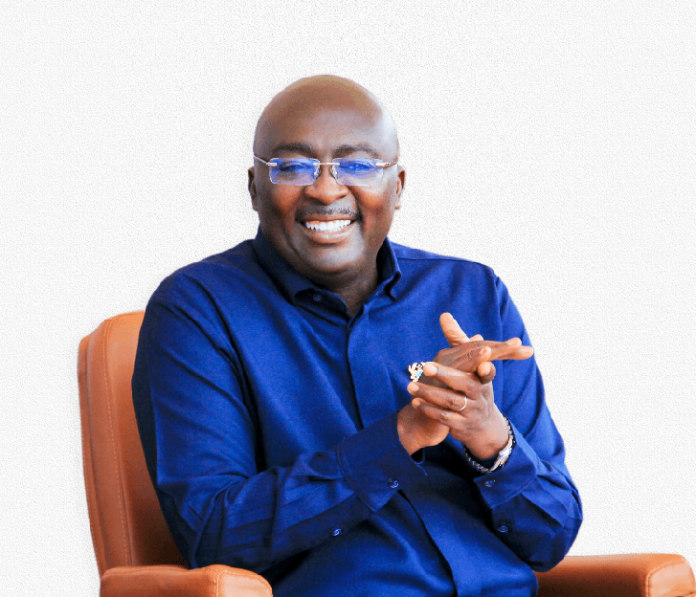
Veep Dr. Mahamudu Bawumia

In the aftermath of Ghana’s 2024 elections, a new Africa Policy Lens post-election survey indicates Dr. Mahamudu Bawumia is the clear favorite to lead the New Patriotic Party (NPP) into 2028. The data shows Bawumia far ahead in a hypothetical party primary.

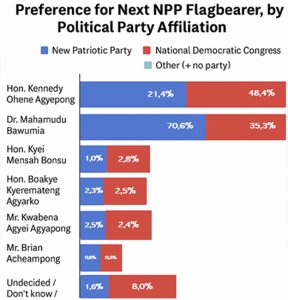
Notably, 70.6% of self-identified NPP supporters among the respondents say they would back Bawumia as the next flagbearer. This overwhelming endorsement from the party faithful highlights how firmly Bawumia has secured the loyalty of the core NPP membership.


Perhaps more strikingly, the survey reveals a strategic cross-party dynamic: nearly half (48.4%) of NDC-aligned respondents say they would support Agyapong in the same NPP contest. In other words, many opposition voters appear to favor Agyapong — likely seeing him as an easier opponent — as the NPP candidate. This tactical pattern shows how partisan loyalties influence perceptions of the race.

Together, these figures underscore the complex dynamics at play: NPP loyalists are coalescing around Bawumia while a substantial share of opposition voters back his intra-party rival, reshaping expectations for the 2028 campaign.These cross-party preferences add a layer of strategy to the race — the NDC base appears to be hedging by boosting Agyapong’s numbers.

Survey respondents cited several compelling reasons for Dr. Bawumia’s commanding victory in the NPP primaries. Foremost, he is widely perceived as the party’s most viable candidate to recapture power in 2028. His Northern background is seen as a strategic electoral asset, enabling the NPP to compete strongly in regions where the NDC is not traditionally dominantand also to further boost the NPP as trulya national,non-discriminatory party.

Bawumia’s broad national appeal—evident in his lead across 12 of 16 regions—reinforces his image as a unifying figure with cross-regional support. Respondents also emphasized his experience as Vice President and continuity of the party’s digitalization and economic policies as key strengths. Moreover, unlike his main rival Kennedy Agyapong, whose support base included many opposition voters, Bawumia’s backing came solidly from within the NPP, giving his candidacy greater legitimacy in the eyes of core party delegates.


Regional Support Patterns

Bawumia’s dominance extends across most of the country. The survey finds he is the leading candidate in 12 of Ghana’s 16 regions. He tops polling in traditional NPP strongholds like Ashanti and Eastern Region, as well as competitive areas such as Greater Accra, indicating broad appeal. Kennedy Agyapong leads in only three regions — Central, Volta, and Western North — with one region (Ahafo) evenly split.

Notably, Bawumia’s strength is especially pronounced in the northern regions: he would carry the Northern, North East and Upper West, Upper East and Savannah even if only NDC-affiliated voters were surveyed. This cross-party appeal in the North is a clear advantage. However, he still trails in traditional NDC bastions like Volta and parts of Western North, highlighting areas he will need to focus on to achieve a nationwide victory.

2024 Defeat: Major Factors

Respondents overwhelmingly blamed the NPP’s defeat on the dire economy. Roughly three-quarters (74.8%) named “general economic conditions (hardships)” – e.g. rampant inflation, cedi depreciation and rising unemployment – as the top reason for the loss. Many noted that global shocks (the Covid-19 pandemic and Ukraine war) had hurt livelihoods, leading voters to punish the government. By contrast, only small minorities cited other factors (about 5–6% mentioned corruption or abuse of power).

The survey also highlights that public events hurt the NPP’s image: large street protests (over illegal mining, corruption, etc.), organized labour strikes, biased media coverage, and bitter infighting during the primaries were all seen as making the party “very unattractive” before the vote. In short, the party’s perceived failure to address the cost-of-living crisis – compounded by scandals and internal disunity – emerged as the main cause of the NPP’s 2024 defeat.

Outlook for 2028

Looking ahead, the APL survey conducted in February 2025 positions Bawumia as the early frontrunner in the 2028 presidential race. In a simulated national vote, 35.8% of respondents say they would support Bawumia, far outpacing the 19.8% for the likely NDC candidate, Prof. Naana Jane Opoku-Agyemang. Kennedy Agyapong trails further at roughly 12%. However, the contest remains highly uncertain: a staggering 69% of respondents said it was too early to decide on the next election just one month into the new administration.

However, Bawumia’s early lead among the 35.8% respondents gives him momentum, but converting that into victory will require energizing the core NPP base and reaching out to floating voters across party lines.

Sources: Africa Policy Lens Post-Election Survey (2028)

Today’s FIFA 2025 Club World Cup Previews

0
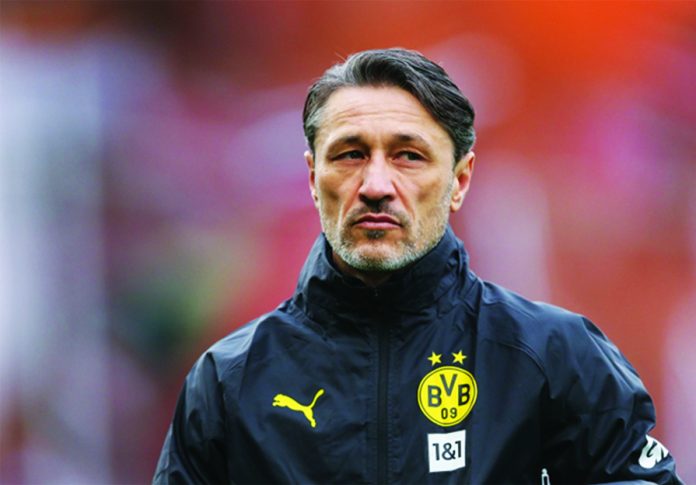
Niko Kovač, Dortmund coach

Dortmund aim to avoid an upset against Ulsan HD

Borussia Dortmund will aim to avoid an upset against Ulsan Hyundai in their third and final Club World Cup group game and qualify for the round of 16 on Wednesday at TQL Stadium.

Dortmund are second with four points following their 4-3 win against Mamelodi Sundowns on June 21 and occupy the second of two qualification spots, while Ulsan are last with no points in fourth place and were eliminated when they lost 4-2 against Fluminense on Saturday.

The German club are not yet certain of their place in the round of 16 given they are only one point ahead of Mamelodi Sundowns, who play first-placed Fluminense on Wednesday, though the group leaders also have just four points.

Black and Yellow head to TQL Stadium in strong form having triumphed in seven of their last eight matches, avoiding defeat in nine.

BVB’s displays in front of goal have been outstanding, with the Bundesliga side scoring 24 times in their eight most recent fixtures.

Dortmund are still unable to select Emre Can or Nico Schlotterbeck, and their injuries are likely to lead to starts in a back three for Niklas Sule, Waldemar Anton and Ramy Bensebaini.

New signing Jobe Bellingham will almost certainly be given the freedom to cause havoc in attack, and he may start in a supportive role behind striker Serhou Guirassy.

Dortmund will come into the clash as overwhelming favourites, but they have shown that they are vulnerable at the back.

Credit: sportsmole.co.uk


Sundowns in a must-win game against Fluminense

Mamelodi Sundowns head to Miami’s Hard Rock Stadium for a must-win Club World Cup clash against Fluminense.

The South African champions need a victory to guarantee their spot in the last 16, while their Brazilian opponents will progress to the knockout stage with a draw.

The Club World Cup may not have much significance for European clubs, but that is certainly not the case for others in the competition – including the Mamelodi Sundowns.

The South African side has already earned over $11m at the event, which is more than double the amount they would have received for winning the CAF Champions League.

While that may not sound like a lot of money for most clubs involved, for the Sundowns it is an extraordinary financial boost, which will not only secure their future for years to come but also strengthen their position as a major force in African football.

Thiago Silva, Fluminense

While the South African outfit are seen as big underdogs by the bookmakers, Miguel Cardoso’s men will certainly feel confident after holding their own against Borussia Dortmund last time out.

Fluminense are also taking the competition seriously – something that can be said about all the Brazilian teams in the tournament.

While they may not have big budgets, Brazil’s representatives are proving they have heart and determination after stunning their European rivals.

Mamelodi Sundowns could be without striker Lebo Mothiba, who pulled a muscle during Saturday’s defeat against Borussia Dortmund and now faces a late fitness test.

While Mamelodi Sundowns have certainly made their mark at the tournament, we are expecting Fluminense to get the win.

Credit: sportsmole.co.uk


Chelsea’s Jackson given two-game ban for red card

Chelsea striker Nicolas Jackson has been given a two-match ban for his red card in Friday’s 3-1 Club World Cup defeat by Flamengo.

Jackson was dismissed just four minutes after coming on as a late substitute for a studs-up challenge on Flamengo defender Lucas Ayrton.

The Senegal forward was given an automatic one-match ban that rules him out of tonight’s final group game against African side ES Tunis (02:00 BST).

Nicolas Jackson, Chelsea

But a Fifa disciplinary committee reviewed the incident and decided to extend the ban as it was deemed serious foul play, meaning Jackson will miss Chelsea’s last-16 match should they progress.

The disciplinary committee’s decision is final and cannot be appealed against.

Enzo Maresca’s side need to avoid defeat by ES Tunis in Philadelphia to reach the knockout stage.

The dismissal was Jackson’s second in four matches and means he is now suspended in two competitions – the Premier League and Club World Cup.

Alongside his eight yellow cards, it means Jackson has a combined record of 10 cards this season.

The former Villarreal player apologised on social media after the game, while both defender Marc Cucurella and Maresca revealed the striker said sorry in person to his team-mates after the match.

Credit: bbc.com


‘Ball bounces like a rabbit’ -Luis Enrique on pitches

Paris St-Germain manager Luis Enrique has criticised the pitches at the Club World Cup and said the “ball bounced like a rabbit” during his side’s win against the Seattle Sounders.

The match was played at Seattle’s Lumen Field, home of MLS side the Sounders and NFL team the Seattle Seahawks, with the stadium’s artificial turf replaced with a temporary hybrid grass for the tournament.

The Spaniard says football’s world governing body Fifa needs to “bear in mind” the quality of both match and training pitches if it wants the Club World Cup to be “the most high-level competition in the world”.

“I wouldn’t imagine a NBA court full of holes,” the 55-year-old said after his side won 2-0 to secure top spot in Group B in the tournament, which is being solely hosted in the United States.

“What I really care about is the state of the field of play, and I say this on the day we’ve won.

“The ball bounces almost like if it were jumping around like a rabbit.”

PSG won the Champions League at the end of May with a dominant victory over Inter Milan in Munich to complete a European and domestic treble.

Paris St-Germain beat the Seattle Sounders 2-0 at Lumen Field

Luis Enrique said his team have had to adjust the way they play since their arrival in the US because of pitch conditions.

Real Madrid’s Jude Bellingham also criticised the pitches at the Club World Cup following his side’s 3-1 win against Pachuca.

“The pitches aren’t great at all. It holds up the ball, the ball barely bounces,” said the England midfielder.

Five of the venues from this year – Mercedes-Benz Stadium, Hard Rock Stadium, MetLife Stadium, Lincoln Financial Field and Lumen Field – will also host World Cup matches.

All five are used by NFL teams and usually have artificial turf but will have real grass installed in time for the World Cup in order to meet Fifa requirements.

Credit: bbc.com

Pastor charged for allegedly stealing from deceased after failed spiritual healing 

0
Court Gavel

A 38-year-old pastor, Wisdom Kwame Adu, popularly known as “Agya,” has been arraigned before the Circuit Court in Accra for allegedly stealing from a deceased friend he had accompanied to Kumasi for spiritual healing.

The accused, standing trial before His Honour Jojo Amoah Hagan, pleaded not guilty to eleven counts of stealing.

He has been granted bail in the sum of GH¢150,000 with two sureties, one required to justify with landed property. The case has been adjourned to July 24, 2025.

The Allegations

According to the facts presented by ASP Issah Achibiri of the CID Homicide Unit, the deceased, Emmanuel Offei Awuku, was a close friend of the accused.

In April 2025, Emmanuel was admitted at Korle Bu Teaching Hospital but requested voluntary discharge. He later traveled with the accused to Kumasi on May 26, 2025, in his unregistered Range Rover for spiritual healing at the church of one Pastor Frank Asukwa, alias “Ohene.”

However, on June 5, 2025, Emmanuel reportedly died on the church premises during the spiritual intervention. The accused subsequently returned the deceased’s body and mobile phone to his family but allegedly withheld his unregistered Range Rover and Ecobank ATM card.

The complainant, Samuel Awuku Darko, brother of the deceased, began receiving suspicious bank alerts on Emmanuel’s phone on June 8, indicating a string of ATM withdrawals totaling GH¢27,000 made between June 8 and 10 in Kumasi and Accra. This prompted him to lodge a complaint with the CID Headquarters.


Arrest and Recovery

The accused was arrested on June 17, 2025, at his residence in Korleyman, near Medie, Accra. A search of the premises yielded GH¢35,356 and £40 in cash.

The court was informed that the postmortem examination on the deceased has yet to be conducted, and investigations are ongoing to determine the full circumstances surrounding Emmanuel’s death and the alleged theft.

Charges

Wisdom Kwame Adu faces 11 charges of stealing, including:

Dishonestly appropriating an unregistered Range Rover.

Withdrawing several sums — GH¢4,000 and GH¢1,000 — on multiple occasions from the deceased’s Ecobank account at various ATMs.

Possessing cash and property suspected to be proceeds from the theft.

If convicted, Pastor Adu faces the possibility of significant penalties under Ghanaian criminal law.

The body of the deceased remains in a private mortuary in Tinkong near Koforidua, awaiting autopsy results.

The next court hearing is set for July 25, 2025, as the investigation continues.

52-Year-Old Man Jailed for Machete Attack on Rival

0
Accra Circuit Court

The Accra Circuit Court, presided over by His Honour Kwabena Kodua Obiri-Yeboah, has sentenced a 52-year-old steel bender, Kojo Senagbe, to six months in hard labour after he pleaded guilty to attacking a 62-year-old man with a machete in what prosecutors say was a violent outburst driven by jealousy.

Senagbe, who initially pleaded not guilty to the charge of causing unlawful harm, changed his plea to guilty on June 24, 2025. In addition to the custodial sentence, he has been ordered to pay a fine of 600 penalty units (equivalent to GH¢7,200) or serve an additional six months in default. He must also compensate the victim with GH¢5,000.

The charge, brought under Section 69 of the Criminal Offences Act, 1960 (Act 29), follows a disturbing assault on May 10, 2025, at Community 14 Annex, Lashibi, in the Greater Accra Region.

Jealousy-Fueled Attack

According to Chief Inspector Belinda Asante, who led the prosecution, the victim, Mr. Oliver Zinto — a 62-year-old retired Togolese ex-serviceman and carpenter — was returning home around 10:30 p.m. when he was ambushed by Senagbe, a neighbor.

Senagbe, lying in wait on a pathway, allegedly ordered Mr. Zinto to stop. When Zinto ignored him and walked on, Senagbe attacked him with a machete, inflicting severe wounds to his scalp, left ear, arm, and back.

Despite the brutal nature of the assault, the victim managed to overpower and disarm his attacker. Bystanders intervened, forcing the accused to flee the scene.

Mr. Zinto was given first aid and later received medical attention after reporting the incident to the Klagon Police. A formal complaint led to the arrest of Senagbe two days later, on May 12.

During police interrogation in the presence of an independent witness, Senagbe confessed to the assault, citing jealousy as his motive. He claimed the victim was “trying to take over” his girlfriend. Police also retrieved the machete used in the attack.

Legal Proceedings and Sentencing

At his initial appearance before Circuit Court 6 on June 6, 2025, Senagbe denied the charge. However, after hearing the facts of the case and considering the evidence presented, the accused changed his plea to guilty during the June 24 hearing.

The court emphasized the seriousness of the offense, describing the attack as “calculated and unprovoked.” In addition to his prison sentence and fines, Senagbe must also pay compensation to the victim to cover his injuries and trauma.

The judge noted that failure to pay the fine or compensation could result in further custodial time.

Galamsey Menace: Ghana Is Heading Towards Doom! … Presby Pastor Warns

0
Rev. E. K. Nyarko

The Obuasi Tutuka District Minister of the Presbyterian Church, Rev. E.K. Nyarkoh, has warned that Ghana is gradually heading towards doom and that decisive action should be taken immediately to deal with illegal mining issue confronting the country.

“Not until all Ghanaians accept the fact that we are heading towards doom, which requires a radical solution, galamsey remains an albatross hanging on our necks.

Madam Margaret Atobrah (middle) speaking at the Thanksgiving Service

The complex nature of the fight against the canker is the fact that all manner of people like chiefs, pastors, academicians and politicians are involved,” he said.

Speaking at a Thanksgiving Service at the Mt. Olivet Presbyterian Church at Tutuka to round off the 6th Conference of the Church Women Fellowship, Rev. E.K. Nyarkoh insisted illegal mining, which is popularly known as galamsey, is a threat to the very survival of this country and that everyone should put his or her shoulders to the wheel to fight it.

The pastor also criticised the many lifestyles of men. He noted that in most families, single parents abound and this is because the men have failed to act as fathers and women or mothers handle the burden of the entire family.

Rev. Nyarkoh encouraged the men to change for the better by stopping the negative attitudes they exhibit towards their children.

A section of members of the Women’s Fellowship

Madam Margaret Atobrah, President of the Tutuka Obuasi District Presbyterian Church Womens’ Fellowship on her part noted that without proper parental role in the home, children would become deviant and irresponsible and behave negatively.

Madam Atobrah, said the constant smoking of Indian hem and other drugs by the youth could be curtailed if such children had been effectively handled in the home right from their infancy.

She called on parents to endeavour to bring their children closer to them, counsel them and help address some of the emerging challenges that confront children.

Answering a question as to why Father’s Day is not as popular and well patronised as Mother’s Day, the Women’s Fellowship President said invariably most fathers refuse to honour their parental obligations as compared to mothers, who use all their energy and resources to push for the wellbeing of their children hence the recognition.

From Frederick Danso Abeam, Obuasi

The Ghanaian Chronicle