Home Blog Page 70

Obuasi Marks World Malaria Day With Durbar And Mini Clinic

0
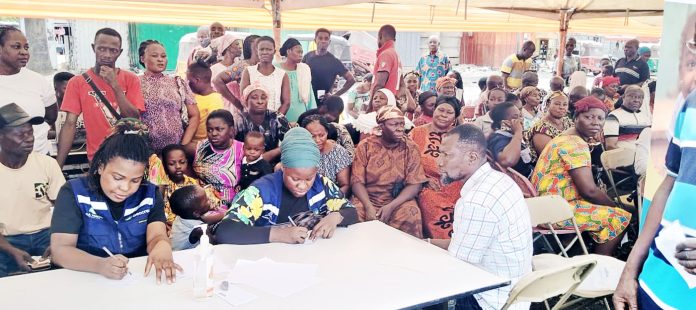
Nurses attending to the public at the mini clinic

A grand Durbar and mini clinic at the forecourt of the Len Clay Sports Stadium

marked this year’s World Malaria Day in Obuasi.The programme, which was funded by AngloGold Ashanti (AGA) Obuasi Mine brought together an array of health professionals including over ten doctors who provided free screening and treatment to the large population that thronged the park.

Mrs. Mavis Nana Yaa Kyei, Social Development and Gender Superintendent of AGA, paid a glowing tribute to AngloGold Ashanti Malaria Control programme (AGAMAL) for fighting malaria for the past 20 years.

“Today through AGAMAL, we are protecting about 1.4 million people across 16 districts and creating over 1,450 direct jobs. This is not just a health intervention, it is a socio-economic engine,” she stated.

Stakeholders in a group photograph

On the mini clinic, she said over the past four years more than 7,000 people have benefitted from free health screening services in Obuasi and its environs.Mrs Nana Yaa Kyei expressed appreciation to partners like Otumfuo Osei Tutu Foundation, AGA Health Foundation, Ghana Health Service and Underground Mining Alliance (UMA) for their support.

Obuasi East Municipal Director of Health Services, Madam Charity Afrifaa-Adjei, for her part, called on households to open their doors to Indoor Residual Spraying operators for spraying and also try as much as possible to sleep under treated insecticide mosquito nets.

The MCE for Obuasi Municipal Assembly, Madam Faustilove Appiah Kannin commended AngloGold for the many mini clinics it had organised to bring health care closer to the people of Obuasi and its environs.

From Frederick Danso Abeam, Obuasi


For more news, join The Chronicle Newspaper channel on WhatsApp: https://whatsapp.com/channel/0029VbBSs55E50UqNPvSOm2z

Salma, Akango Residents Back Revocation of Adamus Lease

0
Yacoub Abdul Aziz addressing the press conference

Residents and opinion leaders of Salma, Akango and surrounding communities in the Ellembelle Municipality of the Western Region have welcomed government’s decision to revoke the mining lease of Adamus Resources, describing the move as long overdue.

The revocation follows recommendations by a committee set up by the Ministry of Lands and Natural Resources to investigate allegations that the mining company was engaged in illegal mining activities. The committee is said to have found evidence to support the claims and subsequently recommended the cancellation of the company’s lease.

At a news conference held at Salma on Tuesday, this week and addressed by Yacoub Abdul Aziz, Assembly Member for Salma Electoral Area, the communities thanked President John Dramani Mahama, the Minister for Lands and Natural Resources, Mr. Emmanuel Armah-Kofi Buah, for taking what they described as a bold and necessary decision.

They, however, cautioned against any future attempt to restore the company’s lease unless clear guarantees are made that local communities would directly benefit from mining operations.

Speaking on behalf of the residents, one of the opinion leaders said the people were excited after learning through social media reports on Sunday that the company’s licence had been revoked.

According to him, Adamus Resources had operated in the area since 2007, yet the host communities had little to show in terms of development projects and economic benefits.

“We are very happy because the company has been there for years, but there is no meaningful benefit for the catchment communities. I cannot point to even one major project in my area,” he stated.

He appealed to government to hand over the concession to a more responsible investor capable of managing the mine efficiently and ensuring that the people of Salma and neighbouring communities benefit from the natural resources in their area.

A former Assembly Member, Mr Adolf Funguwa, also commended government for listening to the concerns of the affected communities and taking action.

He said the revocation of the lease reflected the wishes of residents at Salma, Akango, Gwale, Nkroful and other nearby communities who had long complained about neglect and lack of opportunities.

Mr Funguwa noted that despite years of mining activity, unemployment remained high among the youth in the catchment areas, with many locals sidelined in recruitment.“A lot of people within the catchment communities remain unemployed. No serious employment has taken place here,” he said.

He stressed that if government should consider bringing in another mining company, negotiations must prioritise employment, community development and equitable sharing of benefits.

“What we are saying is that a new company altogether must come, and the negotiation must be done in a way that benefits all of us,” he added.The residents pledged their full support to government and the Lands Minister in pursuing reforms in the mining sector and ensuring that host communities receive fair returns from mining activities.

Group Disowns ‘Concerned Youth of Nzema

Meanwhile a group calling itself the True Nzema Advocates for the Catchment Areas has dismissed claims made by one Jonas Kabutey on behalf of the so-called “Concerned Youth of Nzema,” describing the association as non-existent and fabricated to serve private interests.

In a rejoinder issued to the media, the group said no recognized body by that name exists within the Metropolitan, Municipal and District Assemblies (MMDAs) in the Nzema area, insisting that Mr. Kabutey has no mandate to speak for the youth of Nzema.

“The recent statement attributed to Jonas Kabutey, purporting to represent the ‘Concerned Youth of Nzema,’ is misleading and a deliberate fabrication,” the statement said.

According to the group, Mr. Kabutey is not an indigene of Nzema and, therefore, cannot legitimately claim to represent the concerns of local youth.They further stated that Mr. Kabutey, who they described as a social welfare worker transferred to Ellembelle, was using the platform of youth advocacy as a cover to lobby for the company.

The statement maintained that contrary to the narrative being promoted, many young people in Nzema have welcomed government’s decision to revoke the mining licence of Adamus Resources.

According to the group, residents across affected communities view the revocation as a long-overdue corrective measure after years of mining activities that they claim brought little sustainable development or employment opportunities.

“For years, our people have borne the brunt of mining activities with little to show in terms of sustainable development and employment,” the group stated.

They said the revocation presents an opportunity to reset the relationship between mining companies and host communities to ensure greater benefits for landowners and residents.

While supporting calls for dialogue on the future of mining in the area, the group stressed that such engagements must be genuine and free from what it described as the influence of paid agents and fabricated groups.

The statement urged the media, traditional authorities and government to disregard the comments attributed to the “Concerned Youth of Nzema.”

It concluded that the true Nzema youth are prepared for “a new chapter built on truth, transparency and genuine development of our homeland.”

The rejoinder was signed by Siah Gabriel Kwasi of Anwia, Daniel Kwesi Armoh of A.B. Bokazo, Michael Ehomah Agyarko Blay of TelekuBokazo, and Reindolf Appoh (Asanta).

For more news, join The Chronicle Newspaper channel on WhatsApp: https://whatsapp.com/channel/0029VbBSs55E50UqNPvSOm2z
Beyond Salary: The Cost Of Performance Targets On Human Worth

0
Opinion

As the current government seeks to roll out a system that links salaries to employee productivity, care must be taken to ensure that targets are not used as tools to weaken morale, but rather to improve work performance.

The Executive Director of Africa Education Watch (Eduwatch), Kofi Asare, has warned that examination malpractice in Ghana’s senior high schools may not simply be caused by students. He points to a deeper issue: unrealistic performance targets set for teachers and headmasters.

When performance is judged mainly by results, pressure can distort behaviour and come at a cost not just to integrity, but to human dignity.

This issue is not only in education. It is common in many workplaces today. Targets are used to guide work and measure performance. In theory, they help people know what is expected of them. But in reality, when targets are too high or poorly managed, they can create fear instead of motivation.

Targets are not the real problem. Enforcement is! This refers to how some leaders handle employees when targets are not met.

In some workplaces, employees are treated harshly when they fail to meet targets. They may be shouted at, blamed, or even embarrassed in front of others. Instead of asking, “What went wrong?” leaders ask, “Who is at fault?” In such situations, they may lose their dignity.

In Ghana, I have personally witnessed employees shouted at by supervisors, sometimes even when those employees were older or more experienced than the person reprimanding them. In such moments, dignity often becomes the first casualty of pressure.

Some organizations expect excellent results but fail to provide the necessary training, guidance, or resources. In extreme cases, when targets are missed, employees may be demoted or dismissed without anyone understanding the underlying challenges.

For instance, in 2019, workers of SGS Ghana, an organisation that deals with inspection, verification, and certification, were agitated over, among other issues, the company’s system of measuring productivity. Workers complained that the system tended to blame employees for not meeting productivity targets (GhanaWeb, 2019).

Workers are sometimes called “lazy,” “weak,” or “unprofessional.” These words can damage their confidence. Over time, even good workers begin to doubt themselves. They stop sharing ideas and may start looking for other jobs.

The pressure to hit targets may lead to wrong behaviours. Some workers use their own money to meet targets. Others may adjust records just to look successful. Years ago, a colleague was questioned for using his own money to help a client in order to meet a target.Instead of being praised, rather he was reprimanded. When organizations care more about numbers than honesty, employees are forced to make difficult choices.

Some workplaces use bonuses and commissions to motivate workers. But when targets are too difficult, these rewards become hard to achieve.

Employees often hear, “No bonus for you.” This discourages them. Some lose interest in their work, while others resign. The workplace then becomes stressful instead of supportive.

A survey by Gallup, an American multinational research agency, found that Ghanaian workers are among the top four most stressed in Sub-Saharan Africa. According to its report, 2023 Gallup’s State of the Global Workplace, this ranking reflects the fact that many Ghanaian workers experience stress daily due to demanding and often stressful work environments (GhanaWeb, 2024).

Compassionate accountability

According to Duncan D. R. (2023), Compassionate accountability doesn’t compromise values and standards to keep the peace. Neither does it compromise human dignity in the pursuit of results. By separating the person from their behavior, people can be treated with care, concern and empathy while also holding them accountable for behavior.

Over the years, i have realised that in some workplaces, the real challenge is how accountability is applied when targets are not met.

Some leaders feel proud when targets are met and frustrated when they are not. This can lead to harsh treatment of workers.

When workers miss targets, it is not always because they are lazy. They may be facing personal problems such as family issues, health challenges, or financial stress. Good leaders understand this.

Instead of blaming, effective leaders ask questions. They try to understand the problem and find solutions.

This idea is supported by Marshall Goldsmith, who introduced the concept of feedforward, which focuses on improving the future instead of blaming the past. It is also supported by Carol Dweck, who explains that people can improve through learning and effort. This is called a growth mindset.

Good leaders ask:

  • Do workers have enough time?
  • Do they have the right tools?
  • Do they understand their tasks?
  • Do they feel free to ask questions?

When these are missing, workers will struggle, no matter how hard they try.

Similarly, according to Janelle E. Wells and Doreen MacAulay, accountability is not just about checking results. It is about creating systems that help people succeed.

Stacey Barr (2023) notes that when leaders rationalize why targets are unmet, the problem may lie in the target-setting process itself. Too often, targets focus on numbers and ignore emotion.

How employees feel about a target often determines whether it leads to genuine improvement. Targets must speak to the heart as well as the head. A target framed as performance measure + value + timeframe may satisfy logic, but vivid language that connects to purpose inspires action. Consider the difference between saying “Drink eight glasses of water every day” and “Drink eight glasses of crystal-clear, refreshing water every day to feel alert and energized.” The first speaks to the head; the second to the heart. Targets connected to purpose generate curiosity, anticipation, and a sense of commitment.

Classroom lessons

In schools, students who perform poorly are sometimes insulted or discouraged. This affects their confidence and performance. However, schools that show patience and understanding often achieve better results.

Research by Debrah O. and others (2021) shows that empathy improves learning outcomes in Ghanaian senior high schools.

Former U.S. President Barack Obama once said that his best teachers helped him believe in himself, not just pass exams.(‘An open letter to America’s parents and teachers’- October 26, 2015).

The same applies to workers.

Leadership shift

Researchers partnered with IPA and Ghana’s National Board for Small Scale Industries (NBSSI) to evaluate the impact of goal-setting as a non-monetary incentive on worker performance. The study found goal-setting increased output by 16 percent, working time and hourly productivity by 8 percent, and overall productivity of workers by 13 percent.

Importantly, these improvements didn’t come at the cost of worker well-being – only 10 percent of workers said goal setting made them feel stressed(Arthur I., et al, 2025).

This shows that targets are effective but only when they are realistic and human-centered.


Organizations that treat workers with respect perform better. Workers feel valued not just for what they produce, but for who they are. This leads to better performance and long-term commitment.

Targets can measure performance, but leadership determines whether people succeed or suffer.

Ultimately, leadership determines whether targets build performance or break people.

WRITTEN BY:

Henry Atta Nyame

Institutional Assessment Practitioner

hattanyame@gmail.com


For more news, join The Chronicle Newspaper channel on WhatsApp: https://whatsapp.com/channel/0029VbBSs55E50UqNPvSOm2z

Editorial: Rejection Of Health Agreement: The Chronicle Fully Supports Mahama Government

0
Editorial

Ghana has reportedly rejected a proposed bilateral health agreement with the United States after negotiations collapsed over demands for access to sensitive national health data. According to a Reuters report, the deal formed part of Washington’s “America First Global Health Strategy,” which seeks to restructure foreign aid by encouraging partner countries to take on greater responsibility for funding and managing disease control programmes, such as HIV/AIDS, malaria, tuberculosis and polio.

Talks, which began in November 2025, would have seen Ghana receive approximately $109 million in health support over five years. However, negotiations broke down after Ghanaian officials objected to provisions requiring the sharing of sensitive health data, a condition they reportedly found unacceptable.

A source indicated that while discussions started routinely, pressure intensified toward an April 24 deadline set by the United States. The development comes against the backdrop of significant U.S. support to Ghana, including $96 million in health funding in 2024 alone.

If the reports are accurate, Ghana’s decision to walk away from a deal, tied to the sharing of sensitive health data is not only justified, it is commendable.At first glance, turning down over $100 million in health support may appear counterintuitive, especially for a developing country with pressing public health needs.

But beneath the surface lies a far more consequential issue: the protection of citizens’ personal data and the sovereignty of national information systems. These are not bargaining chips -they are rights and responsibilities that must be guarded with the utmost seriousness.

Health data is among the most intimate categories of personal information. It reveals not just medical conditions, but aspects of identity, behaviour and vulnerability. In the wrong hands or even in poorly regulated systems such data can be misused, misinterpreted or exposed. Once shared beyond national control, it becomes exceedingly difficult to guarantee how it is stored, analysed or further distributed.

Ghana is already grappling with significant concerns around data protection and privacy enforcement. Weak systems, limited public awareness, and evolving digital infrastructure mean that safeguards are not always as robust as they should be. In such a context, agreeing to external access to national health data especially at scale would only deepen existing vulnerabilities.

The issue becomes even more delicate when viewed through the lens of vulnerable populations particularly persons living with HIV. In Ghana and across much of Africa, HIV-related stigma remains a lived reality.

Despite years of advocacy and public health education, discrimination persists in workplaces, communities, and even within healthcare settings. For many, confidentiality is not just a matter of privacy it is a shield against social and economic harm.

Any arrangement that could potentially expose or compromise such data, whether directly or indirectly, must be treated with extreme caution. Even anonymised datasets carry risks if not properly handled, especially in contexts where re-identification is possible through data linkage. The fear of exposure alone can discourage individuals from seeking testing or treatment, undermining national health goals.

Beyond the immediate human impact, there is a broader strategic concern. Data has become one of the most valuable assets in the modern world. It informs research, drives innovation, and shapes policy decisions. Countries that relinquish control over their data risk becoming passive participants in systems that should instead be driven by their own priorities and contexts.

This is not an argument against international cooperation. Ghana’s health sector has long benefited from global partnerships, including significant support from the United States.

These relationships have contributed to progress in disease control, infrastructure development, and capacity building. However, true partnership must be grounded in mutual respect not conditionalities that compromise core principles.

If the reported demands for data access were indeed central to the agreement, then Ghana’s refusal signals an important shift: a recognition that sovereignty in the digital age extends beyond borders and into databases. It underscores the idea that development should not come at the expense of dignity.

Going forward, this moment should prompt a broader national conversation about data governance. Ghana must invest in stronger data protection systems, clearer policies on data sharing, and greater public education on digital rights. It must also engage international partners in redefining cooperation frameworks that prioritise ethical standards alongside financial support.

Ghana is right to insist that its citizens’ data is not a commodity to be exchanged. It is a trust to be protected.


For more news, join The Chronicle Newspaper channel on WhatsApp: https://whatsapp.com/channel/0029VbBSs55E50UqNPvSOm2z

Dunkwahene warns youth against experimenting with drugs

0
Okofrobuor Obeng Nuako II - Dunkwahene

Okofrobuor Obeng Nuako II, the Dunkwahene, has expressed grave concern over the continued usage of drugs including cannabis, cocaine, tramadol and alcohol by the youth.

He noted during the observation of Akwasidae, last Sunday, that drug abuse which normally acts as a catalyst for economic woes and creates a profound negative impact on the community has become rampant in the Dunkwa enclave.

Okoforbour Nuako admonished the youth, as future leaders, against experimenting with drugs because it would ruin their lives.

The Chief further advised BECE candidates, who are due to write their basic examination in May, 2026 to learn hard and not rely on “exam malpractices”.

The Dunkwahene also called on the Minister of Roads and Highways to prioritise the Dunkwa-Kumasi road, as well as Dunkwa-Ayanfuri road, noting that they are vital to the livelihood of residents of Dunkwa enclave.

That stretch, the chief noted, serves as a major road that connects the Takoradi Habour to the northern sector of the country.

From Oswald P. Freiku, Dunkwa


For more news, join The Chronicle Newspaper channel on WhatsApp: https://whatsapp.com/channel/0029VbBSs55E50UqNPvSOm2z

AGA School expands with Construction of 12-Unit Classroom Block

0
Simon Peter Attah-Cato breaking the ground for the commencement of the project while teachers and Kilon staff look on

Authorities of the AngloGold Ashanti (AGA) School in Obuasi are constructing a 12-Unit Classroom Block at the cost of GHC6million for the school.

Speaking at a sod-cutting ceremony for the commencement of the project on the school premises, the Executive Director of the school, Mr. Simon Peter Attah-Cato, said it has become necessary to put up an additional school block to ease congestion in the various classrooms.

He stated that the two-storey classroom block is expected to be completed in eight months and it is being funded from the school’s own resources.

Mr. Attah-Cato explained that in 2018 the population of the school was around 1,000 students but currently it has increased to 3,721 thus necessitating the expansion in infrastructure.

Mr. Edmund Oduro Agyei, AGA Community Relations Manager commended the Director, Teaching Staff and PTA for their initiative in the project, especially when the school is funding the project from its own resources.

Mr. Evans Appiah Adjei Boateng, Safety Officer for Kilon Design and Build, the Construction Company undertaking the project, pledged that the company would hand over a befitting block to the school at the scheduled date for completion.

From Frederick Danso Abeam, Obuasi


For more news, join The Chronicle Newspaper channel on WhatsApp: https://whatsapp.com/channel/0029VbBSs55E50UqNPvSOm2z

Roads minister inspects Asokwa-Santasi By-pass and Suame Interchange projects 

0
Rango Project Site manager briefing the Roads and Ashanti Regional Ministers on progress at the Suame Interchange

The Minister for Roads and Highways, Mr. Kwame Govern Agbodza, has commended contractors working on the Asokwa-Santasi Bypass and the Suame Interchange projects for the progress of work so far.

During an inspection of the project sites, the Minister expressed satisfaction with the work done and urged the contractors to complete the projects on schedule to ease traffic congestion in the city.

Ongoing work at Asokwa-Santasi by-pass project site

He praised Joshob Construction for its dedication, noting that delays on such critical projects would have had far-reaching consequences.

According to the Minister, the President’s vision is to grow our internal capacity and Joshob falls within the category of local firms with the capacity, quality and control to execute major infrastructure projects.

Mr Agbodza encouraged all contractors working in urban areas to collaborate with utility agencies to prevent damage to underground installations.

He stressed the importance of proper documentation and mapping of buried services to ensure that future works do not damage existing lines, citing coordination with Ghana Water Company and Electricity Company of Ghana as an example.

The Minister noted that the Suame Interchange project nearly stalled under the previous administration due to financial constraints of about $30 million.

He further explained that the government had included the Suame Interchange, along with the Kasoa and Winneba roads projects under its “Big Push” infrastructure programme.

According to him, to sustain progress, President John Dramani Mahama has directed the payment of arrears owed to contractors, which exceed GH¢12 billion.

He disclosed that for the Kasoa project $29.5 million out of the $50 million certified has already been paid, while government and the ministry are committed to settling outstanding debts to keep work moving.

He added that rather than reducing allocations, the government is providing an additional GH¢3 million to enhance the impact of the Asokwa-Santasi By-pass.

He stated that the Suame Interchange is scheduled for completion by the end of 2028, but contractors have been encouraged to work extended hours to finish ahead of schedule.

The Minister also revealed that feasibility studies and initial clearing works are ongoing for the Accra-Kumasi Expressway project.


For more news, join The Chronicle Newspaper channel on WhatsApp: https://whatsapp.com/channel/0029VbBSs55E50UqNPvSOm2z

Techiman North DCE cautions contractors against shoddy works

0
Nkoko nkitinkiti’ project

Mr Johnson Kwabena Adom, the Techiman North District Chief Executive (DCE) in the Bono East Region, has cautioned contractors executing government projects in the local communities against shoddy works. He urged them to speed up, and ensure value for money by executing quality work and endeavour to complete those projects on time.

Mr Adom gave the caution in an interview with the Ghana News Agency (GNA) after he inspected the progress of work on some projects being funded by the District Assembly Common Fund (DACF) in the area.

He said the execution of the educational and health facilities in the localities would improve access and enhance the quality of lives of the people. Mr Adom commended President John Dramani Mahama and Mrs Elizabeth Ofosu-Adjare, the Member of Parliament for Techiman North for their efforts toward advancing the physical infrastructure development of the area.

He gave the assurance that the District Assembly would ensure the prudent and transparent utilization of the DACF for development purposes. Nana Yeboah Afena Akumsah, the Chief of Bridgeso, also commended the government, DCE and the MP for the on-going construction of a three-unit Kindergarten block in the community that would create access and promote quality education in the area.

He said the community was fast growing and appealed for more development projects to meet the needs of the people. Some of the residents in the area also commended the government for its socio-economic intervention programmes like the Nkoko Nketenkete and the ‘Big Push’ road infrastructure initiatives.

According to them, farming remained the major occupation in the district, saying that the ‘Big Push’ programme would open up the area and create ready markets while the Nkoko Nketenkete would also boost the local poultry industry.
They called on the government to expedite action on the construction of the “Farmer Service Centre” in the area.

The DCE inspected the work on the construction of a six-unit classroom block at Konimase Area two, as well as three unit-classroom KG block as Bridgeso, and Community-based Planning Service (CHPS) compound at Kogoago. Others were the drilling of a mechanized borehole project at Boadan and Nyamebekyere communities, Bonya CHPS compound and a borehole project as Kwakunumakura.

From Jerry Azanduna, Tuobodom

GNA

For more news, join The Chronicle Newspaper channel on WhatsApp: https://whatsapp.com/channel/0029VbBSs55E50UqNPvSOm2z

Businessman Remanded Over alleged GH¢710,050 Mineral Water Scam

0
Dansoman Circuit Court

The Dansoman Circuit Court has remanded a 34-year-old businessman, Augustine Agyei, into police custody for allegedly defrauding six individuals of a total sum of GH¢710,050 under the pretext of supplying them with mineral water.

Agyei, who pleaded not guilty to six counts of defrauding by false pretence, appeared before the court presided over by Her Honour Nancy Teiko.Prosecuting, Chief Inspector Kwadwo Aboagye prayed the court to remand the accused, arguing that he posed a flight risk and could abscond if granted bail.

The prosecution further noted that investigations were still ongoing and that the accused could interfere with the process if released.

The court granted the prosecution’s request and ordered that Agyei be held in police custody. He is expected to reappear on May 13, 2026.According to the prosecution, the accused allegedly committed the offences earlier this year within the jurisdiction of the court.

He is said to have presented himself to the complainants as an agent of Awake Mineral Water, claiming he could supply them with large quantities of the product.

Based on this representation, the complainants reportedly handed over various sums of money to the accused.

These included GH¢184,000 from Joshua Ntim, GH¢97,000 from Ebenezer Manaa Mpah, GH¢80,000 from Jocelyn Serwaa Ampofo, GH¢149,000 from Helena Owusu Boakye, GH¢100,050 from Emmanuel Awuah, and GH¢100,000 from Kwame Asante.

The prosecution said after receiving the monies, Agyei failed to deliver the products as promised and subsequently went into hiding.

Police investigations led to his arrest on April 16, 2026. During interrogation, he allegedly admitted to the offence and pleaded with the complainants to allow him time to refund the money.

He has since been charged with defrauding by false pretence, contrary to Section 131(1) of the Criminal Offences Act, 1960 (Act 29), as investigations continue.


For more news, join The Chronicle Newspaper channel on WhatsApp: https://whatsapp.com/channel/0029VbBSs55E50UqNPvSOm2z

Policemen Who Killed Suspect In Viral Video Will Be Tried For Murder -PRO

0
Delta State Police spokesperson, Bright Edafe

The Delta State Police Command has said that the policeman who shot and killed a suspect in Effurun, as captured in a viral video, will be tried for murder.

The spokesperson of the Command, Bright Edafe, who disclosed this during an interview on Channels Television’s The Morning Brief on Wednesday, said the cop, identified as one ASP Nuhu Usman, had been moved to the Force Headquarters, Abuja, to face disciplinary action.

Edafe said that the officer acted unprofessionally and likened his violent action to one that could not be explained unless from a spiritual perspective.

When asked why Usman’s face was covered in the press statement issued by the Command announcing his arrest, the PPRO said it was the professional thing to do.

The extra-judicial killing of 28-year-old Mene Ogidi by the ASP has sparked outrage online.

According to the police, the incident occurred on April 26, 2026, when operatives attached to Area Command Effurun acted on intelligence that the deceased had been apprehended while allegedly attempting to waybill a parcel containing “a Beretta pistol with four rounds of ammunition.”

The Command further stated that “the police officer leading the team, ASP Nuhu Usman, in clear violation of Force Order 237 and the Standard Operating Procedure of the Nigeria Police Force, discharged his firearm, leading to the death of the suspect”.

Credit: channelstv.com

The Ghanaian Chronicle