Home Blog Page 69

Pentecost Elder Arrested For Allegedly Doing Galamsey

0
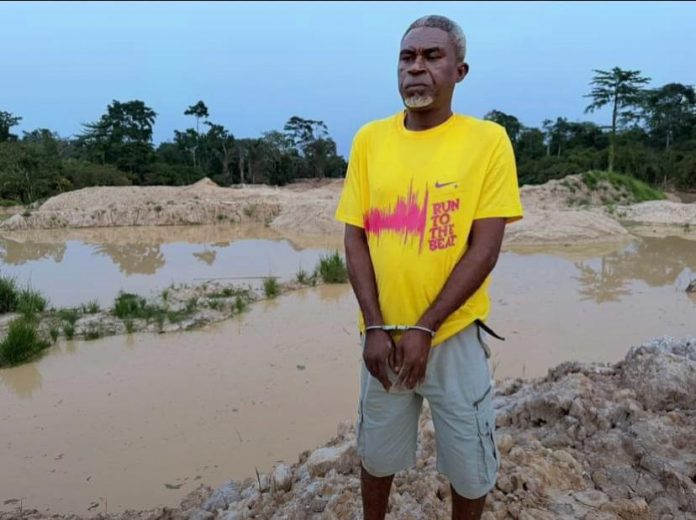
Elder David Bobie Peter in handcuffs after his arrest by NAIMOS over his alleged involvement in illegal mining (galamsey).

The National Anti-Illegal Mining Operations Secretariat (NAIMOS) has arrested a man said to be an elder of The Church of Pentecost for allegedly operating an illegal mining site at Akyem Morso near Juaso in the Asante Akyem South District of the Ashanti Region.

The suspect, identified as David Bobie Peter, was apprehended during a targeted operation along the polluted Kume River, spanning the communities of Morso, Kyekyebiase and Bimma. According to NAIMOS, the suspect admitted during interrogation that he is an elder of The Church of Pentecost at Konongo.
A statement issued by the Secretariat said the operation began when its task force stormed a large illegal mining enclave at Kyekyebiase, where several youth were allegedly caught in active mining operations. On seeing the security team, the miners reportedly fled into the bush, abandoning equipment at the scene.
The task force pursued the suspects but failed to make arrests at the initial stage, as the miners allegedly used their knowledge of the terrain to escape through bush paths.

Despite the escape, the team destroyed eight Chanfang machines, four wooden gold-washing platforms and several pipe hoses through controlled burning. Twelve water-pumping machines were also seized.
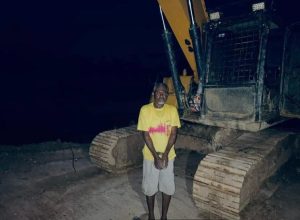
NAIMOS further disclosed that a search of the surrounding area uncovered fresh excavator tracks leading into a nearby cocoa farm, where a Sany excavator had allegedly been hidden to avoid detection. Officers found the machine partly disabled, but the task force reportedly removed additional key components to render it unusable.

The statement said Mr. Bobie Peter later appeared at the scene claiming he had come to visit his farm. However, intelligence gathered by the task force allegedly identified him as a foreman of one of the illegal mining sites in the area.Confronted with the information, he reportedly confessed to managing a mining site at Morso and admitted he had been sent by his employer, identified only as Mr. Appiah, to confirm reports of the NAIMOS operation.
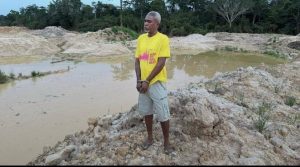
He subsequently led officers to the Morso site, where NAIMOS said extensive environmental destruction was discovered. The Secretariat alleged that sections of the Kume River had been heavily polluted and diverted to serve the mining activities.
A second Sany excavator was found at the site and was also disabled by the task force.

Mr. Bobie Peter has since been handed over to the Konongo District Police Station for further investigations and possible prosecution.
NAIMOS used the occasion to warn persons engaged in illegal mining that offenders would be pursued regardless of their social status, religious position or political affiliation. It also called on traditional authorities, local administrators and security agencies to intensify efforts to curb the menace.


For more news, join The Chronicle Newspaper channel on WhatsApp: https://whatsapp.com/channel/0029VbBSs55E50UqNPvSOm2z
ECG Restores Power to Afram Plains After Marine Cable Damage

0

The Electricity Company of Ghana (ECG) has restored electricity supply to the Afram Plains after a major outage triggered by damage to a marine cable in the early hours of Monday.

Speaking in an interview, the General Manager for External Communications at ECG, Dr. Charles Nii Ayiku Ayiku, explained that the fault occurred about 400 metres into the River Afram, cutting off power to the entire Donkorkrom District.

He indicated that immediately after the incident, the Eastern Regional Maintenance team mobilised to the site to conduct an assessment. “Our initial checks confirmed a serious fault on the marine cable, which made it impossible to transmit power across the river,” he noted.

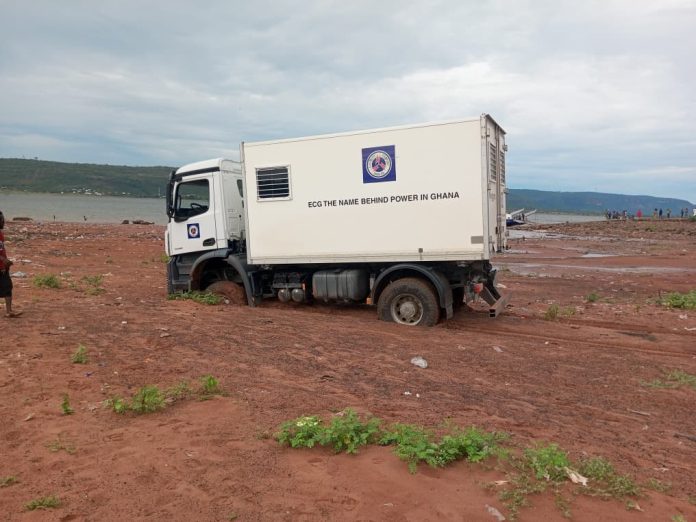
Dr. Ayiku further revealed that a specialised Cable Test Van was deployed from Accra to help locate the exact point of failure. Although the team arrived on Tuesday and began work, operations were briefly disrupted on Wednesday when the vehicle became stuck in a swampy section while tracing the fault.

He highlighted the intervention of the District Chief Executive for Afram Plains South, Moses Tangbe, who played a pivotal role in resolving the challenge. “The DCE personally ensured that the Test Van was pulled out safely, demonstrating strong leadership and commitment throughout the process,” he said.

Despite the difficult terrain, ECG engineers, with support from local residents, adopted a practical and innovative recovery approach. Two boats were deployed, along with community divers, to lift sections of the submerged cable from the river. The team carefully navigated the water until the damaged portion was identified and repaired.

“In the absence of specialised marine cable joints, the team improvised with standard cable joints to restore supply. They also constructed a temporary wharf to prevent the repaired section from coming into direct contact with the river,” Dr. Ayiku explained.

He emphasised that the coordinated effort and ingenuity of the team helped avert what could have been a prolonged outage across the Afram Plains.

Dr. Ayiku commended all stakeholders involved, including the Eastern Regional Management and Maintenance Team, the Accra Sub-Transmission Cable Test Van Team, the Donkorkrom District team, and residents of Ekye Amanfrom and Adawso, for their dedication and resilience.

“Thanks to their collective effort, power has now been fully restored, bringing relief to affected communities,” he stated.

ECG also expressed its appreciation to all who contributed to the restoration effort and extended an apology to its cherished customers and the general public for the inconvenience caused.

GHS probes maternal death at Kasoa Mother and Child Hospital

0
Ghana Health Service

The Central Regional Health Directorate has launched an investigation into the reported maternal death at the Kasoa Mother and Child Hospital.

In a statement issued yesterday, the Directorate expressed deep sorrow over the incident and extended condolences to the bereaved family and all those affected by the tragedy.

It described the death of a mother as a painful loss and assured the public that the matter was being treated with the seriousness it deserves.

According to the statement, a special investigative committee has been constituted to examine the circumstances leading to the death.

The committee is made up of representatives from the Cape Coast Teaching Hospital, Trauma and Specialist Hospital, the Regional Health Directorate, the Central Regional Co-ordinating Council, and the Attorney-General’s Office.

The Directorate said the committee had been tasked to carry out a thorough, objective and transparent review of the incident.

It added that findings and recommendations of the committee would be made public after the investigations, to promote transparency and help prevent similar occurrences in future.

The Health Directorate further assured residents of the Central Region and the general public of its continued commitment to patient safety, quality healthcare delivery and the well-being of all patients, especially mothers and children.

It also appealed for calm and urged the public to allow the investigative process to proceed without interference to ensure a fair, credible and accurate outcome.


For more news, join The Chronicle Newspaper channel on WhatsApp: https://whatsapp.com/channel/0029VbBSs55E50UqNPvSOm2z
Armed Robbers On IGP Yohuno’s Radar … Intelligence Led Operations Exposing Miscreants

0
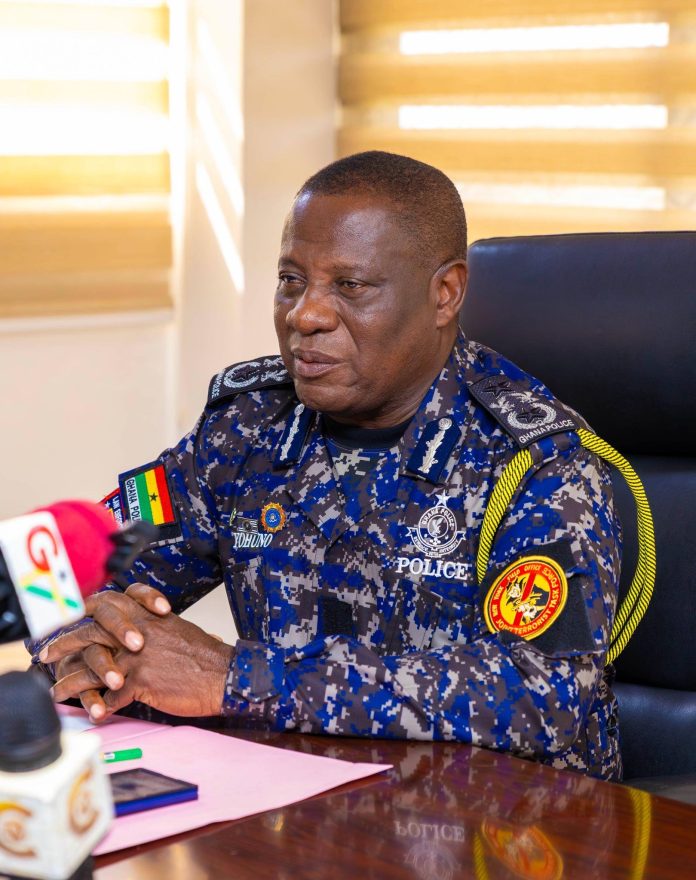
Mr Christian Tetteh Yohuno - IGP

The Chronicle’s independent investigation has uncovered that the Inspector General of Police (IGP), Mr Christian Tetteh Yohuno, has earned a reputation as a results-driven law enforcement chief, whose leadership is anchored in intelligence-led policing.

Across regions, Mr Yohuno is widely described by both the public and security analysts as a commander, whose active intelligence network often intercepts conspiracies before they escalate.

Under his watch, the Ghana Police Service has been credited with dismantling several criminal gangs with coordinated operations targeting armed robbery syndicates and landguard networks amongst others.

Equally defining is the speed of response once a crime occurs. The investigation further reveals that from high-profile murders to common market thefts, communities point to a solid pattern, suspects are tracked and apprehended within the shortest possible time.

This rapid post-crime response has bolstered public confidence, with many citizens citing it as evidence of a reinvigorated police service.

While challenges in crime fighting persist nationwide, the IGP’s approach has shifted the narrative from reactive to pre-emptive policing, a move that opinion leaders say is restoring trust in the service.

For those familiar with his track record, his current impact at the helm of the Ghana Police Service is not surprising, but consistent.

With 40 years of service, the ‘Turnaround Tiger’ who believes in action, rather than noise, has risen through the ranks, holding some of the most critical operational and intelligence roles in the service.

From a combined role as Accra Divisional and Regional Operations Director to Deputy Accra Regional Commander, later Director General of Police Operations and Director General of Police Intelligence Directorate (PID), which he created from its embryonic stage, at the instance of former IGP, Mr David Asante Apeatu.

His career has been defined by frontline engagements with Ghana’s most complex security challenges.

As the Director General of Operations, he supervised national security arrangements for major events such as the 2016 General Elections and high-level Economic Community of West African States (ECOWAS) summits, requiring precision, coordination and foresight.

At the PID, the ‘Turnaround Tiger’ strengthen intelligence systems that contributed to the smashing of the syndicate responsible for the Kwabenya Police Station attack and the murder of a Lebanese national in Tema.

According to security analysts, Mr Yohuno’s operational strength lies in his sustained crackdown on armed robbery syndicates during his tenure in various command positions.

Among his notable cases is that of Kwabena Takyi, aka Rasta, aka Not Nice, a notorious car-jacking kingpin who specialised in the stealing of vehicles, particularly VW Touareg and within two hours transported same across the borders to Togo for the ready market.

Names such as Spider Ebow, Rabiu, Awudu, Addis Ababa, Drop-Arm, Dotse Babanawo, Benin Boy and Thunder became synonymous with organised crime at the time, but he managed to silence their groups.

These groups, often armed with loaded AK47 assault rifles operated brazenly, carrying out robberies both day and night, sometimes open fire indiscriminately to instil fear and evade capture.

In one chilling account linked to ECOBANK robberies, criminals reportedly used distraction tactics, such as women accomplices as decoy to disarm security personnel before launching strikes.

What distinguishes the ‘Turnaround Tiger’ is not just his willingness to confront crime but his reliance on ‘intelligence as a backbone of operation’.

Colleagues often describe his style as ‘using petrol to quench fire’.


For more news, join The Chronicle Newspaper channel on WhatsApp: https://whatsapp.com/channel/0029VbBSs55E50UqNPvSOm2z
 

Kofi Jumah Arrested Again!

0
Maxwell Kofi Jumah

Former Managing Director of GIHOC Distilleries Company Limited, Maxwell Kofi Jumah, has been arrested by the Economic and Organised Crime Office (EOCO), in connection with an ongoing investigation into suspected financial irregularities.

Sources within EOCO indicate that Kofi Jumah was picked up on Tuesday, April 28, 2026 and is currently in the custody of the agency.

The arrest follows a recent operation at his private residence in Kumasi, which investigators believe is linked to a broader probe into alleged breaches of public financial management protocols, during his tenure at GIHOC Distilleries.

Individuals familiar with the matter say the investigation is focused on how certain official resources were administered under his leadership.

Authorities are reportedly examining issues relating to procurement processes, contract awards, asset management and the overall financial performance of the state-owned enterprise during his time in office.

The development comes weeks after EOCO officials allegedly raided Kofi Jumah’s residence on April 14 at Atonsu in the Ashanti Region. The operation has since generated controversy, particularly over claims about how it was conducted.

According to Paul Yandoh, the Ashanti Regional Communications Director of the New Patriotic Party (NPP), EOCO operatives carried out the raid in Jumah’s absence.

“They arrived when Kofi Jumah was not at home, broke into his room and took away some of his belongings,” Yandoh alleged.

The Chronicle could not, however, independently confirm whether it was EOCO officials that went to the former Managing Director of GIHOC Distilleries house in Kumasi or not.

EOCO has, however, yet to officially comment on the specifics of the operation or confirm what items, if any, were retrieved during the search. The lack of immediate clarification from the agency has fuelled public and political interest in the case.

Maxwell Kofi Jumah, a former appointee under the NPP administration, served as Managing Director of GIHOC Distilleries for several years. During his tenure, the company, one of Ghana’s key state-owned enterprises underwent a number of operational and commercial changes aimed at improving its performance in the competitive beverage market.

In recent times, however, his stewardship of the company has come under increasing scrutiny. Reports have pointed to concerns over procurement decisions, contract allocations and the management of company assets, although no formal charges have been publicly announced against him.

The investigation forms part of a broader effort by state institutions to probe alleged financial mismanagement and enforce accountability across state-owned enterprises.

Authorities have in recent months intensified actions aimed at strengthening transparency and ensuring compliance with public financial management laws.


For more news, join The Chronicle Newspaper channel on WhatsApp: https://whatsapp.com/channel/0029VbBSs55E50UqNPvSOm2z
Gold Fields Ghana Foundation Marks World Malaria Day With Strong Push Against Disease

0
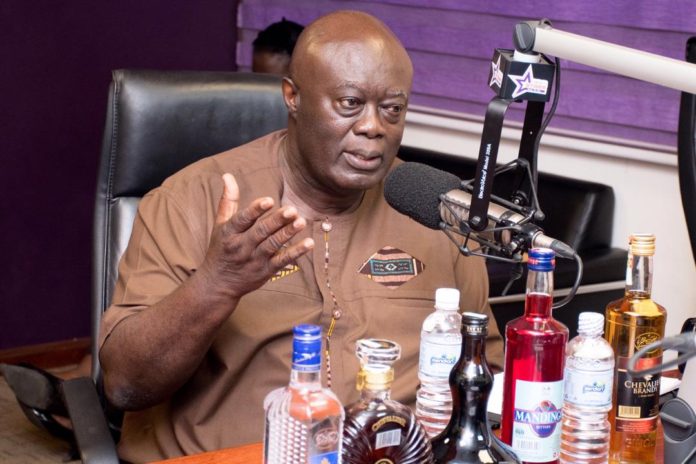
A panel discussion at the world malaria day celebration

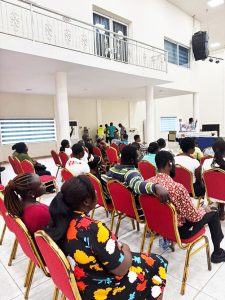
The Gold Fields Ghana Foundation has marked the 2026 World Malaria Day with a large-scale community engagement programme aimed at intensifying awareness creation, prevention efforts and collective action against malaria in its host communities.

Held under the global theme, “Driven to End Malaria: Now We Can. Now We Must,” the programme brought together stakeholders from the Tarkwa-Nsuaem and Prestea/Huni-Valley Municipalities to promote practical interventions towards reducing malaria prevalence and advancing Sustainable Development Goal Three, which focuses on good health and well-being.

Speaking at the event, Executive Secretary of the Gold Fields Ghana Foundation, Abdel Razak Yakubu, said the Foundation partnered the Tarkwa-Nsuaem Municipal Assembly and the Municipal Health Directorate to ensure the municipality was fully involved in the global observance.

He said chiefs, queen mothers, assembly members, unit committee executives, water and sanitation committee members, market women representatives and school children were invited to participate in discussions centred on malaria prevention and control.

Participants at the world malaria programme

Mr Yakubu explained that beyond awareness creation, the Foundation had procured weed slashers for distribution to water and sanitation committees in host communities to support communal labour activities such as clearing bushes, cleaning surroundings and removing stagnant water.

He noted that these environmental sanitation measures would help reduce mosquito breeding sites and lower malaria prevalence in the municipality.

According to him, malaria remains a serious public health challenge in the area, with about four out of every 10 cases reported at health facilities in the municipality being malaria-related.“The toll on productivity is very high, not to talk about morbidity and mortality as well,” he stated.

Mr Yakubu said the ultimate goal was to reduce malaria prevalence in communities and institutions through sustained education and practical interventions.

He announced that Gold Fields Ghana, through the Foundation, had committed GH¢320,000 this year towards World Malaria Day celebrations and related activities.

The amount, he said, would support radio programmes, public education campaigns and other interventions to create more awareness and drive down malaria cases in Tarkwa-Nsuaem and Prestea/Huni-Valley.

He cautioned that malaria should not be dismissed as a common illness, stressing that it remains a deadly disease that must be taken seriously.Municipal Health Director for Tarkwa-Nsuaem, Wilhelmina Tiwaa Duah, said malaria continues to top Out-Patient Department attendance in the municipality despite ongoing interventions.

She disclosed that in 2025, health facilities recorded 160,474 suspected malaria cases, out of which 53,037 tested positive.She added that among pregnant women, 628 were tested for malaria, with 224 confirmed positive, describing the figures as significant and worrying.

Mrs Duah explained that malaria in pregnancy could lead to miscarriage, stillbirth, premature delivery, anaemia and developmental complications for babies. She said the condition also undermines efforts to reduce maternal mortality.

She said although health authorities continue to promote the use of insecticide-treated mosquito nets and intermittent preventive treatment for pregnant women, more action was needed to bring the numbers down.

Mrs Duah commended Gold Fields Ghana Foundation for its annual support to the Municipal Health Directorate in malaria prevention campaigns.She said this year’s programme had introduced a stronger environmental sanitation component to complement public education.

“We are encouraging citizens to keep the environment clean in such a way that we will not have breeding sites for mosquitoes because when we control the vector that spreads the parasite, then we break transmission,” she said.

She urged residents not to use the backyards of their homes as dumping grounds, but rather clear weeds, drain stagnant water and desilt gutters regularly.

According to her, Tarkwa’s heavy rainfall pattern makes proper sanitation even more critical because stagnant water easily becomes breeding grounds for mosquitoes.

Mrs Duah further encouraged residents who develop symptoms such as fever, headache, weakness and loss of appetite to report promptly to health facilities for treatment.

She said anti-malaria drugs available at health facilities remain effective, but patients must complete their full three-day treatment course even when they start feeling better.

She disclosed that the municipality had not recorded any malaria-related death in the past five years, attributing the achievement to early reporting and effective treatment.She also advised residents to use mosquito nets for their intended purpose and not for fishing, farming or other domestic activities.

The programme featured a stakeholder panel discussion on malaria transmission patterns, environmental factors that encourage mosquito breeding and sustainable prevention strategies.

As part of practical interventions, organisers undertook a larviciding exercise using environmentally safe chemicals at identified mosquito breeding sites to disrupt the mosquito life cycle and reduce transmission risks.


For more news, join The Chronicle Newspaper channel on WhatsApp: https://whatsapp.com/channel/0029VbBSs55E50UqNPvSOm2z

Energy Commission graduates new batch of certified electricians

0
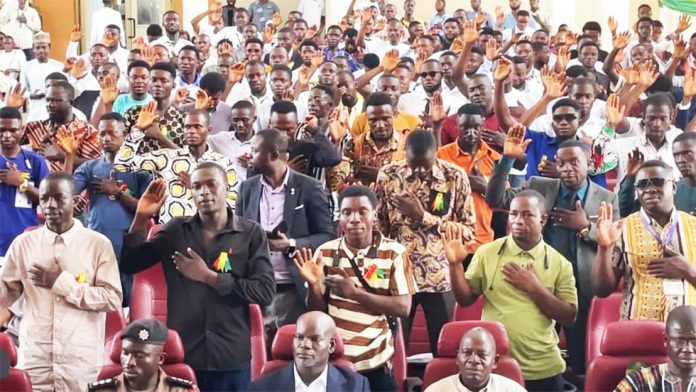
A section of the trainees at the graduation ceremony

The Energy Commission of Ghana has graduated a new batch of certified electricians from Bono, Ashanti and Bono East regions as part of ongoing efforts to improve safety and ensure professionalism in electrical installation and enhance standards across the nation.

The training and certification programme, which was held on Tuesday, this week, in Kumasi,   forms part of broader efforts by the Energy Commission to sanitise the electrical installation sector, reduce technical losses, and minimise fire outbreaks linked to faulty wiring and non-compliant installations.

Senior Officer for Inspection and Enforcement at the Commission, Mr. Ebenezer Kojo Asaam, described the certification programme as a critical component of compliance and quality assurance within Ghana’s power distribution value chain.

He disclosed that since the inception of the programme in 2013, more than 18,000 electricians and inspectors have been trained and certified across the country.

Mr. Asaam explained that the initiative was introduced in response to a rise in electrical fire incidents, largely attributed to substandard workmanship and the activities of unlicensed practitioners.

He noted that the Commission, backed by statutory mandates, is responsible for training, examining, certifying, and licensing electricians to ensure strict adherence to national wiring regulations and international safety standards.

“The certification process is not merely academic; it is a competency-based assessment designed to ensure that practitioners meet the requisite technical standards, operational safety benchmarks, and industry best practices,” he said.

The Inspection and Enforcement officer assured of the Energy Commission’s commitment to collaborate with training institutions and industry stakeholders to strengthen capacity building, enforce licensing regulations and ensure a safer and more resilient electrical infrastructure across the country.

The Overall Best Graduating Student, Maame Afua Gyapomaa Oppong, called for increased female participation in technical and vocational education and training (TVET).

She noted that although the electrical trade has traditionally been male-dominated, it offers significant economic and professional opportunities for women as well.


For more news, join The Chronicle Newspaper channel on WhatsApp: https://whatsapp.com/channel/0029VbBSs55E50UqNPvSOm2z
Africa’s Media Houses Face Survival Crisis -George Twumasi

0
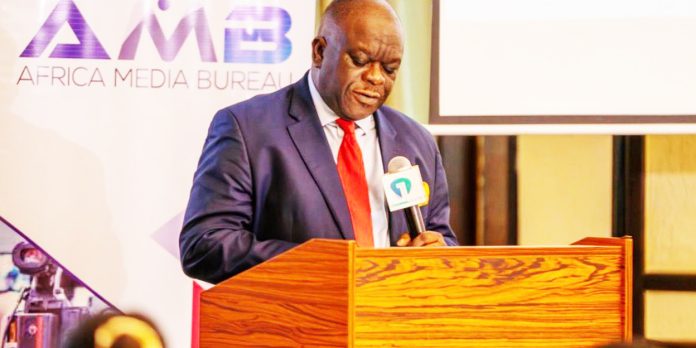
George Twumasi

Africa’s ability to tell its own story is slipping not for lack of talent or platforms, but because the media industry itself is running out of money to sustain independent journalism.

That was the stark warning from ABN Holdings Chief Executive, George Twumasi, who argued that the continent’s “narrative sovereignty” is increasingly under threat as media organisations battle shrinking revenues and weak institutional backing.

Speaking at the Media Convergence in Ghana conference organised by the Africa Media Bureau on Wednesday, April 29, 2026 Mr Twumasi said the financial instability of media houses is forcing difficult compromises that could erode editorial independence.

With traditional advertising income steadily declining, he noted, many outlets are turning to sponsored content and event-driven revenue just to survive, a shift he warned could blur the line between journalism and commercial influence.

“Our narrative sovereignty remains compromised,” he stressed, pointing to the growing dependence on non-traditional funding streams.

Twumasi attributed the crisis to deeper structural challenges, singling out Africa’s major financial institutions for what he described as a lack of commitment to the media sector.

He criticised bodies such as the African Development Bank and African Export-Import Bank for failing to prioritise investment in an industry he considers central to democratic development.

Beyond financing, he highlighted persistent infrastructure gaps, particularly unreliable electricity supply in rural communities and the high cost of internet data as barriers that continue to limit access to information across the continent.

He also pointed to a shortage of digitally skilled journalists, outdated regulatory frameworks and concerns about censorship in some countries as compounding pressures weakening the industry.

Despite the bleak outlook, Mr Twumasi maintained that the future is not without promise.

He advocated for a more integrated media ecosystem that brings together state-owned and private platforms, describing it as a potential “electronic classroom” capable of educating citizens and narrowing the information gap between rural and urban populations.

Drawing on Ghana’s experience, he said media reforms in the early 2000s helped strengthen democratic accountability through a more vibrant press.

However, he warned that in parts of Africa, the media still functions either as a fragmented opposition tool or as an extension of state propaganda.

In a complementary address, Executive Director of the Africa Media Bureau, Samuel Attah-Mensah, underscored the urgency of reimagining Ghana’s media landscape in response to rapid technological change.

Delivering the opening remarks under the theme “The Future of Media Practice, Education and Policy in Ghana,” he said the era of isolated traditional media is over, as digital innovation continues to reshape how stories are produced, distributed and consumed.

He stressed that the real challenge now is not just understanding these changes, but actively responding to them in ways that ensure sustainability and relevance.

According to Mr Attah-Mensah, the conference is intended to go beyond diagnosing industry problems, serving instead as a platform to bridge the gap between academia and practice while generating actionable solutions.

He emphasised that even as media organisations innovate, they must remain anchored in core values such as ethics, credibility and public trust.

“The future of media depends on collaboration,” he said, calling for stronger partnerships among lecturers, editors, students, professionals and policymakers.

He expressed confidence that such collaboration would lead to practical recommendations and lasting impact, positioning the conference as a critical step toward shaping a more resilient and forward-looking media industry in Ghana and across Africa.


For more news, join The Chronicle Newspaper channel on WhatsApp: https://whatsapp.com/channel/0029VbBSs55E50UqNPvSOm2z
African Media Must Rise Above Petty Politics Or Risk Irrelevance -Prof. Karikari

0
Prof Kwame Karikari

Veteran media scholar, Prof. Kwame Karikari, has issued a strong warning to African journalists to urgently broaden their focus beyond domestic party politics or risk becoming irrelevant in a fast-changing geopolitical environment.

According to him, many African media houses remain excessively consumed by internal political quarrels while powerful foreign interests continue to shape the continent’s economic, political and security future with little scrutiny.

Prof. Karikari, former Executive Director of the Media Foundation for West Africa (MFWA), made the remarks at a forum organised by the Centre for Democratic Development (CDD-Ghana) on the theme: Enhancing Media Capacity on Foreign Influence, Geopolitics and Democracy in West Africa and the Sahel. The programme brought together journalists from Ghana and other countries in the sub-region.

Addressing participants, Prof. Karikari said journalism today must go beyond routine reporting and become a democratic safeguard capable of informing citizens about forces operating both within and outside their countries.

“Journalists are not only storytellers; they are guardians of truth, accountability and public trust,” he stated.He stressed that strengthening media capacity should not be seen merely as improving newsroom skills, but as reinforcing the foundations of democracy itself.

Scramble for Africa

Prof. Karikari painted a troubling picture of renewed global competition for Africa’s natural resources, especially strategic minerals needed for modern technology and digital industries.

He said world powers including the United States, China, Russia, Britain, France, Turkey, India, Japan, South Korea, Canada, Gulf States and Israel are all competing for access to Africa’s resources.He lamented that many African states still export raw materials without building industries to process them locally.

“In other words, Africa’s minerals are like pearls before swine. We make no use of them and therefore they become easy prey for others,” he said.

He cautioned that while such competition may appear peaceful today, history shows that battles over resources often end in instability and war.

He cited conflicts and insecurity in Sudan, the Democratic Republic of Congo, Mozambique, the Sahel and northern Nigeria as examples of how internal weaknesses can be exploited by outside interests.

A major concern raised by the professor was what he described as the insularity of African media.

He noted that many Africans rely on foreign networks such as CNN, BBC and Al Jazeera to learn about events taking place in neighbouring African countries.

“Our media are very insular,” he said, questioning how often Ghanaian newspapers or broadcasters carry meaningful reports about developments in nearby states.

He added that important continental institutions such as the African Union (AU), ECOWAS and regional courts receive little sustained coverage from African journalists.

According to him, the absence of regular scrutiny and reporting weakens public understanding of bodies that are meant to defend African interests.

Prof. Karikari also criticised the dominance of political parties over media discourse. He argued that instead of the media setting the public agenda through critical questioning and independent analysis, political parties often dictate what is discussed.

Democracy under Threat

The veteran scholar further warned of growing democratic backsliding across the continent.

He referred to military coups in parts of West Africa, shrinking opposition space in some countries and what he described as manipulated electoral processes.He said the decline of democracy usually goes hand in hand with attacks on press freedom and freedom of expression.Where democratic institutions weaken, journalists often face intimidation, arrests and censorship, he observed.

AU Must Wake Up

Prof. Karikari did not spare continental leadership institutions.He said the African Union has failed to show enough urgency in responding to crises affecting member states.

Using Sudan as an example, he noted that external actors such as Qatar have at times taken the lead in mediation while Africa’s own institutions appeared passive.

He urged stronger continental leadership capable of defending African peace, sovereignty and development.

Five Questions for Journalists

Prof. Karikari challenged African media practitioners to reflect on five urgent questions:

How can African media improve coverage of other African countries?
How can journalists push leaders to engage more seriously with continental matters?
How can the media help make AU and ECOWAS more responsive?
How can journalism build solidarity among African peoples amid rising xenophobia?
And how can the media help defend Africa’s sovereignty against foreign manipulation?

“These questions reflect the responsibilities African media ought to have toward the peoples of this continent,” he said.


For more news, join The Chronicle Newspaper channel on WhatsApp: https://whatsapp.com/channel/0029VbBSs55E50UqNPvSOm2z
 

African Youth Take Center Stage At Yale Model African Union Conference In Accra

0

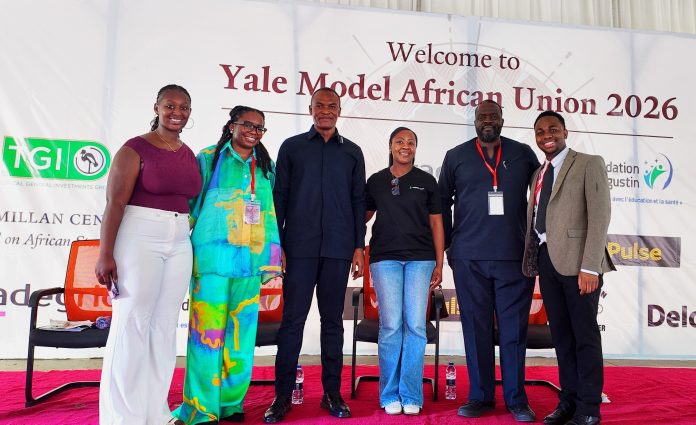
Young leaders from across Africa and the diaspora took centre stage at the fifth edition of the Yale Model African Union Conference (YMAU), which concluded in Accra after three days of dialogue, innovation, and collaboration.

Held from March 13 to 15, 2026, under the theme “Imagine, Challenge & Build the Africa We Want,” the conference brought together more than 300 delegates, policymakers, industry leaders, and entrepreneurs to mark five years of promoting youth leadership and policy engagement on the continent.

The programme featured African Union committee simulations, leadership workshops, the Mandate-to-Market Innovation Pitch Contest, and a University and Career Fair. A major highlight was a panel discussion titled “Designing the Future: Creativity at the Intersection of Policy and Enterprise,” which examined how innovation and policy design can drive sustainable development.

Among the speakers was Dennis Sampong, Country Director of Fludor Ghana. Drawing on his experience in Ghana’s agricultural sector, he underscored the need to integrate young people into the cocoa value chain and strengthen private sector involvement in policymaking.

“The future of Africa is the youth. If you look at Ghana, more than 60 per cent of the population are under the age of 35. Anything we’re doing now is going to be the youth’s future,” he said, urging young Africans to take ownership of the continent’s development.

Mr. Sampong also raised concerns about the ageing workforce in Ghana’s cocoa sector, noting that the average farmer is between 55 and 60 years old. He stressed the importance of attracting young people into agriculture through innovation and modern farming techniques.

“If our farmers used to use cutlasses and hoes to cultivate cocoa, what other technologies can we bring in? As part of our training programmes, we encourage young people to go into cocoa and adopt modern methods,” he added.

He was joined on the panel by Audrey S-Darko, Jide Pratt, and moderator Ericka K. Tenta. Discussions centred on strengthening collaboration between policymakers, entrepreneurs, and private sector actors to translate policy ideas into practical, scalable solutions.

The conference also featured keynote addresses from Tara Squire and Kabral Blay-Amihere. Other notable speakers included George Opare Addo, Rosemary Mbabzi, and Festus Kofi Aubyn.

Participation by Fludor Ghana formed part of the broader involvement of TGI Group as a sponsor and exhibitor at the career fair, reaffirming its commitment to youth empowerment initiatives across Africa.

The 2026 YMAU conference reinforced the critical role of young Africans in shaping the continent’s future, with stakeholders calling for stronger partnerships and innovative solutions to drive inclusive growth and development.


For more news, join The Chronicle Newspaper channel on WhatsApp: https://whatsapp.com/channel/0029VbBSs55E50UqNPvSOm2z
The Ghanaian Chronicle