Home Blog Page 696

Italy’s Mount Etna erupts as large plumes rise from volcano

0
Mount Etna erupts

Italy’s Mount Etna has erupted, with large plumes of ash and smoke seen rising from the volcano.

Images and video from the island of Sicily showed volcanic material spilling out of the volcano on Monday morning.

A number of explosions of “increasing intensity” were recorded in the early hours on Monday morning, Italy’s National Institute of Geophysics and Volcanology (INGV) Etna Observatory said.

The full scale of the eruption is currently unclear and disruption appears to be minimal.

Mount Etna is one of the world’s most active volcanoes, so eruptions are not uncommon and its outbursts rarely cause significant damage or injury.

Ground movements indicated latest eruption happened on the south eastern edge of the volcano, according to INGV. This appears to be where a known 200m-wide vent is.

Footage shared throughout Monday shows a rapidly moving mix of ash, gas and rock – known as a pyroclastic flow – emerging from the site and moving down the side of the volcano.

Geologists monitoring the eruption said it was likely that part of volcano’s crater collapsed and that this was the material being carried down its slopes.

Pyroclastic flow can be very dangerous to the surrounding area, but there has been no indication of an imminent threat.

In its most recent update, INGV noted that the volcanic material had not yet gone past the Valley of the Lion, the point on the approach to the summit where tourist trips stop.

The size of Strombolian eruptions can vary but are often characterised by intermittent explosions, which occur due to the presence of gas in the magma chamber within the volcano.

Credit: bbc.com

Populist Karol Nawrocki wins Polish presidential election

0
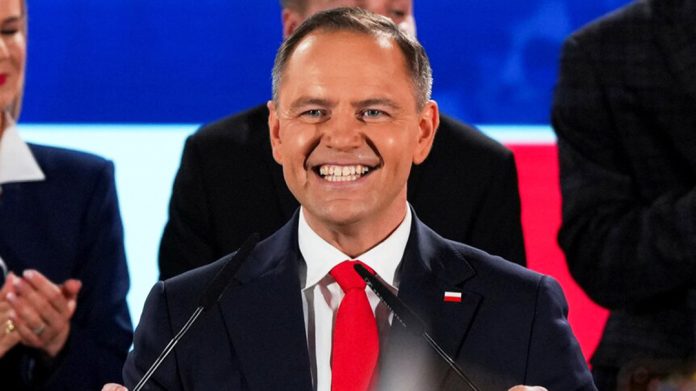
Karol Nawrocki wins Polish election

A historian and populist firebrand who boasted about his brawls with soccer hooligans has narrowly won Poland’s presidential election, in a political upset that could torpedo the centrist government’s efforts to unspool the legacy of authoritarianism in the country.

Karol Nawrocki, the candidate aligned with Poland’s right-wing populist Law and Justice (PiS) party, won 50.89% of the vote, defeating the liberal mayor of Warsaw Rafał Trzaskowski – long the favorite to win – in a head-to-head run-off.

The result extends PiS’ 10-year occupancy of the presidential palace and could spell disaster for Prime Minister Donald Tusk, whose pledge to erase PiS’ fingerprints from Poland’s embattled institutions saw him clash repeatedly with the outgoing President Andrzej Duda.

Nawrocki is a champion of US President Donald Trump and visited the White House in the weeks before the election. He was the underdog throughout the campaign, but came a close second to Trzaskowski in the first round of voting two weeks ago, having survived a series of damaging stories about his past. He picked up a late endorsement from the third-placed, far-right candidate.

The 42-year-old historian will now yield the hugely powerful presidential veto, which Duda used frequently to thwart Tusk’s agenda. The European Union has looked to Tusk for a blueprint on undoing the effects of populism on a democracy – but a victory for Nawrocki was not part of the plan.

Though Polish presidential candidates often stand as individuals, rather than representatives of a party, there is little hiding their affiliations, and each major party historically endorses and campaigns for a candidate.

Tusk ousted PiS from government in a heated parliamentary election in 2023, but Nawrocki’s victory denies him an open road to fully undo the transformation of the Polish state overseen by PiS during an eight-year stint in government.

Credit: cnn.com

Protests over designer handbags throw Mongolia into political crisis

0
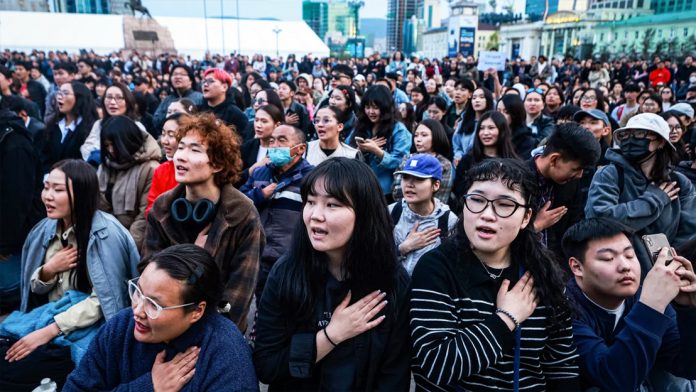
People sing during a protest calling for the resignation of Mongolia's Prime Minister

Mongolia has been thrown into fresh political crisis with protesters calling for the resignation of the country’s prime minister over his family’s lavish displays of wealth.

For two weeks, young Mongolians have taken to the streets of the capital putting pressure on Prime Minister Oyun-Erdene Luvsannamsrai who will face a vote of confidence in his government on Monday.

Democratic Mongolia is a landlocked nation of just 3.5 million people sandwiched between authoritarian giants China and Russia, and the latest political crisis has put renewed scrutiny on the stability of the country’s democracy.

The protests were triggered by social media posts that went viral showing the prime minister’s 23-year-old son’s lavish engagement proposal and their apparent extravagant lifestyle including helicopter-rides, an expensive ring, designer handbags and a luxury car.

Suspicion grew over how the son accumulated such wealth – especially as Prime Minister Oyun-Erdene campaigned on being from a rural, not wealthy family.

“With no visible sources of income, their display of luxury bags, private travel, and high-end living was a blatant slap in the face to the average Mongolian citizen,” said Amina, 28, a member of protest group.

Deepening the anger is the rising cost of living, soaring inflation in the wake of Russia’s war in Ukraine, and choking pollution in the capital that’s home to half the population.

Credit: cnn.com

Ukraine’s audacious drone attack sends critical message to Russia and the West

0
Ukrainian President Volodymyr Zelensky shakes hands with the Head of the Security Service Vasyl Malyuk

It’s hard to exaggerate the sheer audacity – or ingenuity – that went into Ukraine’s countrywide assault on Russia’s air force.

We cannot possibly verify Ukrainian claims that the attacks resulted in $7bn (£5.2bn) of damage, but it’s clear that “Operation Spider’s Web” was, at the very least, a spectacular propaganda coup.

Ukrainians are already comparing it with other notable military successes since Russia’s full-scale invasion, including the sinking of the flagship of Russia’s Black Sea fleet, the Moskva, and the bombing of the Kerch Bridge, both in 2022, as well as a missile attack on Sevastopol harbour the following year.

Judging by details leaked to the media by the Security Service of Ukraine (SBU), the latest operation is the most elaborate achievement so far.

In an operation said to have taken 18 months to prepare, scores of small drones were smuggled into Russia, stored in special compartments aboard freight trucks, driven to at least four separate locations, thousands of miles apart, and launched remotely towards nearby airbases.

“No intelligence operation in the world has done anything like this before,” defence analyst Serhii Kuzan told Ukrainian TV.

“These strategic bombers are capable of launching long-range strikes against us,” he said. “There are only 120 of them and we struck 40. That’s an incredible figure.”

It is hard to assess the damage, but Ukrainian military blogger Oleksandr Kovalenko says that even if the bombers, and command and control aircraft were not destroyed, the impact is enormous.

Credit: bbc.com

Journalist appointed Jury member of World Press Freedom Prize 

0
Ms Rebekah Awuah - Jury

Renowned Ghanaian journalist, communicator and documentary filmmaker, Rebekah Awuah, has been appointed as a jury member for the prestigious UNESCO/Guillermo Cano World Press Freedom Prize.

Her appointment is a landmark achievement, both personally and for Ghanaian and African journalism.

A statement copied to the Ghana News Agency in Accra on Monday said it recognized her exceptional career dedicated to investigative reporting, press freedom advocacy and impactful storytelling across critical issues.

Her presence on this global jury ensures African perspectives are represented at the highest level of international press freedom recognition and provides a powerful platform to advocate journalists under threat worldwide.

“It also solidifies her status as a key figure in the global fight for free and independent media.

“I’d wear this role not as a personal crown, but as a megaphone for every reporter working in shadows to keep democracy alive,” Rebekah said.

“It’s an opportunity and a rare privilege to serve as an international juror. Ghana is often hailed as a beacon of press freedom and stability in West Africa. Serving on this global jury would acknowledge Ghana’s commitment to democratic values and enable me to keep that legacy. It also aligns greatly with my deepest values as a journalist – Truth, Justice and Impact and will enable me to use the jury’s platform to push for tangible protections for threatened journalists globally.

Rebekah Awuah is the first Ghanaian journalist to be appointed to the jury of the UNESCO/Guillermo Cano World Press Freedom Prize.

Her selection places her among six distinguished media professionals from across the globe, tasked with recognizing outstanding contributions to press freedom.

The UNESCO/Guillermo Cano World Press Freedom Prize, established in 1997, honours individuals, organizations, or institutions that have made remarkable efforts in defending or promoting press freedom, often at great personal risk.

The award is named after Colombian journalist Guillermo Cano Isaza, who was assassinated in 1986 for his fearless reporting on drug cartels.

Administered by UNESCO and supported by several international foundations, the prize is awarded annually on World Press Freedom Day.

“As the first Ghanaian juror, I carry a responsibility to amplify press freedom struggles leveraging my dual understanding of local realities and global standards while learning from very accomplished jury members.

‘It would also allow me to ensure African narratives aren’t sidelined in global press freedom advocacy.”

Rebekah, a Senior Reporter and investigative journalist at The Fourth Estate and Fact-Check Ghana – an all-public interest journalism project of the Media Foundation of West Africa (MFWA) brings a wealth of experience in accountability journalism, human rights reporting, and advocacy for press freedom.

She has also worked in areas including gender, climate, human rights, environment, arts, entertainment, tourism and governance.

Before joining the MFWA, she served for over 14 years at Ghana Television (GTV), where she played pivotal roles as a news editor and anchor, current affairs show host and content producer.

Her journalistic excellence had earned her numerous accolades, including being a finalist in the 2013 CNN Africa Journalist Awards.

She has also won many national and international awards, such as the 2023 Energy and SDG Media Personality Award, African Journalist of the Year, and the 2022 Ghana Energy Reporter of the Year.

Her commitment to impactful storytelling and media advocacy has positioned her as a key figure in the Ghanaian and African media landscape.

The jury is chaired by Yasuomi Sawa of Japan, a professor of journalism and investigative reporter.

Other members include Jaime Abello Banfi from Colombia, the co-founder of the Gabo Foundation; Nima Elbagir from Sudan, an award-winning senior international correspondent for CNN; Aneta Grosu from Moldova, editor-in-chief of Ziarul de Gardă; and Åsne Seierstad from Norway, a freelance journalist and author.

As a jury member, Rebekah will play a crucial role in evaluating nominees and recommending a single winner to UNESCO’s Director-General.

The appointment, which is for a renewable three-year term, underscores her expertise and dedication to the principles of free and independent journalism.

Her inclusion in this global panel highlights Ghana’s continued contribution to media excellence and press freedom.

It also serves as an inspiration for journalists across Africa, emphasizing the crucial role of investigative journalism in upholding democracy and human rights.

Rebekah’s appointment is a significant milestone in her career and a demonstration of her unwavering commitment to the values of truth, accountability and justice in journalism.

GNA

Election of MMDCEs back on the table

0
Ahmed Ibrahim, Minister for Local Government

Parliament has revisited the long-held discussion on the need to elect the various Metropolitan, Municipal and District Chief Executives (MMDCEs).

Members of Parliament across the aisle have always supported the move, leading to the attempt to implement same in 2019, by the erstwhile Akufo-Addo administration.

But for the last-minute misunderstanding on the modalities, which compelled the then president to pull the brakes on the subject, MMDCEs may have been elected by now, not appointed.

On the floor of Parliament on Thursday, May 29, 2025 both sides called for a workable framework towards the implementation of an elective system, which they believed would improve local governance.

They were contributing to a statement made by the MP for Ahafo Ano North, Eric Nana Agyemang, who argued that “this issue is long overdue.”

STRENGTH

The minority members made the point that the current government had the numbers to see to the implementation of the idea.

It must be noted that the ruling National Democratic Congress promised in its 2020 and 2024 manifesto to implement the policy.

The Minority Chief Whip, Frank Annoh-Dompreh, saw the proposal as a way to reform decades of an old system which he said often breeds unnecessary tension.

The Deputy Majority Chief Whip, Richard Acheampong, raised some concerns in the minds of some people that an opposition-elected DCE may frustrate the development agenda of the government.

Despite the concern, the House was hopeful that consensus could be reached to finally resolve the fear in the interest of national development.

AMENDMENT

The First Deputy Speaker, Bernard Ahiafor, who was in the Speaker’s chair, said the previous amendment was not enough because only Article 243 (1) was amended.

According to him, Article 243(3) must also be amended to take the power from the president to appoint DCEs.

“What came before us was to amend Article 243 (1). However, if you amend Article 243 (1) without amending Article 243 (3), there will be a challenge.

“Because as we speak, the constitutional imperative currently is that the MMDC must be nominated by the president and confirmed by the assembly members by a vote of two-thirds majority.

“Thereafter, the President will appoint them. The President then becomes the appointing authority. In view of that, Article 243 gives the power to the President to revoke the appointment of the district chief executive,” he said.

THE LAW

For better understanding, he referred members to Article 249, which states that subject to a procedure established by law, the mandate of a member of the District Assembly may be revoked by the electorate or the appointing authority.

His argument was that if the DCE is elected, the President should not have the power to remove that Chief Executive from office.

The view he expressed was that unless Article 243 of the 1992 Constitution is amended in whole, “we may not be solving the problem that we really want to solve. Honourable Members, we agree that they need to be elected,” he added.

Tips For Better Night’s Sleep

0

Repay Your Debt

The lack of enough sleep over time can result in a sleep debt. This is the difference between the amount of sleep you need and the amount you actually get. This debt can be repaid by tacking on extra snooze time each night until you feel caught up.

Exercise by Day to Sleep at Night

Regular exercise can help you sleep better. For best results, exercise outside before dinner. But don’t rev up with exercise near bedtime. In the evening, light yoga or stretches can help you wind down. If you have a medical problem or are over 50 check with your doctor before starting an exercise routine.

Choose Evening Snacks Wisely

An oatmeal raisin cookie and a glass of milk can help you fall asleep. That’s because this snack includes complex carbs that likely increase levels of sleep-inducing amino acid tryptophan. Other sleep-boosting choices: a piece of whole grain toast or a small bowl of cereal.

Get on a Sleep Schedule

The average person needs 7-9 hours of sleep per night. Most experts recommend maintaining a consistent sleep schedule even on days when you are able to sleep in. This balances a person’s internal clock, allowing them to stay awake when needed and fall asleep when ready. It helps if your bedroom is conducive to sleep: dark, cool, and quiet.

Wind Down Your Brain

Try blocking out a daily “worry time” to get anxiety out of your system before bed. Make time just after dinner to plan your next day, catch up on email, and tie up loose ends. Then you can have time before bed to let go of anxieties and relax.

If You Nap, Keep it Short

Whether you should nap during the day depends on how you normally sleep at night. If you typically sleep well, then an occasional short nap is OK. Naps can make you function better, lower blood pressure, and maybe even help you live longer. Avoid napping too late in the day, as it might affect your nighttime sleep. But if you have sleep problems, naps may mess up your sleep schedule even more.

Avoid Hidden Sleep Wreckers

Caffeine can perk you up so avoid it after lunch if you have trouble sleeping at night. It can stay in your system for an average of three to five hours, but some people are affected as long as 12 hours. Watch your afternoon food and drink choices. Caffeine may hide in soft drinks, tea, and chocolate. Also be wary of certain medications, such as decongestants, which can aggravate sleep problems.

Natural Ways to Help You Sleep

Some people try natural methods to wind down their day. Used medicinally for thousands of years, chamomile brewed in tea is non-caffeinated and may help relax you for sleep. Or try aromatherapy. Studies have found that lavender produces slight relaxing and calming effects when inhaled. For some people, melatonin seems to improve sleep. If you take medications, talk with your doctor before taking any supplement.

Try Relaxation Exercises

In the late evening, visualize something calming, using all your senses to make the image as vivid as possible. Or try progressive muscle relaxation. Tighten up the muscles in your toes for several seconds. Then relax them for 30 seconds. Focus on how relaxed they feel. Repeat this all the way up your body, ending at your neck and face.

When You’re in Pain

Are aches and pains keeping you up at night? You’re not alone: According to one survey, three-quarters of people with low back pain experienced poor sleep. And if you can’t sleep well, you may feel even worse during the day. First, make sure you practice good sleep hygiene. You may want to consider taking a nighttime pain reliever to help you doze off, but consult your doctor if pain commonly keeps you up at night.

See a Doctor About Sleep Problems

If you have sleep problems and none of these strategies helps, you may have a sleep disorder. Medications and some medical conditions can cause sleep problems. Your doctor or a sleep specialist can help you find the problem and learn ways to improve sleep.

Credit: webmd

Feature: NaCCA’s Bold Curriculum Shift: GES and WAEC Back Revolutionary Literature Text for BECE 2027

0
Wisdom Klu, the writer

To revitalize literary education within Ghana’s basic school system, the National Council for Curriculum and Assessment (NaCCA), in partnership with the Ghana Education Service (GES) and the West African Examinations Council (WAEC), has officially adopted The Beacon of Light as the new mandatory literature text for Junior High Schools (JHS). This recently approved text, authored by Joshlyn Yayra Diabo, Adam Ankrah, Bryte Okrah, and Lucas Zanyoh, replaces The Cock Crow, which has been in use for over 15 years.

The change marks a substantial transformation in how literature is understood and taught within the framework of Ghana’s Standards-Based Curriculum, aligning teaching methods with contemporary competencies and national educational objectives (NaCCA, 2019).

A Literature Text Tailored for 21st-Century Learners

Unlike its predecessor, The Beacon of Light is crafted to foster critical thinking, ethical considerations, creativity, and problem-solving skills among students. As stated by NaCCA (2024), the book “has been thoughtfully designed to align with the Standards-Based Curriculum and address the evolving moral, social, and cognitive needs of today’s learners.” These competencies are vital in a world where students must not only comprehend texts but also interpret their environment.

According to Rosenblatt (1995) literature can be described as “an experience lived through, where meaning emerges from the interaction between the reader and the text.” In this framework, The book encourages students to connect personal experiences with the themes presented in the stories. By tackling relevant issues such as identity, leadership, environmental stewardship, peer pressure, and resilience, the anthology reflects the real-life experiences of Ghanaian youth. This fosters what Nussbaum (2010) terms “narrative imagination”the capacity to empathize with the circumstances of others.

Supporting Material

The main literature text is supplemented by The Beacon of Light Commentary, written by Victoria Stevens, Dr. Jemima Larteley Mensah, and Very Rev. Ebo Ephraim. This commentary provides valuable pedagogical support for educators and students. It offers  thorough analyses of literary techniques, themes, and character arcs. This aligns with findings from instructional research highlighting the importance of teacher resources for effective literature delivery (Fisher & Frey, 2014).

Transitioning from The Cock Crow: A Necessary Upgrade?

For over 15 years, The Cock Crow served as the standard literature text for Junior High Schools in Ghana. However, its extended use contributed to educational stagnation in various aspects. According to NaCCA (2024), “the repetitive nature of assessment due to familiarity with the old text limited innovative responses from students and hindered authentic literary comprehension.

”Scholars such as Applebee (1996) maintain that literature should continuously evolve in education to reflect changing cultural narratives and social values. Thus, the replacement of The Cock Crow signifies a renewal of a curriculum that rejuvenates literary discussions in schools and injects fresh concepts and themes into the Basic Education Certificate Examination (BECE).

Furthermore, this shift aligns with the philosophy of the new curriculum, which emphasizes learner-centred education, relevant content, and practical applications (MoE, 2019). By introducing new literature, Ghana’s education system mitigates the risk of relying on an outdated literary canon that fails to resonate with modern students.

Addressing National Curriculum Objectives

The inclusion directly connects with the goals of Ghana’s Standards-Based Curriculum, which aims to equip students with essential skills such as communication, teamwork, and personal development (NaCCA, 2019). When chosen thoughtfully, literature serves as a vital avenue for boosting these competencies.

Research conducted by Darling-Hammond et al. (2019) indicates that “educational content must be culturally relevant and intellectually challenging in order to adequately prepare students for a global society.” In this context, the themes explored in The Beacon of Light including social justice, moral integrity, empathy, and resilience offer a rich foundation for students to engage in moral reasoning and civic education.

Moreover, it enables educators to implement project-based assessments, character education, and performance tasks that encourage critical thinking and creative expression skills central to 21st-century education (Trilling & Fadel, 2009).

Cultivating a Culture of Literary Transformation

Beyond its academic significance, The Beacon of Light symbolizes a broader shift in educational culture. It highlights the necessity for curriculum design to remain dynamic, inclusive, and responsive to societal evolution. It underscores the value of literaturenot only as a subject of study but also as a transformative force in students’ lives.

As Martha Nussbaum (2010) poignantly observes, “the development of empathy and understanding through literature prepares individuals to respect one another and collaborate towards shared goals.” Therefore, the true impact of The Beacon of Light will not solely be reflected in exam results but in its influence on the character, critical thinking, and compassion of Ghana’s future leaders.

Conclusion

The choice of the book as the new literature text for Junior High Schools represents a commendable and timely advancement. With its rich thematic content, engaging narratives, and supportive pedagogical resources, it is poised to enhance the teaching and learning of literature. NaCCA, GES, and WAEC have made a significant commitment to ensuring educational content remains relevant, reflective, and transformative.

The responsibility now rests with educators, school leaders, and district authorities to ensure the effective implementation of this literary resource. With dedicated effort and support, The Beacon of Light will not only illuminate educational paths but also foster ethical and reflective citizenship among Ghana’s youth.


WRITTEN BY:

Wisdom KoudjoKlu,

Education Expert/Columnist,

Greater Accra Region.

wisdomklu@gmail.com


Feature: No More Stress After Exams: GES Restores Pre-BECE School Selection- Bravo!

0
The writer, Wisdom Koudjo Klu

As we continue to evolve our educational system, key decisions regarding basic education hold immense importance. The Ghana Education Service (GES) recently announced a significant policy change, stating that Basic Education Certificate Examination (BECE) candidates will now choose their senior high school (SHS) options prior to taking the exams. This instruction, detailed in a circular dated May 13, 2025, and signed by Prince Charles Agyemang-Duah on behalf of the Acting Director-General of GES, reflects a renewed commitment to a learner-focused framework that takes into consideration the psychological and practical needs of both students and their families.

Educators have long awaited this shift, which goes beyond a mere scheduling change; it corrects a flawed practice that has caused unnecessary challenges for various stakeholders. This change reinstates a thoughtful, proactive approach that has previously benefited the nation.

Importance of the Change

The previous post-exam school selection process faced numerous difficulties. Under the old model, students completed the BECE, returned home often to remote rural areas and were later called back for school selection. This disjointed system imposed logistical burdens on educators and financial strains on families.

A report from the Ghana National Education Campaign Coalition (GNECC) emphasizes, “one of the most persistent challenges of the current school placement system is the absence of students at the crucial decision-making moment, leading to rushed selections, errors, and, in some cases, complete misplacement” (GNECC, 2023). Many teachers struggle to contact students who have returned home, often lacking direct communication or facing delays due to guardians who are not engaged in the educational process.

The new policy allows school counsellors and teachers to assist students in the school selection while they are present and still connected to their school environment. This enhancement is expected to reduce errors, miscommunication, and last-minute upheaval.

Economic Relief and Equity

The financial implications of the old selection process are significant. Many families, especially in underserved areas, found themselves needing to travel multiple times to urban centres for the selection, leading to additional transportation costs, time off work, and, in some cases, overnight stays expenses that would be mitigated if the process occurred while students were still in school.

A head teacher in Greater Accra recently expressed, “We constantly face challenges locating students through outdated contacts and absent guardians. It’s a nightmare.” This logistical difficulty places an unnecessary burden on both schools and families.

Motivation and Academic Focus

A vital, yet often overlooked, benefit of the pre-exam school selection is its positive impact on student motivation. When students identify their preferred schools in advance, they are more likely to recognize the importance of diligent study and maintain focus during exam preparation. This aligns with the goal-setting theory put forth by Locke and Latham (2002), which suggests that “specific and challenging goals lead to higher performance when compared with easy or ambiguous goals.”

With a clear vision of their educational aspirations, they are more inclined to take charge of their academic success. The old post-exam system disrupted this connection, diminishing motivation and academic concentration during the critical weeks leading to the examinations.

Mental Health and Emotional Support

Education encompasses not just academics but emotional well-being as well. The pressure on students during and after the BECE can be significant. Following months of intense preparation, learners require time to rest and mentally decompress, rather than immediate re-engagement in administrative duties.

Dr. Gifty Quarshie, a psychologist at the University of Ghana, notes that “students need time to decompress after national exams. Reintroducing school routines too soon can lead to anxiety and burnout” (Quarshie, 2022). By shifting the selection process to before the exams, GES enables students to have the necessary post-exam recovery time.

Administrative Efficiency

For school leaders and district officials, the updated timeline is a welcome development. It will provide a structured opportunity to engage students in a controlled environment and ensures greater data accuracy. Additionally,it will alleviate the chaotic environment that often follows exams, where schools struggle to coordinate students scattered across various locations.

According to a 2021 policy brief by the Centre for Educational Research and Training (CERT), “delays and errors in school placement stem largely from fragmented communication and the absence of structured pre-exam engagement.” The new GES directive directly addresses these issues.

Thoughtful Implementation

Although this policy change is commendable, its success hinges on careful execution. The GES must ensure that all parties:school leaders, educators, parents, and local education officials are adequately trained and informed.

Where possible, efforts to digitize the process should be made, enabling students and schools to input and confirm selections online. A public awareness campaign should accompany the rollout, particularly aimed at rural communities where understanding may lag.

Moreover, the Ministry of Education should establish systems for ongoing monitoring and refinement of the process each year. Feedback from parents, students, and educators will be essential in ensuring the pre-exam selection approach is efficient and equitable.

Conclusion:

In conclusion, the GES’s decision to revert to a pre-BECE school selection is a timely and transformative reform focused on students. It addresses persistent challenges, prioritizes the welfare of students and families, and clarifies a previously convoluted system.

The GES has made an important first move. Now it is our responsibility school leaders, parents, teachers, and policy advocates to ensure this change is impactful and lasting. Together, let’s keep students at the heart of every decision we make.

The bridge may have been broken, but careful reconstruction can lead our students toward a more promising future.


WRITTE BY:

Wisdom KoudjoKlu,

Education Expert/Columnist,

Greater Accra Region.

wisdomklu@gmail.com

We have not learned from Pooley’s death -Dr Kwame Kyei

0
Owner of Nations FC, Dr Kwame Kyei

Owner and bankroller of Nations FC, Dr Kwame Kyei, believes the country and the football ecosystem have not picked up valuable lessons from the tragic death of Francis Frimpong, also known as Nana Pooley.

His remarks follow after Nations FC walked off during their Matchday 33 game against Basake Holy Stars on Sunday at the Ampian AAK II Sports Arena at Ayinase.

Players and officials of Nations FC stormed the pitch after the referee awarded a second contentious penalty to the home side.

Tensions erupted, which led to their decision to boycott the game.

Speaking in an interview with Asempa FM, Dr Kyei explained why they walked off and further said that with what he witnessed on Sunday, the country has not learned from the incident which happened in Nsoatre in February earlier this year.

“We have not learned anything from what happened in Nsoatre with regards to the death of Nana Pooley,” Dr Kyei said.

“I believe it was good for me to be at Ayinase, but as a country, we have not learned anything from what happened,” he added.

Despite the chaos that marred the game, Nations FC remain at the top of the league standings with 60 points, with a game to end the 2024/25 Ghana Premier League season.

Credit: ghanasoccernet.com

The Ghanaian Chronicle