Home Blog Page 693

Gyakie’s ‘Sankofa’ debuts on Billboard U.S. Afrobeats Chart

0
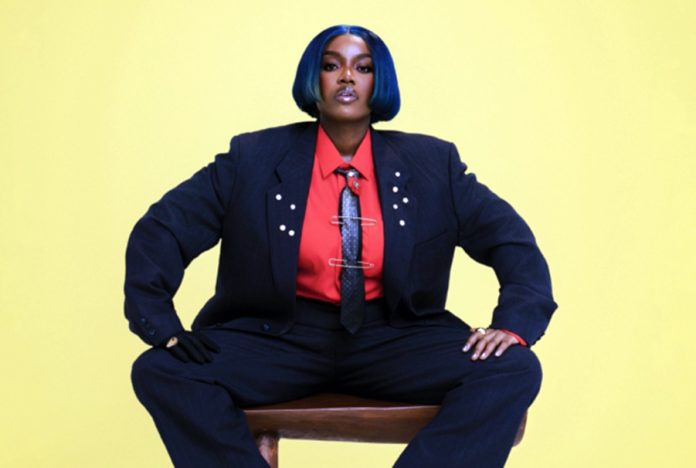
Gyakie

Ghanaian singer Gyakie’s latest single “Sankofa” has debuted on the Billboard U.S. Afrobeats Top 50chart, marking her first appearance on the prestigious international list.

The song also ranks in the Top 5 Trending videos on YouTube in Ghana, solidifying its local and global appeal.

Lifted from her upcoming debut album After MidnightSankofa has rapidly gained momentum just weeks after its release, amassing millions of streams across digital platforms.

This chart breakthrough adds to Gyakie’s growing international profile, further establishing her as one of Africa’s most dynamic female voices. Known for her genre-blending sound and lyrical depth, she continues to bridge cultures through music.

The song’s vibrant visuals and empowering message have contributed to its viral success on YouTube, where it continues to resonate with fans.

With After Midnight expected later this year, Sankofa’s early success signals a strong start to what could be one of 2025’s most talked-about African music projects.

“Sankofa” is currently available on all major streaming platforms.

Credit: myjoyonline.com

Earthquake sparks escape of 216 inmates from Pakistan prison

0
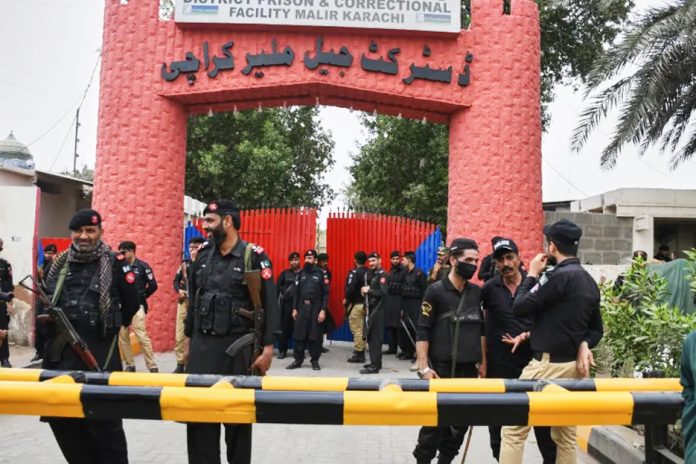
Police and paramilitary soldiers stand guard outside the Malir prison

More than 200 inmates have escaped from a prison in Pakistan after they were moved from their cells for safety amid earthquake tremors, officials have said.

Several dozen of the prisoners that broke out of the jail in Karachi were quickly recaptured, police said on Tuesday, but at least 130 are understood to remain unaccounted for. Authorities added that raids are under way to apprehend those still at large.

Of the 216 prisoners who had fled from Malir prison during the night, 78 had been recaptured, Kashif Abbasi, a senior police official, told the AP news agency. He stressed that none of the escaped prisoners were convicted fighters.

Escapes are not common from Pakistani jails, which have stepped up security measures since an attack on a prison by the Pakistani Taliban in the town of Dera Ismail Khan, which freed hundreds of inmates.

One prisoner was killed and three security officials were wounded in a shootout that developed amid a bid to put one of the escapees back into custody.

Zia-ul-Hassan Lanjar, home minister for Sindh province, said the jailbreak happened while prisoners were removed from their cells for safety during the tremors. Once outside their cells, a group of inmates attacked guards, seized their weapons and opened fire.

In comments carried live on local TV news channels, Lanjar said the prison break was one of the largest ever in Pakistan, the Reuters news agency reported.

Credit: aljazeera.com

South Korea’s Lee Jae-myung projected to win presidential election

0
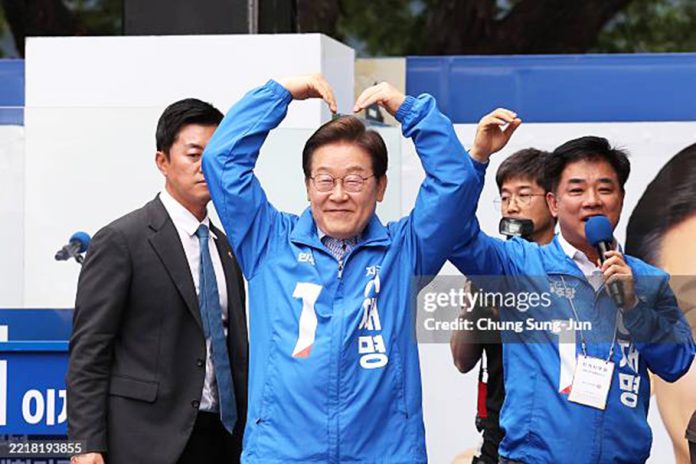
The Democratic Party's Lee Jae-myung

Liberal Lee Jae-myung looks set to win South Korea’s snap presidential election, with exit polls suggesting he enjoys a significant lead.

One exit poll conducted by South Korea’s three major TV stations – KBS, MBC and SBS – suggested Lee will obtain 51.7 percent of the votes cast during Tuesday’s election, which was called to find a successor to Yoon Suk-yeol, the conservative who was removed from office in April over his ill-fated imposition of martial law late last year.

His nearest rival, conservative candidate Kim Moon-soo, trailed with 39.3 percent in the projection.

Another poll by MBN projected Lee will win 49.2 percent of the vote against Kim’s 41.7 percent, according to state news agency Yonhap.

The winning candidate is due to take office as soon as Wednesday, with the unusual circumstances having seen the usual two-month transition period dismissed.

Applause and cheers filled the situation room of the National Assembly, where Democratic Party officials were gathered as the result of the exit poll was announced.

Kim’s poor showing was not helped by the former Yoon ally’s failure to convince a third-party candidate, Lee Jun-seok of the Reform Party, to unify and avoid splitting the right-wing vote.

Al Jazeera’s Jack Barton, reporting from Seoul, said Kim also struggled to distance himself from the scandal around Yoon. The impeached former president is now facing a criminal trial for insurrection.

“He is seen as a Yoon loyalist,” Barton said.

The long-running crisis around Yoon helped mobilise voters, with turnout running at about 77.8 percent by late afternoon, officials said – the highest in nearly two decades. That could bode well for the winner of the polls, who needs a solid mandate after the political turmoil of the last six months.

Credit: aljazeera.com

Dutch government collapses after far-right leader quits coalition

0
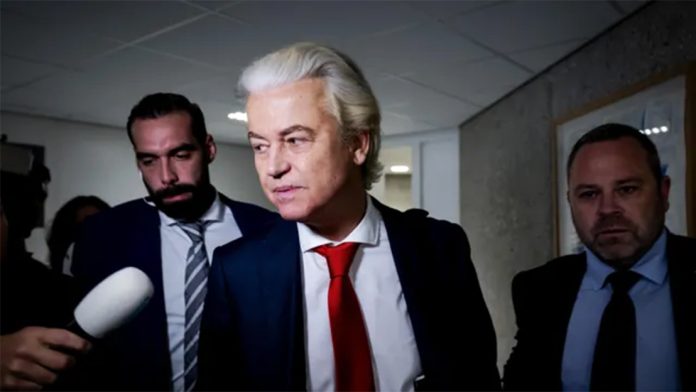
Geert Wilders heads the far-right, anti-immigration Freedom Party

The Dutch government has collapsed after Geert Wilders withdrew his far-right party from the governing coalition, less than a year after it was formed.

Prime Minister Dick Schoof confirmed he was stepping down on Tuesday, and is expected to offer the resignation of the cabinet to King Willem-Alexander before the end of the day.

In televised remarks following an emergency cabinet meeting, Schoof said Wilders’ decision to withdraw the support of his PVV party was “irresponsible and unnecessary”.

With the Nato summit due to be held in the Hague at the end of the month, it is likely that Schoof’s ministers will remain in power in a caretaker capacity until a date is set for the Netherlands to return to the polls.

Schoof had made a last-minute appeal to coalition party leaders on Tuesday morning, but the meeting lasted just one minute before Wilders walked out, ending the coalition.

Wilders had asked for 10 additional asylum measures, including a freeze on asylum applications, halting the construction of reception centres and limiting family reunification.

“No signature for our asylum plans. PVV leaves the coalition,” said Wilders on X.

There was shock and anger among political leaders, many of whom pointed out that several of Wilders’ demands were similar to policies already in the coalition agreement, and that they would not stand in the PVV’s way to implement them.

Many of the additional proposals put forward by Wilders had been dismissed during coalition talks because of legal concerns.

Wilders’ decision has put an end to an uneasy governing coalition which was born in July 2024 after months of political wrangling following elections the previous year.

Credit: bbc.com

Ukraine strikes bridge connecting Russia to Crimea with underwater explosives

0
An image released by the SBU showed damage to the Crimean Bridge

Ukraine said on Tuesday that it had hit the bridge connecting Russia and the occupied Crimean Peninsula with explosives planted underwater, in its third attack on the vital supply line for Moscow’s forces since the full-scale war began in 2022.

Ukraine’s security service, the SBU, said on Telegram that its agents had mined the piers of the road and rail Crimean Bridge, also called the Kerch Bridge, and detonated the first explosive at 4.44 a.m. Tuesday. The whole operation took several months, it added.

The agency said it had used 1,100 kilograms of explosives which “severely damaged” the underwater pillars supporting the bridge.

Russian officials did not immediately respond to Ukraine’s claims. Traffic on the bridge has been temporarily suspended, the bridge operator announced on its official Telegram account.

Although the scale of the damage was not immediately clear, Tuesday’s attack is the latest example of the SBU’s attempts to blindside Moscow and demonstrate that there are costs to continuing its war.

Built after Russia’s annexation of Crimea in 2014, Putin opened the bridge in 2018. The project cost around $3.7 billion.

Credit: cnn.com

2 men imprisoned for stealing television 

0
Accra Circuit Court

A Circuit Court in Accra, presided over by Her Honour Susana Eduful, has sentenced two men, Isaac Bortey, alias “Brown” and David Abu Bonnah, to three months’ imprisonment each, after they pleaded guilty to charges of unlawful entry, stealing and dishonestly receiving.

The incident occurred on May 17, 2025 at Nungua in the Greater Accra Region.

According to the prosecution, Isaac Bortey, a 28-year-old factory hand, unlawfully entered the premises of one Vida Lomotey, a security officer, at about 3:16 a.m. and stole a black 32-inch Samsung television set, valued at GH¢1,500.00.

Bortey, who had no lawful authority to be on the property, removed the wall-mounted television, while witness Albert Alabi Tsokosi, a caretaker in the complainant’s house was asleep in an adjoining room.

The theft went unnoticed until later, when the complainant, with assistance from another witness, Ebenezer Badu, identified and arrested Bortey on May 28, 2025.

He was subsequently handed over to the police. During interrogation, Bortey admitted to the offence and revealed that he had sold the stolen television to 52-year-old David Abu Bonnah, a trader, also residing in Nungua. Abu Bonnah was arrested on May 30, 2025 following investigations.

Both men were charged under the Criminal Offences Act, 1960 (Act 29). Bortey faced two counts: unlawful entry, contrary to Section 152 and stealing, contrary to Section 124(1), while Abu Bonnah was charged with dishonestly receiving stolen property, contrary to Section 147.

In court, both accused persons pleaded guilty simpliciter.

In delivering judgment, Her Honour Susana Eduful noted that the convicts were first-time offenders and took into account the value of the stolen item.

Consequently, she imposed a custodial sentence of three months on each of the accused.

The court emphasised the need to deter similar offences in the community while balancing justice with leniency for first-time offenders.

Tobacco-related diseases kill 8m people annually –WHO

0
Dr. Fiona Braka, World Health Organization

Dr. Fiona Braka, World Health Organisation (WHO) Country Representative to Ghana, says tobacco-related diseases are responsible for the deaths of approximately eight million people, including one million, who die from exposure to secondhand smoke globally each year.

This equates to one death every four seconds because of tobacco use or exposure.

She said this at the launch of the 2025 World No Tobacco Day celebration organised by Food and Drugs Authority (FDA) held in Ho, on Monday.

Dr. Braka expressed concern over the increasing use of flavoured tobacco and nicotine products, which were particularly attractive to young people due to their sweet taste, modern designs and appealing packaging.

“These products are a trap,” she said, adding “They are designed to mislead, to addict and to harm.”

She emphasised that each year, the global campaign served as a stark reminder of the devastating health impacts of tobacco use and the aggressive marketing strategies of the tobacco and nicotine industries aimed at recruiting a new generation of users.

According to WHO data, an estimated 37 million adolescents aged 13 to 15 are already using tobacco products worldwide.

Content promoting e-cigarettes and nicotine devices has amassed over 3.4 billion views on social media, reflecting the industry’s relentless efforts to target youth.

Dr. Braka noted that Ghana was not immune. The 2023 Ghana STEP survey indicates that 4.8 percent of adults currently use tobacco products, with usage significantly higher among men.

Even more alarming is the 7.8 per cent prevalence of shisha use, which disproportionately affects young people and women.

She outlined WHO’s support to Ghana’s tobacco control efforts, which includes strengthening the National Tobacco Track and Trace System to combat illicit trade, supporting the development of a roadmap for implementing the Protocol to Eliminate Illicit Trade in Tobacco Products, Providing technical guidance for amending the Public Health Act (Act 851, Part 6), Facilitating the design of graphic health warnings, conducting public awareness campaigns and national baseline surveys.

She, however, stressed the need for further action and called on Ghana to ban all flavours and flavour descriptors in tobacco and nicotine products, eliminate accessories that bypass flavour bans, enforce plain packaging laws, prohibit misleading terms like “mild” or “light”, scale up cessation services in line with WHO treatment guidelines, strengthen enforcement of Article 5.3 of the WHO Framework Convention on Tobacco Control (FCTC), which protects policies from tobacco industry interference.

“Ghana must rise to the challenge. We must unmask the appeal of these harmful products, protect our children, and build a society where health is valued above profit,” she urged.

Dr. Olivia Boateng, Director of Tobacco and Substance Abuse at the FDA, said the national tobacco use rate stood at 4.8 per cent, a relatively low figure, but there were challenges, especially with emerging products like shisha and electronic nicotine delivery systems (ENDS).

She explained that among tobacco users, 9.3 per cent are men and only 0.3 per cent are women, particularly for combustible products. However, for shisha and ENDS usage is higher among young females, at around 9.3 per cent.

“There is a dangerous misconception that flavoured products like shisha are safer,” Dr. Boateng said.

“But they contain nicotine and over 7,000 harmful chemicals, including carcinogens.” She emphasised that ENDS were banned in Ghana, but they continued to enter the market through unauthorized routes.

She said the FDA conducted surveillance, raids, and market inspections to seize unapproved products and prosecute offenders and public education campaigns to counter misinformation.

Dr. Ruby Biaku, representing the Pharmaceutical Society of Ghana (PSGH), noted that substance abuse, including tobacco use, was a critical public health concern that directly involved the pharmaceutical sector.

She said PSGH had collaborated with the FDA in training pharmacists to prevent misuse of controlled medicines and raise awareness about tobacco’s health risks.

Public education initiatives by the Society extended to tertiary institutions, where students were empowered with knowledge on the dangers of tobacco and substance abuse.

“These efforts are crucial in preventing non-communicable diseases and promoting informed decision-making among youth,” she added.

Dr. Hafez Adam Taher, Acting Director for Technical Coordination at the Ministry of Health, speaking on behalf of the Minister, highlighted the government’s dedication to reducing tobacco use through bold regulatory actions.

Ghana, he said, had ratified the WHO FCTC and enacted policies including, Public Health Act, 2012 (Act 851), Tobacco Control Regulations, 2016 (L.I. 2247), Protocol to Eliminate Illicit Trade in Tobacco Products, Graphic health warnings, Ban on smoking in public places, Excise Duty Amendment (Act 1108, 2023) to increase the cost of tobacco products, and National Tobacco Control Strategy under WHO FCTC Project 2030

He also mentioned projects like the Tobacco Policy Action Fund for Africa (TOPAFA), which promotes smoke-free public spaces.

“Tobacco products are not glamorous—they are deadly. They do not enhance freedom—they entrap users in cycles of addiction,” he said.He assured that the government would continue to provide resources to the FDA and partners to enforce control measures.

He called on all stakeholders – health workers, civil society and the media to support and promote tobacco control messages across communities. “Together, let us unmask the deception of the tobacco industry and create a future where tobacco no longer has a place in our society,” he concluded.

From Michael Foli Jackidy, Ho

GNA

Gas, Bloating and Heartburn; Causes & Prevention

0
Heartburn

Bloating and passing gas can be uncomfortable and embarrassing. Here’s what you need to know.

What is gas?

Gas is a normal part of healthy digestion. Air that is in your digestive tract is either released through your mouth as a burp or through your anus as gas. You typically pass gas 13 to 21 times a day.

What causes gas?

Gas is created when you swallow air, such as when you eat and drink. But it’s also a byproduct of the breakdown of food. Some foods cause more gas than others. You may also be more sensitive to particular foods and may have more gas when you eat them.

Taking some medications can also cause gas.

Which foods cause gas?

You’ve probably noticed you feel gassy after eating certain foods. Cut back on the common culprits:

  • Apples
  • Asparagus
  • Beans
  • Broccoli
  • Brussels sprouts
  • Cabbage
  • Cauliflower
  • Milk and dairy products
  • Mushrooms
  • Onions
  • Peaches
  • Pears
  • Prunes
  • Wheat

What causes bloating?

When gas builds up in your stomach and intestines, you may have bloating – swelling in your belly and a feeling of fullness. It may happen to you more often if you have:

  • A stomach infection
  • Irritable bowel syndrome (IBS). This digestive condition causes stomach pain, cramping, and diarrhea or constipation.
  • Celiac disease. When people with this condition eat gluten, their bodies produce antibodies that attack the intestinal lining.
  • Hormonal changes that happen around women’s periods
  • Constipation

While bloating is usually just uncomfortable, it can sometimes cause pain in your belly or sides.

How can I reduce gas and bloating?

Diet and lifestyle changes can make a big difference:

  • Cut back on fatty foods.
  • Avoid fizzy drinks.
  • Eat and drink slowly.
  • Quit smoking.
  • Don’t chew gum.
  • Exercise more.
  • Avoid foods that cause gas.
  • Avoid sweeteners that cause gas such as fructose and sorbitol. They are often found in candies, chewing gum, energy bars, and low-carb foods.

Heartburn

What is heartburn?

Heartburn, sometimes called acid indigestion, is a painful, burning feeling in the middle of your chest or the upper part of your stomach. The pain, which can also spread to your neck, jaw, or arms, can last just a few minutes or stick with you for hours.

What causes heartburn?

There’s a muscle at the entrance of your stomach, called the lower esophageal sphincter (LES), that acts like a gate: It opens to let food move from your esophagus to your stomach, and it shuts to stop food and acid from coming back out.

When the LES opens too often or isn’t tight enough, stomach acid can rise up into the esophagus and cause the burning feeling.

What triggers heartburn?

Triggers vary from person to person, but you may be more likely to get heartburn when you:

  • Overeat
  • Eat spicy, fatty, acidic, or greasy foods
  • Consume caffeine or alcohol
  • Smoke
  • Lie down shortly after you eat
  • Are under stress

Who gets heartburn?

Some people have a higher risk of heartburn, including those who are:

  • Smokers
  • Overweight
  • Pregnant
  • Have a hiatal hernia, where the stomach bulges up into the chest through an opening in the diaphragm

How should I change my diet to avoid heartburn?

You might have noticed that your heartburn gets worse when you eat or drink certain things. Here are a few that can trigger heartburn:

  • Alcohol
  • Chocolate
  • Coffee
  • Fatty or fried foods
  • Greasy foods
  • Onions
  • Oranges, lemons, and other citrus fruits and juices
  • Vinegar, hot sauces, and salad dressings
  • Peppermint
  • Sodas and other bubbly drinks
  • Spicy foods
  • Tomatoes and tomato sauce

Big meals can also set off heartburn. Instead of eating three big meals a day, try to eat several small meals throughout the day.

What else can I do to prevent heartburn?

Here are a few steps to try:

  • Lose weight if you’re overweight. Extra pounds put pressure on your stomach, forcing more acid up into your esophagus.
  • Wear loose clothing. Tight clothes that press on your stomach can trigger heartburn.
  • If you smoke, quit. Cigarette smoke relaxes the muscle that prevents acid from backing up into the esophagus. It also may increase how much acid your stomach makes.
  • Check your medicines. Regular use of anti-inflammatory and pain medicines (other than acetaminophen) contributes to heartburn.
  • Avoid high-impact exercise.

If heartburn bothers you at night:

  • Eat a light dinner and avoid foods that trigger your heartburn.
  • Don’t lie down for at least 2 to 3 hours after you eat.
  • Use blocks or books to raise the head of your bed by 4-6 inches. Or put a foam wedge under your mattress at the head of the bed. Sleeping at an angle will help stop acid from backing up into your esophagus.

Credit: webmd

Feature: NPP and Nyaho-Tamakloe

0
Feature

Dr. Nyaho Nyaho-Tamakloe is no stranger in the news. He would always come out to speak out his mind, without “tuuingsebi.To such a fellow as the adage goes, you do not “beg pardons,” when speaking the truth.

As a leading firebrand and member of the New Patriotic Party, he threw aside his blood-links with Jerry John Rawlings and bullshitted him, his party and political ideologies. During those days, he was cheered on by all free minded Ghanaians, particularly members of the New Patriotic Party. He was very hard on his cousin, Rawlings and his PNDC/NDC.

With that attitude, he portrayed to the world, who he really was. A no-nonsense person who could be described as principled enough to condemn his own mother publicly, as he would condemn a total stranger.

For the past sixteen or so years, he might have noticed something which was not just right, taking roots in the party he co-founded and loved so much. Trust him, he would never vent his anger and disappointment behind closed doors but will always go public.

No one can deny that the issues in the party during these times do warrant, questioning, criticisms and outright condemnations. The leadership of the party is pretending that nothing is going on wrongly, but unfortunately almost two million supporters, the party’s natural backbones, decided to raise their objections by staying away from the polling stations during the General Elections.

The NPP like any respectable institution had its Constitution to clearly show the path, members must collectively tow. Things went on well with blind discipline directing what are to be done and not to be done. A top member, KakraEssamuah, only had to praise another party’s flag bearer for a speech he made and that cost him his membership. This was clearly interpretated as “campaigning for a candidate not from the party.”

Yes, those were the days when there were men in the party and even people like Nyaho Nyaho-Tamaklo could be described as backbenchers among the no-nonsense disciplinary elders.

Yes, in NPP there were freedoms, one had freedoms of expression and action, but must neverbreak the rules.

Then things took an opposite turn. It began with the choice of running mate in 2008, which against the party’s constitution, someone who was not qualified anda total stranger as such, was hanged on the party. That article in the Party’s Constitution, Art. 13 (3) was waived off.

Earlier, after the 2007 primary, the floodgates of indiscipline were opened and some NPP members descended on those who initially supported an aspirant other than the flag bearer, and beat the living daylight out of them. Yes, those victims had freedom of association, but that freedom enslaved them.

An Establishment was formed, the communist way, where one was to obey all laws, but he or she must be discreet to know when and to whom such obedience was to be applied to. One could break the party’s laws and be branded a patriot only if by so doing he or she supported the decrees of the Establishment.

So, as things went, a blue-blooded anti-UP socialist, Freddy Blay, defected from his CPP to join the NPP and was crowned a top party executive position. This man who disliked the UP Tradition was now going to decide the fate of the NPP, and no-one talked, for he stood for the Establishment and the Establishment must be obeyed.

Suddenly, a party that stood against tyrants and dictators of this nation and the world, was put under oppressors’ rule and no one could even cough. Did, I say no one? People like H.E. J. A. Kufuor, Paul Afoko, Sammy Crabbe and of course, Nyaho Nyaho-Tamaklo were among the vociferous micro-minority who spoke their minds against the wrong steps the party had taken, warning of disaster.Unfortunately, the Establishment had taken a sound footing, instilling fear into the party members and anyone seen or heard to be doing or saying anything against the system, was quickly branded a traitor and an enemy of the party, and treated as such.

The NPP which was a fine and classic example of democracy in Africa, suddenly became a perfect blend of a cocktail of dictatorship, autocracy, authoritarianism and oligarchy, what can simply be described as democratic dictatorship.

Then Paul Afoko, a true liberal democrat, became elected as national chairman, in 2014, to the shock and disbelief of the Establishment, when he beat its choice to third position.

Quickly, plans were put across to remove him, by any means possible, even if it meant breaking the party’s Constitution. As mandated, it is only the Electoral or Appointment Body that elected or appointed an officer that can remove him. When attempts to get the National Delegates Conference to do so, failed, the Establishment resorted to the National Council, and its wishes were granted. Then the former CPP member, Freddy Blay became acting national chairman. Now the Establishment had fully arrived.

Under his administration, painstaking efforts were made to make sure that every party officer, elected or appointed supported the Establishment’s course. In 2018, Freddy Blay was elected national chairman. This cost a minister, Hon. OtikoDjaba, her position in government when she opposed the idea that full support must be given to Freddy to win the chairmanship.

So, it turned out that the Seat of Government controlled the party and no one could voice out against this; no one except, Dr. Nyaho Nyaho-Tamaklo.

In the 2022 national delegates conference, Steve Ntim won, after five attempts and many thought true democracy would once again, smile down on NPP.

Justin Kodua, the new General Secretary started off by warning against party officers and appointees campaigning for presidential aspirants. But under his watch, a lot of such officers, openly endorsed Bawumia and nothing happened to them, but anyone who did same for Alan Kyerematen was immediately suspended.

Kodua, again, came out to calm party members down by stating that all members who left with Alan were still to be considered NPP members. He made an about-turnand came back expelling them.

It clearly showed that the NPP national executives were not in charge of the party. Only a few people could decide what should be done, who should be picked as candidates and many others. With no elder to hold the party, almost two million party supporters, decided that with Alan out, NPP was not worth their votes. Unfortunately, Alan was not strong on the ground, so they decided never to go to waste time going to the polling station.

It is how far the NPP has come. No one in the driver’s seat to drive the course of the party to the right direction. Twice, in 2020 and 2024, the party had to set up committees to unravel why it performed poorly in the elections. And twice, the reports were kept away from the stakeholders. So, who is in charge? Who wants to keep things away from members?

This could probably include the reason why Nyaho Nyaho-Tamaklo came out recently to describe the party as one without leadership.

For saying that, Nyaho Nyaho-Tamaklo was described by Justin Kodua as one with a disruptive voice, who instead of wisely counselling the rank and file, he makes statements and comes out with public postures which are not helpful to the party’s reorganisation.Justin threatens to strip off Nyaho Nyaho-Tamaklo’s founding father status.

Interestingly, with Nyaho Nyaho-Tamaklo’s firebrand nature and desire to speak out the truth, can Justin Koduaorany party executives allow him to counsel the members? The proposal to demote Nyaho-Tamaklo will not stop him, rather he will start building a strong fan base from the two million supporters who stayed away from the polls.

During the old days, he was cheered on by the NPP when he fired shots at the opponents, but today the same party, considers him a course-trouble. The only way to shut his mouth is for the party to rebrand and get back to the good old days. The Establishment must be dismantled and the NPP would bounce back, as strong as ever.

Hon. Daniel Dugan

Feature: June 4: A Revolution That Divided A Nation

0
Feature

General Kutu Acheampong, gatecrash into the scene on January 13, 1972, some fifty-three years ago, after overthrowing a constitutional government.

Acheampong’s coup was hailed by Nkrumah who remarked that even though he disapproved of coups he was happy that the socialists were back. Acheampong ruled Ghana for only six years and was overthrown in a palace coup on July 5, 1978. Yet his achievements surpassed Rawlings who ruled Ghana for nineteen uninterrupted years.

Acheampong embarked on Operation Feed Yourself, to boost self-sufficiency in food production; under him, Ghana shifted from imperial to metric system on September 1, 1975; Ghana changed traffic from left-hand to right-hand on August 4, 1974; Acheampong embarked on National Reconstruction to promote employment and on infrastructural development with the aim at modernizing the nation, among others.

Acheampong built modern townships like Dansoman and Teshie Nungua Estates and he also begun the construction of the second hydro-electric project, the Kpong Hydro-Electric dam, located at Natriku, near Akuse, before he was overthrown.

The economy under Acheampong could not be said to be terrible in comparison to today’s real term. When he took over the dollar was $1.00 to N¢1.80, but he revalued the currency to $1.00 to N¢1.28. In February 1973, the US dollar was devalued but Acheampong decided to maintain the value of the cedi in terms of gold and our currency appreciated to $1.00 to N¢1.15. In March 1973, he reverted to the old name of our currency, removing the ‘New,’ from it. After his overthrow the cedi was devalued to $1.00 to ¢2.75. So, we may safely say that the cedi depreciated by 9.5% during Acheampong’s six and a half years in office.

Unemployment rate was on average 5.64% and inflation rate was 10.2% in 1972 and rose to 73.09% in 1978, averaging 29.54%.

The economy at that time faced some challenges with scarcity of products on the market. Politically, Acheampong wanted to legally extend his stay with the Union Government concept, but faced serious opposition. During the referendum, it was revealed that absolute rigging took place to support the “Yes” vote. That rigging, was however nothing compared to what took place during the One-Party state referendum during the first republic.

Acheampong started making enemies and so in July 5, 1978, his own colleagues toppled him and went ahead to make all the necessary preparations to return this country to constitutional rule, when Rawlings struck on June 4, 1979.

Clearly, the question is, was June 4, necessary? As stated in a book by Col. Abaka Jackson and from interviews granted Major (Rtd) Boakye Gyan, the socialist boys in the military had all along been planning to overthrow any government at all and re-instate Nkrumahism in Ghana. So, any such coup would not be intended to remove a failing government. This had been confirmed by some other serving military personnel at that time.

And June 4, according to Major (Rtd) Boakye Gyan, came too early; Rawlings jumped the gun. The Nkrumaists who were junior officers at that time were waiting to be promoted to senior officers, in a matter of a few more years, then they would strike. But Rawlings could not wait. The position taken by the Armed Forces Revolutionary Council was not to kill any officer. But Rawlings first sanctioned the murder of General Acheampong and General Edward Utuka on June 16, 1979.

His colleagues were in rage and some warned him not to go ahead with any more killings.

According to sources, most of the other ranks who benefited from the generosity of Acheampong, were not too pleased and demanded that more officers should then be killed. And so, still against the decision of his colleagues on the AFRC, Rawlings sanctioned the murder of six more, including Gen. Afrifa who was cleared of any corruption and stood and won the Mampong North parliamentary seat on June 18, 1979.

Ghanaians were made to understand that the crimes the fallen heroes committed included over-throwing constitutional governments, using their official position to borrow money from the bank, among other unconfirmed acts of corruption.

In the case of Afrifa, Rawlings claimed he used money meant for organising the Movement for Freedom and Justice to dismantle the Union Government’s idea, to push his political agenda. Gen Utuka on the other hand had to be killed for ethnic balance. Rawlings said he did not want the coup to be seen as ethnic cleansing. So, Utuka who was not an Ewe, but from the Volta Region, had to be killed to make people believe that two Ewes, the other was, Joy Amedume were on the list of the murdered officers.

So, in the strong breeze of the revolution, Ghanaians were made to believe that June 4, came to save this nation. However, about forty-three years later, Rawlings, knowing he was about to go and account for his stewardship on earth, made a confession, that all the eight officers were not guilty of any crime but had to be murdered as sacrificial lambs to spare the lives of the real crooks. He admitted that he knew this from Day One and it had been haunting him, ever since.

Today, Rawlings had left behind a nation very much divided on this June 4 issue. Based on his own admission on television, that he knew he was killing innocent people, some Ghanaians, rightly called him a murderer, others, even including full blooded Ewes, whose kinsman, Joy Amedume, was also murdered, would not take kindly to this label placed on Rawlings.

So, today is June 4 and it is most likely that some Ghanaians would like to remember it in grand style as the day of independence is remembered. Speeches will be made to justify the course of June 4, 1979 and we will be told of the economic and administrative mess Ghana was in, which warranted that coup.

Things that we will not be told include, the fact that Ghana was on its way to return to constitutional rule and nothing would be mentioned about that two-part Rawlings’ interview on Asaase FM, which he finally exonerated the eight officers, he murdered.

All across the country, in four Akan communities, people will mourn their loved ones and curse Rawlings. In Likpe Mate, Oti region, there shall be the same, as in Navrongo, Keta and Accra. So long as June 4, appears on the calendar, Ghanaians will remain divided, for on that day, an Abimelech made himself a king.

Rawlings came back against his word when in 1981, he overthrew a constitutional government; he then ruled for nineteen years, more than thrice Acheampong did, but he heralded us into the worst economic crisis with the cedi depreciating over 260,000% from ¢2.75 to $1.00 in 1981 to ¢7,631.00 to $1.00 in 2000. Inflation could break deep into the 100% barrier and unemployment rate cruised into the mid double digits.

His developmental projects could not match Acheampong’s and yet he is imposed on Ghanaians as our hero.

And of course, he had his hero who he would even murder anyone who tarnished his name. After describing Nkrumah as someone who could only give us a national anthem and a national flag, he went on to describe General Kotoka as a hero for removing Nkrumah and restoring democracy. And this is the one the Nkrumaists flocked to and called him Junior Jesus.

By the way, as we move on, June 4, shall forever divide this country.

Hon. Daniel Dugan

The Ghanaian Chronicle