A 26-year-old labourer, Kelvin Sevor, has been sentenced to six months in prison by the Accra Circuit Court after he failed to pay a total of GH¢6,600 in penalties and compensation for causing harm to a man he suspected of having an affair with his girlfriend.
Sevor, who resides at Mango Street, Kotobabi, was found guilty of causing harm to Isaac Bortey, a trader at the Texpo Market on Spintex Road, in an unprovoked machete attack.
The court, presided over by Her Honour Basilia Adjei-Tawiah, initially remanded Sevor into police custody on May 15, 2025, after he pleaded guilty to the offence. His conviction and sentencing were deferred until June 6, 2025.
Delivering judgment, the court convicted Sevor based on his own plea and sentenced him to a fine of 300 penalty units—equivalent to GH¢3,600—or in default, six months in prison. In addition, he was ordered to pay GH¢3,000 in compensation to the victim to cover medical expenses. Having failed to meet these financial obligations, Sevor is now serving the custodial sentence.
According to ,Chief Inspector Daniel Appiah–Ofori, the offence occurred on March 4, 2025, at Baatsonaa in the Greater Accra Region. A day earlier, the complainant, Isaac Bortey, had received threatening messages from Sevor, who accused him of having a relationship with his girlfriend, identified only as Sylvia.
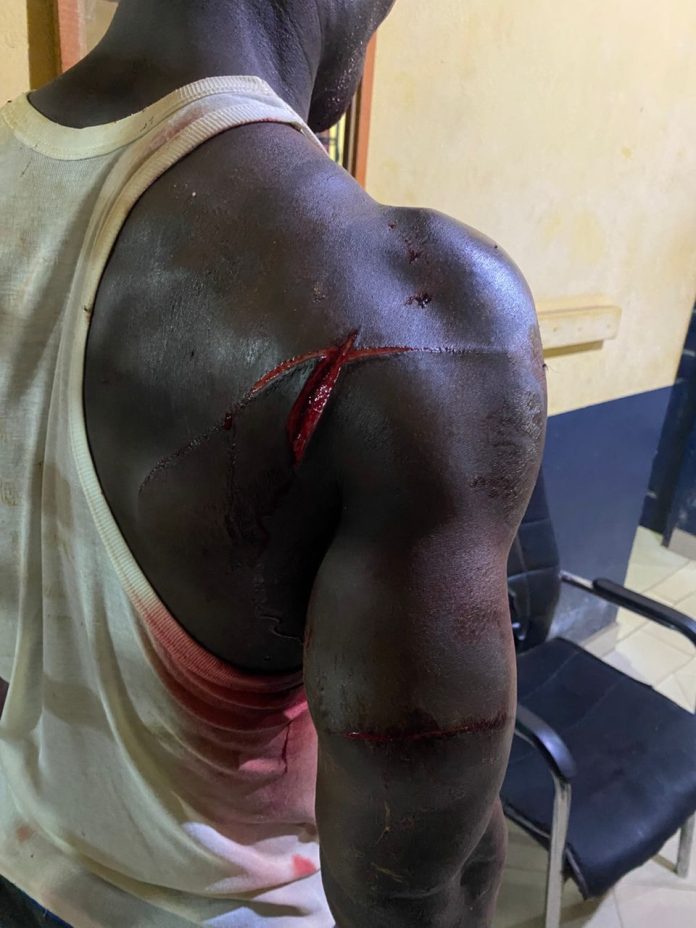
The following morning, while Bortey was engaged in a conversation with another person, Sevor reportedly approached from behind and attacked him with a machete, inflicting serious wounds to his left abdomen and right arm. The incident, which occurred in the presence of eyewitnesses, was unprovoked.
Bortey, bleeding heavily, managed to report the matter to the police. He was issued a medical form and sought treatment while police launched a manhunt for Sevor, eventually arresting him at a hideout. Investigators later retrieved the weapon used in the attack from the scene and documented Bortey’s injuries with photographic evidence.
Sevor was charged under Section 69 of the Criminal Code, 1960 (Act 29), for causing harm, and subsequently brought before the court for prosecution.
The Accra Circuit Court, presided over by His Honour Kwabena Kodua Obiri-Yeboah, has remanded a 52-year-old steel bender, Kojo Senagbe, into police custody for allegedly causing grievous bodily harm to a 62-year-old ex-service Togolese national, Oliver Zinto.
Senagbe faces a charge of causing unlawful harm, contrary to Section 69 of the Criminal Offences Act, 1960 (Act 29). He pleaded not guilty when the case was called before Circuit Court 6 on May 21, 2025. The case has since been adjourned to June 18, 2025.
Incident Details
According to the prosecution led by Chief Inspector Belinda Asante, the violent incident occurred on May 10, 2025, at about 10:30 p.m. at Community 14 Annex, Lashibi, in the Greater Accra Region. Both the complainant and the accused reside in the same neighborhood.
The facts of the case indicate that the complainant, Mr. Zinto — a retired ex-serviceman and current carpenter — was walking home when Senagbe allegedly emerged from a pathway and ordered him to stop. Sensing danger, Zinto ignored the command and continued walking.
Senagbe then reportedly attacked him with a machete, inflicting multiple wounds on his scalp, left ear, arm, and back.
Despite his injuries, Mr. Zinto mustered the strength to disarm his attacker during the struggle.
Bystanders rushed to the scene, prompting the accused to flee.
The injured man was given first aid and later received a medical form from the Klagon Police for hospital treatment. A formal complaint was lodged at the station.
The accused was arrested two days later, on May 12, 2025. In his caution statement — given in the presence of an independent witness — Senagbe allegedly admitted to the attack, claiming he acted out of jealousy, accusing the victim of taking over his girlfriend.
Investigators later retrieved the machete used in the assault. The accused was subsequently charged and brought before the court.
Court Proceedings
During the court appearance, Senagbe denied the charge. The prosecution presented its initial facts, and the court, considering the gravity of the offense, ordered that he be remanded in custody.
The case is expected to resume on June 18, 2025, as investigations continue and prosecution prepares its evidence.
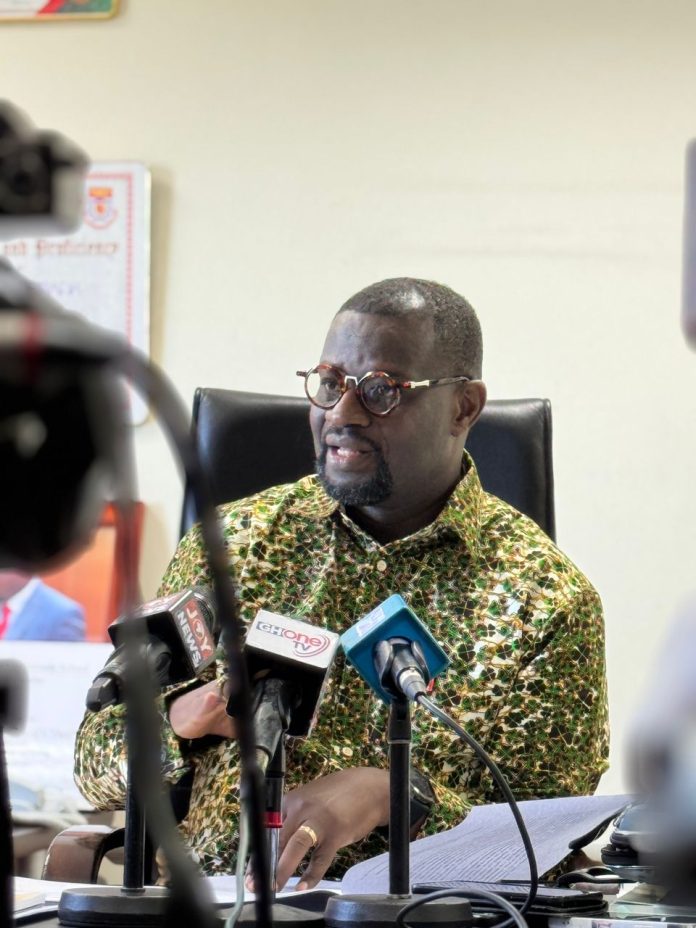
The Minority in Parliament has sharply criticized the government’s newly passed energy sector levy, describing it as a “predatory tax” that will inflict severe economic hardship on already burdened Ghanaians.
In a statement issued Wednesday, the Minority Caucus labeled the one-cedi per litre fuel levy as “callous, insensitive, and a midnight robbery,” arguing that it will further erode the purchasing power of citizens, inflate prices across sectors, and drain over GH¢475 million from Ghanaians’ pockets every month.
“This one-cedi increase is not a minor inconvenience; it’s a significant blow to household budgets and businesses nationwide,” the statement read.
“Fuel is a fundamental input across all sectors, and this tax will ripple through the economy, exacerbating inflation.”
The minority accused the government of breaching its own earlier promises.
In January, the Finance Minister had pledged that “tariffs will not be used to raise revenue” or reward the inefficiencies of the Electricity Company of Ghana (ECG).
According to the Minority, this new levy represents a complete reversal of that assurance, without any evidence that inefficiencies in ECG have been addressed.
“What concrete steps have been taken to fix ECG?” the Caucus questioned. “The government’s silence on this critical issue is deafening.”
The Caucus further challenged the justification that lower global fuel prices warranted the introduction of the tax, calling it “simplistic and misleading.”
They pointed to the volatility of the international oil market and asked what the government’s plan would be if prices began to rise again.
“This is not leadership. It’s economic betrayal,” the statement said.
The levy, they warned, was pushed through Parliament under a certificate of urgency “with the speed of light,” denying meaningful debate and transparency.
The process, they said, “epitomizes bad governance and contempt for the people.”
Adding to the frustration, the Minority highlighted recent increases in electricity (14%) and water tariffs (3%), as well as the recent persuasion of commercial drivers to reduce transport fares — only to be hit later with the fuel tax.
“This levy is a stab in the back to drivers and the Ghanaian people,” they noted. “It follows a pattern of broken promises, dishonesty, and manipulation.”
The Minority also condemned what they called a glaring double standard: while ordinary Ghanaians are being taxed, there has been no move to cut perks such as free fuel for government appointees.
“If the government genuinely cared, they would start by cutting their own luxuries,” the statement said. “This is not shared sacrifice. This is selective suffering.”
The Minority is calling for the immediate withdrawal or reduction of the levy, urging the government to instead focus on transparent and efficient reforms in the energy sector.
They also announced plans to mobilize Ghanaians for street protests against what they describe as a “wicked” policy.
The Minority Caucus has charged the Inspector General of Police (IGP), Christian Tetteh Yohunu, to uphold the High Court’s directive and cooperate fully with the Electoral Commission (EC) of Ghana by swiftly deploying adequate security personnel to its designated collation center for the collation and declaration of the 2024 Ablekuma North Parliamentary Election.
This, they noted, would ensure an enabling environment for the peaceful and lawful conclusion of the electoral process, as the people have long been denied their constitutional rights to representation in the legislature.
“The continued disenfranchisement of the people of Ablekuma North represents not only a denial of their constitutional rights to representation, but also an affront to the democratic principles enshrined in the 1992 Constitution,” the group contended.
“This crisis erodes public trust in the integrity and independence of state institutions, particularly the Ghana Police Service.”
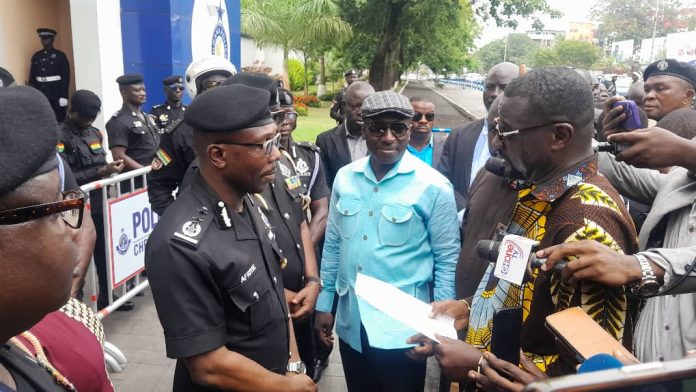
The Minority Caucus marching to the Police Headquarters
The Minority Caucus, which is the parliamentary wing of the opposition New Patriotic Party (NPP), made this observation in a petition that was presented to the IGP in Accra on Wednesday, June 4, 2025.
The petition was submitted after a peaceful march from the precincts of Parliament through the Gamel Abdul Nasser Avenue to the National Headquarters of the Ghana Police Service. The exercise temporarily caused vehicular traffic disruptions.
During the march, the NPP MPs sang patriotic songs before reading out the content of the petition and subsequently presenting it to DCOP Appiah Afriyie, who received it on behalf of the IGP.
The group was joined by the NPP parliamentary candidate for the Ablekuma North constituency and a former deputy Ambassador to the People’s Republic of China, Nana Akua Afriyie.
The Minority Chief Whip, Frank Annoh-Dompreh, who read out and presented the petition, emphasised that “the Ghana Police Service must not be perceived as the institution standing in the way of democracy,” underscoring that “democracy delayed is democracy denied.”
He added, “We urge your leadership to act with urgency and in good faith to restore the people’s confidence in Ghana’s democratic process.”
He was accompanied by the Minority Leader, Alexander Afenyo-Markin, 2nd Deputy Speaker of Parliament, Andrew Asiamah, Deputy Whip, Alhaji Habib Iddrisu, 2nd Deputy Whip, Jerry Ahmed Shaib and other MPs.
Nearly six months after the 2024 Presidential and Parliamentary elections, the Electoral Commission of Ghana has yet to declare the official parliamentary results for the Ablekuma North constituency.
Results from about seven polling stations remain unaccounted for. The Electoral Commission initially attempted to conduct the collation process, but was obstructed due to reported threats and acts of intimidation at the collation center by unidentified individuals in military attire, leading to the suspension of the exercise.
The exercise was later carried out, but the outcome was declared unlawful, prompting an Accra High Court to order the election management body, in a ruling dated January 4, 2025, to complete the collation process. The court further directed the Ghana Police Service to provide necessary security to facilitate the exercise.
On January 17, 2025 the EC scheduled the continuation of the collation process and formally requested for police protection.
However, their request was not honoured due to cited intelligence concerns, leading the EC to suspend the exercise again.
The absence of security led to the invasion of the collation centre by party supporters, including unidentified men in military uniforms, forcing EC officials to abandon the process.
The EC has since expressed its readiness to proceed with the exercise, but continues to face a lack of cooperation from the Ghana Police Service, as confirmed in official communications.
A subsequent high-level meeting involving the IGP, the Electoral Commission and the Election Security Task Force reaffirmed the importance of concluding the collation. Yet, no action has been taken to date.
To the Minority Caucus, the conduct of the Ghana Police Service amounts not merely to administrative failure, but also, constitutes a constitutional crisis and a grave affront to democratic governance.
“Under Ghana’s electoral framework, the Election Security Task Force (ESTF), chaired by the IGP, is responsible for security during the entire electoral process, including the collation of results,” the Minority Chief Whip noted.
“Yet, in this instance, the Task Force abdicated its duty at a critical moment, leaving the EC without protection and allowing the disruption of a fundamental democratic exercise.
“I trust that with our petition, your office will act swiftly and decisively to safeguard the public interest and uphold the rule of law.”
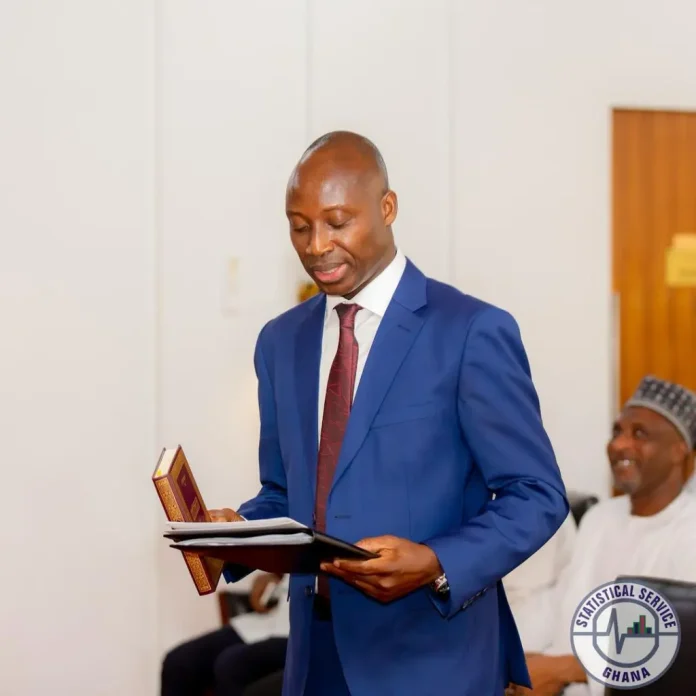
The rate of inflation slowed to 18.4 per cent year-on-year in May, compared with 21.2 per cent in April 2025, marking the lowest rate since February, the Ghana Statistical Service said on Wednesday.
This is the fifth straight year-on-year decline in inflation, a clear signal that price stability is returning to our economy.
Dr. Alhassan Iddrisu, the Government Statistician said the monthly inflation stood at 0.7 per cent, slightly down from 0.8 per cent in April, indicating short-term price stability.
He said the core inflation eased to 18.5 per cent, signaling moderation in underlying inflationary pressures.
The Government Statistician said the food inflation fell to 22.8 per cent; non-food inflation declined sharply to 14.4 per cent, while goods inflation remained higher (20. Per cent) than Services inflation (14.3 per cent), adding that Goods contributed 79 per cent to overall inflation.
He said non-durable goods drove Ghana’s inflation, contributing 10.1 percentage points to headline inflation of 18.4 per cent.
He said services inflation in Ghana recorded a modest 0.7 per cent rise in May 2025, contributing 0.19 percentage points to the headline rate.
Locally produced goods inflation dropped more than imported items (down by 3.5 and 1.3 percentage points respectively).
He said top inflation contributors include yam, smoked herring, fish, vegetable oil, and ginger, mostly food items.
Upper West recorded the highest inflation (38.1 per cent) with high food, education and utilities inflation, meanwhile Ahafo Region posted the lowest at 14.5 per cent with 15 out of 16 regions recorded year-on-year declines.
He said the overall trend showed sustained disinflation, possibly influenced by strengthened cedi; tighter monetary policy; fiscal consolidation and positive market sentiments.
The Government Statistician said the Service remained cautiously optimistic that the trajectory would continue, offering relief to households and creating a more stable environment for businesses and investors.
He said with food inflation contributing almost 2/3 of the total inflation, households should adopt bulk purchasing, shared food buying, and consider local, in-season produce to reduce food costs.
He said households could also limit discretionary spending on items like restaurants (18.5 per cent inflation) and recreation.
”Given 20.1 per cent inflation in health, households should prioritise preventive care and take advantage of NHIS benefits to avoid high out-of-pocket expenses,” he added.
For businesses, he said, since local inflation was easing faster than imported inflation businesses could reduce cost pressures by sourcing locally and with high inflation in food and imported goods, businesses should strengthen local sourcing and reduce reliance on volatile inputs.
Dr Iddrisu said with disinflation underway, avoid sharp price hikes and build customer trust through transparent pricing and tailor distribution and pricing strategies to reflect regional inflation differences particularly in the north.
He said the government should continue to support macroeconomic policies that keep the cedi stable, reinforcing the disinflation trend.
He urged the government to implement targeted interventions in food logistics, utilities, and education access in high inflation regions such as the Upper West, which was still recording inflation above 38 per cent.
“Invest in post-harvest storage, transport infrastructure, and irrigation to stabilize food prices further and continue to protect vulnerable groups through expansion of targeted social protection in high-inflation regions and sectors, especially where food and education costs are rising,” he added.
He said the government must promote local production by supporting SMEs and agribusinesses to strengthen domestic supply chains and align monetary and fiscal policies through collaboration with the Bank of Ghana to monitor inflation drivers and evaluate the need for cautious monetary tightening if pressures persist.
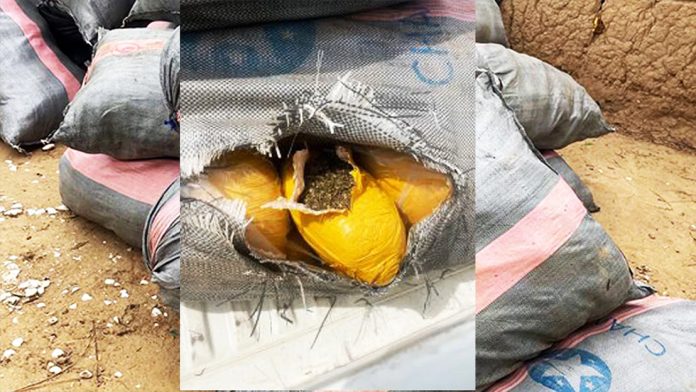
The Narcotics Control Commission (NARCOC) on Monday took possession of a massive consignment of cannabis valued at GHC2million (Two Million Ghana Cedis) from the custody of the National Intelligence Bureau (NIB) in Ho.
The cannabis
The cannabis, comprising 3,680 (Three Thousand Six Hundred and Eighty) slabs in 49 (Forty-Nine) bags have since been evacuated to the NARCOC Headquarters in Accra, amid heavy escort.
The substance was seized by NIB operatives exactly a week ago, Thursday May 29, 2025 at Zadolakope, a riverside community in the North Tongu District of the Volta Region.
According to The Chronicle’s dependable source at NARCOC, each slab has a street value of GHC300 (Three Hundred Ghana Cedis) in Ho and GHC500 (Five Hundred Ghana Cedis) in Accra.
The source continued that the NARCOC officials, before taking custody of the substance, conducted on the spot test which confirmed to be cannabis.
The Commission’s prompt response ensured the illicit substance is removed from circulation, protecting communities from its harmful effects.
The seizure, the official source went on, underscores the ongoing efforts to combat narcotics trafficking in not only the region but the entire country.
He named Kpandu Anfoega, Golokwati, Wegbe, Adidome and Dzemeni as some of the areas in the Volta Region, where the cultivation of cannabis is prevalent.
In the Eastern Region, Huhunya, Asesewa, Boso and Afram Plains also feature as hot beds.
The Bono East/West and Ahafo have not been missing in the roll call, The Chronicle gathered.
A 39-year-old administrator, Louisa Amoako Boadu, has been charged before the Dansoman Circuit Court for allegedly defrauding a Logistics Coordinator of nearly GH¢282,000 under the pretext of investing in a Vodafone scratch card business.
Louisa Boadu is facing a charge of defrauding by false pretence, contrary to Section 131(1) of the Criminal Offences Act, 1960 (Act 29).
The case is being heard by Her Honour Halimah El-Alawa Abdul-Baasit, with Chief Inspector Christopher Wonder leading the prosecution.
According to the brief facts presented in court, the complainant, Mr. Godfred Ofori, who resides at Odorkor Official Town and works as a Logistics Coordinator, was persuaded by the accused in January 2021 to part with GH¢281,880.
Louisa Boadu, who lives in Dansoman, allegedly claimed the funds would be used to invest in the Vodafone scratch card distribution business, a claim the prosecution says she knew was false.
Instead of following through on the stated investment, Louisa Boadu reportedly diverted the money into a pharmaceutical business venture without informing or obtaining the consent of Mr. Ofori.
The court also heard that Mr. Ofori secured part of the amount through loans from individuals at his workplace, believing Boadu’s promise to invest the money into the telecom business and repay it by a specific date.
However, she failed to meet the agreed deadline.
Following persistent efforts to recover the money, the complainant filed a report with the police on August 26, 2022.
Upon arrest and caution, Boadu admitted to receiving GH¢281,881.00 and having refunded only GH¢106,000.00. Despite numerous demands, she allegedly failed to return the outstanding balance of GH¢175,880.00.
After thorough investigations, she was charged and arraigned. However, Boadu was absent when the case was called on June 2, 2025.
The court has adjourned the matter to June 25, 2025, when she is expected to appear and answer to the charges.
Four individuals have been arraigned before the Dansoman Circuit Court for allegedly conspiring to illegally transport cocoa beans from Tepa in the Ashanti Region to Accra, without the requisite authorisation from the Ghana Cocoa Board (COCOBOD).
The accused, Kofi Boateng, a driver; Seth Kwabena Baffour, also a driver; and their respective driver’s mates, Joseph Yakubu and Amponsah Paul are facing two charges: conspiracy to commit a crime, to wit, transporting cocoa beans without authority and the substantive offence of transporting cocoa beans without authority.
The charges are in contravention of Section 23(1) of the Criminal Offences Act, 1960 (Act 29) and Section 15 of the Cocoa Industry Regulation Act, 1968 (NLCD 278).
According to the prosecution, led by Chief Inspector Christopher Wonder, the accused were arrested on May 30, 2025 at Dome Market in Accra, following a tip-off received by Patrick Ocansey, a Principal Service Officer with COCOBOD.
The two cargo trucks, with registration numbers GN 8967-17 and AS 4066-21 were found parked at the market, loaded with 159 and 198 bags of cocoa beans respectively.
Investigations revealed that the accused had concealed the cocoa with plantains, in an attempt to evade detection. They offloaded the plantains upon arrival at Dome, exposing the illicit cargo.
The accused allegedly claimed the goods belonged to one “Kwame,” but were unable to assist the police in locating or identifying the individual.
All four pleaded not guilty when arraigned.
Her Honour Halimah El-Alawa Abdul-Baasit, presiding over the case, granted bail to the accused with strict conditions:
Kofi Boateng (A1) was granted bail of GH¢500,000 with three sureties — two must be public servants earning not less than GH¢2,000 monthly and one must provide justification.
Seth Kwabena Baffour (A2) received a higher bail amount of GH¢650,000 under the same conditions.
Joseph Yakubu (A3) and Amponsah Paul (A4), both driver’s mates, were each granted bail of GH¢100,000 also with three sureties, including two public servants and one justification.
The court ordered all accused to deposit their Ghana Cards and report to the police every two weeks.
The case docket is to be referred to the Attorney General’s Office for further advice, as the quantity of cocoa involved exceeds the substantive prosecutor’s jurisdiction. The case has been adjourned to July 23, 2025.
The Member of Parliament (MP) for Abetifi, Dr Bryan Acheampong, has made it clear he is eyeing the presidency. He will, therefore, contest the upcoming presidential primary of the opposition New Patriotic Party (NPP).
The former Minister for Food and Agriculture under the erstwhile Akufo-Addo administration has made public pronouncements pointing out why he wants to contest for the presidential election.
In a video communication shared on Wednesday, June 4, 2025 Dr Bryan Acheampong spoke pidgin, indicating his readiness to connect with the youth, especially with the ‘street’, a terminology that resonates well with a large population of young adults on social media.
“But I want to focus on jobs, food security, youth development, safety and security and infrastructure,” he indicated, adding that a committee has been formed to go round and hear from the public on their vision for Ghana.
ALIGNMENT
Dr Bryan Achempong noted that his willingness to offer himself for service at the highest level stems from calls from people for him to step up for the role. However, he stated that considering the calls vis-à-vis his own vision, that of Ghanaians and his party, the NPP, there was the need for alignment.
The committee has one month to tour the country and speak with the public and the NPP to bring on board what their visions are and to be able to align them with his personal ideas and then submit a report.
“You know you have your own vision; Ghanaians have theirs, and the NPP too have their vision. So, you have to seek alignment for these things.
“So, I have formed a committee to talk to the party and Ghanaians to find some alignment between my vision and what will help the Ghanaians and the NPP,” he said.
REFLECTION
According to him, the NPP is at a point where it needs to reflect on the recent electoral defeat while acknowledging that something was done wrongly, resulting in Ghanaians voting for another party. He raised concerns about the blame games following the defeat, indicating that it could be detrimental to the future fortunes of the party.
“The election in 2024 did not go well. We have all seen the results. But, where we are, we need to reflect and see what Ghanaians did not like that made them not vote for us.
“At the moment everyone is talking, and there is no unity. It is not good for us. NPP, we have values,” he said in pidgin.
EXPERIENCE
Dr Bryan Acheampong noted that his contributions to the development of the party, from being a grassroots organiser, working at the party office and becoming a parliamentary candidate, an MP and then a cabinet minister, as well as a party financier, have given him enough experience.
He said it was out of the experience that his vision for the development of Ghana grew, which he intends to “share with the party and Ghanaians.”
UNITY
He made a passionate appeal to supporters of the NPP to remain calm in this tumultuous moment following the electoral defeat. He was confident the party would recover from the defeat and stage a comeback, but called for unity to achieve success.
“I believe that the NPP will come back. I beg you, people of NPP. I believe that the party will win the election again, but we have to come together for the party to stand united to win. Our hearts and minds should be one.
“How we talk to each other is very important. We have to unite in the party for Ghanaians to see that we are united to give us power again. But let’s wait for the committee. After one month, you will hear from me. This is your brother, Bryan,” he ended.
Most interviewers appreciate candidates who come prepared with thoughtful questions. However, while your questions are important, the strategic timing of when you ask them is more crucial.
You’ve likely heard, “Timing is everything.” This is especially true in interviews. Asking about work-life balance too early—during the initial (introductory) or second interview—can lead to elimination. Sure, work-life balance matters, but raising it early screams: “I just want to do the bare minimum!” “I’m not a team player!” “I’m already planning my escape.”
As a job seeker, understand that the hiring process is inherently a process of elimination, necessitated by many candidates vying for one role. Therefore, before you ask questions that answer, “Will this job serve my self-interests?” first, focus on establishing stickiness—a connection and trust. By demonstrating your awareness of the employer’s needs, something candidates you’re competing against are unlikely to exhibit; you increase the odds of your interviewer envisioning you as the ideal candidate for the role and the company.
Also, keep in mind that an interview is a sales meeting. Your initial and second interviews should revolve around selling yourself. Emphasizing the value you can bring—how you’ll generate revenue, solve problems, increase savings—distinguishes you from candidates more focused on WIIFM (What’s in it for me?).
The exception is the “money question.” Ideally, you should know the salary range for the position. I always ask within the first five minutes of an initial interview, “To ensure we’re not wasting each other’s time, I’m looking for an annual salary of $X. Is that within the range for this position?” There’s no point in pursuing a job that won’t meet your compensation requirements. Save everything else for later, as those details are often negotiable.
During your first and second interviews, ask:
Discovery questions:
What’s the most important thing I should accomplish in my first 90 days?
What challenges might I face in this position?
Will my responsibilities change in the next six months to a year?
Can you tell me about the team I’ll be working with and my direct reports?
Clarification questions:
Can you elaborate on the day-to-day responsibilities of this role?
What specific skills or experiences are you looking for in the ideal candidate?
Please clarify the reporting structure for this position.
What’s the timeline for the expected projects or initiatives this role will be involved with?
Closing questions:
What am I not asking you that I should?
What is essential for success in this role and at [company]?
How is performance in this role measured and evaluated?
Is there anything valuable for me to understand about the role or [company] role that we haven’t discussed?
Regarding closing questions, the purpose of asking such questions is to create a selling opportunity to emphasize that you have the skills, experience, and confidence, a critical aspect of interview success that jobseekers underestimate, to do the job. If you don’t believe in yourself, then why should your interviewer?
For instance, if you ask, “What are the biggest challenges I will face in this position?” and your interviewer answers, “Rimway is currently implementing a new company-wide software program called GLaDOS, which will greatly enhance our ability to interface with our customers and inventory; therefore, Rimway employees are in a steep learning curve.” You can respond in one of two ways:
That you’re familiar with GLaDOS, having used it extensively while working at [company], this would be the ideal answer, or
Recount a STAR (Situation, Task, Action, and Result) story in which you were successfully part of an implementation, be it new software, change in process, new government regulations, etc., to demonstrate (sell) your ability to adapt to changes and learn new technology, processes, regulations, a mindset not everyone has.
During your first and second interviews, focus your questions on the company, its people, and how the role contributes to its overall success. More than ever, your entire job search, not just when you’re interviewing, but your resume, LinkedIn profile, and how you present yourself during a networking opportunity, needs to clearly (keyword) demonstrate—this is where your quantifying results and achievement numbers (revenue, savings, time, amount, size, percentage) come in—how hiring you will add value.
An interview is your chance—never easy to obtain—to demonstrate (read: sell) what you can do for an employer. As the job seeker, you’re trying to land the job, not vice versa. (In today’s job market, an employer will have many viable candidates per position. You’re not an employer’s only option.) More than ever, especially as employers are understandably increasingly running their business on lean, a job exists because the employer believes that by creating the job and having it occupied by the right person (key), they’ll make more money than by not having it.
Strategically timing your questions is a crucial factor in achieving interview success. Asking about benefits, flex hours, vacation, sick days, professional development offered or “Can I work from home?” (despite the job posting stating the job is on-site) too early in the interview stage is perceived as an indication that you’re focused on what the employer can do for you, not on what you can do for the employer.
Nick Kossovan, a well-seasoned corporate veteran, offers “unsweetened” job search advice. Send Nick your job search questions to artoffindingwork@gmail.com.
The views expressed in this article are the author’s own and do not necessarily reflect The Chronicle’s stance.