Home Blog Page 65

Nigeria plans to repatriate nationals willing to leave South Africa after attacks

0
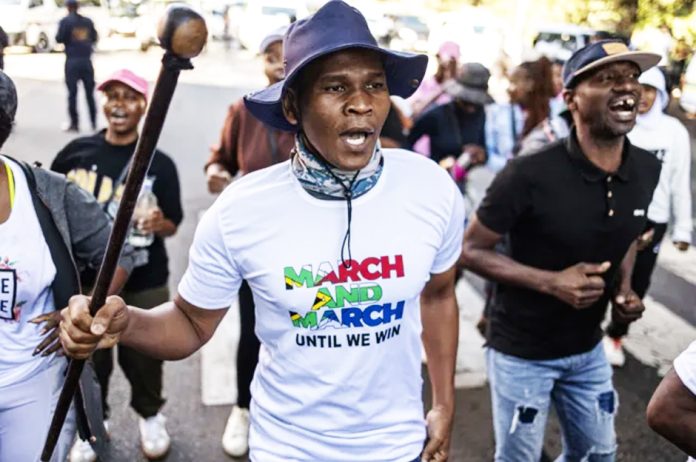
A March and demonstration in Johannesburg

Nigeria is planning to repatriate its nationals in South Africa willing to return home voluntarily, amid growing fears that recent attacks on foreigners there could escalate.

Foreign Minister Bianca Odumegwu-Ojukwu said 130 applicants had already registered for the exercise, adding that the number was expected to rise.

She expressed President Bola Tinubu’s concern about the attacks in the southern African nation, and condemned the violence against foreign nationals and demonstrations characterised by “xenophobic rhetoric, hate speeches and incendiary anti-migrant statements”.

Nigeria has summoned South Africa’s acting High Commissioner over the issue.

Nigeria will formally convey its “profound concern” at a meeting later on Monday over the incidents in South Africa, saying they could affect existing relations between the countries, according to a foreign ministry statement.

The meeting will focus on recent marches held by anti-immigrant groups and “documented instances of mistreatment of Nigerian citizens and attacks on their businesses”, it said.

On Sunday, Nigeria’s foreign minister said: “Nigerian lives and businesses in South Africa must not continue to be put at risk, and we remain committed to working to explore with South Africa ways to put an end to this.”

She cited the killing of two Nigerians in separate incidents involving local security personnel, insisting that her government was demanding justice.

She said the Nigerian president’s priority was for the safety of citizens and “consequently, arrangements are currently under way to collate details of Nigerians in South Africa for voluntary repatriation flights for those seeking assistance to return home”.

As Africa’s most industrialised country, people from elsewhere in the continent have long travelled to South Africa to seek work.

South African President Cyril Ramaphosa has condemned the attacks but also cautioned foreigners to respect local laws.

Credit: bbc.com

Falling Resource Revenues, Aid Cuts Tighten Noose on Developing Economies – IMF Warns

0
IMF

Developing countries, including Ghana, are facing mounting fiscal strain as revenues from natural resources decline and foreign aid from advanced economies continues to shrink, the International Monetary Fund has revealed.

In its latest update of the World Revenue Longitudinal Database, the IMF paints a sobering picture of weakening public finances across low-income and emerging market economies. According to the Fund, income from extractive industries—such as oil, gas and mining—together with foreign aid grants for general government spending, has dropped by a combined 3.8 percentage points of Gross Domestic Product (GDP) since 2000.

This sharp decline, the report notes, has not been fully offset by improvements in tax collection. While tax revenues have increased over the same period, the gains—amounting to 2.6 percentage points of GDP—have only managed to cover about two-thirds of the losses, leaving a persistent financing gap.

The IMF identifies falling proceeds from natural resource extraction as the single largest contributor to the revenue slump. These proceeds, often referred to as non-tax revenues, include royalties, profit-sharing arrangements and dividends from state-owned enterprises operating in sectors such as mining and petroleum—industries that remain central to the economies of countries like Ghana.

Foreign aid, particularly grants that governments rely on for general budgetary support, has also declined significantly, compounding the fiscal pressures. The dual shock—shrinking extractive revenues and reduced donor inflows—has left many developing economies struggling to maintain public spending and meet development targets.

The implications are far-reaching. With limited fiscal space, governments face difficult trade-offs between financing infrastructure, social services and debt obligations. For resource-dependent economies, volatility in global commodity prices further exacerbates uncertainty in revenue flows.

To bridge the gap, the IMF emphasises the urgent need for stronger domestic revenue mobilisation, particularly through more efficient and broad-based tax systems. Without this shift, the Fund warns, affected countries may find it increasingly difficult to achieve sustainable economic development.

“Closing the gap often requires collecting more tax revenue,” the IMF notes, stressing that long-term fiscal stability depends on a country’s ability to generate reliable income internally rather than relying on unpredictable external sources.

However, boosting tax revenue is not merely a matter of raising rates. The IMF underscores the importance of sustained investment in tax policy reforms and administrative capacity. This includes modernising tax systems, improving compliance, reducing leakages, and strengthening institutions responsible for revenue collection.

The Fund indicates that it is supporting member countries through targeted capacity development programmes. These interventions—delivered in collaboration with donor nations and international partners—focus on technical assistance and training aimed at enhancing tax administration and policy design.

Such efforts are intended to reduce dependence on volatile revenue streams like extractive industries and foreign aid, while building more resilient fiscal systems. According to the IMF, stronger domestic revenue frameworks not only improve national economic stability but also contribute to broader global growth.

Underlying these policy recommendations is the need for accurate and comprehensive data. The IMF’s World Revenue Longitudinal Database, which tracks revenue trends across 195 economies over several decades, provides policymakers with detailed insights into how governments generate income. The database is widely used by researchers and development practitioners to benchmark performance and identify priority areas for reform.

For countries like Ghana, where natural resource revenues and external support have historically played a significant role in public financing, the IMF’s findings reinforce a critical policy challenge: how to transition towards a more self-reliant and устойчивый revenue model in an increasingly uncertain global environment.

While the path forward may require difficult reforms, the IMF maintains that strengthening domestic revenue systems remains the most viable route to fiscal resilience and long-term economic sustainability.


For more news, join The Chronicle Newspaper channel on WhatsApp: https://whatsapp.com/channel/0029VbBSs55E50UqNPvSOm2z

Police Land Guards Abduct Detective … COP Teye-Cudjoe Opens Investigation Into Bizarre Incident At Shai Hills

0
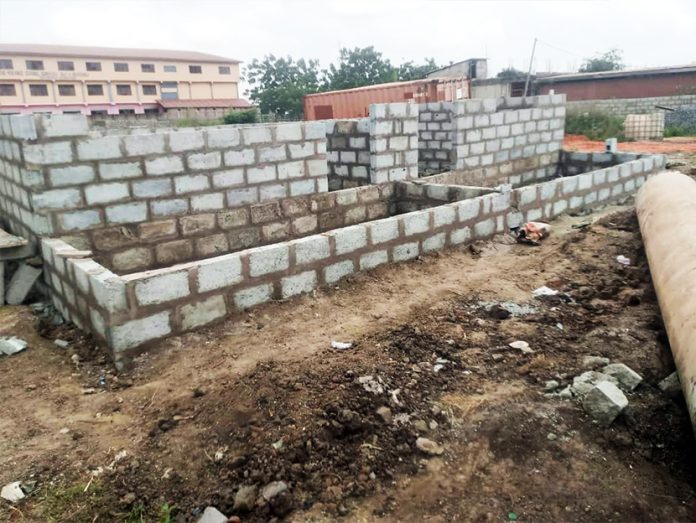
The site

The Director General of Police Operations, Commissioner of Police  (COP) Emmanuel Teye-Cudjoe, is investigating circumstances that led to a near confrontation between two Police teams at Shai Hills, in the Shai Osudoku District of the Greater Accra Region.

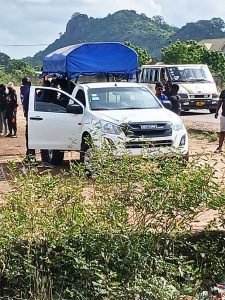
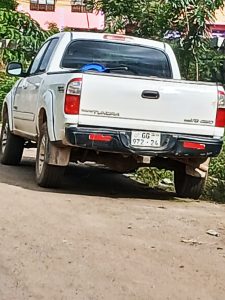
The car used in the
illegal operation

The incident occurred on Saturday when a team of officers from Tema, whose official duty point to provide land security at the request of a developer, was besieged by a squad, which emerged from the Police Headquarters Operations Unit.

Tension rose as the two groups faced off at the site, but the situation was de-escalated by the Tema Regional Police Operations Commander, Deputy Superintendent of Police (DSP), Mr Jean Kpelli, before violence broke out.

Verified information from the Police Headquarters indicates that the movement of the operations squad was not officially sanctioned.It was reportedly an arbitrary decision taken by an individual within the unit.

COP Teye-Cudjoe has opened the probe to establish how the unsanctioned team was mobilised, who authorised the movement and what led to the standoff with the Tema officers who were on lawful duty.

The car used in the
illegal operation

Reports put together by The Chronicle reveal that a real estate developer, Mr Rush Asare, has secured a piece of land in front of the VIK-FRANZ SCHOOL COMPLEX at Shai Hills on the Tema-Akosombo highway.

But when he commenced construction of fence wall and a gate, he was harassed by landguards. He subsequently proceeded to the Tema Regional Police Command to lodge a complaint and applied for security, which was provided.

The regional operations unit in Tema, which was handling the assignment tactically positioned their men, not on the ground, but outside, in wait for the supposed landguards.

That on Friday May 1, 2026 workers of Mr Rush Asare went to place a gate to the fenced parcel of land.

In the early hours of Saturday May 2, 2026 a group of armed men in mufti, drove two unmarked white pickups, with registration numbers GG 972-24 and GS 241-24 to the site and took occupancy of the place.

Prior to the arrival of the illegal operation team, about thirty (30) hefty men assembled in front of the gate, as though waiting for directives to act.

When the police illegal team wielding sophisticated weapons took positions to wardoff any potential threat, the hefty men pulled down the walls, gate and gained access to the entire perimeter.

Information got to Asare regarding the takeover of his property by the unknown group and subsequently alerted the Tema Police of the latest development.

Asare also proceeded to the nearby Afienya Police Station to report for action.An investigator, Sergeant David Afeke was assigned to the case and so he accompanied the Tema Police who happened to be around, to the site/scene to ascertain happenings on the ground.

On their arrival in police uniforms and a marked vehicle, the situation became so tensed and as the detective who was in mufti entered the yard to conduct his own preliminary enquiries, he was accosted by the unknown armed men, right in the presence of the equally armed police personnel from the port city.

Report has it that, even though the investigator allegedly introduced himself as a police investigator officer and went ahead to show his identity card, he was still bundled into one of the two ‘standby’ pickups, specifically GG 972-24 and whisked away to an unknown destination.

Sensing danger and to avoid confrontation and the consequential bloodbath, the Regional Operations Commander, DSP, Mr Kpelli, tactically withdrew his men to a safer ground pending further instructions.

On the way in the illegal headquarters operations vehicle, on which edges were displayed with bold inscription ‘police’ bulletproof vests, Sgt Afeke was said to have reached out to the Afienya District Police Commander and reported how he was ‘abducted’.

The Commander in turn decided to speak with the leadership in the pickup and after a banter on the line, they returned the captured investigator to the site/scene.

By this time when The Chronicle sneaked to the area unnoticed, the fully armed men in mufti remained alert as workers, masons and labourers actively took part in the construction of block works inside the now open yard.

The Chronicle contacted one Mr Tawiah alleged to have organized the headquarters operations team to the ground, but he denied responsibility.

According to him, the said piece of land belongs to him, but found it strange that each time he went there to work, persons he described as ‘landguards’ came to harass him.

He told The Chronicle how he was once placed behind the counter at the Emefs Police Station, Afienya, only to be saved by an acquaintance senior police officer at the Police Headquarters in Accra.

The said acquaintance, senior police officer and another, whose names cropped up at the site/scene, all at the headquarters when reached by The Chronicle, both denied any knowledge of the presence of the mufti wearing, heavily armed men who forcibly occupied the parcel of land last Saturday.

The Director General of Police Operations, COP Teye-Cudjoe when reached expressed disappointment in what happened and that he had personally decided to probe and appropriate sanctions applied where necessary.


More anon


For more news, join The Chronicle Newspaper channel on WhatsApp: https://whatsapp.com/channel/0029VbBSs55E50UqNPvSOm2z
Bad Policy Decisions Partly Contributed To GH¢44bn BoG Loss -Minority

0
Kojo Oppong-Nkrumah (2nd right) addressing the press

A detailed review of the Bank of Ghana’s (BoG) 2025 audited financial statements suggests that recent policy decisions taken by the central bank significantly worsened its financial position, partly contributing to an estimated underlying loss of about GH¢44 billion, according to an analysis presented by the Minority Caucus in Parliament.

Addressing a news conference in Accra on Sunday, May 3, 2026, the Minority said although the BoG officially reported a headline loss of GH¢15.6 billion for the 2025 financial year, the Minority argues that this figure understates the true economic cost of policy choices made during the period.When additional losses recorded in Other Comprehensive Income (OCI) and one-off gains from the sale of gold reserves are taken into account, the total loss rises sharply.

The BoG’s published accounts show a net operating loss of GH¢15.63 billion for 2025. However, the same statements also disclose an additional GH¢19.3 billion loss recorded under Other Comprehensive Income (OCI), mainly from foreign exchange, gold and securities revaluation effects.

Adding these two components produces a total comprehensive loss of roughly GH¢35 billion.
The Minority’s analysis goes further by adjusting for a reported GH¢9.6 billion gain from the sale of gold assets during the year. That gain, they argue, was a one-off transaction rather than recurring operational income.
“When it is excluded to assess the Bank’s underlying performance, the effective economic loss rises to approximately GH¢44 billion.

“This is not a dispute about arithmetic”, the Ranking Member on the Economy and Development Committee, Kojo Oppong Nkrumah who read the statement said.
He added “It is about whether one-off asset sales and accounting treatments should be used to downplay the true cost of decisions taken in 2025.”

Central to the Minority’s argument is the claim that a series of policy reversals sharply increased the Bank’s operating costs, particularly the cost of liquidity management. In 2025, the BoG spent GH¢16.7 billion on Open Market Operations (OMO) to sterilise excess liquidity, more than double the amount paid in cash interest the previous year.

According to the Minority, earlier low-cost tools for managing liquidity, including a dynamic Cash Reserve Ratio framework and cedi equivalent reserve requirements for foreign-currency deposits were prematurely abandoned.

In their place, the Bank relied heavily on interest-bearing bills, significantly increasing the interest burden on the central bank.
Audit notes show that outstanding sterilisation bills rose from about GH¢32.7 billion at the end of 2024 to GH¢93.6 billion by the end of 2025, while interest paid on these instruments jumped to about GH¢14.6 billion within a single year.

“These were not unavoidable costs of stabilisation alone,” the Oppong. Nkrumah argued, stressing further that “they were amplified by deliberate policy reversals that replaced low-cost instruments with the most expensive ones available.”

The sale of up to half of the Bank’s gold reserves also features prominently in the analysis. While the BoG recorded net gains from the transaction in 2025, the Minority contends that the sale was driven by the need to cushion losses rather than by long-term reserve management considerations.

They further argue that changes to the gold purchasing structure, including routing purchases through GoldBod, resulted in losses being borne by the BoG while profits accrued elsewhere in the public sector.

The accounting framework used in preparing the 2025 accounts has also drawn attention. The external auditor, KPMG, noted that the statements were prepared using the Bank’s own accounting policies rather than full International Financial Reporting Standards (IFRS).
Under the Bank of Ghana Act, certain valuation gains and losses are excluded from the determination of annual profit or loss and instead recorded in equity.

While this treatment is permitted by law, the Minority maintains that it obscures the scale of the Bank’s underlying economic losses and delays corrective action.
Beyond the total loss figure, the analysis raises concerns about what it describes as “policy insolvency”.The BoG reported a policy solvency surplus of GH¢5.5 billion for 2025, but the Minority disputes this on the grounds that the calculation includes the one-off gold-sale gain.

Excluding that gain, they argue, shows that operational income was insufficient to cover the cost of monetary policy operations, implying a policy deficit of around GH¢4 billion for the year.
The Minority acknowledged that disinflation, exchange rate adjustments, and legacy effects from earlier economic interventions also played a role.

However, it insists that decisions taken in 2025 materially amplified those losses.In their words, “Policy decisions did not create every shock facing the Bank, but they significantly worsened the financial outcome.”
The BoG and the Majority Caucus have defended the 2025 results as the necessary cost of stabilising the economy after years of macroeconomic stress.

However, the Minority says such argument is defenceless.

By Stephen Larbi


For more news, join The Chronicle Newspaper channel on WhatsApp: https://whatsapp.com/channel/0029VbBSs55E50UqNPvSOm2z


Pentecost Elder busted in NAIMOS operations at mining sites at Morso

0
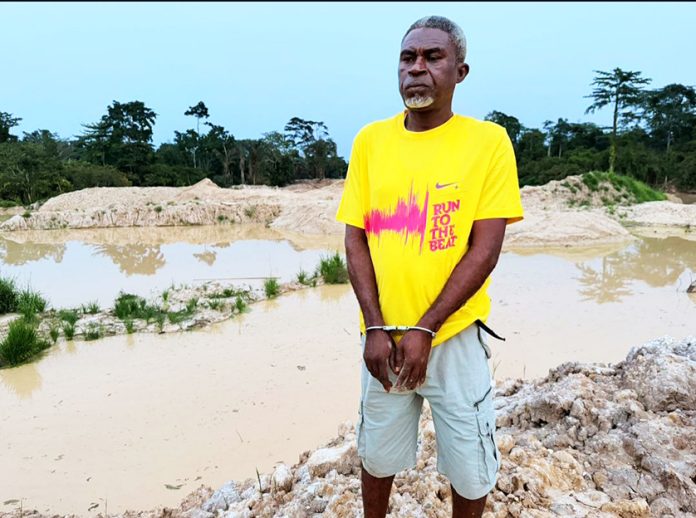
Elder David Peter Bobie, handcuffed

Unannounced operations of the National Anti-Illegal Mining Operations Secretariat (NAIMOS) last Thursday, along the Kume River, across Kyekyebiase and Bimma and Morso, in the Asante Akyem South district have led to the arrest of Elder David Peter Bobie of the Konongo branch of the Church of Pentecost.

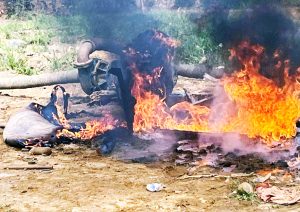
Chanfans and other items being burnt

Elder Bobie claims he is a foreman of an illegal small scale mining site operating at Akyem Morso, near Juaso in the Asante Akim South District of the Ashanti Region. He was apprehended when he came to nose around and confirms the presence of NAIMOS in the area on the instructions of his boss, one Mr Appiah.

Elder David Bobie Peter led the NAIMOS Task force to his mining site at Morso, where the full scale of the destruction under his foremanship became pronounced, as the environment had massively been degraded with the Kume River heavily polluted.

He is helping the Konongo District police in their investigations and prosecution.

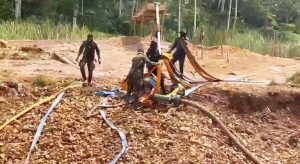
During the operation, NAIMOS Task force came across dozens of youth engaged in illegal mining at Kyekyebiase, built upon seeing the task force fled in all directions, abandoning their mining equipment to escape lawful arrest.

The task force members were was left with no other option than to dismantle eight Chanfang machines and four (4) wooden gold washing platforms, several pipe hoses and set them ablaze, with 12 water pumping machines seized as exhibits.

Task Force members dismantling a pumping machine

In a further swoop in the surrounding bushes, a Sany Excavator was traced to a cocoa farm to evade detection.

The NAIMOS team, however, detached oil pump and other vital components of the excavator to render the machine completely useless.

NAIMOS has cautioned all persons engaged in galamsey against the reckless illegal mining activities assuring that it remains resolute in its mandate to bring offenders to book irrespective of their social standing, religious office or political affiliation.

The Secretariat further called on all local administrative authorities, traditional rulers, intelligence agencies and security services across the affected districts to intensify their monitoring and enforcement commitments to forestall further degradation of the environment within their respective jurisdictions.

Meanwhile, residents of the Morso enclave have praised NAIMOS for swift response to their call to intervene in the wanton destruction of the environment and pollution of the river and water bodies in the area.

BoG’s GH¢15.6bn Loss Has Stabilised Inflation, Cedi

0
Dr Johnson Pandit Asiama Governor of BoG

The Bank of Ghana (BoG) recorded a net loss of GH¢15.6 billion in 2025, with the central bank stating that the outcome reflects the cost of measures taken to reduce inflation, stabilise the cedi and strengthen the financial system.

According to the Bank’s 2025 financial results, the loss represents a deeper position compared to the GH¢9.4 billion loss recorded in 2024. The Bank attributed the development to what it described as “traceable policy costs” associated with restoring macroeconomic stability after a period of elevated inflation and currency pressures.

The results show that while the Bank’s income grew significantly during the year, the cost of implementing monetary and financial sector policies outweighed those gains, leading to the overall loss position.

BoG reported that total income increased by 137 per cent to GH¢22.3 billion in 2025, with all major income lines recording growth. Despite this improvement, the Bank indicated that the financial outcome was primarily driven by three key cost components—open market operations, the domestic gold purchase programme, and foreign exchange revaluation effects.

Open market operations (OMO), which involve absorbing excess liquidity from the banking system to control inflation, accounted for GH¢16.7 billion in interest costs in 2025. The Bank explained that excess liquidity had built up in the financial system between 2022 and 2024, largely due to high levels of government spending.

To address this, the central bank issued instruments to mop up the excess funds. However, it noted that the process became costly in a high interest rate environment. The Bank also highlighted a “negative carry” effect, where it paid relatively high interest on OMO instruments while earning lower returns on certain restructured assets, contributing to the overall loss.

In addition to liquidity management costs, the Bank reported a net cost of GH¢9.1 billion from its Domestic Gold Purchase Programme (DGPP). The programme, which has been a key component of efforts to build external reserves, involved purchasing gold domestically and holding it as part of the country’s reserve assets.

The Bank indicated that the programme carries structural costs, including pricing differences between market and official rates, transaction-related expenses, and refining and processing losses. It added that the scale of the programme increased significantly in 2025, contributing to the higher cost profile.

Data from the results show that gold purchases rose to 111 tonnes in 2025, compared to lower volumes in previous years. The Bank stated that despite the associated costs, the programme contributed to strengthening Ghana’s external reserves position.

Foreign exchange revaluation effects formed the third major cost component, with a total impact of GH¢29.1 billion recorded through profit and loss and other comprehensive income accounts.

The Bank explained that this was largely driven by the appreciation of the cedi during the year. According to the results, the cedi gained 40.7 per cent against the US dollar in 2025.

While a stronger currency is generally seen as positive for the broader economy, the Bank noted that it reduces the cedi value of foreign-currency-denominated assets held on its balance sheet. As a result, the revaluation led to accounting losses.

The Bank emphasised that these revaluation effects are “paper entries” and do not involve actual cash outflows or a reduction in foreign reserves. It added that similar gains had been recorded in 2024 when the cedi depreciated, increasing the cedi value of foreign assets.

In 2024, the Bank reported combined gains of GH¢12.7 billion from foreign exchange revaluation effects, which supported its financial position at the time. The 2025 outcome, the Bank said, represents a reversal of those earlier gains due to the change in exchange rate movements.

Beyond the net loss, the Bank also reported a net other comprehensive income (OCI) charge of GH¢19.32 billion for 2025, compared to a gain of GH¢12.9 billion in 2024. The reversal was attributed primarily to the appreciation of the cedi.

Cumulative negative equity often described as the central bank’s capital position—widened to GH¢96.3 billion in 2025, up from GH¢61.3 billion the previous year.

Despite this, the Bank maintained that it remains fully operational and capable of carrying out its mandate. It noted that central banks are not profit-maximising institutions and often incur financial costs in the process of achieving policy objectives such as price stability and financial system resilience.

The Bank further indicated that similar trends have been observed in other jurisdictions, where central banks that tightened monetary policy to combat inflation recorded losses or faced financial pressures.

According to the results, the financial outcome reflects the broader context of policy actions taken during the year, which led to significant improvements in key macroeconomic indicators.

Inflation declined sharply over the period, falling from 23.8 per cent in December 2024 to 5.4 per cent by December 2025. The Bank noted that inflation fell consistently throughout the year, marking one of the most sustained disinflation trends in recent years.

The cedi also recorded strong performance, appreciating from around GH¢14.70 to the US dollar to approximately GH¢10.45 by the end of 2025. The Bank stated that the currency’s performance contributed to improved market confidence and reduced imported inflation.

In addition, Ghana’s gross international reserves increased from about US$9.1 billion to US$13.8 billion, representing approximately 5.7 months of import cover. The Bank described this as a record level, supported in part by the gold accumulation programme.

The policy rate was reduced during the year, declining from 28 per cent to 18 per cent, with further adjustments indicated into 2026. Lending rates in the banking sector also declined, reflecting improved monetary conditions.

Public debt levels, measured as a share of gross domestic product, also showed improvement, falling from 61.8 per cent to 45.3 per cent. The Bank noted that the stronger cedi contributed to this outcome by reducing the domestic currency value of external debt.

The Bank said the overall financial results should be viewed within the context of these outcomes, noting that efforts to stabilise the economy often involve trade-offs that are reflected in financial statements.


For more news, join The Chronicle Newspaper channel on WhatsApp: https://whatsapp.com/channel/0029VbBSs55E50UqNPvSOm2z
 

Ibrahim Mahama Justifies Why Ghanaians Must Control Their Mines

0
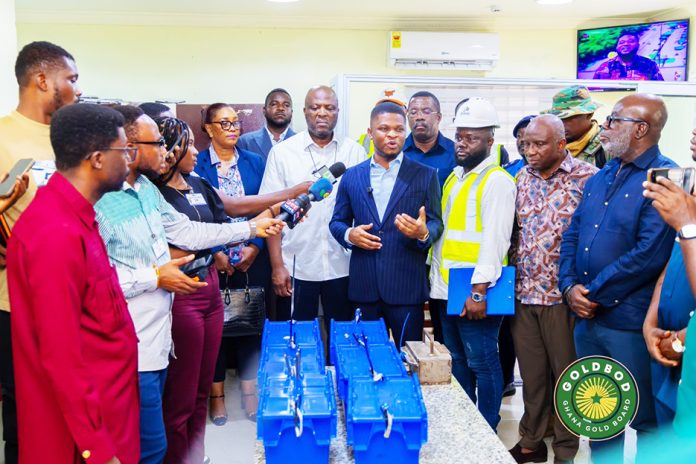
Ibrahim Mahama handing over the gold from Damang Mine to CEO of the Ghana Gold Board, Sammy Gyamfi

In a bid to support foreign reserves accumulation, Ibrahim Mahama’s Damang Gold Mine Ltd. has sold 100% of its first gold output to the Ghana Gold Board.

The Chief Executive Officer of the Ghana Gold Board, Sammy Gyamfi, received a team from Damang Gold Mine led by Mr. Ibrahim Mahama himself at the GoldBod Assay Laboratory in Accra last week, where he briefed the media about the historic transaction.

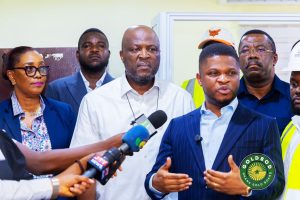
CEO of the Ghana Gold Board, Sammy Gyamfi
addressing the press

He noted that having Ghanaians at the helm of the country’s minerals and mining sector is key to maximizing national benefits, local value retention and economic transformation.

The Chief Executive Officer bemoaned the low contribution of large-scale mining companies to foreign reserve accumulation efforts of government and urged other large-scale mining companies to emulate the good example set by the Damang Gold Mine.

This, he said, is imperative for the actualization of the objects of the Ghana Accelerated National Reserve Accumulation Program (GANRAP) launched by the government and approved by Parliament.

The first output of the Damang Gold Mine delivered to the GoldBod was about 110KG. The gold will be assayed, valued and purchased by the GoldBod for and on behalf of the Bank of Ghana, refined and added to the Central Bank’s gold holdings.


For more news, join The Chronicle Newspaper channel on WhatsApp: https://whatsapp.com/channel/0029VbBSs55E50UqNPvSOm2z
Editorial: ECOWAS Must Still Play Frontline Role In The Sahel Crisis

0
Editorial

Last week, the entire continent was taken aghast when it was reported that an al-Qaeda affiliate and Tuareg insurgents had murdered Mali’s Defence Minister, Gen. Sadio Camara, in a sweeping assault in which jihadists and rebel fighters reportedly seized several towns and military bases.

The shocking development has once again drawn urgent attention to the deteriorating security crisis in the Sahel. The central question is unavoidable: why has so much money been invested in the Sahel, yet insecurity continues to deepen?

The region’s crisis is no longer simply about terrorism. It has evolved into a dangerous mixture of insurgency, weak governance, military rule, ethnic grievances, external interference and geopolitical competition.

Mali, Burkina Faso and Niger have all experienced coups in recent years, replacing elected governments with juntas that promised order and national revival. Yet the security environment has deteriorated under their watch.

Large parts of these countries remain contested. Civilians continue to be killed, displaced and impoverished. Schools, clinics and markets have shut down in many rural areas. State authority has retreated while armed groups fill the vacuum.

Equally troubling is the increasing internationalisation of the conflict. The Sahel has become another arena for global rivalries.

Russia has expanded influence through the Africa Corps, formerly linked to Wagner, offering military support to regimes battling insurgents. Other foreign actors are also accused of backing armed factions, deepening mistrust and prolonging violence.

Whether every allegation is proven or not, one reality is clear: African battlefields are increasingly being shaped by external contests that do little to solve African problems.

The human cost has been staggering. Security monitors estimate that the Sahel accounted for about 51 percent of all global terrorism-related deaths in recent years.

Across Africa, more than 150,000 deaths have been linked to militant Islamist violence over the past decade. Thousands more have been wounded, displaced or stripped of their livelihoods, while already fragile economies continue to suffer.

The Alliance of Sahel States (AES) formed by Mali, Burkina Faso and Niger, has announced joint military operations following the latest attacks. While regional cooperation is welcome, military action alone will not solve a crisis rooted in governance failure, poverty, corruption, exclusion and state absence.

This is where continental leadership has been lacking. Both the African Union and ECOWAS have struggled to respond effectively. Their divisions over coups, sanctions and diplomacy have often produced more headlines than solutions. Institutions created to preserve peace and constitutional order now risk appearing distant and ineffective.

The Chronicle is worried that democratic credentials in the sub-region are fast fading, creating room for these complex challenges to flourish. The weakening of constitutional governance has opened space for misguided external actors to exploit tensions and deepen conflicts within the AES states. These developments could drive away investors, worsen unemployment and deepen poverty in a region already struggling with fragile and distressed economies.

We believe urgent and coordinated action is needed. The AU and ECOWAS must move beyond routine statements and establish a credible regional security framework based on intelligence sharing, rapid response capacity and sustained cooperation among affected states.

Governments in Mali, Burkina Faso and Niger must also address the underlying causes of extremism, including youth unemployment, weak justice systems, corruption, ethnic marginalisation and the lack of basic services. Where the state is absent, extremist groups gain influence. They must also review their decision to leave ECOWAS, which admit, has limited the role of the regional body to fully resolve the crisis.

We insist there must be a clear return to constitutional civilian rule. Military governments may promise order, but durable peace is built through accountable institutions, democratic legitimacy and the rule of law.

Africa must equally resist becoming a battleground for foreign rivalries. Partnerships should serve African interests, not turn the continent into a theatre for proxy wars.

The humanitarian crisis requires urgent attention. Millions face hunger, displacement and economic hardship. Greater support is needed for food security, healthcare, shelter and education in affected communities.

Above all, The Chronicle believes leadership is required from Addis Ababa to Abuja. The Sahel crisis is no longer a distant problem. It is a direct threat to regional peace, democratic governance and economic progress. The era of half-measures must end. Africa must act now!


For more news, join The Chronicle Newspaper channel on WhatsApp: https://whatsapp.com/channel/0029VbBSs55E50UqNPvSOm2z
Ashanti Council of State Member donates food items to two Orphanages in Kumasi

0
Yaw Bimpeh presenting the items to Manager of Apre Cherub Children's Home

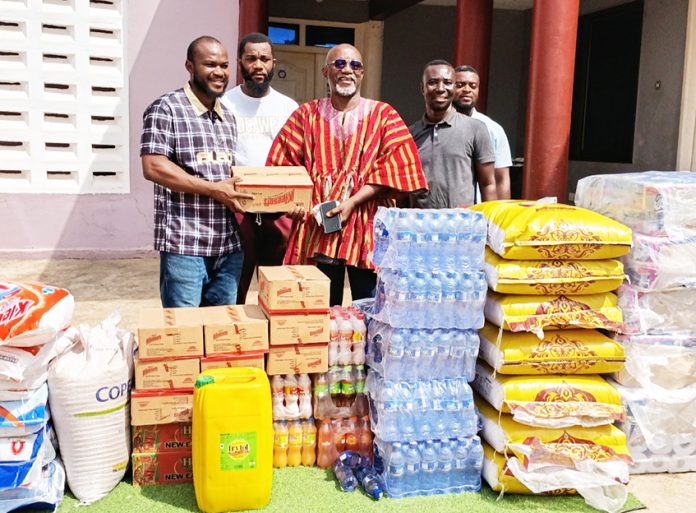
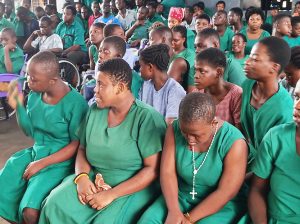
Mr. Yaw Bimpeh, the Ashanti Regional Representative on the Council of State, has donated food items and assorted drinks to inmates at the Dwenase Rehabilitation Centre and the Apre Cherub Children’s Home to support their upkeep.

The donated items included five bags of rice for each facility, gallons of cooking oil, toiletries, boxes of soap, washing powder, assorted drinks, packs of mineral water, and cartons of Tasty Tom tomato paste.

A section of the Inmates at Dwenase Rehabilitation Centre

Presenting the items, Mr. Bimpeh said the gesture was his contribution to improving the welfare of the less privileged in society.

He explained that anyone could find himself or herself in the situation of the inmates, adding that it is not of their own making.

Mr. Bimpeh appealed to philanthropists, individuals, and Civil Society Organisations (CSOs) to extend support to the vulnerable so they do not become a burden to society.

He commended the management of both institutions for their commitment to enhancing the well-being of inmates.

Mr. Bernard Osei Bonsu, Administrator of Cherub Children’s Home, and Mrs. Rita Agyei, Manageress of Dwenase Rehabilitation Centre, expressed profound gratitude to Mr. Bimpeh for the donation.

According to them, the items came at a critical time and would greatly support the upkeep of the inmates.

They appealed to the general public, corporate bodies and CSOs to emulate Mr. Bimpeh’s example and extend support to the facilities.


For more news, join The Chronicle Newspaper channel on WhatsApp: https://whatsapp.com/channel/0029VbBSs55E50UqNPvSOm2z

Amakyebare R/C Primary Rehabilitated After Storm Damage

0
The Rehabilitated RC Primary School at Amakyebare

Pupils and Teachers of Amakyebare R/C Primary School can now enjoy a safer and more conducive learning environment, following the successful rehabilitation and commissioning of the school by the Atwima Nwabiagya North District Assembly.

The facility, which suffered extensive damage during a thunderstorm in February 2025, has been fully restored through the intervention of the District Chief Executive (DCE), Mr. Mba Zachariah Anabila.

The rehabilitation exercise was financed through the District Assembly Common Fund, as part of a broader effort by the government to expand access to quality education.

Prior to the renovation, the deteriorated condition of the school posed a serious concern to both education authorities and residents.

The refurbished school now boasts of modern infrastructure, including newly reconstructed three-unit and four-unit classroom blocks, a staff common room, a headmaster’s office, a urinal facility, electricity and ceiling fans to improve comfort for both pupils and teachers.

Speaking at the commissioning ceremony, Mr. Anabila said the swift intervention was driven by appeals from traditional leaders and the urgent need to restore normal academic activities in the community.

According to him, he was deeply moved by the concerns raised by Nananom over the state of the school, hence the need to act quickly to provide a conducive learning environment for the children of Amakyebare and surrounding communities.

According to the DCE, the commissioning marks the beginning of a series of project inaugurations across the district.

He further revealed that the Akwaboah community has, for the first time since independence, received a basic school under his administration.

Mr. Anabila reiterated the government’s commitment to ensuring that every child of school-going age has access to education, emphasising efforts to bring schools closer to communities.

He disclosed that in just 10 months in office, he has overseen the completion of 38 physical projects spanning sanitation, water, healthcare, road reshaping and educational infrastructure and assured to do more to improve the lives of the people.

He also called for continued collaboration with traditional authorities to accelerate development across the district.

Meanwhile, traditional leaders used the occasion to appeal to the government to prioritise the tarring of the road linking Maaban to Amakyebare to improve accessibility.

The headmaster of the school, Mr. Atta Kwasi, expressed gratitude to the District Assembly for the timely intervention.

He noted that while the new facilities have significantly improved conditions, more classrooms are needed to match the growing student population.

According to him, the new classrooms and facilities have brought great relief, but increasing enrolment means they will need additional infrastructure to sustain effective teaching and learning.


For more news, join The Chronicle Newspaper channel on WhatsApp: https://whatsapp.com/channel/0029VbBSs55E50UqNPvSOm2z
The Ghanaian Chronicle