Home Blog Page 618

FDA sensitises Santase market women on food hygiene and safety

0
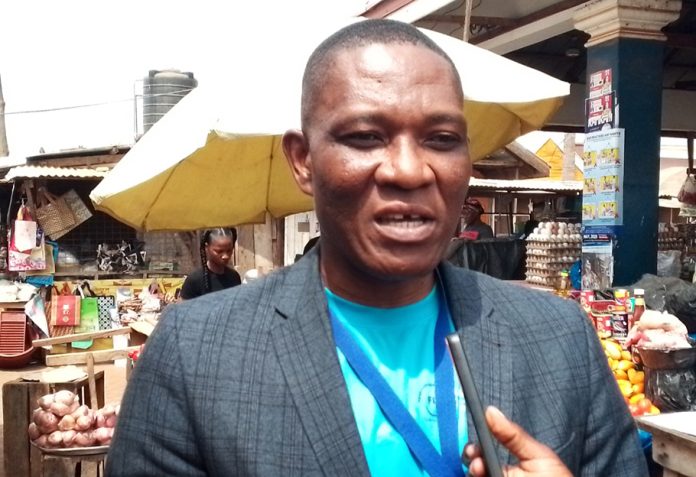
John Laryea Odai-Tettey, Ashanti Regional Head (FDA)

The Food and Drugs Authority (FDA) has sensitized women at the Santase Market in Kumasi on food hygiene and safety. The initiative is part of the FDA’s efforts to ensure that food sold in markets meet the required standards and is safe for consumption.

Mr. John Laryea Odai-Tettey, Ashanti Regional Head of FDA, revealed the importance of food safety, explaining that food production involves various stages, from farm to table.

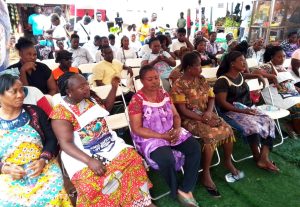
The market women at the sensitisation programme

He noted that all stakeholders, including farmers, manufacturers, distributors and regulators have a role to play in ensuring that food is consistently produced to meet the required standards.

The FDA’s sensitisation programme focused on key areas, including handling and storage of food, while market women were educated on how to handle and store food safely to prevent contamination.

The Ashanti Regional Head reiterated the importance of washing hands regularly, especially before handling food, proper disposal of waste to prevent the spread of diseases.

He disclosed that the FDA is working with environmental health officers to ensure that food vendors comply with food safety regulations.

Mr. David Oppong Darko, Ashanti Regional Environmental Health Officer, noted that the sensitisation programme was part of a series of activities aimed at educating market women on food safety and hygiene.

He stressed that the FDA’s sensitisation programme was a step in the right direction towards promoting food safety and hygiene in markets by educating market women on the importance of food safety.

He stated that the FDA was helping to prevent the spread of food borne diseases and promote a healthier environment for consumers.

KMA boss gets tough with encroachers on public school lands 

0
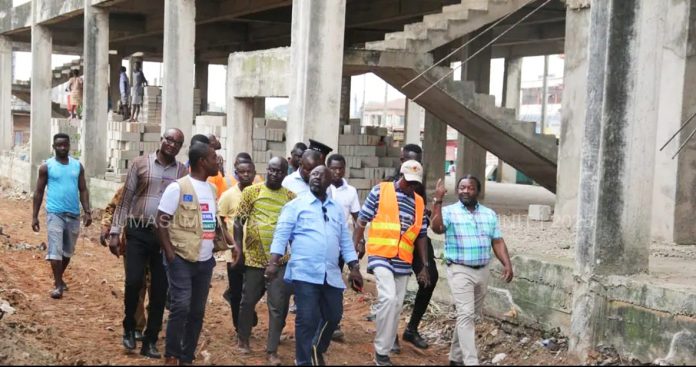
The mayor and his team during the inspection tour

The Kumasi Mayor, Richard Ofori-Agyeman Boadi, has directed the eviction of squatters from all public school premises within the Kumasi Metropolis. He is enraged by the chaotic encroachment of school lands by residents and prospective developers.

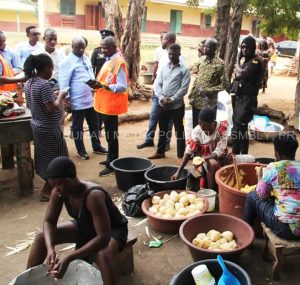
School premises being used by a food seller

During an inspection tour of basic schools last week, the mayor, in the company of key officials, including Mr. Francis Dwira Darko, Metro Coordinating Director and Mr. David Oppong, Metro Director of Education, realised that the squatters were using school lands for various unauthorised purposes, including shelter, trading, cargo stations, drug peddling, mechanic workshops, sanitation and religious activities.

Schools visited by the mayor and his team included the Asem Cluster of Schools, Amankwatia Cluster of Schools and Bantama Methodist Primary School, during which he engaged assembly members, head teachers and Ghana Education Service staff in discussions.

He said the misuse of the lands does not only defeat the intended purposes of these lands, but also obstruct effective academic activities, as well as raising serious security, moral and sanitation concerns, besides noise pollution by the encroachers.

As a result, the KMA boss has instructed personnel from the National Disaster Management Organisation (NADMO), Physical Planning and the Works Department to ensure the eviction of all encroachers on such lands as soon as possible.

Bosome-Freho DCE courts government’s support to address infrastructural challenges 

0
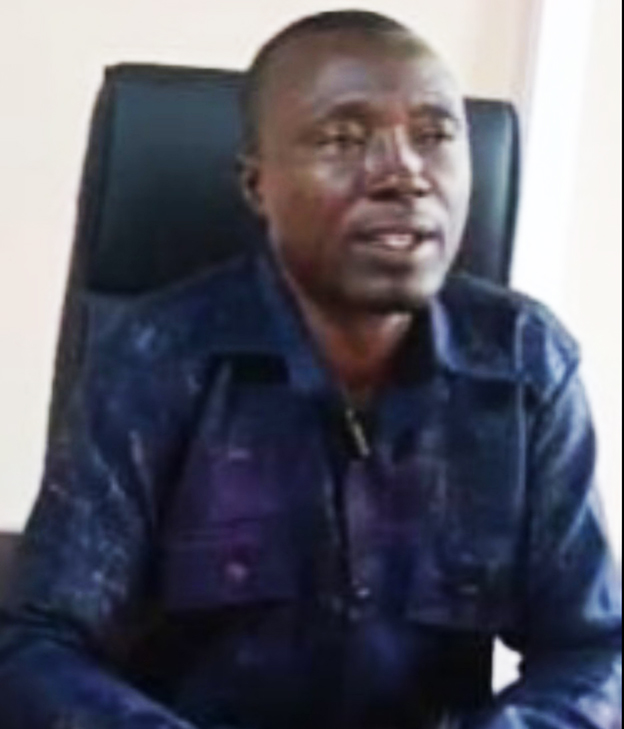
Charles Appiah Kubi, Bosome-Freho DCE

The Chief Executive Officer (CEO) for Bosome Freho District in the Ashanti Region, Charles Appiah Kubi, has called on the central government to help address the infrastructural challenges facing the district.

He mentioned road, health, education and security sectors as the major areas needing urgent attention.

He identified the challenges following engagement with the chiefs and people of the 90 communities constituting the Bosome-Freho District, with Asiwa as its capital.

The district was carved out of the Amansie East district created by a decree of President John Agyekum Kufuor on February 29, 2008.

Speaking in an interview with The Chronicle, the DCE stressed that the road network was vital in the livelihood of the residents, 85 percent of who are dominantly farmers and traders.

However, the district has one of the deplorable road networks in the country with few tarred portions, thus affecting productivity, as farmers experience post-harvest loses.

The DCE mentioned the Juaso-Adansi Bodwesango-Adansi Asokwa-Kumasi/Cape Coast, Asiwa-Bomfa, Asiwa-Asante Bekwai roads as major roads within the district that “need” to be reconstructed to boost economic growth, assuring that the District Assembly in its small way would tackle the feeder roads in the district.

Currently, the district is faced with shortages of teachers because they refuse postings to the district due to lack of accommodation facilities and bad road network.

He said the district can boast of only one secondary school, the Bosome Senior High Technical School, for which reason President Mahama, in his previous administration intended to construct E-block SHS for the district, but his vision could not be realised due to the change of government in 2016.

The DCE, therefore, appealed to the President to construct the E-Block SHS to complement the existing one.

Appiah Kubi also complained of the lack of a District Hospital, stressing that the Health Centre in the district, as well as CHP compounds alone cannot cater for the health needs of the district, hence the need for the Central government to assist in this area.

DCE Appiah Kubi also revealed that though the district has a Police Command at its capital (Asiwa), as well as Police Stations at Nsuaem and Tebeso (yet to be officially commissioned), security is still not adequate due to the sparse nature of the communities within the district.

He disclosed that the Nsuta community has been able to construct a Police Station and appealed to the Ghana Police Service to provide them with personnel to beef up security in the enclave.

The DCE announced that he has established a Foundation to help the youth and less-privileged with good grades to further their education and discourage them from indulging in social vices, such as drug abuse and peer pressure, among others.

“Three individuals have benefitted from the Foundation since its establishment in May, this year”, he said.

From Oswald Pius Freiku, Kumasi

Insecurity: Plateau women threaten naked protest, accuse government of inaction

0
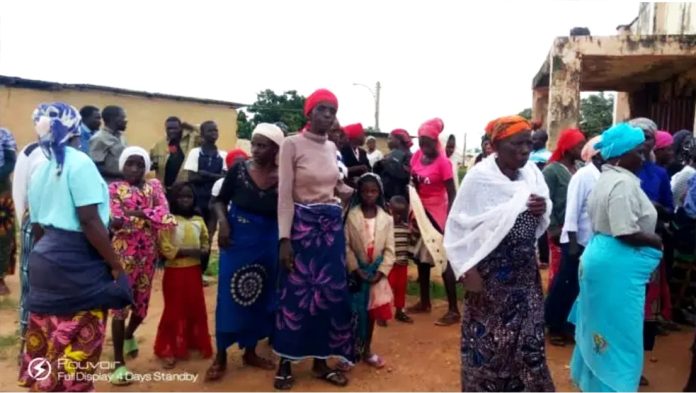
Plateau women threaten to protest

A women’s group in Plateau State has threatened to protest naked over the recurring attacks and killings by suspected Fulani militias, especially in Berom communities.

The group under the aegis of the Berom Women Development Association, BWEDA, who made the threat in a statement on Saturday, also declared that the ongoing violence in the state is a clear case of genocide and not a result of farmer-herder conflicts as widely believed.

the statement signed by its President, Abigail Banga, BWEDA demanded immediate and decisive action from the government and security agencies to stop the relentless bloodshed in the state.

Describing the wave of attacks as mindless and unprovoked, the women’s group lamented the repeated killings and destruction of entire communities despite the presence of military personnel and armoured equipment.

The women also expressed deep frustration over what they term as the failure of the government to provide security and justice to the victims of such attacks.

They criticised the governments resort to condolence visits and palliatives, instead of a firm, decisive, and long-term security solution to avert the violence.

“Our hearts bleed with each butchered child and burned home. We are traumatised, we are grieving, and we are angry. This is not a conflict—it is a campaign of extermination,” part of the statement said.

The group further called on the federal government to urgently review its security framework in the state, stressing that allegations of military indifference and possibly collusion with attackers should not be swept under the carpet.

Credit: dailypost.ng

NDLEA Intercepts Cocaine Hidden In Mirrors, Lipsticks

0
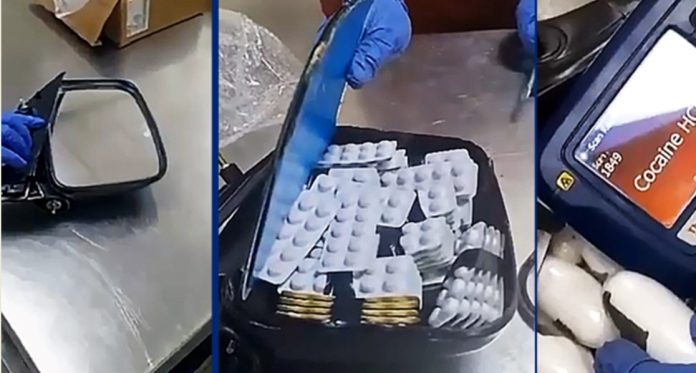
NDLEA Intercepts Cocaine

The National Drug Law Enforcement Agency (NDLEA) has intercepted consignments of cocaine and tramadol hidden in vehicle side mirrors, lipsticks, and footwears in a string of operations that led to multiple arrests across Lagos, Abuja, and several states.

Spokesperson for the agency, Femi Babafemi, disclosed in a statement on Sunday that operatives at the Murtala Muhammed International Airport (MMIA), Lagos, intercepted a consignment headed to Libreville, Gabon, containing 57,420 pills of tramadol 225mg and 57 pellets of cocaine weighing 1.60kg concealed in 71 vehicle side mirrors.

The agency noted that the shipment was seized on 19 July, leading to the arrest of cargo agent Ihekweme Osinachi Benedict. Follow-up operations resulted in the arrest of Uzochukwu Godspower Chukwurah, from whose residence an additional 11 parcels of cocaine weighing 1kg were recovered. The total haul of cocaine reached 2.60kg across 68 parcels.

In a separate case, NDLEA operatives arrested a businesswoman, Mrs Nwafor Roseann Nneka, at the Trade Fair Complex, Ojo, Lagos, after tracing a July 10 consignment of cocaine and phenacetine concealed in ladies’ lipsticks bound for Malabo, Equatorial Guinea

Two cargo agents were earlier arrested. While Nneka was reported to have confessed to purchasing the lipsticks used for concealment, her husband and accomplice, Remigus Nwafor, remains at large.

Credit: channelstv.com

I’m Not Really Nigerian By Identity -UK Conservative Party leader Kemi Badenoch

0
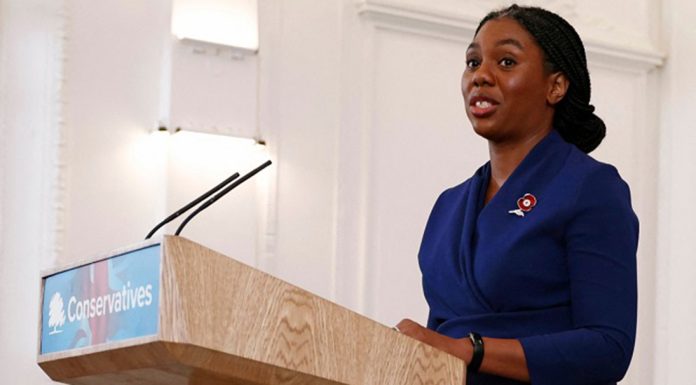
UK Conservative Party leader, Kemi Badenoch

UK Conservative Party leader, Kemi Badenoch, says she no longer considers herself Nigerian and does not hold a Nigerian passport.

Badenoch admitted that although her ancestry is Nigerian and she spent part of her upbringing in the country, she does not identify as Nigerian.

“I’m Nigerian through ancestry, by birth, despite not being born there because of my parents, but by identity, I’m not really.

“I know the country very well, I have a lot of family there, and I’m very interested in what happens there,” Badenoch said on the Rosebud podcast hosted by Gyles Brandreth.

Born in Wimbledon, London, in 1980, the politician said that she had not renewed her Nigerian passport in over two decades.

Badenoch spent a significant part of her childhood in Nigeria and the United States before returning to the UK at the age of 16.

“I know the country [Nigeria] very well, I have a lot of family there, and I’m very interested in what happens there,” she stated.

Despite her roots, she emphasised a personal sense of detachment from the West African country.

Reflecting on her early struggles, she recalled, “The toughest thing I had to do was to fend for myself at 18.”

She also shared her feelings of not fully belonging while living in Nigeria, saying, “Never quite feeling that I belonged there.”

Now firmly rooted in the UK, Badenoch described what “home” means to her.

She said, “But home is where my now family is, and my now family is my children, it’s my husband and my brother and his children, in-laws. The Conservative party is very much part of my family, my extended family, I call it.”

Badenoch is among the last group of people to receive British birthright citizenship before the policy was abolished in 1981 by Margaret Thatcher’s government.

Credit: channelstv.com

Saint Lucia PM Faults Opposition Backlash Against Tinubu’s Visit

0
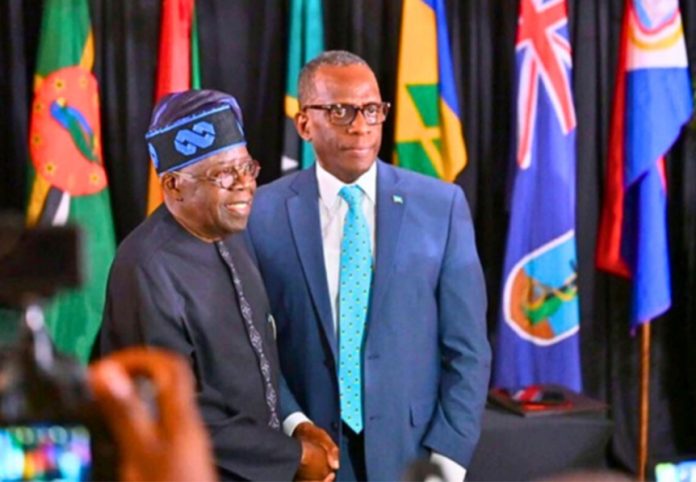
President Bola Tinubu and Saint Lucia Prime Minister Philip Pierre

Saint Lucia’s Prime Minister, Philip Pierre, has faulted the backlash trailing President Bola Tinubu’s recent visit to the Caribbean nation.

Pierre, who spoke during his 2025 Emancipation Day address on August 1, 2025, lamented the “vilification and denigration” of Tinubu’s June 29, 2025 visit, branding it as a harmful residue of colonialism that still distorts perceptions of African leadership.

“The vilification and denigration of the President of Nigeria, Bola Tinubu, by a politically-motivated group tacitly supported by the opposition group was another demonstration of the harmful effects of the legacy of slavery — self-hate and readiness to accept African people and their descendants as inferior,” he said.

In the wake of Tinubu’s trip on July 29, many critics in Nigeria, especially opposition politicians, had questioned the necessity of the visit, especially in the wake of a deadly flood in Minna, Niger State, which claimed the lives of scores of residents.

Similarly, opposition parties and commentators in Saint Lucia scrutinised the cost of the visit, temporary airport closures, and the nature of any resulting bilateral agreements.

But Pierre said such criticisms were politically motivated and steeped in disrespect toward African heritage.

The Prime Minister reaffirmed Saint Lucia’s appreciation for Tinubu’s visit and emphasised a commitment to building stronger ties with Nigeria.

“That behaviour was nothing short of shameful and disgraceful. Had the visit been by a head of state from another country, the reception from that group would have been at least respectful.

“To the government and the people of Nigeria, the government and the people of Saint Lucia have been honoured by your president’s visit,” he added.

Emancipation Day in Saint Lucia marks the abolition of slavery in the British Caribbean and is commemorated with reflections on racial justice, Pan-Africanism, and solidarity with the African diaspora.

Credit: channelstv.com

Media guidelines for IFFs reporting launched

0
Illicit Financial Flows reporting launched

A document designed to guide journalists in reporting on Illicit Financial Flows (IFFs), progressive taxation, resource-based lending, and domestic resource mobilisation has been launched in Accra.

The 128-page, 14-chapter media guide covers topics including natural resources and the national economy, resource-backed loans, investigative journalism, interest-driven IFFs, cryptocurrency, trade secrecy and case studies on IFFs.

Launching the document, Mr. Ernest Owusu Addo, a member of the National Media Commission (NMC) said IFFs took various forms such as profit-shifting by multinational companies, trade mis-invoicing, abuse of transfer pricing, and outright corruption.

He noted that regardless of the form, IFFs had a devastating impact on the national economy.

The launch formed part of activities under the project titled “Tax for Development: Strengthening Civil Society and Media for Fiscal Justice”, funded by the Norwegian Agency for Development Cooperation (NORAD) through Oxfam in Ghana.

Mr. Ernest Owusu Addo said IFFs had drained public coffers, undermined development, widened inequality, and eroded public trust.

He noted that from the extractive sector to agriculture, blockchain and cryptocurrency, IFFs continued to exert complex and multifaceted pressure on Ghana’s economy.

“In fact, with Ghana’s economy largely informal and over 70 per cent of actors involved, tracking is as difficult as enforcing revenue mobilisation policies,” he stated.

Mr. Ernest Owusu Addo cited cocoa smuggling, cross-border trade in agricultural produce and illegal imports as examples of activities exploiting unapproved routes.

“Conservative estimates suggest that Ghana alone loses $1.4 billion annually through illicit outflows.

“That is almost equivalent to the GHS1.5 billion annual allocation to the entire Ministry of Agriculture in the 2025 budget. Your guess is as good as mine how many lives could be saved if that money stayed home,” he added.

Describing the guide as “more than a technical document,” Mr. Addo said, “It is a blueprint for reform. It is a tool of empowerment.”

He encouraged journalists to take up the fight against IFFs, saying, “The guidelines offer practical steps for regulators, investigators, financial institutions, revenue authorities and border officials to detect, disrupt and deter IFFs.”

Madam Rebecca Ekpe, Vice President of the Ghana Journalists Association (GJA), said the launch marked a milestone in Ghana’s pursuit of transparency, accountability, and economic justice.

“IFFs and tax evasion deprive a country of vital resources, undermining the ability to fund essential public services and infrastructure,” she said.

Madam Ekpe said that the GJA believed in fostering informed public discourse, promoting accountability, and driving meaningful change.

She urged journalists to use the guide to uncover the truth, expose wrongdoing, and give voice to the voiceless.

Mrs. Rosemond Ebi-Adwo Aryeetey, Senior Programme Manager at the Media Foundation for West Africa noted that many journalists lacked sufficient knowledge and skills on IFFs, and emphasised the guide’s importance in promoting transparency and accountability.

Mr. Mohammed-Anwar Sadat Adam, Country Director of Oxfam Ghana, said his organisation had decided to support journalists to enhance their understanding of IFFs and build their capacity to identify and report on such issues.

He explained that IFFs were often complex and difficult to navigate, making capacity building crucial to enabling the media to contribute meaningfully to Ghana’s development.

IFFs refer to the illegal movement of money across borders, often associated with criminal activities, corruption, and tax evasion, and pose significant threats to economic development, particularly in developing countries.

By Joyce Danso

GNA

Government to roll out National OSH Policy to bolster workplace safety and health –Rashid Pelpuo

0
Dr Rashid Pelpuo, Minister for Employment

The Government is at an advanced stage of developing a National Occupational Safety and Health (OSH) Policy aimed at improving workplace safety, health and productivity across all sectors of the economy.

Dr Abdul-Rashid Hassan Pelpuo, Minister for Labour, Jobs and Employment, made the announcement at the HESS Leadership Conference 2025, where he stressed that OSH must be treated as a core pillar of sustainable development, not an afterthought.

Delivering his speech as a Guest Speaker at the conference, on the theme: “Leading the Way: Empowering Safety Professionals to Become Tomorrow’s Safety Leaders,” Dr Pelpuo said the impending policy would provide a clear and coordinated framework for managing safety and health in the workplace.

“This policy will outline the roles and responsibilities of all OSH actors and integrate cross-cutting issues, including gender, disability, climate resilience and the informal economy,” Dr Abdul-Rashid Pelpuo explained.

“It will also guide the development of sector-specific safety policies and support OSH implementation at the enterprise level,” he added.

He charged the private sector to intensify efforts toward safer work environments, noting that safe and conducive workplaces reduce absenteeism, increase productivity and improve employee morale.

Dr Pelpuo also highlighted government interventions to strengthen OSH systems, including the formation of a Special Task Force on Compliance and Enforcement. This task force, he said, would conduct nationwide OSH audits, inspections, and certifications, particularly in high-risk sectors like construction, mining, and manufacturing.

“The Task Force is also engaging with employers and workers to identify systemic safety gaps and offer guidance to ensure compliance with both national laws and international best practices,” he added.

The Minister revealed that Ghana was currently developing its first-ever National Occupational Safety and Health Profile in collaboration with the International Labour Organisation (ILO).

“The profile will present a comprehensive overview of Ghana’s OSH legal framework, risk-prone sectors, training institutions and accident reporting systems,” he stressed.

Dr Abdul-Rashid Pelpuo commended Ianmatsun Global Services Limited, organisers of the HESS Leadership Conference for their consistent efforts in convening stakeholders to improve health, environment, safety and security standards in Ghanaian workplaces.

Mr Ian Isaac Nana Adu-Gyamfi, Event Director of the HESS Leadership Conference, expressed satisfaction with the level of engagement at this year’s event.

He said the forum offered a critical platform for regulators, policymakers and industry leaders to address gaps in workplace safety and build a stronger business case for safety investments.

“Many companies do not make the necessary investments in safety technologies and systems. We brought in industry experts to demonstrate how professionals can build compelling cases to justify budgets for safety initiatives,” he said.

The conference also covered topics such as risk assessment, security leadership and collective responsibility in workplace safety, moving the dialogue beyond just the health and safety teams to involve management and staff across organisations.

MrAdu-Gyamfi expressed hope that the HESS Leadership Conference would become a national fixture in the coming years, drawing participation from ministries, departments, agencies and all players involved in occupational health and safety.

“We are looking at a future where industry players, regulators and workers collectively champion a safety-first culture in Ghana,” he concluded.

The HESS Leadership Conference 2025 served as a vital platform for promoting innovation, collaboration, and excellence in the quest for safe, healthy and sustainable workplaces in Ghana and beyond.

GNA

Rubber Processors demand urgent crackdown on illegal raw rubber exports

0
Andrew Osei Okrah, CEO of TCDA

Following this paper’s exposé on the alleged export of unprocessed rubber, the Rubber Processors Association of Ghana (RUPAG) has issued a statement confirming the story and demanding an urgent crackdown on what it describes as illegal raw rubber exports.
The Association, confirming The Chronicle story as published on July 25, 2025 stated categorically that unregulated exports threaten Ghana 24-Hour economy, jobs and industrialization agenda.

RUPAG consequently called on security agencies to intervene in the illegal and unregulated export of raw rubber (cuplumps).

However, Mr. Andrew Okrah, the Chief Executive Officer of Tree Crop Development Authority (TCDA), a body mandated to sanitise the industry has told The Chroniclethat loading of rubber from one jurisdiction to another could not be referred to as illegal exports of raw rubber.
Below is the full press statement
The Rubber Processors Association of Ghana (RUPAG) calls on security agencies to intervene in the illegal and unregulated export of raw rubber (cuplumps), which continues to undermine Ghana’s rubber value addition agenda and broader industrialization goals.

The ongoing smuggling of raw cup lumps directly contravenes the Tree Crops Development Authority’s (TCDA) ban under the Tree Crops Regulations, 2023 (L.I.2471), and severely threatens the survival of local processing companies and thousands of livelihoods.
Our factories have the capacity and expertise to process all locally produced rubber. However, ongoing illegal exports deny us access to raw materials, putting processing plants, investments, and jobs at serious risk.

Raw Export Undermines Ghana’s Industrial Growth

Exporting raw cuplumps directly contradicts the government’s industrialization strategy, particularly the 24-hour economy agenda, which is premised on local value addition and
sustained economic activity.

The unprocessed export of raw rubber drains Ghana of potential foreign exchange, stifles industrial development, and weakens the supply to local
Factories, which are essential for continuous operations.

Contrary to fears that halting raw exports may cause job losses, enforcing local processing before export leads to more jobs across the entire value chain, from processing and logistics to packaging, quality control, and export services.

Moreover, downstream industries such as rubber-based manufacturing gain momentum, accelerating inclusive economic growth.
Stopping raw exports is not a loss; it is a necessary lever for job creation, expansion, and long-term national prosperity.

Exports threaten over 1,300 direct jobs and more than 70,000 indirect livelihoods across Ghana’s rubber sector. The Rubber Outgrower Plantation Project (ROPP), which supports over 11,800 farmers cultivating 55,599 hectares, is facing serious disruption as
illegal buyers lure farmers away from formal processing channels. This not only undermines the sustainability of the plantations, but also jeopardizes critical repayment structures tied to long-term financing.

The situation is particularly alarming for the recovery of over Four Hundred and Fifty Million Ghana Cedis (GHS 450,000,000.00) in credit financing extended to the sector.
If left unchecked, this will render the current financing model unviable, closing the door to future funding and threatening the very foundation of rubber plantation development in
Ghana, an industry that has largely relied on these financing schemes to thrive.

Regulatory Evasion and Market Distortion

Although the TCDA introduced a permit system in April 2025 to control exports, smugglers reportedly bypass the rules, destabilizing the market. This breach directly violates Act 1010
and the Tree Crops Regulations, 2023 (L.I. 2471) and impairs Ghana’s ambition to develop a globally competitive, value-added rubber industry.

Call for Immediate Action

RUPAG is appealing to the Ghana Police Service, National Security, Customs Division of the Ghana Revenue Authority, National Investigations Bureau (NIB), and the Economic and
Organized Crime Office (EOCO) to:
• Strengthen surveillance at all export points
• Intercept illicit shipments
• Prosecute offenders in accordance with the law
Furthermore, RUPAG urges government and industry stakeholders to deepen public-private partnerships to protect agribusiness investments, boost domestic processing, and ensure the
rubber sector drives Ghana’s economic transformation under the 24-hour economy vision.

The Ghanaian Chronicle